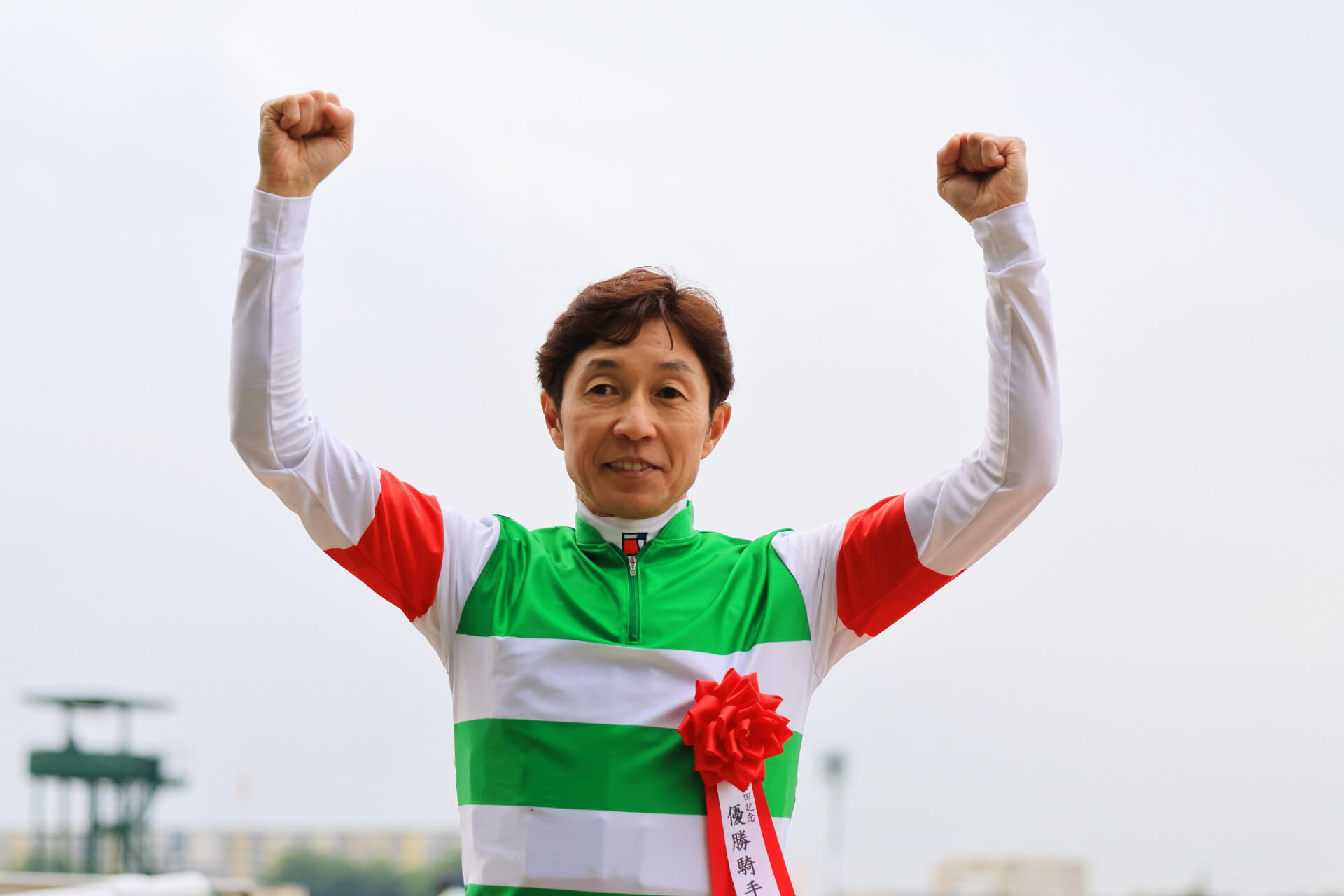
Three days before the Yasuda Kinen, Yutaka Take thought his weekend was over. Admire Zoom, his intended partner in Sunday’s Group 1, had been scratched on Tuesday with an injured forefoot, and the legend was left with a single ride at Tokyo Racecourse – and nothing in the feature.
“I thought I might have Sunday off, and then I got the call,” Take said with a laugh.
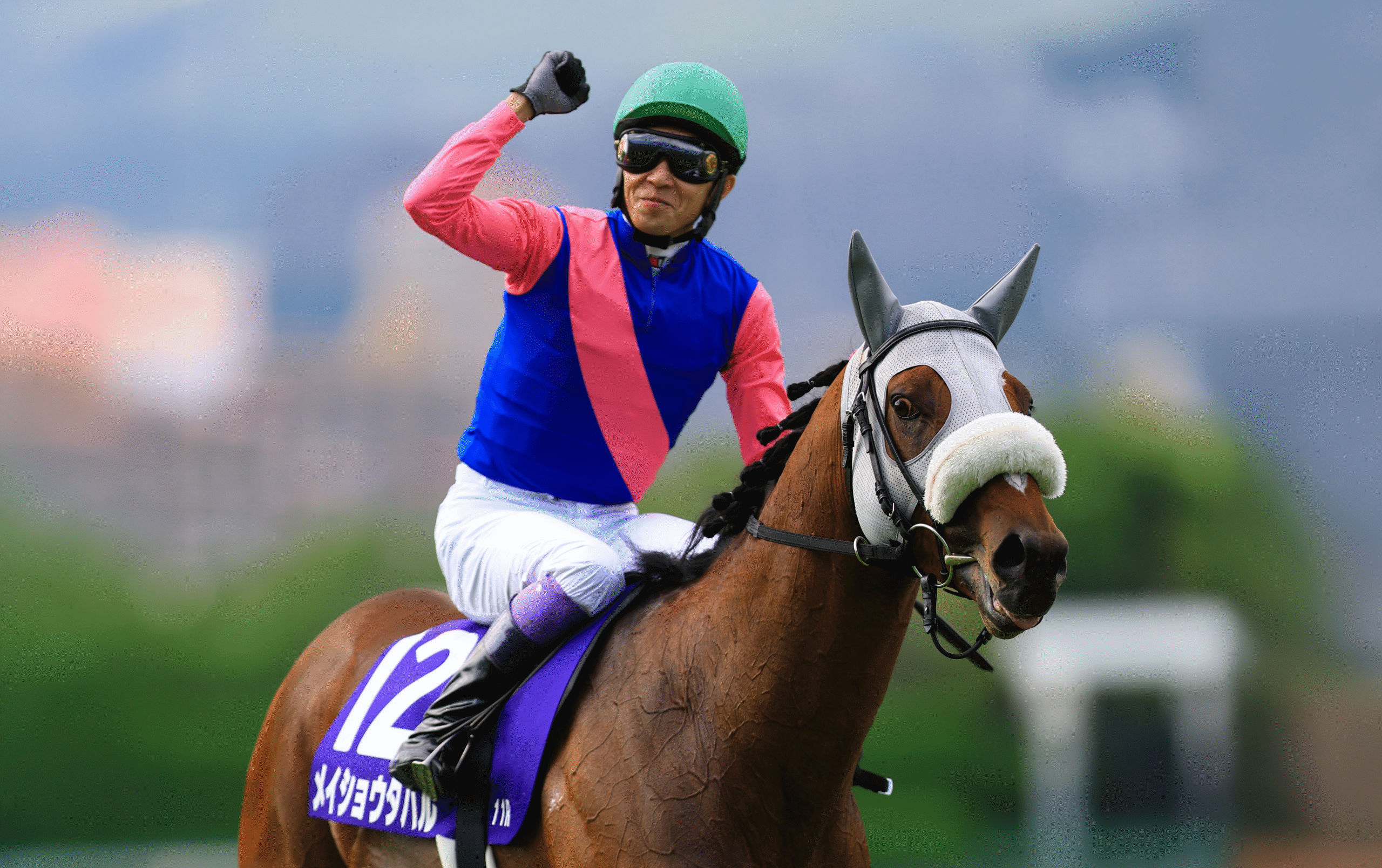
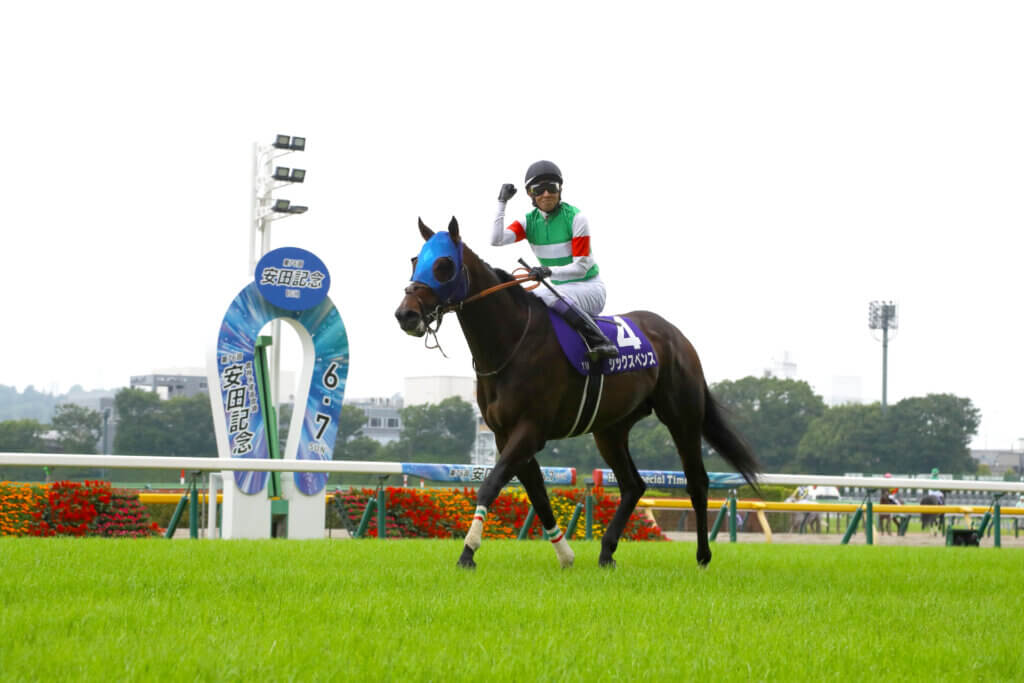
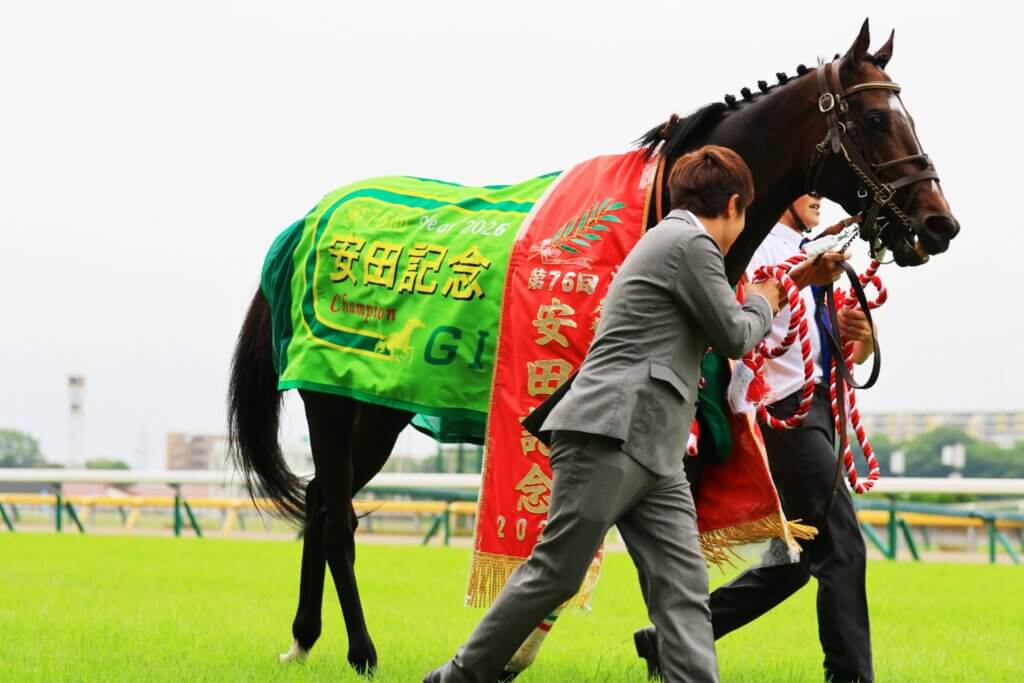
The call came on Wednesday. It paired him with Sixpence for the first time. By Sunday, they had won the Yasuda Kinen by one final stride.
At 57 years and two months, Take became the oldest jockey to win a Japan Racing Association (JRA) Group 1, surpassing Norihiro Yokoyama, who was 56 years and three months old when he won the 2024 Japanese Derby. Take now holds both ends of the JRA Group 1 record: the youngest winning jockey and the oldest.
But to tell this victory only through the legend’s record would be to miss something. What Sixpence showed was not a dazzling turn of foot. It was the toughness to race prominently and keep finding all the way to the line. And what brought that out of him was Take’s judgement in a short preparation window, and trainer Hiroyasu Tanaka’s search for answers less than three months after the horse had transferred to his stable.
“Looking at his previous races, too, my image was that he was not so much a horse with a sharp turn of foot, but more a fairly tough horse,” Take said after riding Sixpence in a race for the first time.
The call-up had come late, but Take did not go into the race cold. He spoke to jockeys who had ridden Sixpence before and had a detailed pre-race discussion with Tanaka. What they shared was the stable’s sense that the horse had been prepared to go forward and still keep fighting.
“The trainer told me, ‘He can go forward and still hold on. That’s the kind of training we’ve been doing,’ so I was prepared for him to be forward,” Take said.
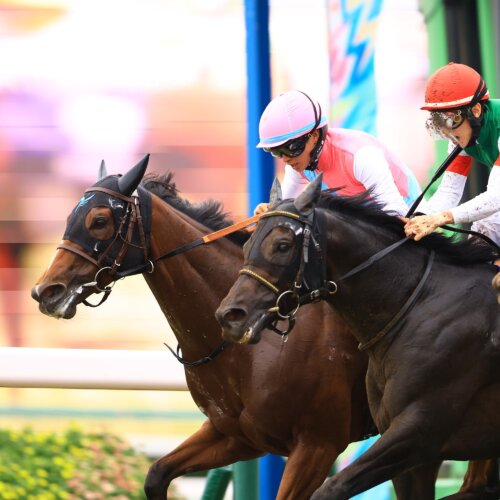
Sixpence did not break sharply. But he soon found his stride, and when World’s End took up the running, Sixpence settled just behind him in second. Take had even been ready to make the running if no one else wanted to go on. As it was, he had a horse in front of him and was able to let Sixpence find a rhythm on the inside.
World’s End did not stop when they turned for home. Seiun Hades came at Sixpence from the outside, and Gaia Force closed from farther back. There was no moment when Sixpence suddenly put the race away. Take had no room to feel sure of victory.
“It felt like we got there in the final stride, so I didn’t know until the very end,” he said.
Yet Sixpence still had something left at the finish. He had chased the leader, absorbed pressure from the side, and withstood the late run from behind before edging ahead with one final stride. This was not a victory in which he overpowered his rivals with acceleration. He joined the fight early and stayed in it to the end. What Sixpence proved in this Yasuda Kinen was the strength of his mind.
His career had not been the smooth rise of a gifted horse fulfilling his promise without interruption.
Two years ago, he won the Spring Stakes and went on to the Japanese Derby, only to finish ninth. That autumn, he won the Mainichi Okan, but an inflamed hoof forced him to miss his planned start in the Mile Championship. Early the following year, he won the Nakayama Kinen in course-record time. He then contested the Osaka Hai and Yasuda Kinen in succession, but finished seventh and 12th. In the autumn, he switched to dirt, but even there he was unable to win.
After trainer Sakae Kunieda retired, Sixpence moved to Tanaka’s stable. His first start for his new yard came in the G2 Milers Cup, where he finished seventh. For Tanaka, too, the horse was still a work in progress.
“At the time of the Milers Cup, we were really feeling our way,” Tanaka said. “To be honest, I didn’t have confidence, and we sent him out wondering whether he could really compete in a graded race in that condition.”
With that run behind him, Tanaka was able to be bolder this time. Speaking about the work Sixpence did on the woodchip course on the eve of the race, he felt that asking the horse to use his body more fully may have helped him.
Another focal point was the first-time blinkers.
But they were not so much a move made with certainty as part of the trial and error needed to change the horse in a short period of time. The idea came from the stable staff, and Tanaka himself had doubts. Christophe Lemaire, who had ridden Sixpence in six starts including his debut, was also not in favour.
Take acknowledged the result, but he did not present the blinkers as a complete answer.
“Since we got the result, I suppose it was good,” he said. “But he was a little too keen in the first half, so I do feel they may have worked a bit too well.”
Tanaka, too, resisted reducing the victory to a single cause.
“I think he showed us his underlying strength,” he reflected.
The victory was also Tanaka’s first Group 1 win on turf. As a jockey, he won 129 JRA races, including one Group 1, but his progress as a trainer has moved faster than his riding career did. He had already made his presence felt on dirt’s biggest stages, training Lemon Pop to win the February Stakes and Champions Cup, and winning NAR Group 1 races with Mikki Fight and Narukami. A turf Group 1 title, however, had still been missing.
Sixpence opened that door. He did so in a way that carried forward the foundation built by Kunieda, while adding Tanaka’s own stable’s “seasoning”.
“Trainer Kunieda took great care in developing him, and we inherited that,” Tanaka said. “Of course, that foundation was there, and from there we were able to add our own stable’s flavour. To reach this point through those new approaches is, in a word, truly pleasing.”
The next story is already visible in the distance. Sixpence is entered for the G1 Prix Jacques le Marois at Deauville on August 16. In 1998, Taiki Shuttle won the Yasuda Kinen and then went to France to win that same race.
Tanaka, though, was not rushing ahead. Sixpence has certainly broadened his options with this victory, but any overseas trip, and even his next start, will depend on how the horse comes out of the race.
“I think there are various options,” Tanaka said. “But he is not a horse with the strongest constitution, so we will watch how he is after the race and discuss it with the owners before deciding.” ∎