Jose Ortiz: The Road To La Gloria, Where Derby Dreams Were Made
The Kentucky Derby winning jockey speaks to Idol Horse about his horse racing roots in Puerto Rico, the family, friends and neighbourhood that shaped him, and continuing the legacy and the dream.
Jose Ortiz: The Road To La Gloria, Where Derby Dreams Were Made
The Kentucky Derby winning jockey speaks to Idol Horse about his horse racing roots in Puerto Rico, the family, friends and neighbourhood that shaped him, and continuing the legacy and the dream.
18 May, 2026JOSE ORTIZ is not in his familiar horse-riding garb. There are no coloured silks, no white breeches, no featherweight boots, and not a body protector or helmet in sight. Instead, he wears a collared white shirt, light blue jeans, and a Stetson – it’s a look straight off the Wyoming cattle range. He is riding long in the stirrups, seated on an unfamiliar horse, a Cremello by the looks of it, with a black bridle, and reins held western style in his famously light hands.
He is front-rank in a procession of what appears to be a couple of hundred men and women on horseback, a collection of Stetsons and baseball caps bobbing along at a trot – Ortiz switches between headwear as the event goes on. All that’s missing is a Colt ‘Peacemaker’ on the hip and an Ennio Morricone score.
But this is not a High Plains cattle drive, nor a summertime county fair west of the Mississippi. This is the Caribbean – this is Trujillo Alto, Puerto Rico and Ortiz is riding along the asphalt highway with his people, celebrating his Kentucky Derby victory.
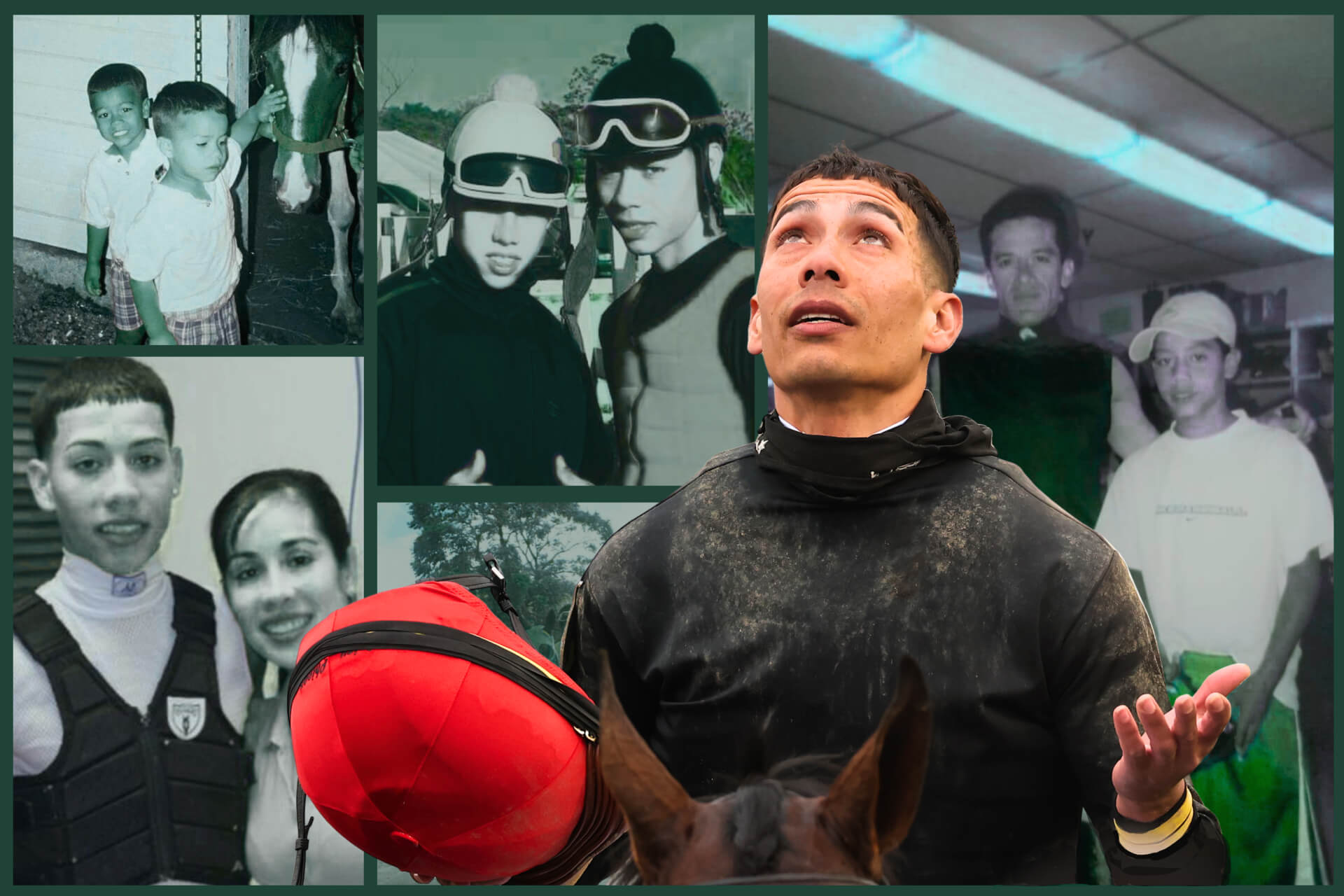
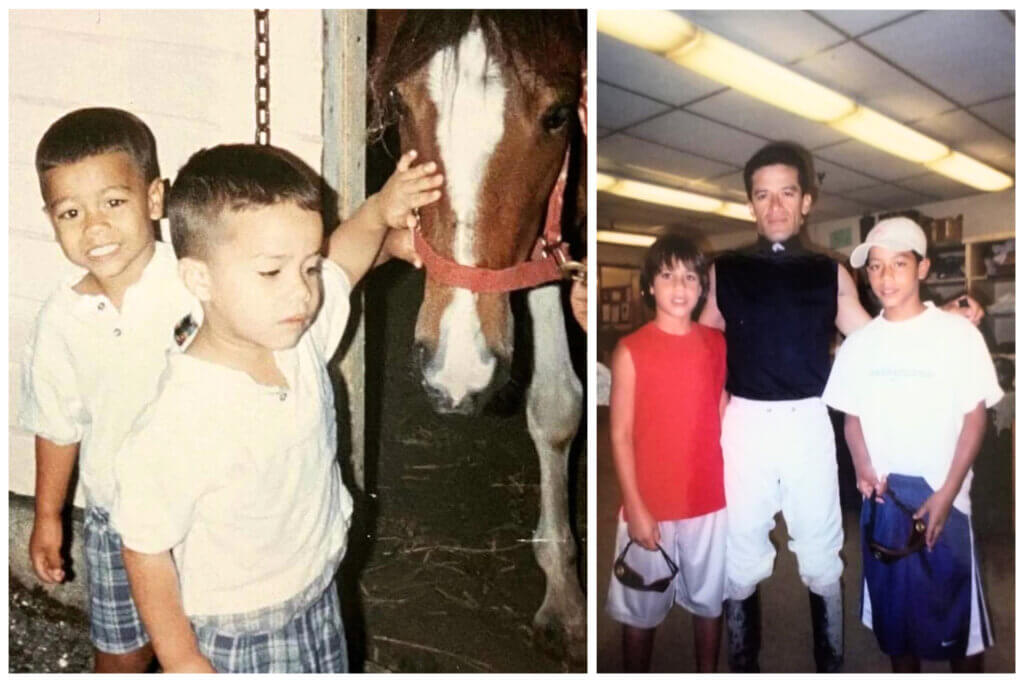
This is where he was born into a love for horse racing as the grandson, nephew, and neighbour of jockeys; a childhood riding horses, going to the race track, playing the Gallop Racer video game for hours a day with his brother, cousins and friends, including two others who would become jockeys, the U.S.-based Hector Diaz Jr. and his younger brother Hector Miguel Diaz who was paralysed in a race fall. This town is where the Ortiz brothers got their first horse when most kids would be getting their first bicycle.
“I used to go to the racetrack when I was four or five years old,” Ortiz tells Idol Horse. “Our first horse was a Christmas gift, his name was Popeye, we were probably four, five years old then as well.”
He shared riding time on Popeye – and the horses that followed – with his brother, Irad, 14 months his senior. Irad and Jose are the top two jockeys in the United States right now by wins and prize money, Irad marginally ahead in both measures: both have won the Eclipse Award given to North America’s ‘Outstanding Jockey’, Jose first, in 2017, and Irad five times since.
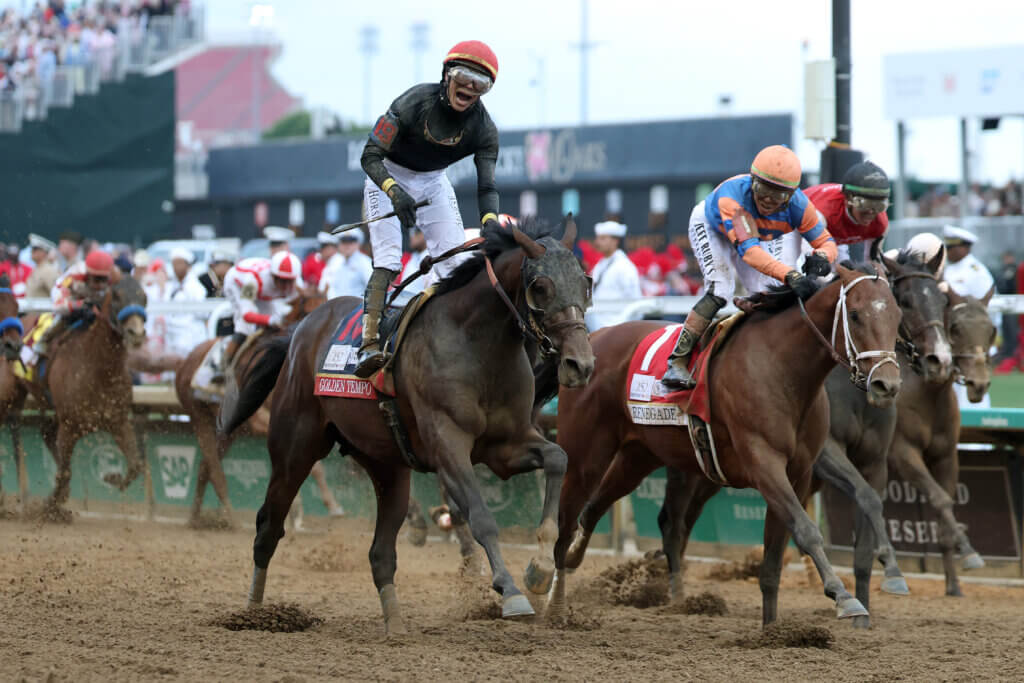
A week and a half before this gathering of local horse folk, the two of them famously became the first brothers to finish first and second in the Kentucky Derby, and the ‘Cabalgata Ortiz’, is to honour them both. It passes through their old home neighbourhood, barrio La Gloria, a district not far from the racetrack, Hipodromo Camarero, southeast of Puerto Rico’s capital San Juan.
“My town, yeah, we got a few jockeys as well living nearby, so there was always something going on with the race track,” Jose Ortiz says. “I’ve been mixed into the sport since I was a baby, honestly: my neighbour was a jockey as well, my mom’s cousin.”
Puerto Rico has known great jockeys before who conquered the U.S., and Ortiz’s Derby win puts him in exalted company alongside storied compatriots Angel Cordero and John Velazquez.
Ortiz’s late grandfather, Irad Ortiz Sr., was the family trailblazer and one of his sons, Ivan Ortiz, followed that route: another, also Irad Ortiz, Jose and Irad’s father, might have been, but wasn’t, his life path was to be different.
“He took a job in a grocery store back when he was 19 years old, he was already running it,” Ortiz says, “He tried to lose some weight, he tried to go to the Jockey School, but he was making good money doing that, so he didn’t try very hard.
“He bounced from jobs until he ended up working for the government. He used to be the right hand for a blind person, he used to be his guide.”
But Jose’s grandfather and uncle took the jockey path to the U.S. and the dream of making it there.
“My grandpa, his career, he was a good jock, but he didn’t have any major wins,” he says. “He moved to Cleveland, he rode a little bit in Cleveland, Ohio, he rode in Parx, he used to call it Keystone. But, you know, it wasn’t anything major. My uncle rode in Turf Paradise, Charles Town, and a bunch of little tracks.
“My grandpa worked in the race track until not too long ago, he was walking horses. And my uncle’s still working, he worked in Monmouth, and in Tampa he worked in the gates. Me and Irad got bigger, you know, but they are the foundation. They took us here.”
Ortiz’s only sibling Irad is not in the front rank of the Cabalgata, which has been organised by a local promoter, ‘El Rey’ Charlie. The older brother appears in an open vehicle, black t-shirt, hat drawstring fastened tightly under his chin, just out of the spotlight as the gathering heads into the night. Jose, after all, was the victor in the ‘Run For The Roses,’ and Irad has been clear in ensuring that message is heard, it was one of the things he stressed to media when a local TeleOnce TV reporter interviewed them on arrival at the airport.
The moment Irad reached out and grasped Jose’s arm, right after they passed the Churchill Downs winning post, right after the year-younger brother had driven past on Golden Tempo to win the race both had dreamed about winning since their childhood in Trujillo Alto, that instant has been seen around the world. It is already one of the sport’s iconic images.
“At that moment, I was like, ‘My God,’ I can’t believe I just won the Derby,” Jose says. “Very happy, very emotional. And to see Irad very happy for me, even though he got beat on his dream. Yeah, it was great, a great moment.
“You know, right now it’s a little bittersweet because I know that’s his dream as well and I took it away from him. He doesn’t feel great, but you know, it’s the way it is. It was me, it was my time and he was very happy for me. I mean, that’s all that matters.
“We both tried to do our best and hopefully he wins it as well, and I’m confident he’s going to get his time.”
The brothers are close. “We had a great relationship, great childhood,” Ortiz says. “Obviously, we fought, but it was a good relationship almost every day because we were so competitive and we tried to compete at everything. Irad tried to cheat on me and stuff like that and I would just get mad at him. And we go back and forth like normal brothers.
“We love each other, we’ve got a great relationship, we always have and we’re gonna keep it that way.”
Knitting them to each other and to their neighbours is their upbringing in what was essentially a working class environment. Their identities are rooted deeply in Puerto Rico’s sporting culture, which also features very prominently baseball and the centuries old but increasingly socially frowned upon cockfighting.
Cockfighting is subject to a 2018 U.S. Federal ban, given the island’s status as a U.S. dependent territory. The Puerto Rican government and much of the public were and still are against the ban, though, which is seen broadly as undermining the island’s culture and being detrimental to its economy, given the scale of the cockfighting industry there.

A couple of days after the Cabalgata, after Idol Horse had spoken to Jose Ortiz and the brothers were back in the U.S. readying for the G1 Preakness Stakes, USA Today published a story about the Ortiz brothers attending a cockfighting event with their friends. The brothers – like baseball star Edwin Diaz, who was also highlighted in the USA Today article – have not previously hidden their enjoyment of cockfighting events, which have negligible ban enforcement by the Puerto Rican authorities.
In an article in Puerto Rico’s El Nuevo Dia dated January 2024, the Ortiz and Diaz brothers defended the continuation of cockfighting, which is considered by many working class Puerto Ricans to be their national sport and an important element in their cultural identity.
As the cabalgata showed, though, horse racing is the heartbeat of the Ortiz family’s neighbourhood. Jose was always intent on becoming a jockey, and as the younger brother, he benefitted from following Irad’s lead into the local jockey school, the Escuela Vocacional Hípica Agustín Mercado Reverón, and then the U.S.
“We were basically just waiting until we turned 16 to go to the Jockey School,” Ortiz says. “With my brother it was a little bit harder for my mom because she wanted us to finish school first and then go over. But, we convinced her to let us go at 16 and obviously my brother went first so when she let my brother go she had to let me go so for me it was easy.
“My dad helped a lot, he wanted us to be jockeys and go to the jockey school, so that helps.”
Once there, his childhood spent not only riding horses bareback and with saddle, but also watching horseracing and how jockeys ride races, proved valuable.
“Some people ride bareback and don’t know about horseracing and then they go to horse racing and they have no clue, but I had horse racing always in mind and I knew what I had to do, I just needed some practice,” he says.
“So when I went to Jockey School, everything clicked real good and Irad was ahead of me so when he came home every day he’d kind of teach me all this stuff, so I was at the school just the first few days and everything clicked, and from that moment on I was rolling.”
But one thing that stands out to him about his time in the jockey school was the job of being a valet in the jockeys’ room on race days: 16 years old, surrounded by jockeys he respected and idolised, like the Puerto Rican great, Juan Carlos Diaz.
Ortiz lists off others who were there at that time: “Luis Perez, Carlos Pizarro, Jose Rivera, Edwin Castro. There was just a ton of guys, guys that have won well over 2,000 races each. I learned a lot from them, that was a great group of jockeys.
“That was the best thing that happened to me. I was there for two years and I got to see and hear the jockeys talking about racing, what they should do, what they should not do. I learned a lot from that.”
Ortiz would attend the school in the morning, then spend his race day afternoons in the room valeting and absorbing everything around him.
“It was like a dream for me,” he says. “They had an Equicizer there, so I would get on the Equicizer and the jockeys used to tell me what I’m doing right, what I’m doing wrong, and that helped me a lot.”
His first winner, Dona Clara, was favourite: “She broke good, went to the lead and stayed there.”
That was January 7, 2012, but he only rode in Puerto Rico for about two months before he followed Irad to the U.S., first to Philadelphia – he was in the Parx winners’ circle by March 13 – then to New York before that month was out, to where his brother had already turned heads with a sensational 151 wins in his first year.
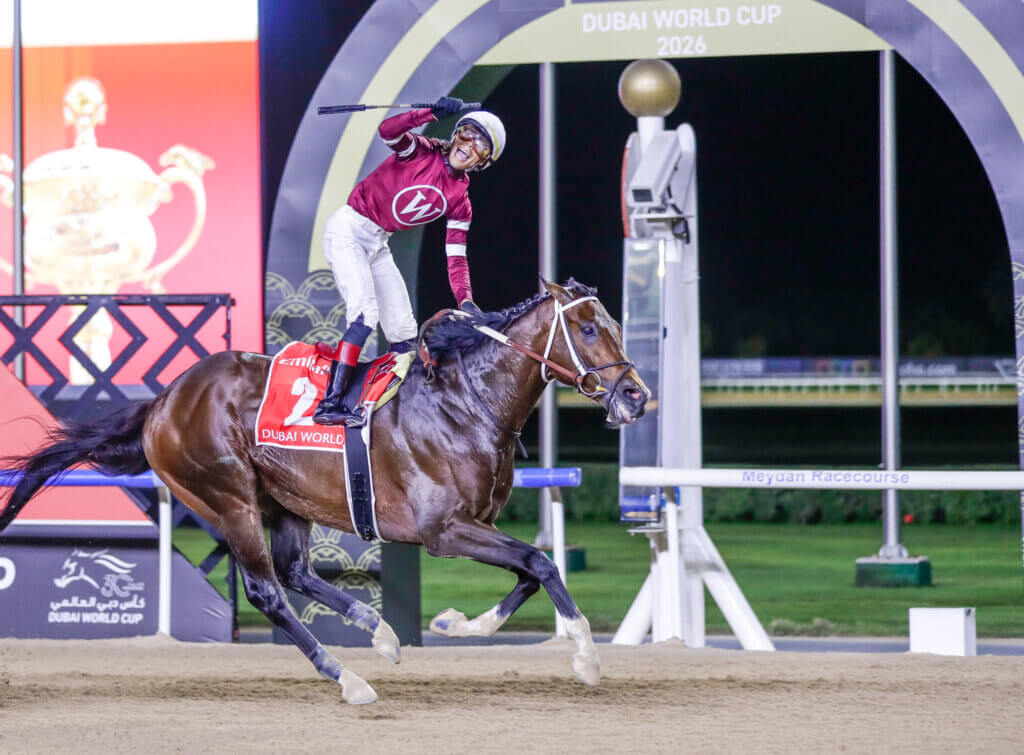
It could be said that in one sense he hasn’t looked back since: that Eclipse Award, an extensive list of stakes wins, five Breeders’ Cup triumphs, the Dubai World Cup, the Belmont, the Preakness, the Kentucky Derby, more than 3,500 career wins, lifetime earnings of US$311.7 million.
But, in another sense, he is never not looking back to where he came from, to Trujillo Alto, the place and the culture that shaped him.
Ortiz and his brother make a point almost every time they return home to visit the kids in the jockey school, knowing the kids are just like they were, dreaming the same dreams.
“All the kids, they look to Irad or me, which is amazing, it’s the same thing we used to do with guys like Johnny V (John Velazquez),” he says. “It kind of feels good, but also you’ve got a responsibility to do things right in the track and outside the track. You are a role model and I want to be a good one.
“I talk to the kids at the school and I like to have a good relationship with all of them so they understand and they know if you work hard, everything is possible because I was just like them 15 years ago. So if we did it, they can do it as well.
“I love going back home to my neighbourhood,” he adds. ∎