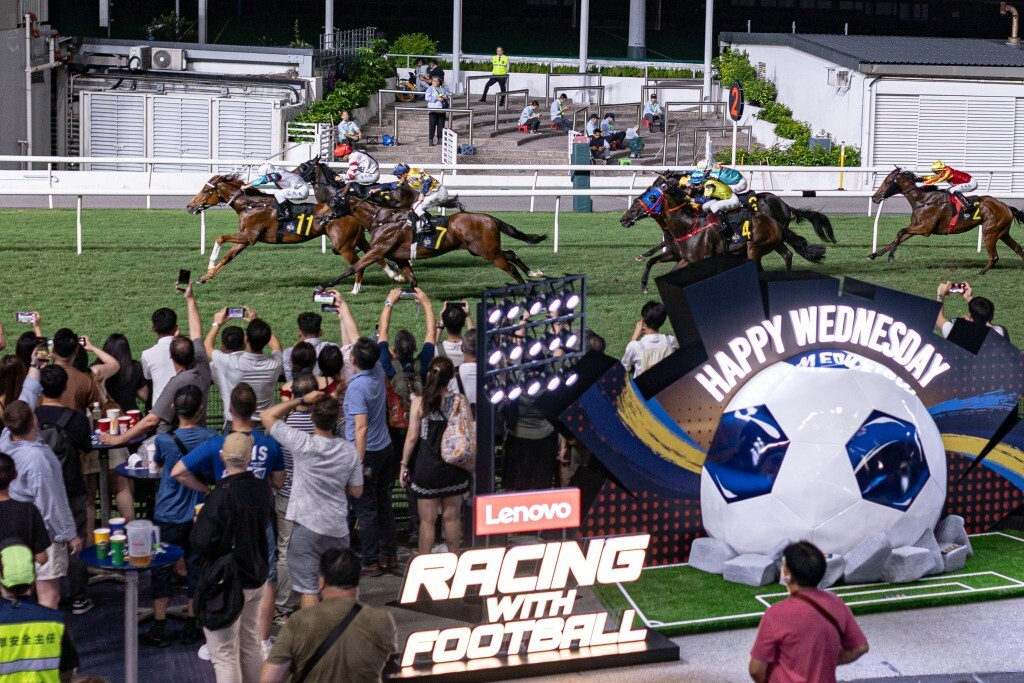
The Hong Kong Jockey Club plans to stage a “special race” at Happy Valley next month in which jockeys carry the silks of the eight nations left standing in the FIFA World Cup, rather than the registered colours of the horses’ owners.
The eight-runner Class 4 over 1650 metres is set for July 8, the climax of the Club’s “Racing with Football” series at Happy Valley. The date is neatly placed in the tournament calendar: the round of 16 will be completed on July 7 and the quarter-finals run from July 9 to 11, leaving the Club a clear midweek night between the two for its tie-in.
Already listed in the 2025/26 Race Programme simply as “The Special Race,” it shares the July 8 card with a second 1650m Class 4 – a conventional 12-runner contest scheduled, it is understood, precisely so that the horses left out of the novelty race still get a start. Given the surplus of Class 4 gallopers this season, filling both fields should pose no difficulty.
Jockey Club sources confirmed the concept would go ahead and “prospectus arrangements were being worked through with trainers and the relevant support groups”. Full details, the sources said, would be announced in due course.
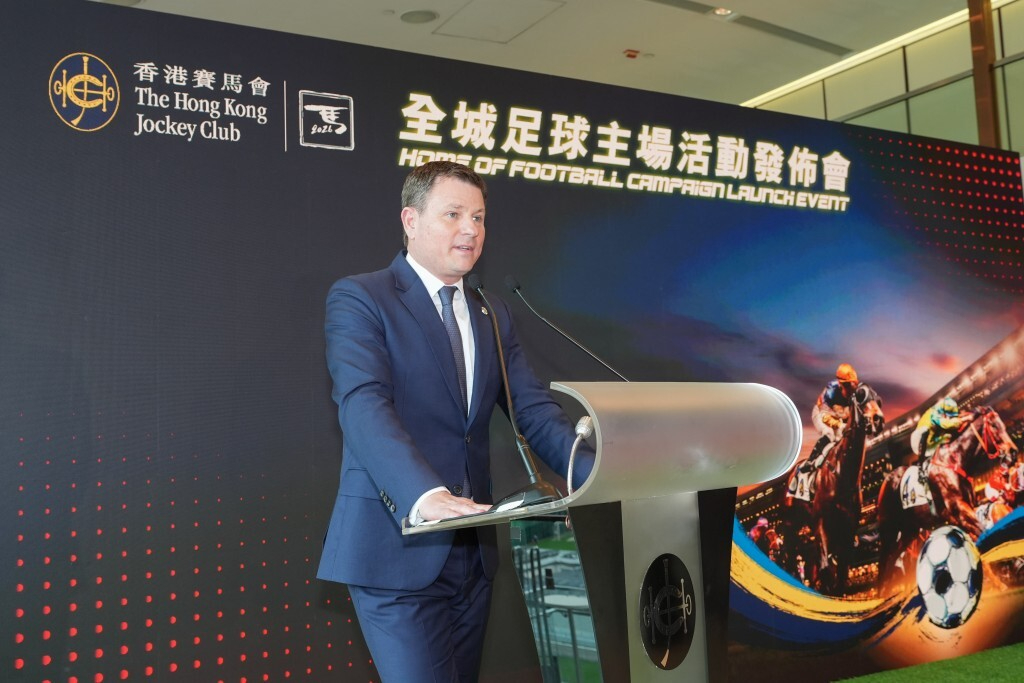
The crossover push comes in part from Casper Stylsvig, the Club’s executive director of sports business, who joined from a football background. The Racing with Football series has turned the city track into a football-themed destination for the duration of the World Cup, launching on June 10 with a visit from David Beckham, who drew a crowd to the Beer Garden and toured an AI-powered fan zone, and running on Wednesday nights through June and into July.
Club CEO Winfried Engelbrecht-Bresges also has a strong footballing background. The Jockey Club’s football turnover topped HK$170 billion last season, up 7.8%, considerably more than racing’s HK$138.4 billion.
Not everyone is sold. Carlos Wu, the Oriental Daily News columnist and a Club-engaged expert commentator, has aired a list of concerns about the plan. One is the field size: capping the novelty race at eight will result in a blow to turnover.
Wu also questioned the silks switch. In racing, writing that an owner’s colours are a matter of pride and identity and while the big stables who frequent the winner’s circle may shrug it off, a first-time winner watching a jockey cross the line in a national flag rather than their own colours might feel short-changed.
Then there is the politics. Among the final eight, Wu noted, are nations that some owners may regard as hostile or unfriendly – and few would relish seeing their horse carried home in those colours.
He was skeptical, too, about the commercial logic. Hong Kong has no shortage of football fans, but plenty of racing followers have no interest in the World Cup and will not buy into what he called a gimmick.
For all the reservations, novelty is hardly foreign to Happy Valley. In the small hours of January 1, 2000, the Club sent a field around the floodlit city track at 12:45 a.m. to contest the Millennium Cup – billed at the time as the first thoroughbred race of the new century anywhere in the world. A quarter of a century on, the Club is again betting that a date on the global calendar is reason enough to do something different. ∎