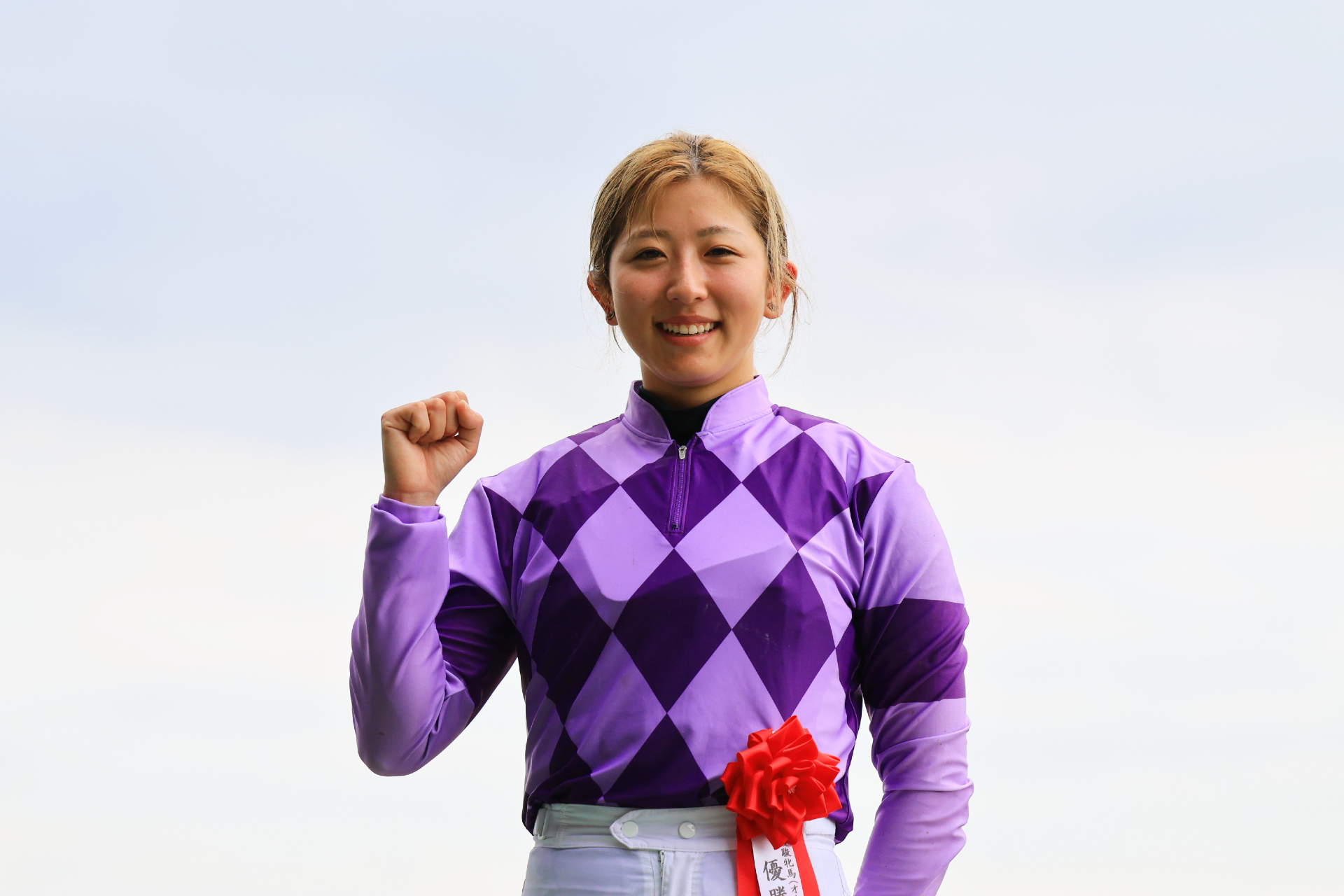
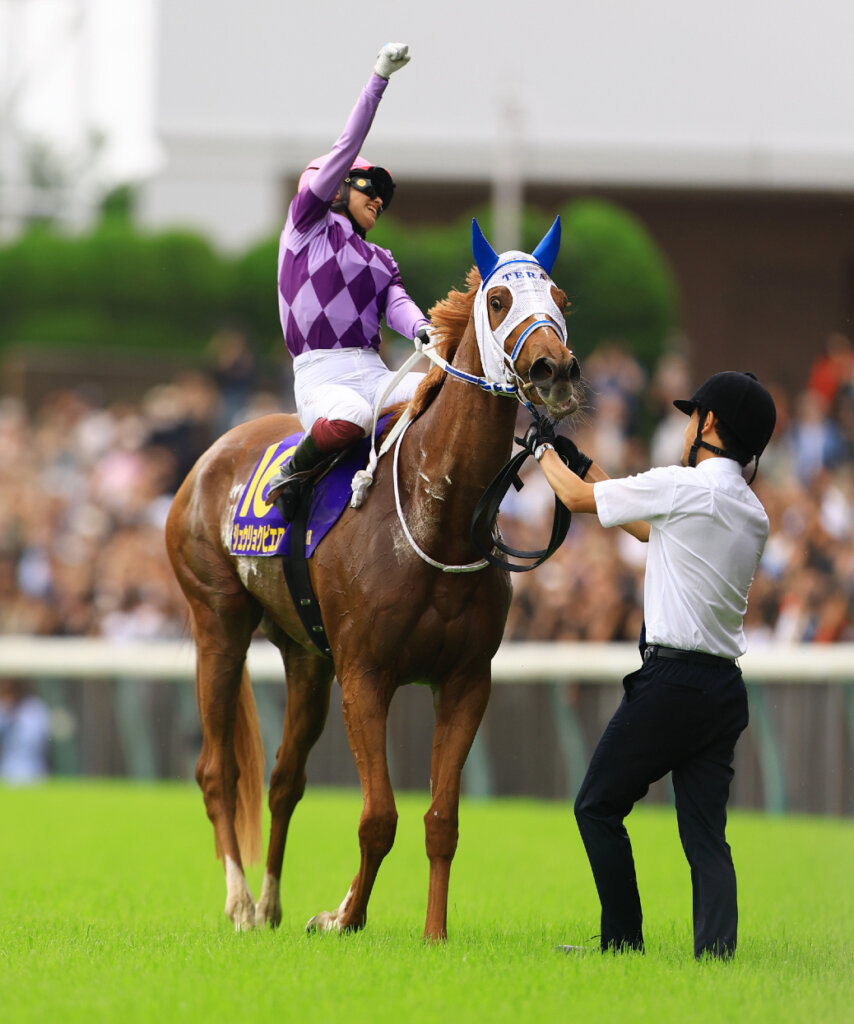
In the moments after Seina Imamura made history in the G1 Yushun Himba, the Japanese Oaks, at Tokyo on Sunday, the Japan Racing Association’s (JRA) jockey camera captured her voice.
She had just become the first Japanese female jockey to win a JRA Group 1 and the first female to win a Japanese classic.
“Yabai, katte mouta.”
Roughly, in Kansai-inflected Japanese: “Oh no, I’ve won it.”
It was not the language of someone calmly processing the scale of a record. It was closer to a reflex, the reaction of a rider who had not yet caught up emotionally with what had just happened.
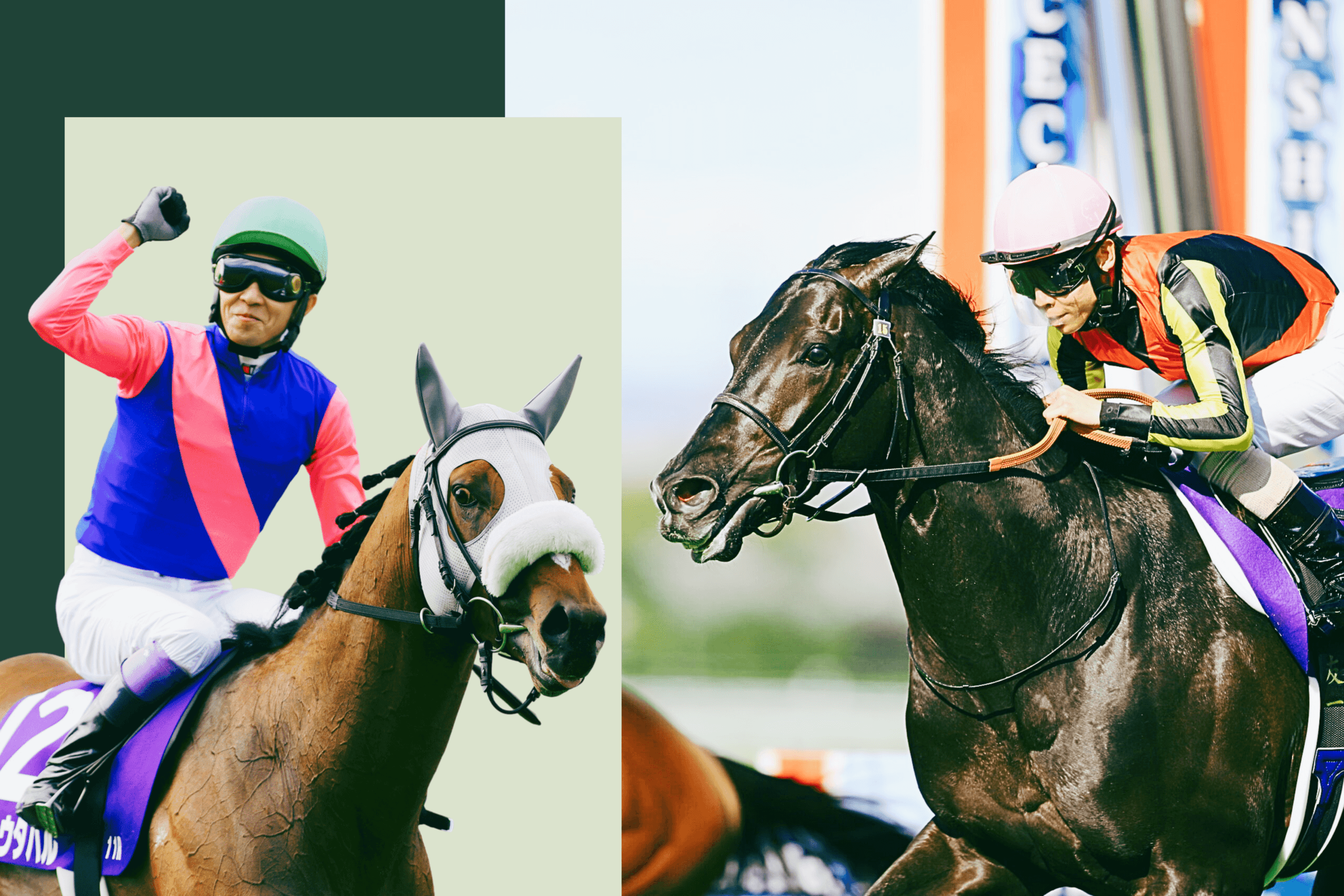
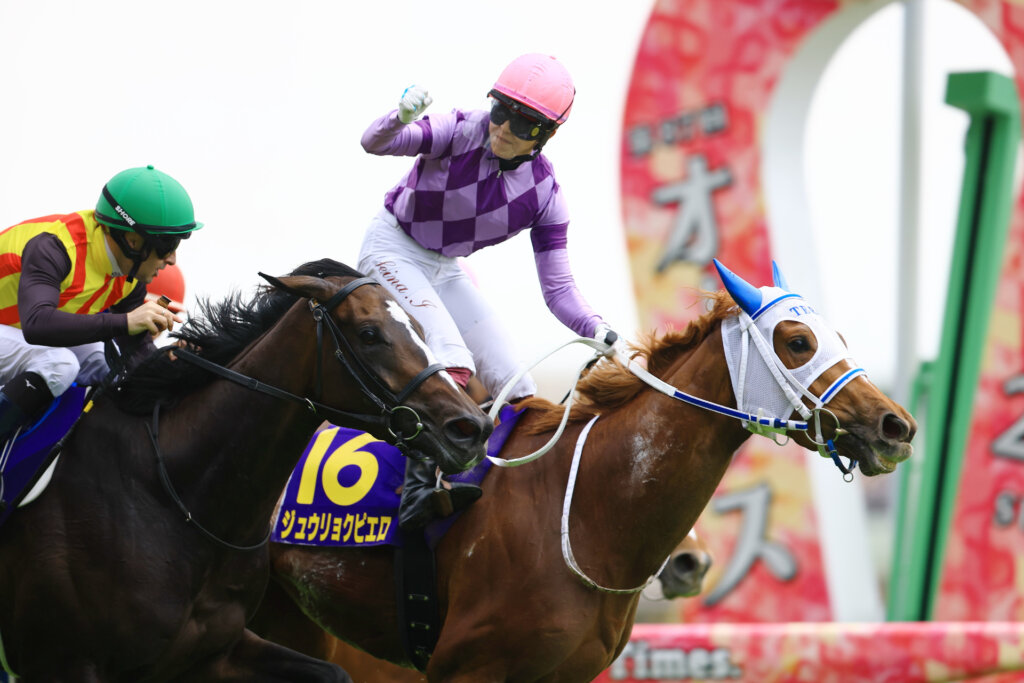
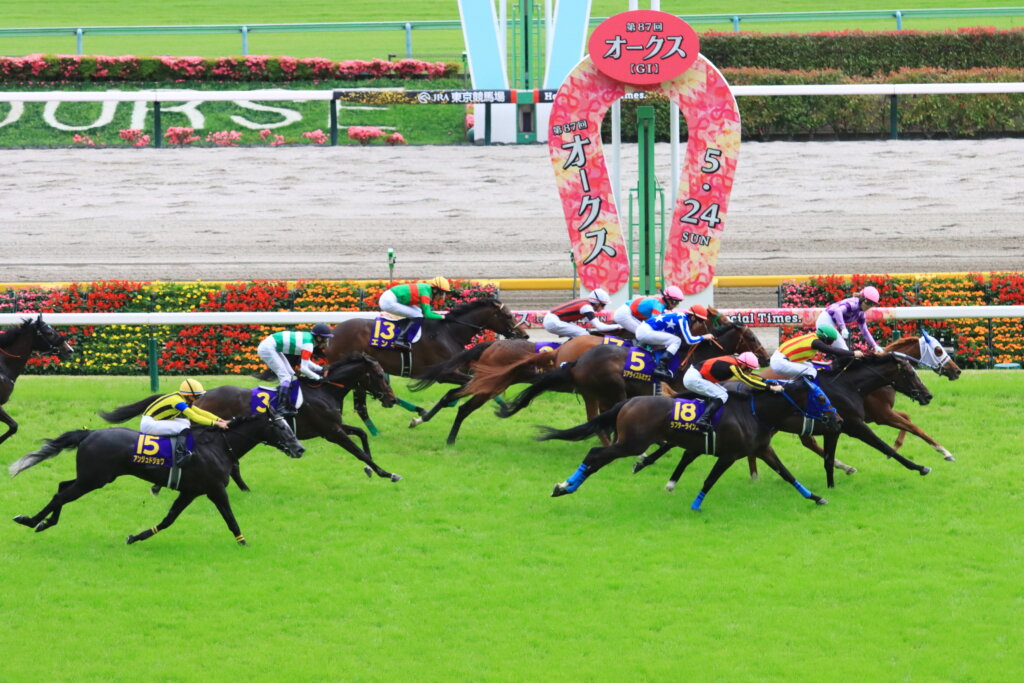
Juryoku Pierrot, the Ryo Terashima-trained daughter of Orfevre, surged between horses in the stretch to win the Oaks comfortably. Star Anise, the Oka Sho winner and favourite as she tried to complete the first two legs of the fillies’ Triple Crown, finished 12th. For both Imamura, in her fifth season, and Terashima, it was a first JRA Group 1 victory.
At the end of last year, it would have been difficult to take Juryoku Pierrot seriously as a potential Oaks winner. She won on debut, then finished seventh in two straight dirt races. This year, however, she has been unbeaten on turf, capped by an easy win in the Wasurenagusa Sho at Hanshin. By then, her chestnut coat, high ability and slightly difficult temperament had all begun to look like part of the appeal of an Orfevre filly. Juryoku Pierrot takes her name from A Clown (Gravity Clown), a famous Japanese novel. By early summer, the name had acquired its own echo, as the once-unlikely filly kept pulling herself toward the Oaks.
Juryoku Pierrot is not an easy, straightforward filly. Asked about her mood in the paddock, Imamura gave a wry answer: “She was quite dangerous.”
The filly dislikes the sound of camera shutter, and her mood grew more intense with each lap around the paddock.
“She was sharper than she had been for the Wasurenagusa Sho, and I think there was more tension,” Imamura added.
Terashima also knew the filly’s personality well.
“She can be difficult temperamentally from the paddock onward, and she has a lot of personality,” he said. “Her sire is Orfevre, so she is a very interesting horse.”
After the race, Imamura did not speak in grand terms about having made history. Her explanation was calm, practical and detached.
“I do not have a lot of experience, and I had never ridden over 2400 metres at Tokyo,” Imamura said. “I knew I could not suddenly try to do something special, so I tried not to overthink it.”
Rather than treating the big stage as one large task, Imamura broke the day down into smaller, more manageable stages. Once she reached the paddock, the first goal was to get safely to the return gallop. After the return gallop, it was to reach the area behind the starting gate safely. Once she was there, she expected the fanfare and the noise from the crowd to switch the filly on, so she thought carefully about when to remove the pacifier and lip chain, and tried to walk her near the inside rail, as far from the source of the sound as possible.
“I told myself that I understood this horse better than anyone else,” she explained. “I set small goals for each stage we had to get through.”
The task was not to suppress that individuality by force, but to get her safely to the race without letting it spill over. The small targets Imamura set for herself ultimately became the foundation for victory over 2400 metres.
From barrier 16, Juryoku Pierrot broke smoothly and travelled behind midfield, outside horses, while settling into rhythm. Imamura chose to get into the flow rather than settle last.
“After the start, the impact of her previous win in the Wasurenagusa Sho was still very strong in my mind,” Imamura recalled. “But in her 1-win class race, there had been a moment after the start when she got into the flow but did not fully settle. I also thought it would be difficult to win a Group 1 from the very back, so I let her get into the flow after the start.”
By the time the field was organised along the backstretch, the horses Imamura wanted to use as targets were nearby. Laughterlines was farther forward than she had expected, and Imamura thought she would make “a very good target”. The early pace was slow. Move too soon, and the Tokyo straight is long. Wait too long, and the race can be gone.
As they approached the fourth turn, Juryoku Pierrot began drifting outward naturally, and Imamura settled her again. At the 400-metre mark, the response was good, but the group in front was tight.
What decided the race was not a lane forced open by the rider, but the judgment of the horse herself.
“The pack in front was a little tight,” Imamura reflected. “But I think the horse guided me through. I was basically just holding on.”
Juryoku Pierrot quickened between horses. Dream Core fought on. Laughterlines closed from the outside. Those who had raced closer to the pace, helped by the slow tempo, did not stop easily. Still, in the final strides, the chestnut daughter of Orfevre put her head in front.
Terashima, too, thought the winner might have too much to do when the field straightened for home.
“When they first entered the straight, I thought she would not get there because the pace had been slow,” he admitted. “But her response was so good that I started to think she might have a chance.”
Imamura later pointed to the filly’s stamina as much as her turn of foot.
“I think she has tremendous stamina,” she said. “She must have used a lot of energy, but she was still able to save something during the race and produce a good turn of foot in the straight. Having both speed and stamina may sound contradictory, but I think that is what makes her special and is one of her strengths.”
The Oaks stretch became the place where that seemingly contradictory quality was proved.
For Terashima, the victory was also his first JRA Group 1. He knew Juryoku Pierrot had a chance. Even so, he stayed with Imamura, who had ridden the filly to that point.
“I thought that even if it did not work out this time, there would be another opportunity,” Terashima said. “But she seized this chance right away. Both the horse and the rider were incredible. I have nothing but gratitude.”
Asked what he said to Imamura after the race, Terashima’s answer was even shorter.
“I just said, ‘I’m so glad,'” he recalled. “That was all.”
For Imamura, Terashima is not merely the trainer of the stable to which she belongs. He had supported her before and after her debut, and had given her opportunities on many horses. She described him as a mentor.
“He has always been on my side and pushed me forward,” Imamura said. “He is truly like a mentor to me.”
Winning a Group 1 together as trainer and jockey, she added, was not something that comes easily in such a relationship.
“On top of that, I never dreamed that I would win a Group 1 myself, so it feels incredible.”
There was also a family thread to the day. Imamura’s father, Yasunari Imamura, was a former jockey who won the 2001 Nakayama Daishogai aboard Yu Fuyoho. After retiring, he became an assistant trainer and was involved with Meisho Mambo, who won the 2013 Oaks and Shuka Sho, while working in Yuji Iida’s stable. Asked whether her father, who knew the pressure of major races, had given her any advice, Imamura answered lightly.
“The advice is a secret,” she said. “There are many other jockeys, after all.”
The next step remains uncertain. Terashima said Juryoku Pierrot had been entered for the Prix de l’Arc de Triomphe because the deadline came soon after the Wasurenagusa Sho, but any decision will be made after discussions with the owner and after watching the filly’s condition.
Imamura’s own concern was directed more toward the horse than toward Kyoto in the autumn or Longchamp.
“Looking back at her performances from her previous race, I think we put quite a lot of stress on her,” she said.
As the Oaks drew closer, attention and media coverage increased, and the filly often had cameras pointed at her, even while she was eating. Imamura said she wanted her partner to have time to recover.
“First of all, I want her to have a good rest,” she said.
Still, in a profession that more often delivers hard realities than days like this, the unreality of the moment stayed with Imamura until the end.
“As a jockey, you spend more time losing or finishing second than winning,” she said. “When I have frustrating races, or when racing is always on my mind in daily life, I sometimes dream about winning or losing. Today felt like one of those dreams. It felt wonderful.” ∎