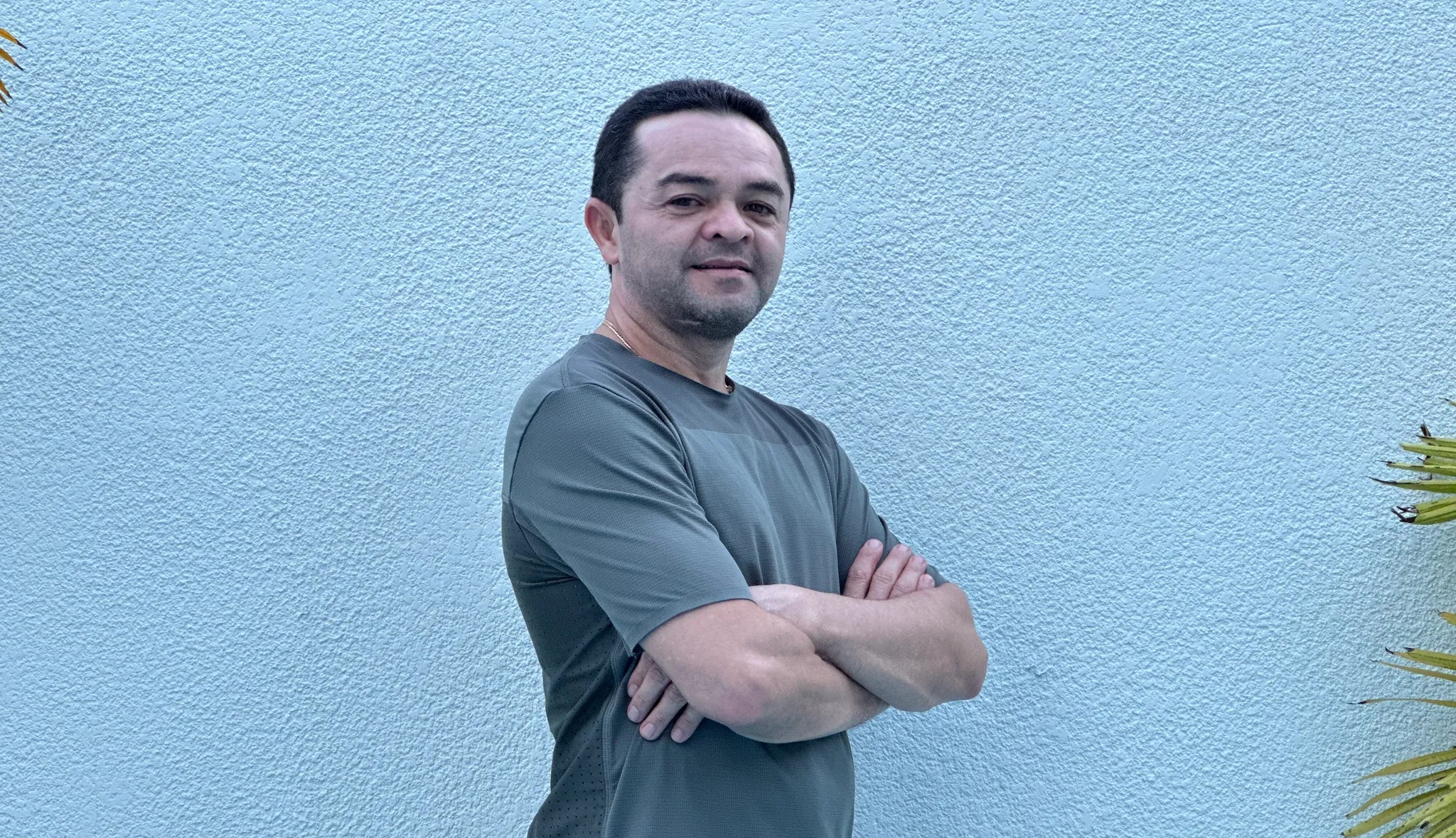
The Globetrotter: Manoel Nunes Arrives In Perth Ready To Write The Next Chapter
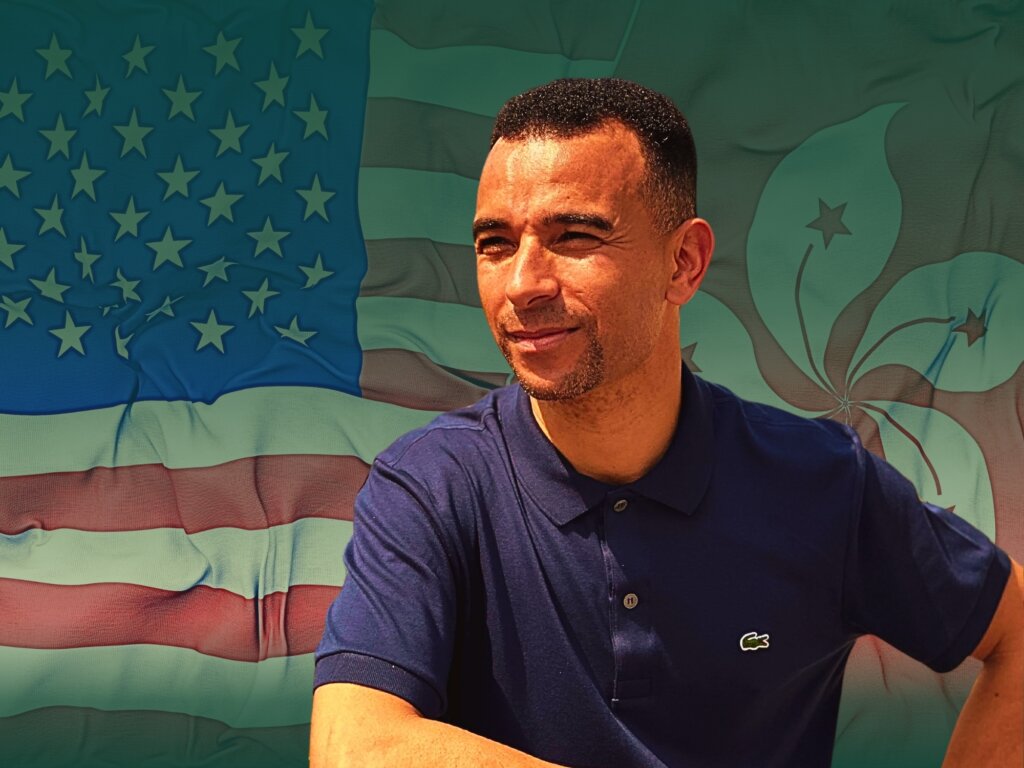
Manoel Nunes has won nearly 2,200 races across six countries. Now, the Brazilian jockey is planning his next move.
The Globetrotter: Manoel Nunes Arrives In Perth Ready To Write The Next Chapter
Manoel Nunes has won nearly 2,200 races across six countries. Now, the Brazilian jockey is planning his next move.
1 May, 2026MANOEL NUNES is sitting by a pool in Mauritius nursing a fractured right ankle, and for the first time in a very long time, the man has nowhere to be. No morning trackwork. No barrier draws to study. Just the water, a gentle breeze from the nearby Indian Ocean and the quiet and strange discomfort of stillness for someone who has spent thirty years in motion.
“It’s hard,” he says, not complaining, just stating the fact. “But anyway, thank God I’m okay now.”
He is 50 years old. He has ridden nearly 2,200 winners. He has been champion jockey fourteen times across three countries – six titles in Macau, five in Singapore, three in Mauritius, including the most recent completed. He has won 26 Group 1 races. He has ridden in Brazil, Macau, Hong Kong, South Korea, Singapore, Australia, and the tiny, horse-mad island where he now sits. If there is a modern jockey who has covered more ground, it would be hard to name him.
But the story of Manoel Nunes does not begin in silks. It begins in dust and cattle.
He grew up on a big farm in the north of Brazil, four hours by flight from São Paulo. His father’s business was buying and selling livestock – 200, 300 head at a time. There were cattle and goats and sheep and donkeys and horses, and Nunes was riding before he could walk. By the age of 10 or 11 he was on Quarter Horses, running the fast, sharp races that teach you about reflexes and nerve. When the family moved to São Paulo, the dream narrowed into a plan: apprentice school.
There was a problem. In 1994, at the age of 16, he weighed 32 kilos. The school turned him away – too light. He spent a year doing everything he could to gain weight, including injections he can’t remember the name of. He came back at 45 kilos, got accepted, and by 1996 he was a licensed jockey. In 1997, still a teenager, he won the Triple Crown in Brazil aboard a horse called Quari Bravo, taking the São Paulo Derby over 2400 metres in an 18-horse field.
He remembers the night before that race. He remembers not sleeping. He also remembers older jockeys approaching him with a proposition common in Brazilian racing at that time: since you’re on the favourite, let’s split the prize money. A kind of insurance racket among riders.
“I told them, no. I’m not going to share anything.”
They weren’t happy. They told him they’d box him in.
“It doesn’t matter,” he said. He won anyway.
That confidence – not arrogance, but a deep trust in his own preparation and his horse – became the through-line of his career. And it was not unique to Nunes. The São Paulo apprentice school produced an extraordinary generation of riders who went on to dominate racing across the world. João Moreira became the “Magic Man” in Singapore and then Sha Tin, winning four jockeys’ championships in each jurisdiction and setting the single-season Hong Kong record at with 170 winners. Silvestre de Sousa won the British Champion Jockey title three times and took the Dubai World Cup. Eurico da Silva became a seven-time Sovereign Award winner in Canada and was inducted into the Canadian Horse Racing Hall of Fame. Ruan Maia, a generation younger, followed the same trail through Macau and Singapore, winning premierships in both. There was something in the programme – the bareback riding, the Quarter Horse beginnings, the technical education in balance and lead changes – that produced not just competent jockeys but exportable ones, riders who could land anywhere in the world and figure it out.
It was Eurico, a fellow graduate of that system, who changed the direction of Nunes’ life. They knew each other from the São Paulo racing world, and in 2001, over dinner after a race, Eurico asked a simple question: why not Macau?
Nunes arrived on October 25, 2001, with a fractured foot, no English, and no connections. The first weeks were miserable. His translator was a 13-year-old boy named Roberto Perez, the son of a club employee, who would follow Nunes around in the mornings and then go to school. In his first season he finished third. The next year he was champion. He would go on to win six premierships and break the Macau riding record before anyone else caught up.
In between, he spent a season in Hong Kong in 2006-07, finishing seventh in the jockeys’ table with 37 winners – enough to prove he belonged at the very top level. More importantly, Hong Kong gave him friendships that lasted: riders like Gérald Mossé and Olivier Doleuze, men who understood the strange, rootless life of the international jockey.
Then came Singapore, and the years that would define him.
Nunes moved to Kranji in 2012 knowing nobody. He had one contact – an owner connected to the Michael Freedman stable – and that was it. No family network, no local support. He rode 124 winners in his first full season and finished second in the premiership. The only man who beat him was João Moreira.
Ask Nunes about Moreira and he lights up. Not with rivalry, but with the fascination of a craftsman studying a master. He talks about the way Moreira makes horses switch leads – the subtle transfer of weight through the turn that gives a horse fresh legs and a second wind at exactly the moment other riders are still figuring out what gear they’re in. He talks about watching replays obsessively, over and over, trying to decode what made Moreira different.
“He just perfect,” Nunes says. “He can ride anywhere. But I like when he come from behind. He drop the horse midfield and suddenly – bang. I don’t know. He make the horse balance, switch lead, and just go.”
The switching of leads is Nunes’ favourite subject. He explains it the way a mechanic explains an engine: when a horse changes from the right lead to the left in the home straight, it breathes differently, finds fresh legs, gets what riders call “another gear.” If a horse runs the whole way on one lead, it tires. The trick is making the switch smooth and fast, and it is taught in the mornings, in canter, through hands and body together. It is one of the things South American riders learn young that many others never master.
When Moreira left Singapore for Hong Kong, Nunes stepped into the space. He won the premiership in 2014, then 2015, then 2016 – a rare hat-trick. He set a personal best of 123 winners in a season. He won the Singapore Derby twice. After a break that included stints in Macau, South Korea, and Mauritius, he returned to Kranji and won the title again in 2022 and 2023. On September 28, 2024, he rode a hat-trick to reach 737 Singapore wins, equalling Moreira’s record. He finished his Kranji career third on the all-time winners’ list.
“We come from Brazil,” he says. “Nobody knows you. No support from owners, trainers, nothing. It’s not easy.”
Then Singapore closed. The Turf Club shut its doors in October 2024, and Nunes, like every other rider there, had to start over. He went to Australia – South Australia first, then Western Australia. He won races early but the adjustment was real: new tracks, new trainers, a new culture. When the Australian winter arrived, he took a short-term contract in Mauritius with the Gujadhur stable, the same operation he’d ridden for when he was crowned champion there in 2019.
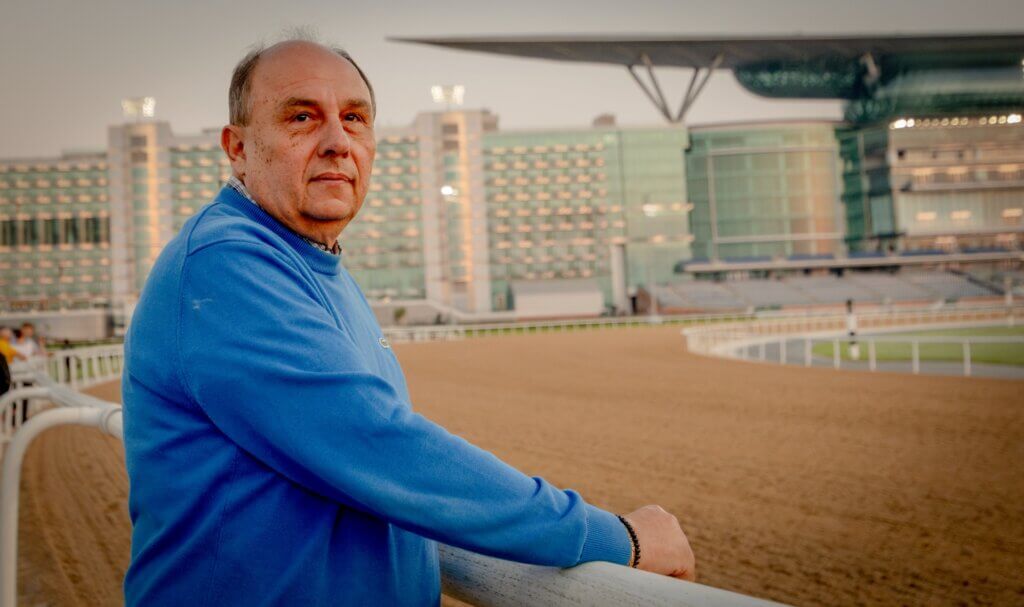
Mauritius is a different world. Champ de Mars is one of the trickiest racetracks on earth – tight, turning, unforgiving. Lose a length here and it becomes an eternity. The 1300-metre starting point is on the turn itself, which makes pre-race instructions almost comical. Nunes has always resisted the Mauritian culture of rigid riding orders, and the track is his best argument for why.
“When the gate open, we have to start the race,” he says. “Why I have to follow instructions from someone who never ride the horse in their life?”
But what makes Mauritius special to him isn’t the track. It’s the people. Horse racing here is not a hobby – it is a religion. Kids wear stable colours to the races. Everyone bets. Everyone knows who you are. When Nunes won the Maiden Cup in 2019, the crowd was unlike anything he’d experienced.
“They crazy,” he says, grinning. “Everywhere we go, they know you.”
This latest Mauritius season was going well until the fracture came. He won the premiership again before injury ended his campaign a month early. But the ankle is nearly healed now. He can feel it mending. And the itch is back.
He has seen racing rise and fall in the places he’s lived. Macau declined when Stanley Ho’s leadership gave way to less passionate management. Singapore couldn’t outrun the economics. He believes the answer is always the same: strong leadership and constant innovation. He points to Hong Kong as the model – a jurisdiction that never stops evolving.
At 50, Nunes doesn’t drink, doesn’t smoke, and still rides at 54 kilos. He says his body feels good. He has no retirement date in mind. He just wants to keep going for as long as the enjoyment lasts.
The ankle has healed. Nunes is back in shape. On April 20 he arrived in Perth, Western Australia, ready to ride. The plan is the same as it has always been, in every country, at every track, across three decades and nearly 2,200 winners: arrive as a stranger, earn rides, challenge for the top.
“I still enjoy to ride,” he says simply. “When I see the time, I will stop. But not yet.”
The water is still. Manoel Nunes is not. He never has been. ∎