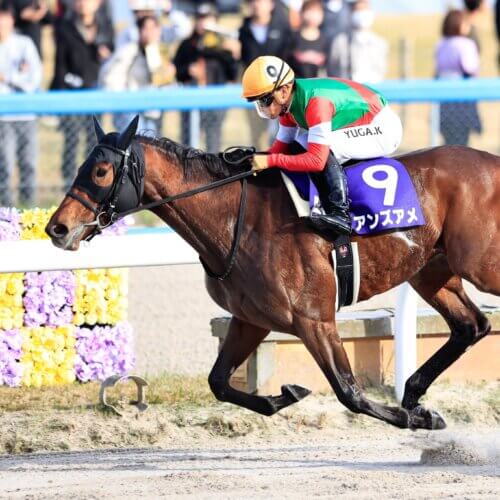
It was after Forever Young’s deflating defeat in the Breeders’ Cup Classic that trainer Yoshito Yahagi lamented that the horse couldn’t speak to him to say why he hadn’t run his usual race.
The fact that horses can’t talk makes horse racing an unusual sport: the main athletes, the ones that should be the biggest stars, are unable to communicate with the audience. But jockeys can talk, some of them really well, like Hong Kong’s champion Zac Purton and any number of U.S.-based riders you’d like to name.
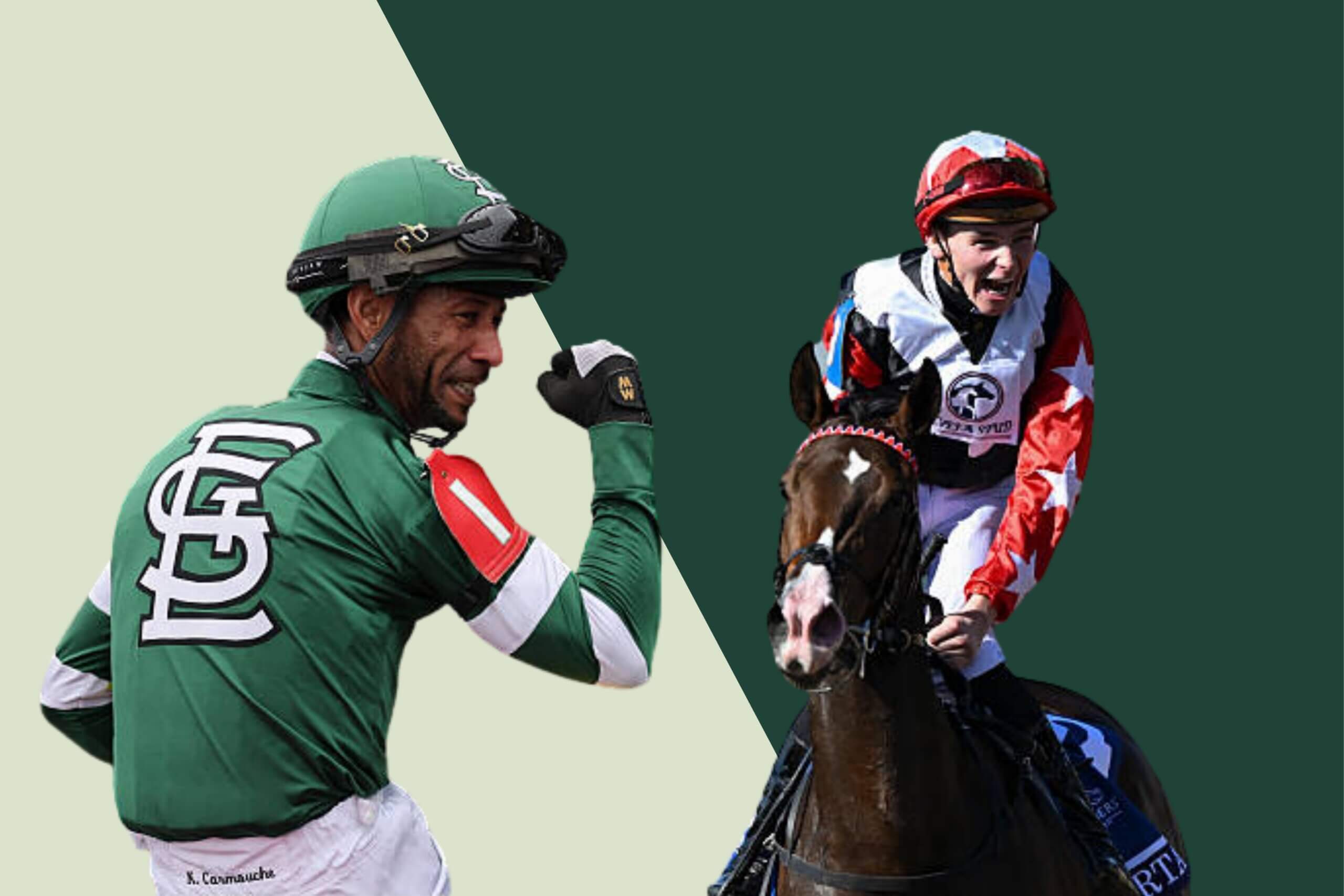
On Saturday it was the seasoned Kendrick Carmouche stealing the show – “they call me Gator” – almost rapping with delight after he out-manoeuvred William Buick with a positive ride to win the Breeders’ Cup Mile, reversing the result from Woodbine in September. The man has charisma and it was out there for everyone to see.
“Y’all stood me up last time in Canada but I knew at Keeneland I was gonna turn the tables on y’all, so here it goes, Deterministic.” The first ‘t’ emphasised, the final ‘i’ stretched out for effect and punctuated by the hard ‘c’.
“It’s the best sport in the world, horse racing,” he added. “If you never saw it yet, you need to come out and see it because you’re gonna meet cool people like me, and some of the top jockeys in the world, so come and see the horse racing. We love y’all. Woooo!”
Saffie Osborne’s rounded vowels are a contrast to Carmouche, but Hong Kong fans will soon know that she can be an engaging character; then there’s Hollie Doyle, always good with fans and media, fresh back from injury and announced as starting her own Hong Kong stint in a few weeks’ time.
The jockeys are key to telling racing’s stories; they’re the sport’s main human heroes, legends in some cases, like the late, great Lester Piggott or Yves Saint-Martin or George Moore, the inimitable Frankie Dettori, Bill Shoemaker or Eddie Arcaro in the U.S., and Japan’s greatest, Yutaka Take.
Their charisma captivated fans and that is needed now more than ever given racing’s general global decline. But, in the past decade or so, there’s not been a truly engaging personality emerge at the very top of the jockey ranks internationally. Ryan Moore, for example, is a genuinely great jockey, he has a sense of humour, a dry wit, by all accounts, and an acute sense of professionalism as a horseman, but he is not an outgoing character, he’s cautious and often closed around the media. He’s certainly not one for fist bumps and flying dismounts.
Yet that’s the kind of vibrancy racing needs. Nowadays, people young and older, get instant connections – action, excitement, comedy, exhilaration – all at a swipe and a tap of their fingers, often via personalities they follow on social media channels.

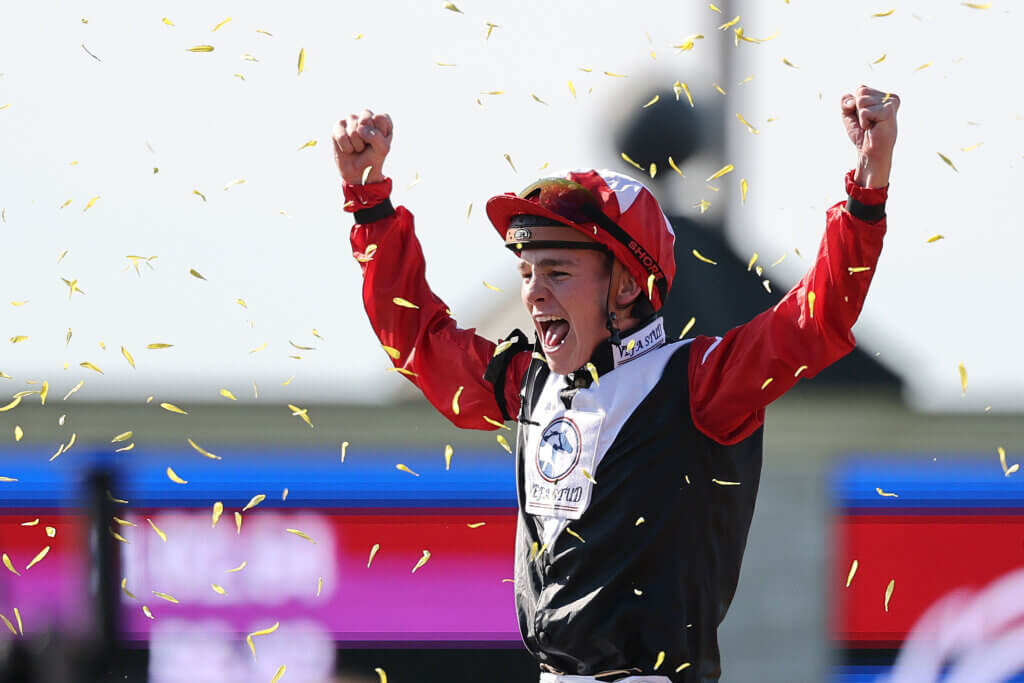
With that in mind, there was a bright hope for the future after the first big race on Breeders’ Cup Friday. It was Billy Loughnane’s reaction to victory on Libertango and the connection with the crowd.
“Go on Billy!” “Get in there, Billy!” Or simply “Billy” on repeat. All those and other variations were heard from points around the winner’s circle when Loughnane nailed his first Breeders’ Cup win.
And what did Loughnane do? He beamed with an impish delight; he raised his arms in triumph; he punched towards the sky; he grabbed the yellow petals from the winner’s blanket draped across Libertango’s withers and he threw them into the air, showering those around him. He owned the stage. And the crowd loved it.
This year marks a coming-of-age: at only 20, he is the champion jockey in Britain where he rode the brilliant unbeaten miler Bow Echo to wins in the G1 2,000 Guineas, G1 St James’s Palace Stakes and G1 Sussex Stakes.
Loughnane was mature in the press conference after Libertango’s win. Not the kind of sullen, too-cool-for-school dourness British sports fans in particular have become broadly accustomed to in recent years, a media-managed blandness that has become mistaken for maturity. No, this was a brighter, engaging, articulate maturity; a polished, informative interview with personality.
Mind you, it’s easier to be that way when you’re riding on foreign shores and you’ve just bagged a championship race; the real measure is how you respond to media and fan attention on a drab run-of-the-mill day at Kempton. Loughnane, like others at the top of the game, can be head down and in the groove on those days. And that’s somewhat understandable given the intensity of the job, and the level of scrutiny and intrusion at times.
But the ease with which the top American horsemen and women can be approached and deliver engaging statements is a Breeders’ Cup lesson to others. It’s a lesson Ryusei Sakai, for one, will do well to learn.
Forever Young can’t talk, but his jockey Sakai can. Yet he rarely does. He ducks out whenever possible and the language barrier only goes so far as an excuse when interpreters are on hand.
Maybe Loughnane’s Breeders’ Cup show is a sign that the sport’s youngest jockeys get it. They don’t have to do acrobatics, they just need to open up and share their personalities, connect with people, and help the media tell racing’s story with the heart it deserves.
This Week In Horse Racing History
Julie Krone made Breeders’ Cup history on November 5, 1988 when she became the first woman jockey to ride at the event. She partnered Darby Shuffle to second in the Juvenile Fillies.
On the same day, Miesque went down in history as the first horse to win a Breeders’ Cup race twice. The Niarchos family’s great filly had won the 1987 Mile in record time at Hollywood Park and at Churchill Downs in 1988 she won the Mile by four lengths.
Global Blackbook
The great Flightline’s son Powerline is this week’s eyecatcher. The Steve Asmussen-trained colt was third-up in his career when he stepped onto the track for the seven-furlong maiden special weight that kicked off Breeders’ Cup Saturday, and his performance suggested he has the scope to advance into the high grades.
Powerline had placed second on debut over six furlongs at Saratoga in July, then fourth over a half-furlong farther at the same track in August. Returning off a two-month break, the youngster was slowly away from the gate and was back in tenth, racing keenly under Flavien Prat.
The Frenchman allowed his mount to roll forward four deep on the track, and by the time they swung into the home straight, he was pressing the lead in a line of four. Powerline lengthened smartly, drifted inside as he took the lead and kept on for a length win.
Powerline was a US$1.8 million purchase out of Fasig-Tipton in August 2025, being out of the stakes-winning mare Park Avenue.
What’s Coming Up
Champions Stakes Day
Flemington, Australia, November 7
Cosmic Crusader, Birdman and Aeliana were 1-2-3 in a thrilling G1 Cox Plate two weeks ago and that trio looks set to lock horns again in the TAB Champions Stakes back at Flemington. Triple Group 1 winner Sir Delius is also expected to take his place after finishing sixth in the Cox Plate.
Grosser Preis von Bayern Day
Munich, Germany, November 7
Europe’s last Group 1 race of the year will see Sir Mark Prescott attempt to win the race for a third time following his star mares Albanova in 2004 and Alpinista in 2021. This time he has Consent, last year’s G1 Prix de Royallieu winner, who finished second in the G1 Prix Royal-Oak last time out. Also in the expected field of 10 for the mile and a half test is fellow British raider Gethin, while Tajlina heads the French challenge. The big local hope is the unbeaten four-year-old Akido, a Group 3 winner last time for trainer Henk Grewe who has won two of the last six editions. ∎