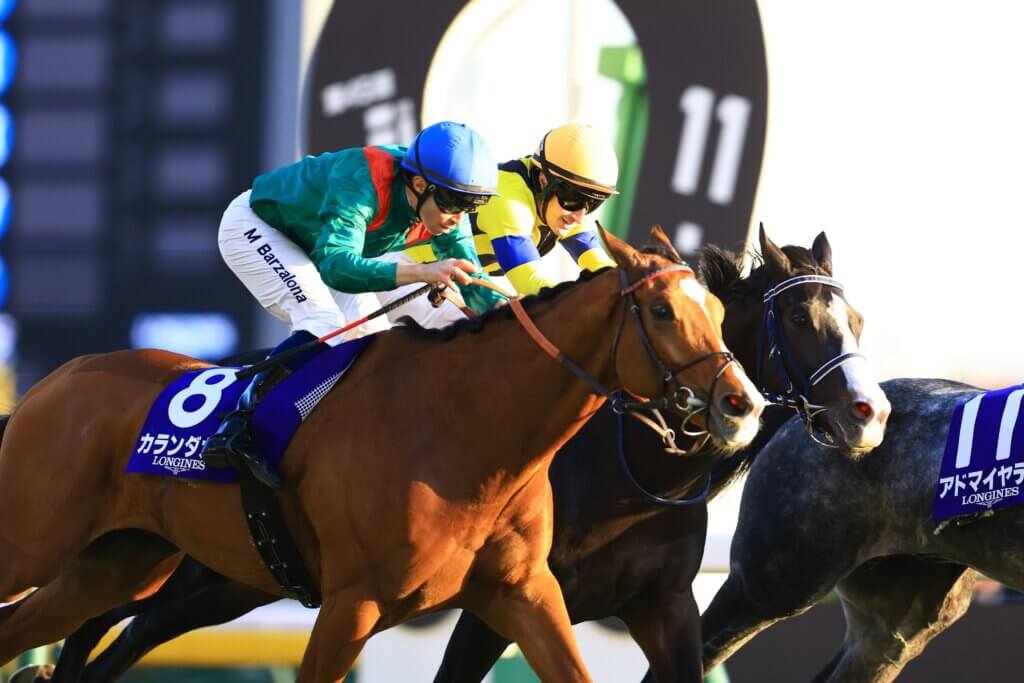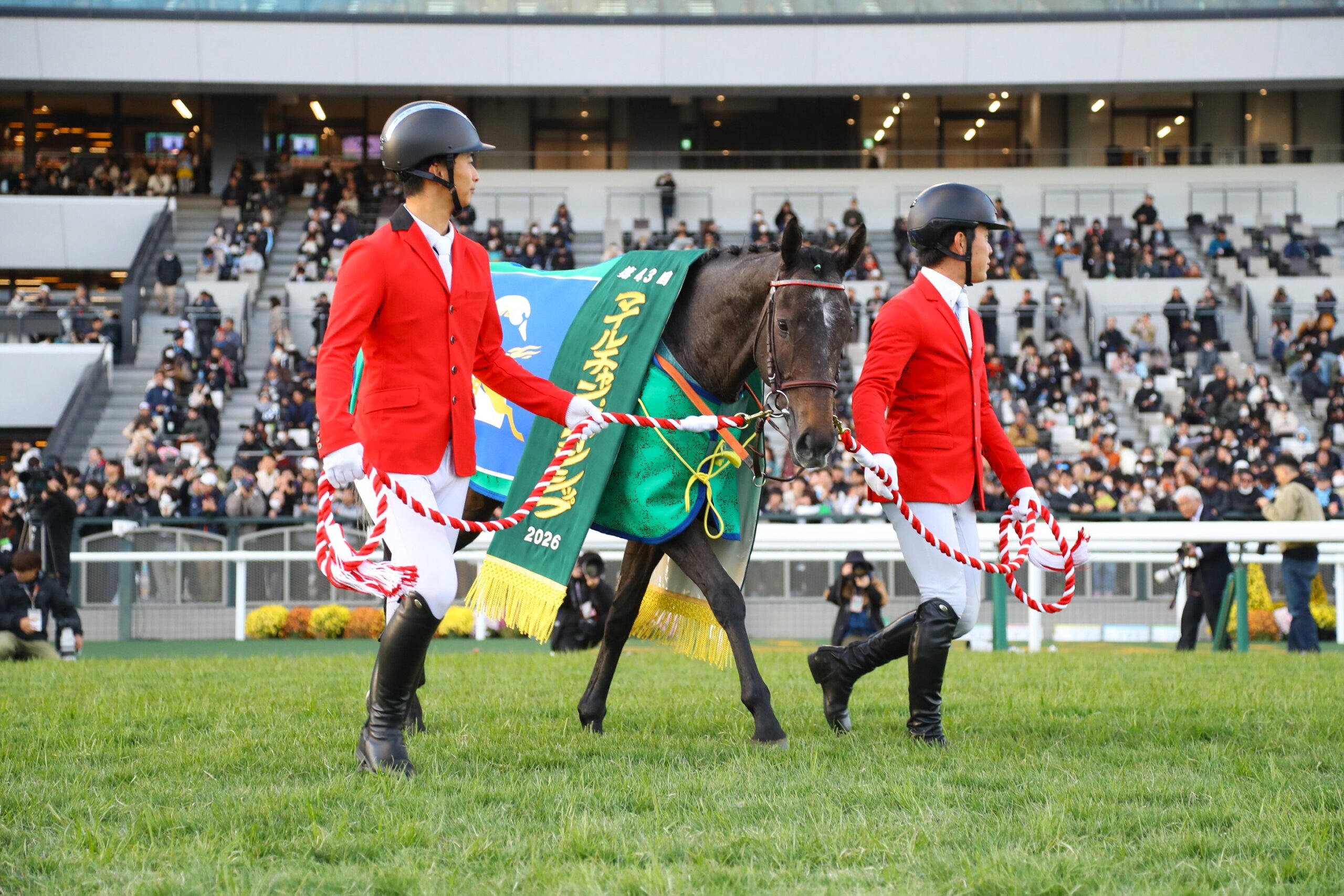
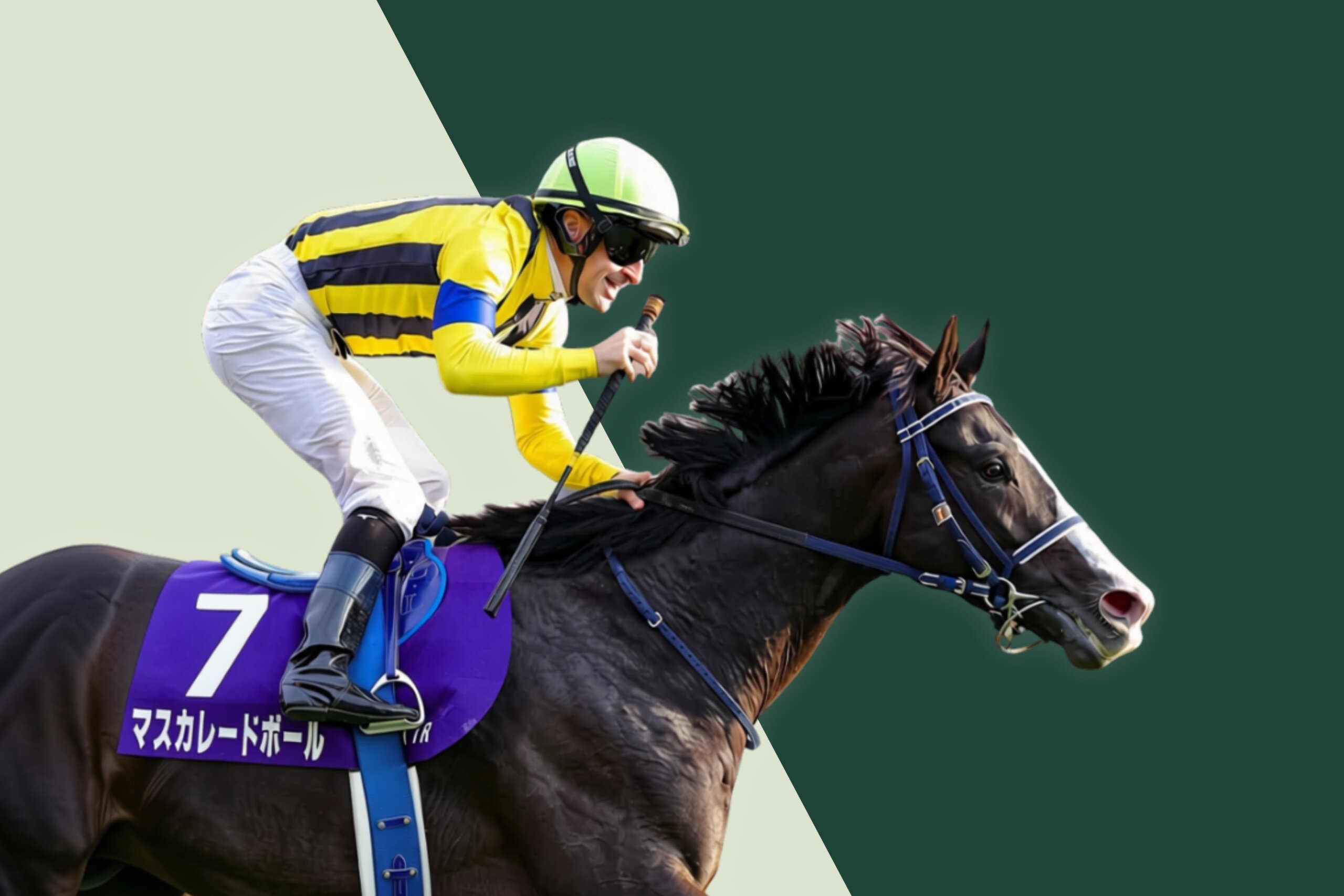
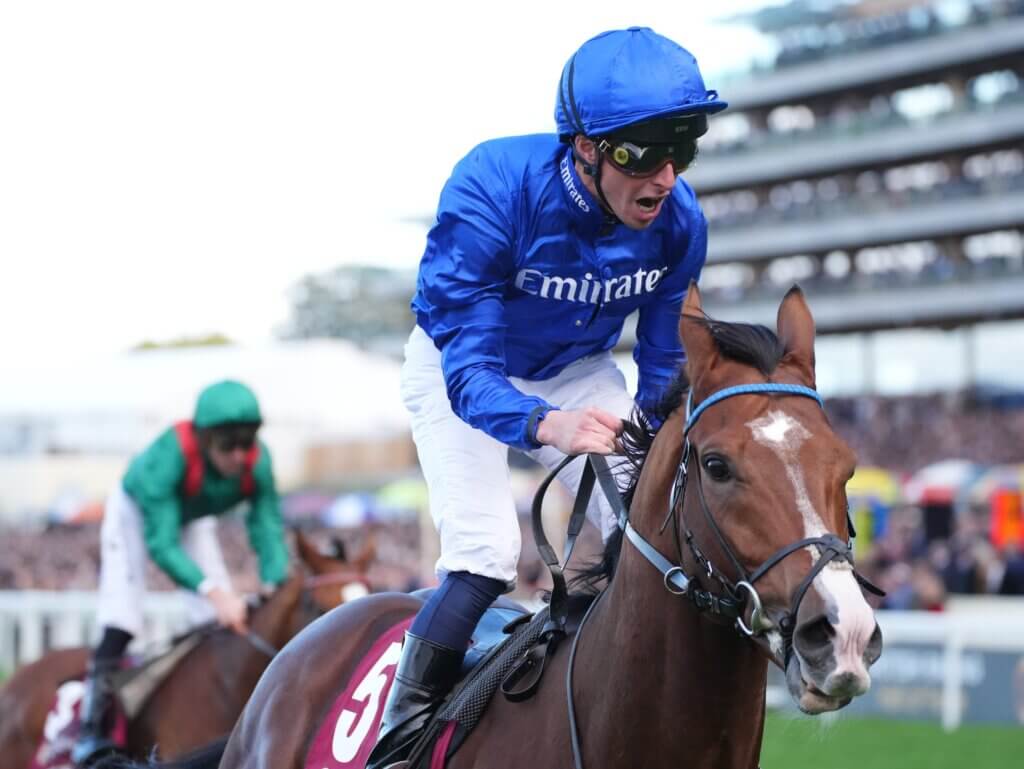
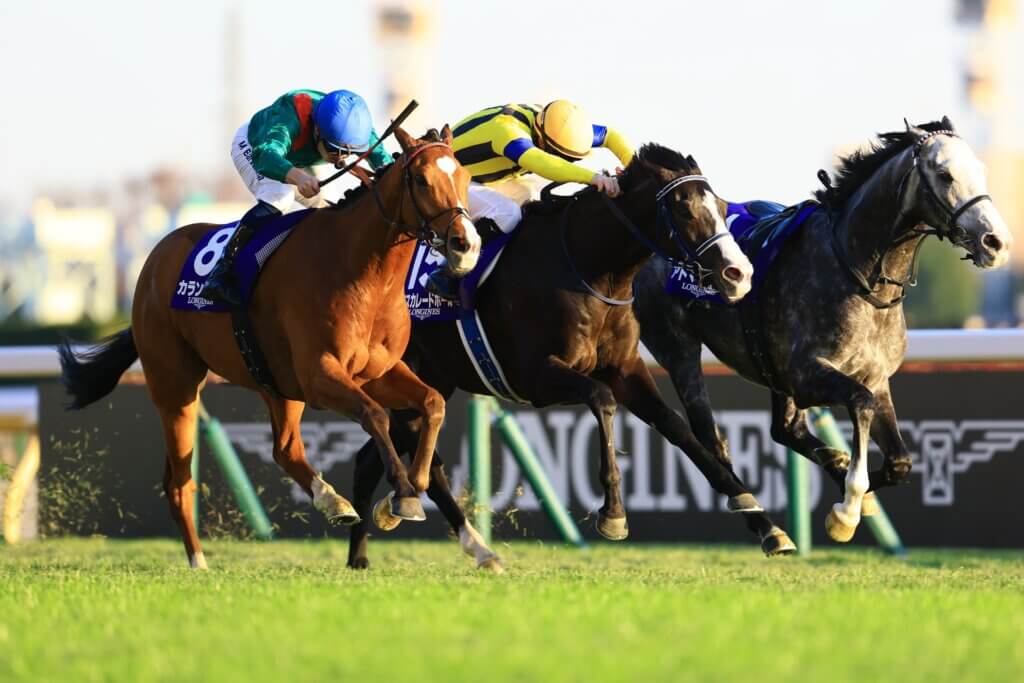
When Masquerade Ball won the G1 Tenno Sho Autumn last year, then ran second to Calandagan in the G1 Japan Cup, beaten only a head, he had the world at his feet: a three-year-old going into 2026 on an upward curve after his earlier placed efforts in the spring classics; a champion in the making, perhaps.
That was the vibe and the campaign was planned accordingly: Dubai, then England, then back to Japan for the autumn. But things haven’t gone as expected in Masquerade Ball’s three runs this year, all defeats.
War in the Gulf meant he was rerouted to Hong Kong first-up in April, a match with the great Romantic Warrior in the G1 QEII Cup – he was a late-closing second over the 2000m, through swift closing 200m splits of 10.72s and 10.95s. Then to Ascot in July and a non-event of a defeat in the G1 King George VI And Queen Elizabeth Stakes, Europe’s high-summer 2400m championship contest. His latest run in the Tenno Sho Autumn was luckless.
But his jockey, Christophe Lemaire, is nonetheless pleased with where the Takahisa Tezuka-trained colt is now at, heading into his second Japan Cup this Sunday when he will again face Calandagan, as well as the brilliant British raider Ombudsman and old domestic foes Danon Decile and Croix Du Nord.
“He ran very well in Hong Kong in the spring for a comeback after his beautiful run in the Japan Cup,” Lemaire told Idol Horse. “Unfortunately, in Ascot he was not at his best and he ran poorly. He pulled for 1000 metres, didn’t breathe, I mean, we have to forget about this run.
“So, my first concern when he ran the Tenno Sho was to see if the horse had recovered mentally from that trip to England: if he was as competitive as he was in the Japan Cup or in the spring. And he definitely was.”
This, despite Masquerade Ball placing only 11th in the Tenno Sho, about seven lengths beyond the Shogo Yasuda-trained Danon Decile. But that bare result doesn’t tell the story.
“Unfortunately, on that 2000 metres course at Tokyo, he missed the kick a little bit and we couldn’t get a position. As usual, his engine was a little bit late down the stretch. So that’s why I couldn’t take the gap when I had it. And from this point, we were very unlucky, because a lot of horses in front of us were moving around, weaving, and I couldn’t give him enough room to express his talent.”
Every horse that could have moved into the colt’s path seemed to do just that. He was an eye-catcher to any race watcher.
“It was disappointing in terms of ranking, but the performance, and his attitude was not bad at all,” Lemaire said. “During the race, he was very comfortable, galloping freely, breathing well, I had no problem at all. And I was happy that the horse showed me that he was back in business, in a good shape, and hopefully improving on that run.”
What went wrong in England is hard to know and Lemaire can only share his observations from the day.
“I can’t say because I didn’t travel with the horse, I couldn’t see him in training in England,” he said. “But the only thing that I can tell is that watching him in the paddock, the horse was already out of the race. He was not looking good, his coat was very … the contrary of shining, a little bit wet, and dry, and he didn’t look good. Cantering to the start, he was already sweating and excited, and he was not comfortable at all.
“So, I don’t know the reason why he did not show his ability that day, but anyway, let’s forget this race. It was not the real Masquerade Ball.”
That’s the way it goes sometimes when horses travel so far to new environments. But this time he’s back on familiar ground, and back to 2400m after that stop-start home run in the 2000m Tenno Sho.
Lemaire, like the rest of Japan’s racing fans, is looking forward to facing the challenge posed by a strong half-dozen top-class overseas raiders. He says there’s a genuine excitement in the build-up.
“Yes, definitely: as always, when foreigners come to run the Japan Cup,” he said. “It was the case last year with the world’s best horse, Calandagan, and he won the race. I can tell you, even after the race, the Japanese were very happy that Calandagan won.
“This time again, everybody is excited by the coming of the Godolphin horse, the Aidan O’Brien filly, the Aga Khan’s Calandagan, and Goliath, and the others, it’s a real buzz here in Japan.
“It’s fantastic to have such a quality group of horses ready for this kind of race. It’s gonna be a fantastic horse racing event.”
This Week In Horse Racing History
Gentildonna made history on November 24, 2013 when she became the first horse in history to win the G1 Japan Cup twice. The Sei Ishizaka-trained mare had won the race the previous year and would go on to finish fourth in the race in 2014, after which she capped her career with a tremendous win in the G1 Arima Kinen.
The unbeaten juvenile Landaluce died at Santa Anita Park of a viral infection on November 28, 1982. The D Wayne Lukas-trained filly had won all five of her career stars in brilliant fashion, by a combined 46.5 lengths. She posthumously won the Eclipse Award as that year’s champion juvenile filly.
The only other horse to win the Japan Cup twice is Almond Eye, though, unlike Gentildonna, she did not win consecutive editions. Her second success came on November 29, 2020, two years after her track record-setting first. The Sakae Kunieda-trained mare defeated the Triple Crown winner Contrail to round off her career as one of Japan’s all-time great champions.
Global Blackbook
Cristian Demuro rode a couple of promising ‘Newcomer’ winners during the JRA’s extended weekend programme, both with potential for the higher grades and both well-bred. The first of those was Arde Oriens on Sunday, while Windsor Grace debuted impressively over 1600m on Monday. We’re going to focus on Silk Racing’s youngster Windsor Grace as this week’s Blackbooker.
The Manabu Ikezoe-trained filly raced towards the rear of the 14-runner field but rounded them up in the straight with a sharp turn of foot from 350m out that saw her pass rivals with ease. She was coasting when she got to the lead and pricked her ears, not quite sure what to do, and undoubtedly had more in hand than the length and three-quarter margin.
Windsor Grace is by Epiphaneia who has already produced the top-class gallopers Danon Decile, Efforia, Daring Tact. Meanwhile, her dam, Euro Charline, won the G1 Beverly D Stakes at Arlington Park in the U.S. and was second in the G1 Falmouth Stakes and G1 Lockinge Stakes in Britain, and in the G1 Dubai Turf at Meydan behind Real Steel.
That blue blood mixed with her impressive turn-of-foot makes Windsor Grace an exciting prospect.
【後方から強襲】 #ウィンザーグレース が後方2番手から鋭く伸びてデビューV🎉 母はアメリカG1勝ち馬という血統です🐴 [東京5R 2歳新馬 芝1,600m] https://t.co/aDjmEmwNrk
— JRA公式 (@JRA_Special) November 23, 2026
What’s Coming Up
Winterbottom Stakes Day
Ascot, Australia, November 28
Overpass was denied a hat-trick of wins in the G1 Winterbottom Stakes last year when Libertad beat him into second in a thriller. But the old champion is back and he will have Blake Shinn in the saddle for the first time in the weight-for-age 1200m contest worth A$1.5 million. Mark Zahra replaces the suspended William Pike on Rey Magnerio, third last year and a Listed winner last start. Oscar’s Fortune won the G3 Colonel Reeves Stakes last time, a key lead-up to the Winterbottom.
Summer Cup Day
Turffontein, South Africa, November 28
Mocha Blend won last year’s G1 Summer Cup from barrier 13 at odds of 100-1, landing the 2000m contest by half a length from Olivia’s Way. The mare will attempt back-to-back wins in the race. Also in the line-up is King Pelles, second over a mile at Greyville recently, one place ahead of Gladatorian who won the G2 Spring Challenge over 1450m the time before and will carry top-weight of 60kg. But the possible market leader is Grand Empire with a weight of 54kg, whose trainer Sean Tarry is a multiple winner of the race. ∎