If I was giving a new jockey advice on how to ride in Hong Kong, I’d keep it simple. Three things.
Save ground. Don’t compound a missed start by pushing. And don’t overuse a low barrier.
They sound basic. They are basic. But Hong Kong is a place where the basics are everything, because there is no margin for error. The handicapping system is so fair and the fields so tightly matched that a length can separate first from fifth. You’ve got 12 or 14 runners in every race, all of them competitive, and the difference between winning and running fourth often comes down to something small the jockey did – or didn’t do – in the first 400 metres. Every bit of energy matters. Every metre of ground matters. And every mistake gets punished. You cannot cover extra ground. You cannot waste fuel early. You cannot panic when things go wrong. Because when those horses hit the line together – and they do, almost every race – the one that had the smoothest run, saved the most ground and kept the most in reserve is the one that often gets its nose in front.
That’s what makes Hong Kong different to anywhere else. In Australia, you can have two or three plans in your head and adjust on the fly because everything happens slower. The fields are smaller. The tempo is more forgiving. You can race a touch wide and still win. You can push out of the gates and recover. In Hong Kong, you can’t. The early pace is genuinely fast – it’s not even close to Australia in 1200-metre and 1400-metre races – and the races are decided by margins so tight that any wasted energy shows up at the finish. Happy Valley makes it even harder. The track is tight and turning, it goes uphill and downhill, and the pace surges and backs off at different stages. You’ve got to be alert to all of it.
When I was 14 or 15 years old, before I’d even had my first ride, my boss Dave O’Sullivan taught me a lesson I never forgot. He drew an oval on the ground and ran a piece of string around it. Then he ran another piece of string around that, a width wider. Then another one wider again. He cut the three pieces where they met and held them up in the air. The difference in length was incredible. It burnt into my brain – the shortest way around is on the fence. That was one of the first lessons I ever learnt about race riding. And in Hong Kong, where those margins at the finish are so small, it matters more than anywhere else.
These are the three things I’d tell any jockey walking into Hong Kong for the first time. They’re the mistakes I see made every single week by good jockeys who just haven’t adjusted yet. And they’re the difference between riding winners and riding horses that should have won.
Save Ground
In Hong Kong, you only have to look at the results to understand how important the fence is. I went through Sunday’s Sha Tin card – 11 races, one up the straight which doesn’t count, so 10 races around a bend. Eight winners were on the fence. Two were one off. That’s it. Nothing won wide. And that’s not unusual. It happens week after week.
The problem I see with a lot of jockeys, especially when they first arrive from Australia, is the instinct to get clear running. In Australia, you can go a bit wider, get into the open, let the horse stride. It’s slower and you can get away with it. In Hong Kong, you can’t. The fields are bigger, they’re all so closely handicapped, and if you’ve covered even two or three extra metres of ground you might as well not have been there. The margins at the finish are that tight.
It’s not just about distance, either. When a horse is racing wide in a fast run race, it’s working harder the whole way. The horse on the fence is saving, tucked in, travelling, doing no work. When it comes time to quicken in the last 200 metres, that horse has got something left. The one that’s been wide? It might still run a good race, but it can’t quicken the same way. And in Hong Kong, quickening is what wins races.
Karis Teetan rode a beautiful race on Sunday aboard Nautical Force that showed exactly this. He had a horse that needed to be ridden cold – a nervous type – and rather than going forward or racing wide, he slotted across to the inside, saved ground the whole way, and produced the horse at the right time to win. His trainer John Size said afterwards that if Karis had ridden it any other way, it wouldn’t have won. He was right. That’s the ride that wins in Hong Kong. Save ground.
You’re not always going to get a run on the fence. Sometimes you get held up and it doesn’t work out. But more often than not, the fence is where you want to be. Clear running feels safe, but the fence wins races more often.
Stunning win, Nautical Force! 😳
— HKJC Racing (@HKJC_Racing) April 19, 2026
John Size celebrates a fourth winner at Sha Tin as the Hong Kong debutant surges from well back in the field to deliver Karis Teetan with a treble…#LoveRacing | #HKracing pic.twitter.com/NiIwLKk3V9
Don’t Compound A Missed Start
Jockeys don’t miss starts. Let me say that first because it drives me mad when a trainer comes in after a race and says, “Why did you miss the start?” You’re sitting in the gates waiting to jump. You’re not making a cup of tea. There’s only one thing you can be doing. It’s the horse that misses the start – it might change its legs, sits down in the gates, or if it’s wearing blinkers for the first time it might not be as alert when the gates open and it can be slow to jump. That’s not on the jockey. But a jockey will get blamed for it every time.
What happens next is up to the jockey. And in Hong Kong, what happens next is critical.
The natural instinct when a horse misses the start – especially for a young jockey feeling the pressure – is to push and make up the lost ground quickly. The trainer said be prominent. The speed map said you’d be in the first three. Everyone watching expects you to be there. So you start digging to make up the ground.
That’s the worst thing you can do. The early pace in Hong Kong is genuinely fast. They go a lot faster than Australia, especially in the shorter races. If you start pushing to make up ground, you’re asking the horse to do something it can’t sustain. And then one of two things happens. Either it uses all its energy trying to be forward and it’s got nothing left in the home straight. Or – and this is even worse – it catches the field when the pace slows after the frantic early stages, but now it’s got its mind set on going fast. Sometimes you can’t settle it. It starts over-racing and pulling, and by the time you get to the business end, it can’t win.
The right thing to do is nothing. Sit on your horse. Don’t panic. When the pace slows – and it will – the horse naturally closes the gap without doing any work. And now you’ve still got all that energy for the last 200 metres.
Joao Moreira showed this perfectly on Forza Toro at Sha Tin on April 12. The horse stood flat-footed as the gates opened and missed the start by about seven lengths. Moreira didn’t push. He didn’t panic. He sat on the horse, let it find the field in its own time, saved ground the whole way, and produced it late to run second, beaten a head. A huge run in defeat. That’s what experience looks like – the confidence to throw the plan out the window and ride what’s in front of you.
A lot of young jockeys can’t do that yet. You’ve got to be able to block out the trainer, the owners, the stewards, everyone, and say: the plan is gone, this is what the horse needs now. If you’re coming to Hong Kong, you’ve got to learn that fast.
Don’t Overuse A Low Barrier
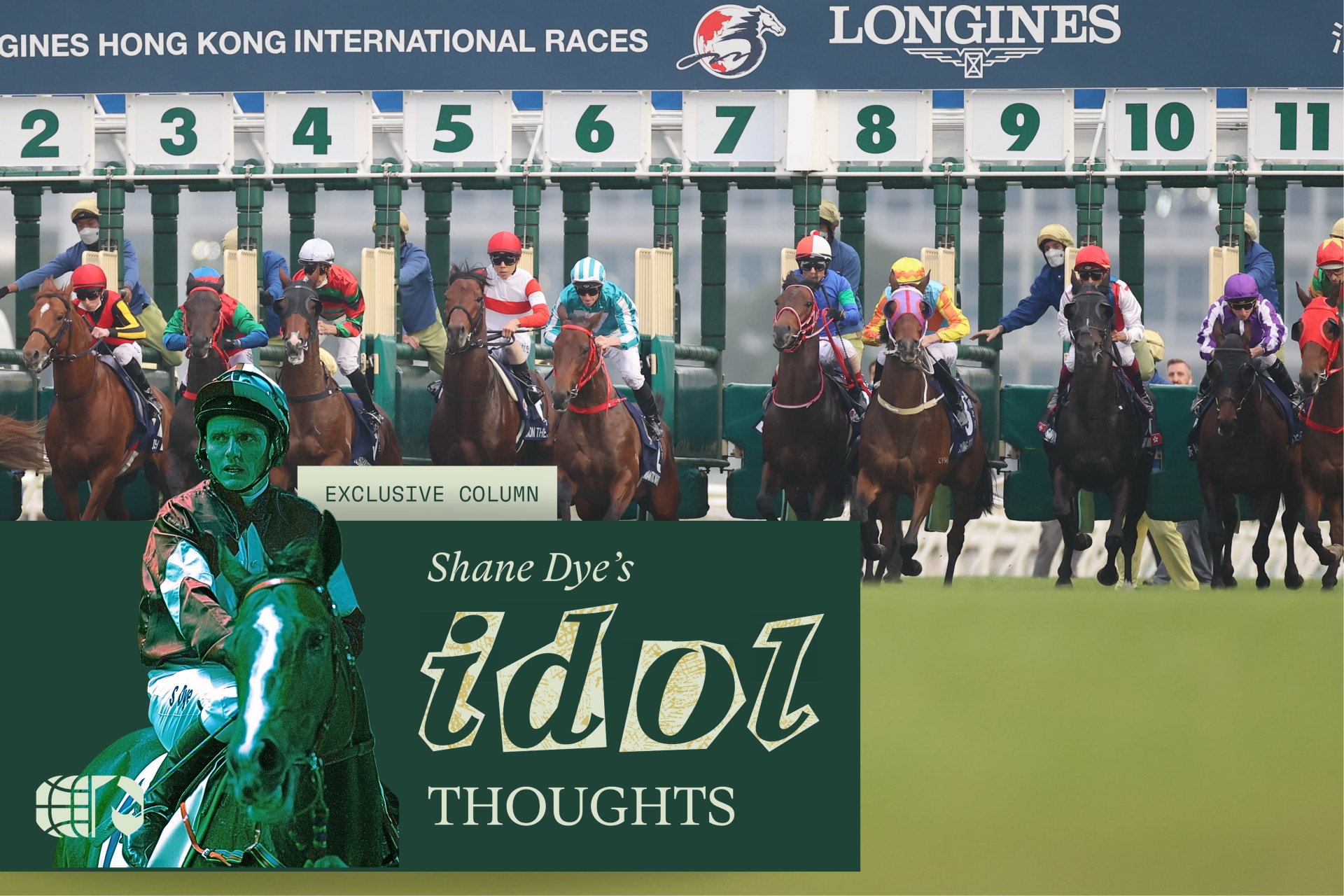
This one happens every week. A horse draws gate one and the jockey pushes it out of the gates to make sure he holds a spot third along the fence. And most of the time, he didn’t need to push at all. The early pace of the race would have put him there anyway.
Here’s what happens. You draw one, you know you want to be third fence with cover, so you push and push to make sure you’re there. And you end up third fence. But you’ve taken the horse out of its comfort zone to get there. You’ve used energy it didn’t need to use. And when you get to the 200-metre mark, where the horse should be able to quicken and dash clear, it can’t. It’s flat. It’s spent that energy already. The position looks the same as if you’d sat quiet, but the horse underneath you is a different horse.
All you need to know is what’s going to lead and what’s coming across from wider gates. If you know that, you can work out where you’re going to end up without pushing. The horse in gate two who wants to lead? Let it lead. Slip in behind it. Don’t contest it. Let the race take its natural shape and you end up where you need to be with energy to burn.
This is also why computer teams back leaders who draw outside gates. A leader from a wide barrier doesn’t always have to push to get across. It just crosses naturally, dictates the speed, and wastes no energy getting there. It’s also on a better part of the track a lot of the time – unraced ground as it comes across, whereas the inside can be chopped up. But when you’re drawn one and leaders are coming across at you, instinct kicks in. You feel the pressure. You push. And that’s where the horse’s energy gets wasted.
It’s the equivalent of drawing wide. You might as well have been in a wide gate if you’re going to push that hard from gate one, because you’ve used the same energy. The whole benefit of drawing inside is gone. I see it at Happy Valley more than anywhere. The track is tight and the margins are tiny. If you’ve pushed a horse in the first 400 metres just to hold a spot it was going to get anyway, you’ve lost the advantage you were going to get from gate one.
The message is simple. If you draw inside. First of all, know your form and the speed map – who could be coming across – and don’t panic.
Most of all, what I would say to a new jockey heading out for his first start in Hong Kong: you are here for a reason – you are a good jockey – trust your horse and trust your ability. ∎