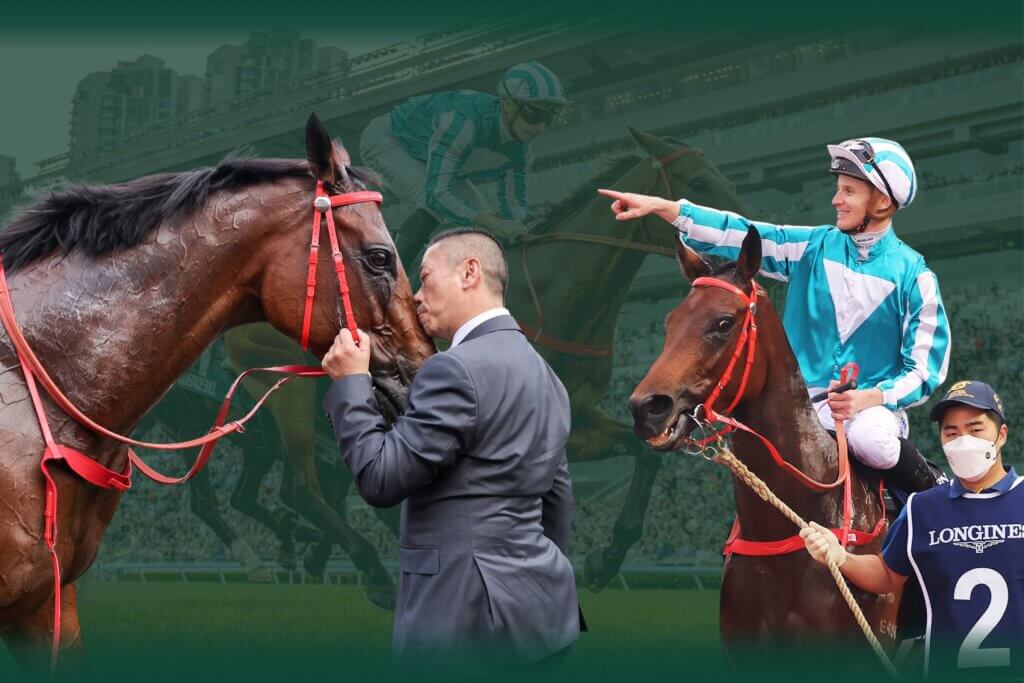
Many great horses can run a fast final section, but that is not what separates Ka Ying Rising from the rest of them.
What separates him is what he does before that final sectional – and his rare ability to quicken off a fast, sustained pace.
Sunday at Sha Tin he ran 1:06.11 over 1200 metres carrying 135 pounds and won by seven and three-quarter lengths. Everyone will talk about the final time. I want to talk about one 200m section inside it: from the 400 to the 200.
He ran that 200 metres in 10.44s. It did not come from a horse building, sitting back in the field, saving energy – it came from a horse racing on the pace, running fast sectionals. He ran 200m splits of 10.51s and 10.64s before the 400m, but to then go faster again after that is extraordinary. He races on pace and then quickens – off a fast pace. The way he runs his races, it makes it physically impossible for a horse to come from behind and beat him.
I rode a lot of very good horses that could quicken for 150 or 200 metres and leave a field behind. But none of them could do it while they were already on the pace. When you race near the lead you burn energy, and when you burn energy you cannot find another gear. That is what makes Ka Ying Rising different.
Winx was one of the best horses I have ever seen and she could come from midfield or worse and would run rivals down in the straight. But she did that from back in the field, conserving energy, saving everything for one late effort.
Ka Ying Rising is never ridden like that, he dominates races. He has a remarkably high cruising speed. He travels through those sectionals with ease – but for his rivals, they are stretched to their limits already. So when it comes time for them to sprint at the 400m mark, it is physically impossible to catch him.
It’s a two-edged sword. If you try to stay within striking distance, you use your energy trying to keep up with him, and you leave nothing for the finish. But if you try and conserve energy and sit back, there is too much ground to make up and it becomes physically impossible to catch him. Kingston Town is the only horse I can compare it to. He raced on the pace, and when he asked for more he found it – he left them behind.
Look at what that style means for the horses chasing Ka Ying Rising. Runner-up Copartner Prance ran exactly the same 200m split from the 800 to the 600, but that’s when things start to get harder. By the time they reached the 400m he was three lengths away. From there Ka Ying Rising produced his 10.44, and like every other rival has for more than two years, Copartner Prance compounded; nothing else in that race broke 22.40 for the last 400 metres. By the time the field reached the corner they were flat out. But Ka Ying Rising had only just got started.
Zac Purton has always said the faster they go, the better it is for him.
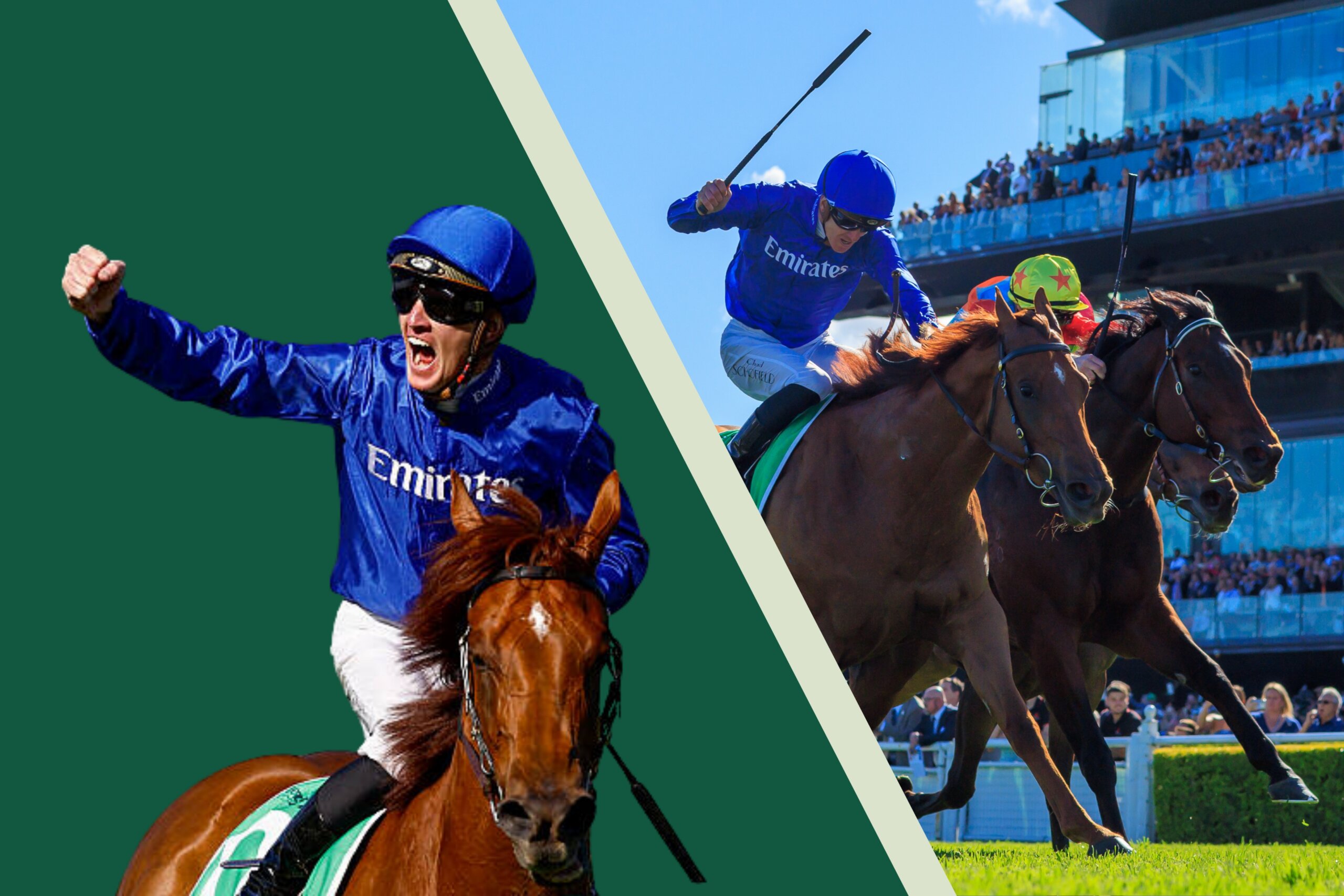
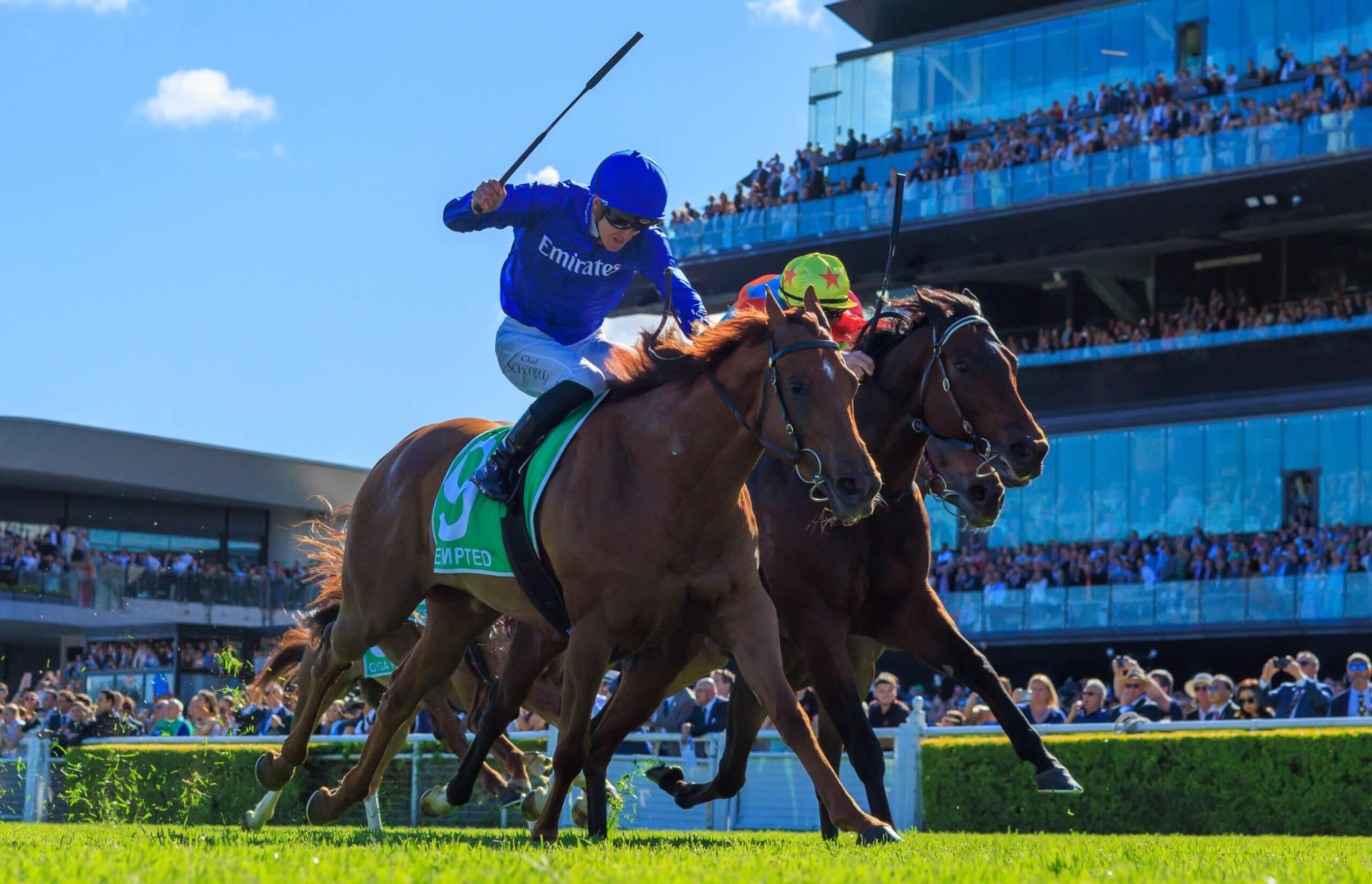
Take Tempted, who ran second to him in last year’s Everest and won the Concorde first-up on Saturday. She is a genuine Group 1 sprinter and she has improved again this preparation. She can reel off a fast final sectional of her own.
But she produces that sprint from off the speed, but if she was to really challenge Ka Ying Rising she would need to be closer to him in the run. The problem is – like most good horses – she can only find that sprint because she is ridden back in the field, saving energy. If she is ridden closer, using energy, will she be able to produce a sprint like she has shown. Most of the time the answer is no. Most horses in the history of the sport couldn’t. That is what makes Ka Ying Rising a freak.
The only way this horse gets beaten in The Everest is if something goes wrong with him internally. He cannot find trouble the way Zac Purton rides him – he is always out of it. If the speed up front is too hot, Purton takes a sit. If nobody wants the lead, he leads instead. It does not even matter if Ka Ying Rising ends up three-deep with cover, because the horse does not pull, he stays relaxed, and he will still quicken from the top of the Randwick rise regardless of where he is sitting. Three deep, on the fence, wherever – it is irrelevant. He is just better than the horses around him.
I heard Wayne Hawkes say Ka Ying Rising could not sit three-wide and win an Everest. He could sit four-wide and win an Everest.
It was obvious we did not see the best of Ka Ying Rising in The Everest last year. Hopefully Sunday is a sign that we will this year. I don’t want to just see a win. I want to see a statement.
Zac Lloyd Has Gone To Another Level, And One Ride Shows It
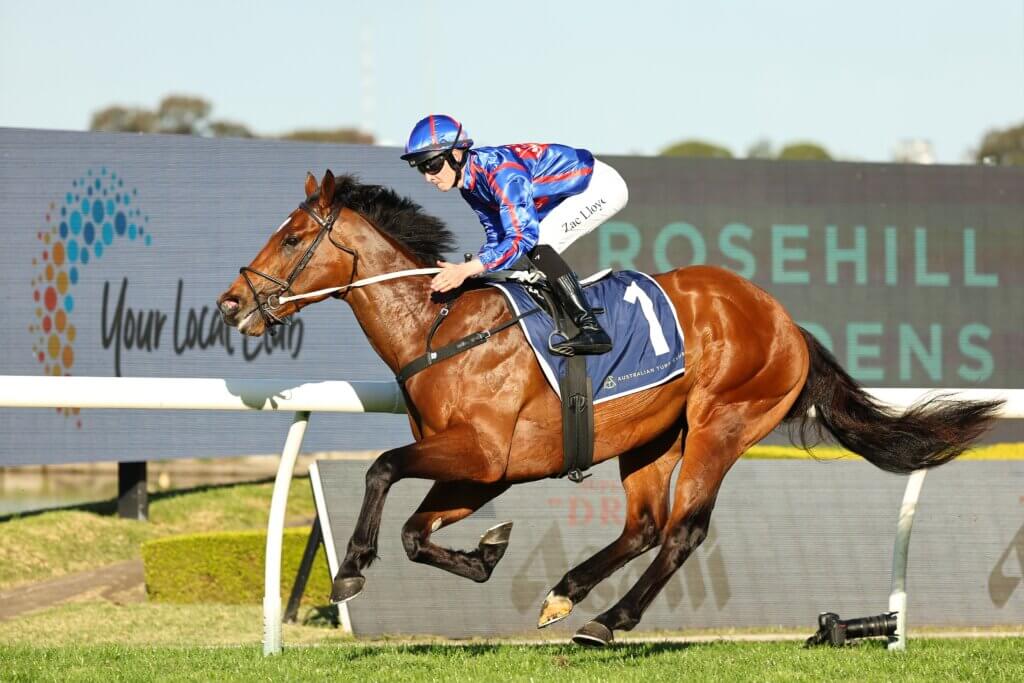
Zac Lloyd was always going to be a star. I rode with his father Jeff, I knew Zac as a kid, and for the last few years he is the one rider in Australia I have watched and thought: if this kid is handled properly, he goes all the way.
He was not a superstar apprentice, though. He was a very good apprentice who made mistakes. He was too aggressive and his timing was not right, and it cost him – in the stewards’ room and on horses that should have won.
Those mistakes have now been eliminated. Every jockey can make a mistake but the good ones make fewer, and in the last six months Zac has turned into a superstar.
Watch his ride on Guest House in the San Domenico Stakes. He was behind the leader on the fence with nowhere to go, and he waited. The gap came, he took it, and the horse went through. Two or three years ago he would not have waited – he would have been impatient, anxious to be in the clear, and pushed out at the top of straight, probably causing interference.
He has learned the benefit of patience and it is the hardest thing to teach a young rider. He is riding the fence more, he is saving ground, and his confidence is growing every week.
I would say Jeff has a lot to do with it. I do not know that for a fact, but I know what I would do if he was my son – I would point out every mistake and I would not be gentle about it. Jeff was a champion jockey. He would have seen exactly what Zac was doing wrong, and I am sure he corrected it. Going to England in the off-season helps too. You watch how other people ride, how races are run somewhere else, and you come home a better rider for it.
Zac and James McDonald are the two best riders in Australia. There is now a big gap to whoever is third.
The Whip Protest: Officials Took The Easy Way Out
Once again the officials In Australia do not understand their own whip rules. This time they have not just got it wrong by taking away the ability for connections to protest the result due to a whip rule breach – the stewards have simply given up.
Taking away the protest is an admission that it was too hard for them. That is a weakness. If you cannot work out whether the whip changed a result, you should not be a steward, because when I watch a race I can tell what the whip did to a horse, and so can anybody who has ridden in a race.
Think about what it could mean in a race like the Golden Slipper. A colt that wins is worth 40 or 50 million Australian dollars. A colt that runs second is worth ten or fifteen. Under this system you take the suspension and the fine, and the owners cover the fine, because the value is too big not to. There is no risk left in it.
Somebody tell me how this is fair. If the jockey of the horse across the line breaks the rules and wins by a nose and the jockey of the second of rides within the rules – how is it fair that he keeps the race? How is the punter that backed the second horse being protected?
From the day I gave up I never wanted to ride again, even the prize money has increased and there are far more Group 1 races. But I’d love to be in my prime again, 300 metres to go in the Golden Slipper, because I would be winning for sure. I would 100 per cent break the rule to win a big race – and if most top jockeys were being honest, they are the same.
An official rang me back in 2008 to tell me that they were bringing in the new whip rules and asked what I thought. I said it could not work. It has not worked. The rules have been changed many times since and jockeys in the world still breach them.
Unfortunately, racing officials just don’t get it. People should understand why riders go over. You are in the race, the adrenaline is up, you are trying to win. You are not counting. Officials think that is easy to do. It is not.
I have no problem with the rule existing. But a rule has to be abided by, and a rule with no consequence is not a rule. There is no difference between overusing the whip and using performance enhancing drugs on a horse – both give you an advantage you are not entitled to. Racing took the drugs away – they can’t take the whip away because it is needed for rider safety. What is required for rules are consequences – and the biggest consequence for a jockey is losing a race.
I think it is a dangerous precedent: as of October 1, when the new rule comes in, you can officially break the rules to win a race.
Australian stewards are world class at keeping riders safe, and the best in the world at interference. Give them a whip rule and they cannot work it out.
Have the rule and enforce it, or do not have the rule at all. ∎