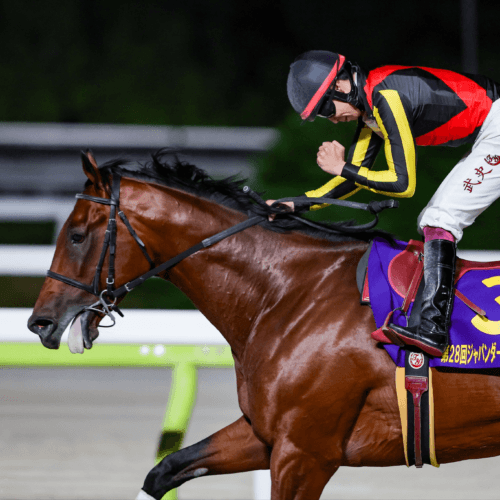
“Rain falls and falls, men and horses are soaked; impassable, unsurpassable, Tabaruzaka.”
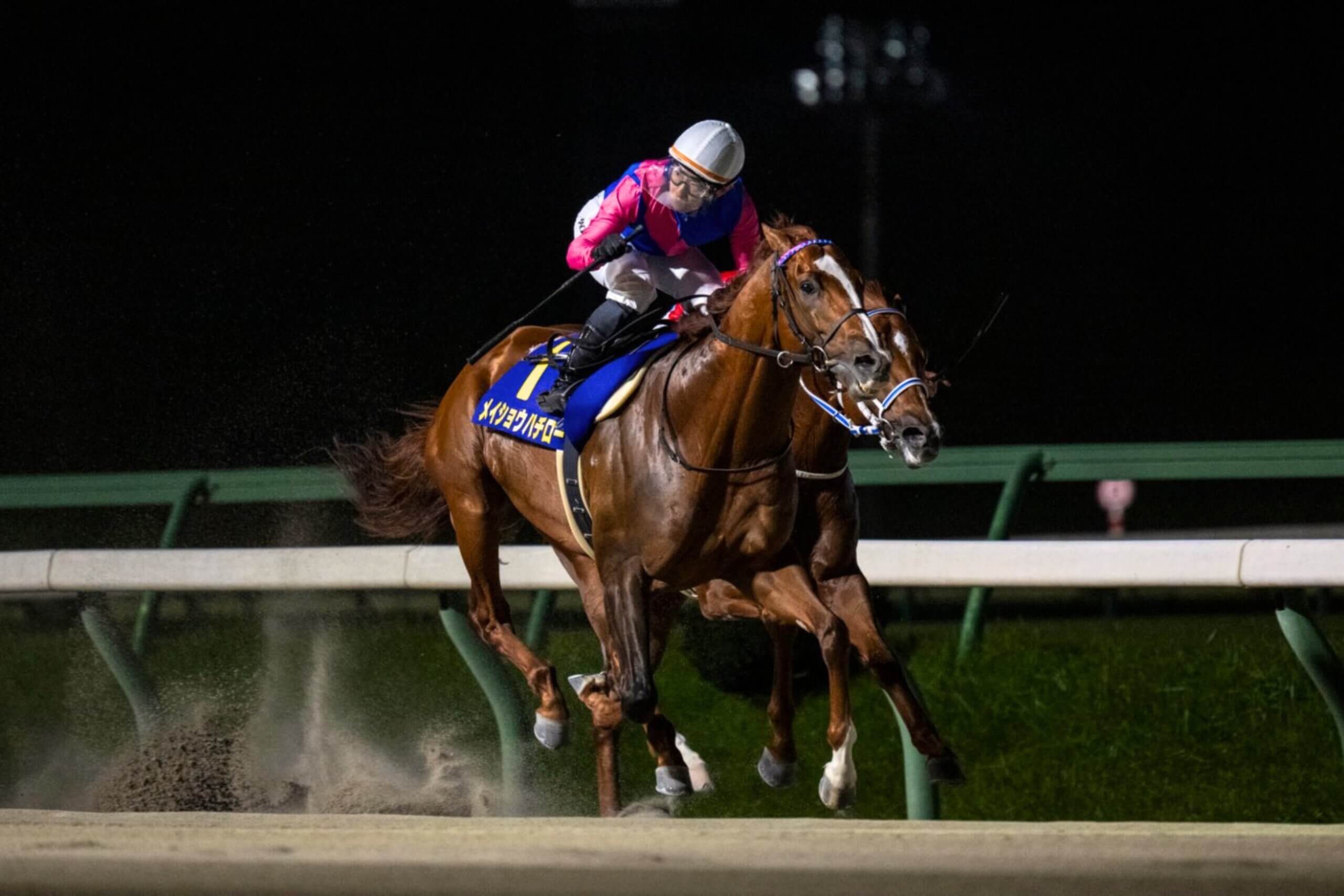
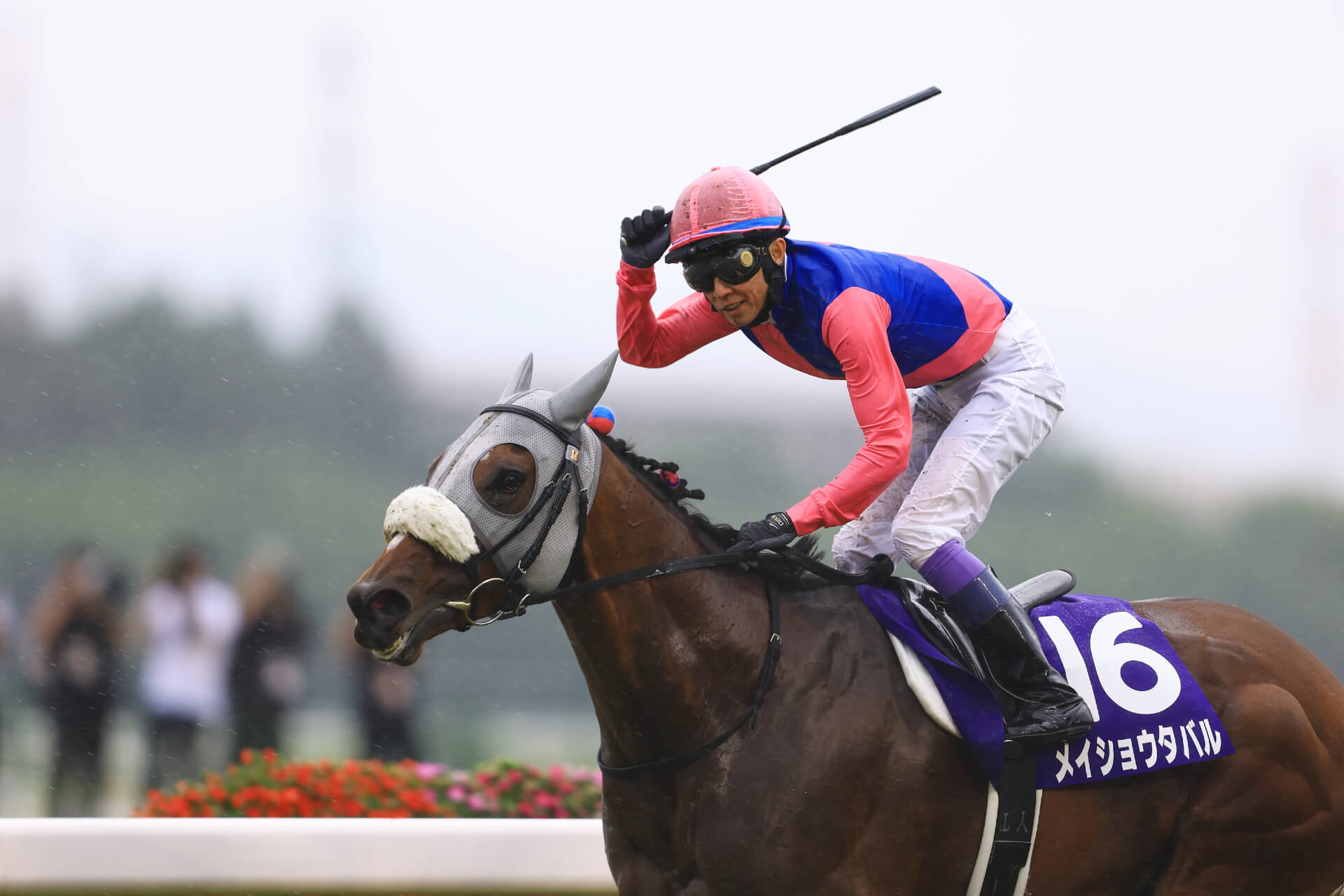
It is a line from an old folk song about one of the fiercest battlefields of the Satsuma Rebellion, a domestic war fought in Japan in the 1870s. Meisho Tabaru’s name comes from that place. On Sunday at Hanshin Racecourse, a violent downpour struck the crowd of more than 60,000 just as the runners came onto the turf for the Takarazuka Kinen. With people and horses soaked, Meisho Tabaru again ran through the spring Grand Prix in front.
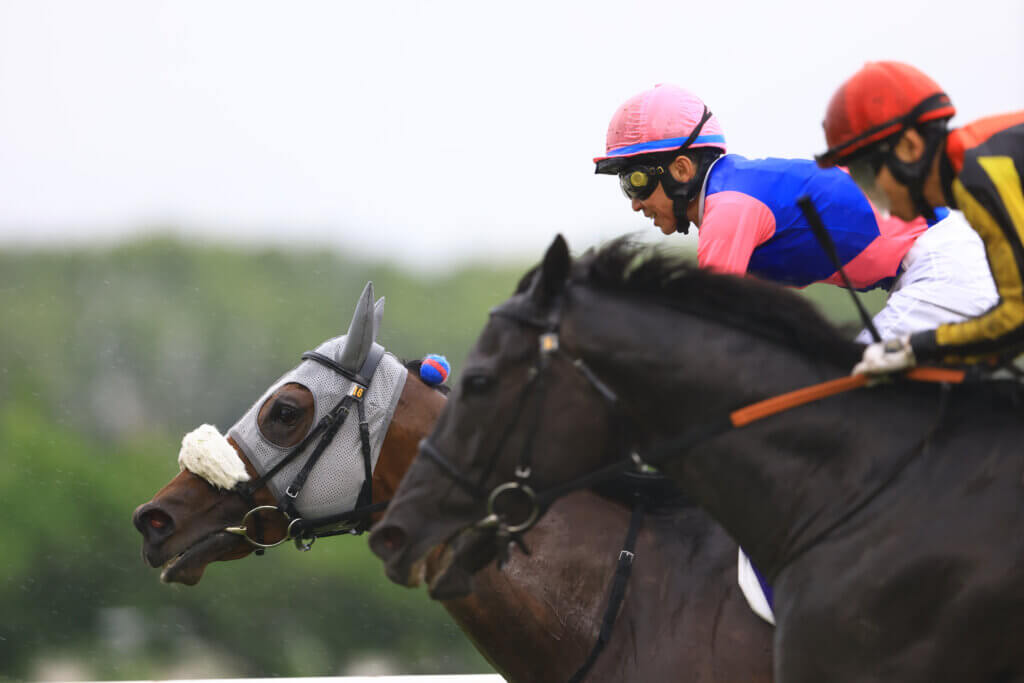
Escorted by Yutaka Take, Meisho Tabaru held off the favourite Croix du Nord by a neck and became only the third horse to win back-to-back editions of the spring Grand Prix, a race also won by his sire, Gold Ship. For Take, it was a record sixth Takarazuka Kinen victory. Following his Yasuda Kinen win, it also gave him his first back-to-back Japan Racing Association (JRA) Group 1 wins in 20 years, and extended the record for the oldest jockey to win a JRA Group 1 that he set only a week earlier.
“It looks like my peak has finally come. I was a late bloomer,” Take joked. He did not have a negative feeling about the rain that arrived just before the race – in fact he inferred a sense of fate.
“I thought maybe Chairman Matsumoto had sent it down from heaven.”
That feeling toward Yoshio Matsumoto, the late owner behind the ‘Meisho’ name who died last August, was also present in trainer Mamoru Ishibashi’s words. Ishibashi, visibly moved, echoed Take’s sentiment, “Maybe Chairman Matsumoto made it rain.”
The rain created a fitting stage for a horse named after Tabaruzaka to defend his title. But Meisho Tabaru did not win this year by repeating last year’s striking front-running performance. Last year, he led all the way and won by three lengths. This year, Cosmo Kuranda went to the front, and Meisho Tabaru settled behind him in second.
“Around this time last year, if he could not take the lead, there might have been some frailty,” Take said.
“In the past, if there was a horse in front of him, he would notice it and try to chase. Today, he settled and ran calmly.”
At the fourth corner, Take chose to go before the horses behind came to him, leaving him in front earlier than planned.
“He still had something left, and he is a horse who keeps trying. I thought we might be able to hold on somehow.”
The horse who came at him in the stretch was Croix du Nord. With 100 metres left, the gap narrowed. “I was riding with the feeling of, ‘please, not today.’”
Croix du Nord kept closing to the line, but Meisho Tabaru held him off by only a neck.
This year’s Takarazuka Kinen was not merely a title defence. Meisho Tabaru’s year since his first win in the race had not been smooth. After last year’s Takarazuka Kinen, he finished sixth in the Tenno Sho Autumn and 13th in the Arima Kinen. In his first start this season, he was second to Croix du Nord in the Osaka Hai.
For Croix du Nord, this was also a race for an unprecedented spring older-horse Triple Crown. Having already won the Osaka Hai and the Tenno Sho Spring, he would have completed a record that even his sire, Kitasan Black, never achieved with victory in the Takarazuka Kinen, but it was last year’s winner who stopped that challenge.
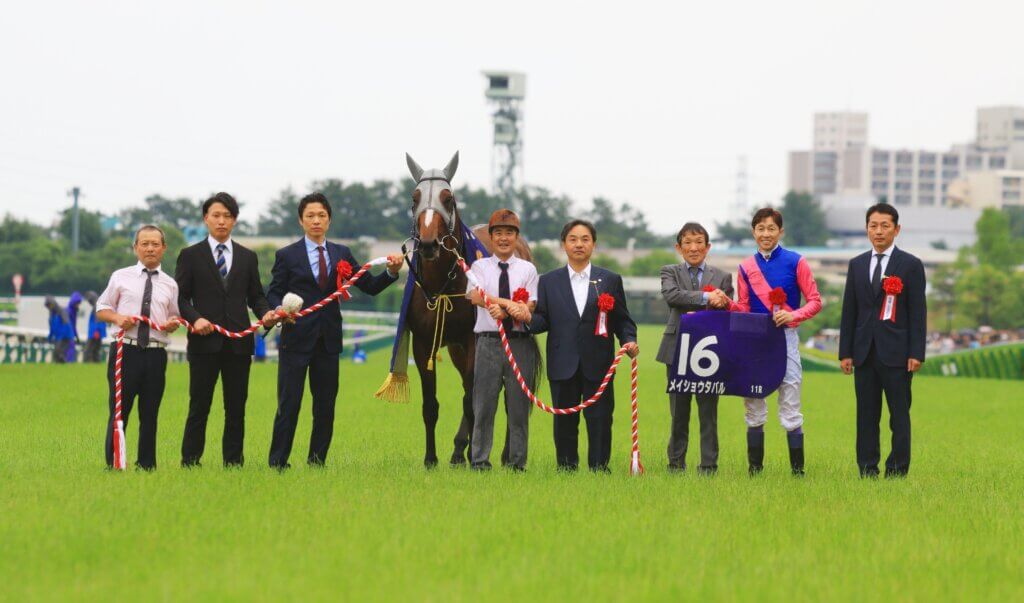
For Ishibashi, this year’s victory felt a little different from last year’s.
“Last year, it felt more like I was moved. This year, of course I am happy, but there is also a feeling of relief.”
“I was really confident about his condition. I am not really the type to say things like that at press conferences, but I had that much confidence, and it showed in the result.”
While Ishibashi knew he had Meisho Tabaru in good order, he was still mindful of raceday pressures.
“I told Yutaka that even when training goes well, there are quite a few times when things do not go well in the race. But in his last two starts, his canter to the start was very good. Watching him, I felt it was a good warm-up, and that he was calm.”
“He is getting stronger and stronger. Compared with last year, I can clearly feel more strength in him now, so I would be even happier if he keeps getting stronger.”
That strength opens options for the autumn.
Meisho Tabaru is entered in the Prix de l’Arc de Triomphe, to be run at Longchamp on October 4, but Ishibashi’s first concern is the horse’s welfare.
“We will look at the horse’s condition. He is entered in the Arc, so of course our thoughts go in that direction, but first I want to get his condition back.”
For Take, this repeat victory also gave him something to take toward France.
“I think we can go to France with our heads held high.” ∎