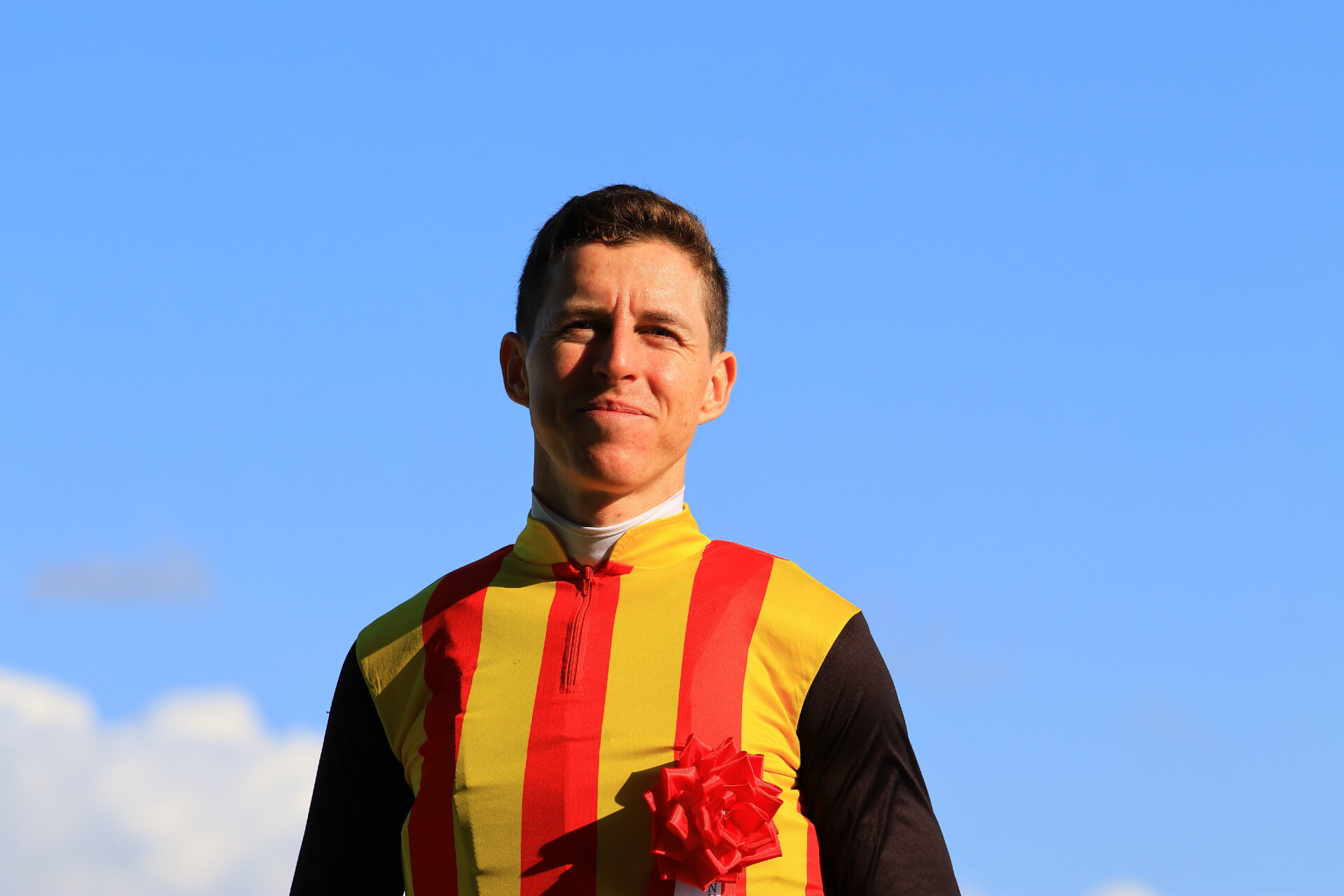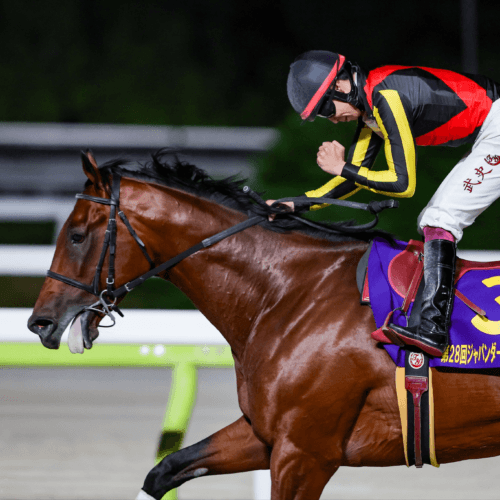
Hokkaido has been Daisuke Sasaki’s happy hunting ground for four seasons now, but it’s not enough. It’s where in the summer of 2023 he emerged as a young rider with a steely-willed conviction, rattling in 18 wins in a whirlwind one-month spell from June 10 to July 9.
That summer riding at Hakodate and Sapporo, away from the white-hot competition of Tokyo’s spring Group 1 season, saw the young apprentice flourish with 25 wins, all told, going towards a second-season tally of 68: a massive leap from the nine wins he scraped together in his debut season.
Sasaki, at 19, was suddenly a jockey to watch, a kid riding with confidence, balance and harnessed aggression. The rising star label was being tagged on. He did not disappoint: 2024 saw him deliver 77 wins, a trio of Graded stakes included; 2025 brought 81 with another three Graded wins as he placed ninth in the end of season Japan Racing Association (JRA) standings. All built around successful summers in Hokkaido.
He was picking up Group 1 rides, too. The first came at the end of his breakout year, an eighth place in the G1 Hopeful Stakes riding In The Moment. Impressive stuff for a young man who only a few years prior seemed disinterested in the sport his parents had made their life.
But here he is: another Hokkaido summer and more wins for the 22-year-old, but also a sense of awareness that time waits for no man and that yesterday’s rising star can too easily become tomorrow’s ‘nearly man’.
“My results haven’t been what I hoped for. I need to do better or I’m in trouble,” Sasaki told Idol Horse back in late June, a few days before the start of his current spell riding in the most northerly of Japan’s main islands, which will run into September before the Nakayama circuit resumes.
“From around the end of last year’s Hokkaido meetings, I just stopped winning. It made me worry about what comes next.
“I’d like to reach 300 career wins within the year. I’m at just over 250, so it’s a big ask,” he added, his head tilted slightly. “I thought I’d win them more easily than this.”
His running tally for the first six months of this year stood at 21 wins when the spring season ended and he prepared to move north to Hokkaido for the summer.
Self-critiquing realism was to the fore as he reflected on where he had come from, where he is at, and where he wants to get to: a place within reach, yet still escaping his grasp. He is conscious that he has never bettered third place in a Group 1.
That close-up defeat aboard Reichsadler in this year’s G1 Satsuki Sho gave him a rare opportunity to be in the mix as the victor passed the winning post.
“When I cross the line in a Group 1, I honestly don’t know what’s won,” he said, adding with a laugh, “I’m usually squinting down the track thinking, was it that one? Wait, did (Akihide) Tsumura-san win it?’ Then I’m asking around – ‘which one was it, which one?’ – and that’s how I find out.”
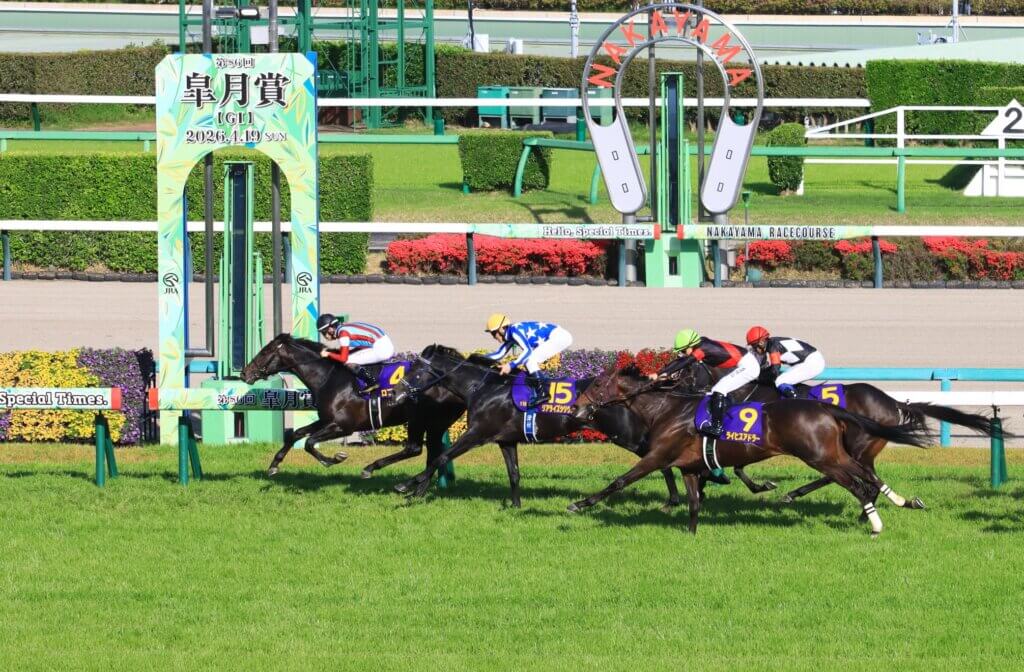
Some riders might be fairly pleased simply with riding in most Group 1 races in their fifth year of race riding, but it’s a measure of Sasaki’s ambitions that him finishing down the field, unable to see ahead to who won the race, just ticking along on the fringe of the elite, isn’t what he’s in this sport for.
His pathway to becoming a jockey was laid out by his parents. His father, Koji, and mother both worked in trainer Yoshitaka Ninomiya’s stable, where they met and married. His mother still rides and his father, a work rider, went to France with two famous horses – El Condor Pasa and Nakayama Festa – to the G1 Prix de l’Arc de Triomphe.
Koji took the whole family with Nakayama Festa in 2010, back when Japanese trainers and their horses did not casually cross oceans. That meant about three weeks in France for seven-year-old Daisuke.
“I didn’t know we were going for the Arc,” he laughs. “It was the holidays, so I just thought, ‘huh, I guess we’ve got money – we’re off to France.’ That was about the extent of it.”
He has no memory of watching races there: “The word ‘racing’ never once entered my head.” To him it was simply a family holiday, and a good one.
But his parents gave him the opportunity to engage with horses and learn to ride, should he want to. At first, he did not. At age 10 he was signed up to Joso Horse Park, run by Mariko Seki, who also works internationally in the media as an interpreter assisting Japanese trainers and jockeys when they travel their horses overseas.
“At first, he wasn’t really interested in riding at all,” Seki recalled. “He wasn’t the type to start a conversation. He’d come to the club and just sit in the clubhouse reading manga like Slam Dunk, Yushun no Mon. Ask him, ‘Want to ride?’ and it was, ‘Mmm, no.'”
What gradually drew him toward the horses was his father’s example. One day Koji went to Seki with a request.
“He asked me, ‘Would you have a stall free?'” she said.
The Ninomiya stable was nearing its dispersal and Koji had decided to take in Blitzen, a retiring graded-race winner from the yard. His idea was that his son would ride the horse.
“(His father) would finish his morning work at the training centre and come here, without fail. Mucking out, exercising – every day. Even at New Year. He must truly love it,” Seki said.
“But Blitzen was a retired racehorse, so Daisuke couldn’t just get straight on. He practiced on our horses. And his father was never pushy about it – he seemed to be waiting, always, for Daisuke to come and say himself, ‘I’ll ride him’. He never forced anything.”
Watching his father work beside the horses, the boy eventually climbed into the saddle of his own accord. On the club’s small track, father and son often galloped side by side. Ask Sasaki how he saw his father in those days, and the answer is plain.
“I never thought about it that deeply. I just figured he did it because he liked it. My dad isn’t really the sentimental horse-lover type. For him, it’s work, first and foremost,” he said.
“I liked horses, and I liked watching racing,” Sasaki admitted. “But actually riding – I wasn’t a very active kid. But the way other kids wanted to be footballers or baseball players, I wanted to be a jockey. But I’d say it without ever actually doing anything about it.”
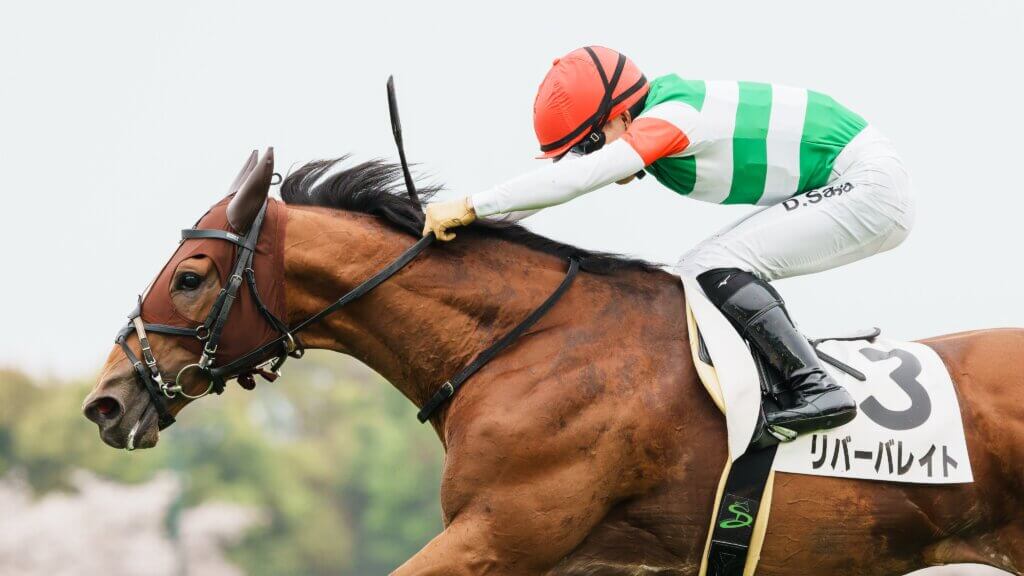
Those formative days at Seki’s riding school brought out Sasaki’s natural talent, as well as a competitive edge and a toughness that had been hidden.
“He had the suppleness of a child, that softness that moves with the horse. And no fear when one played up. Balance, flexibility, fearlessness – those count for a lot. You can still see it in that aggressive style he rides with now,” Seki said.
“He could be thrown hard, the horse could play up – he just put up with it.”
Sasaki saw falling off a horse as a sign that he was doing something wrong and he needed to get back on and do it right. Accepting failure or accepting he could not be the best was not an option.
“Falling didn’t scare me. It just hurt,” Sasaki said. “Falling off means you’re not good enough. Get good enough and you don’t fall off. So – get good. I probably wanted to be better than anyone.”
That mindset is manifest in how he thinks about horses, too. He described them, half deliberately, as machines.
“Told to go right, it goes right. Left, left. Forward, forward. As a machine, the horse is perfect. And if you can’t ride it that way, you’re failing as a rider.
“Put it the other way round – maybe I don’t think of them as animals enough. Not as living creatures, but as something I operate. But I believe that’s the better way to think.”
Those youthful days coming out of his shell and developing an enjoyment in riding and a desire to reach the top as a jockey took him to the JRA’s jockey school, a coveted position. His intake included another rising star of Japanese racing, Seina Imamura.
When Imamura made history in the G1 Yushun Himba earlier this season, as the first Japanese woman to win a Classic race, Sasaki was sure to celebrate with his former classmate, in fact, he was the first one to reach her.
“I was the only one from our class at the track that day, so I thought, it has to be me. A classmate winning a Group 1 is genuinely something to celebrate,” he said.
“About a furlong out, I thought, ‘she’s actually getting there.'”
The camaraderie and mutual respect among that class of young jockeys – the 38th intake – manifests not only as support, but also as pushing each other to be the best they can be.
“Even without meaning to, I end up watching every race they ride in,” Sasaki said. “Not just Group 1s. Tsuchida and Mizunuma in Kanto – I watch pretty much all of their races.”
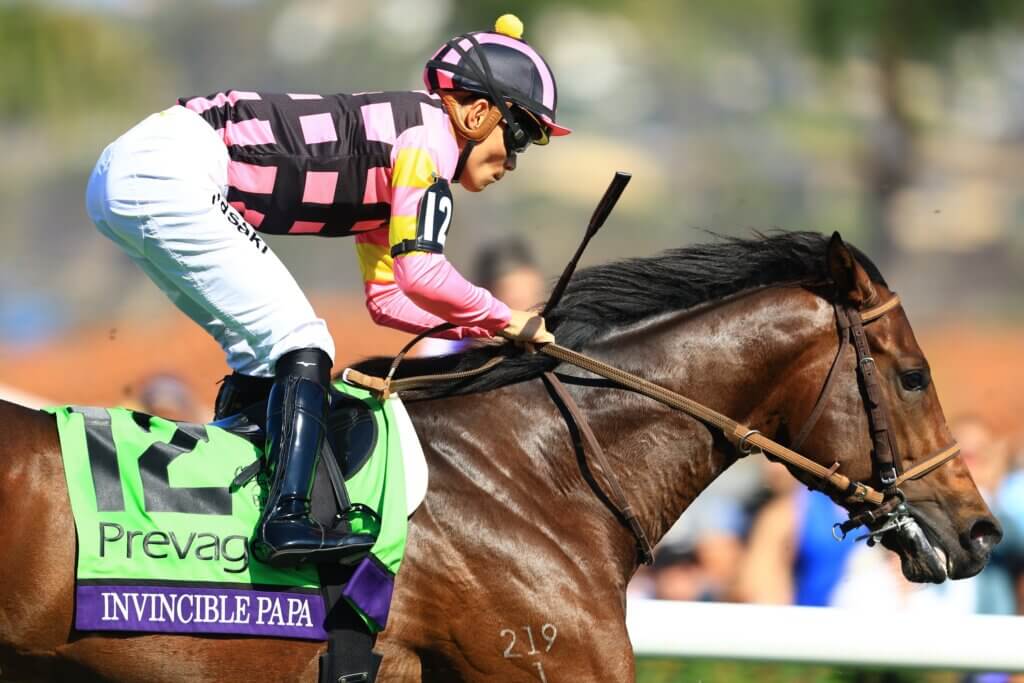
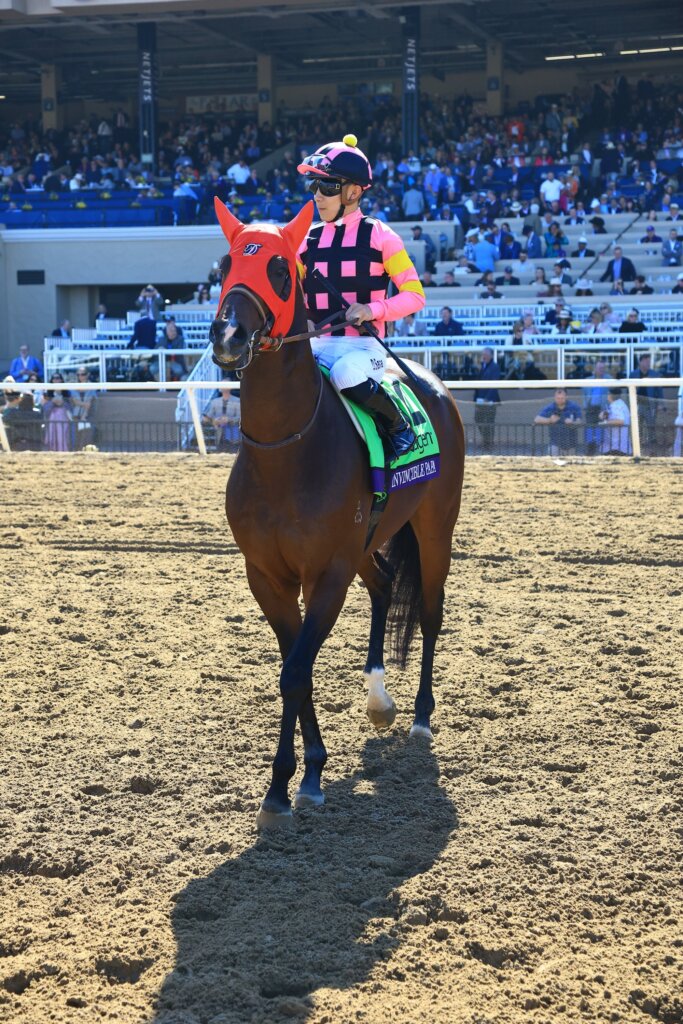
And they were doubtless watching him when he made the important step of riding overseas last year, at the Breeders’ Cup in California, no less. He partnered 25/1 longshot Invincible Papa to sixth in the G1 Breeders’ Cup Turf Sprint.
“I was just so happy. It’s not a stage someone like me gets to ride on,” he said. “Coming out onto the course – that was something. The Japanese Derby is incredible too, but this was different again. An atmosphere you don’t often get to taste.”
By this time he had come to understand the weight of importance in his father’s work in travelling overseas with horses and caring for them, being part of a team that had them ready for the jockey to climb aboard and race.
“Overseas racing is genuinely tough. Just getting a horse to the races safely is hard in itself,” Sasaki reflected.
“Back then, with my father, that was an era when horses weren’t flying abroad all the time as they do now. So, I realized – he was doing something remarkable.”
And doing the remarkable is what Sasaki wants to do, too. That means a Group 1 breakthrough; rising to the level of those who pass the Group 1 winning post ahead of him, out of view as he pushes, head-down, on a beaten rival.
“There are so many top jockeys here, and I’m being given a lot of Group 1 rides,” he said. “So inevitably, even in terms of the rides I’m getting, things have become a little tougher.”
It is the kind of problem that comes only from riding close to the top against great champions like Yutaka Take and Christophe Lemaire.
“They finish off the big races. Real decisiveness. They’re strikers, basically,” Sasaki said.
That level is where Sasaki wants to be, but being in a Group 1 race against the best does not make him a Group 1 rider, not yet.
“It’s far away. It really is,” he reflected quietly. “I really can’t picture it.”
But maybe not so far away, after all. Sasaki journeyed over to Niigata last weekend where he rode his Satsuki Sho third Reichsadler. The colt won an 1800m allowance, setting up an autumn that could take him through the G2 Mainichi Okan and on to the G1 Mile Championship, perhaps.
Sasaki is still only 22, he is still a star on the rise. This year he has ridden in two classics – the Satsuki Sho and the Tokyo Yushun – he is in a good place, as long as the wins keep on coming. They have, too: his tally so far from his latest summer at Hakodate and Sapporo is 15 wins, another platform to take him into the autumn Group 1 season with momentum.
“That’s exactly why I need to keep grinding away, from the small races up,” he added.
And it’s all built on another summer in Hokkaido. ∎