Thursday night belonged to Daryz. The brilliant colt’s win in the G1 Prix Aga Khan IV emphasised that he is European racing’s golden boy: a blue-blooded G1 Prix de l’Arc de Triomphe winner strutting it as a four-year-old, unbeaten in two this term and with a primetime Royal Ascot assignment next on the agenda. This is how bona fide champions are made.
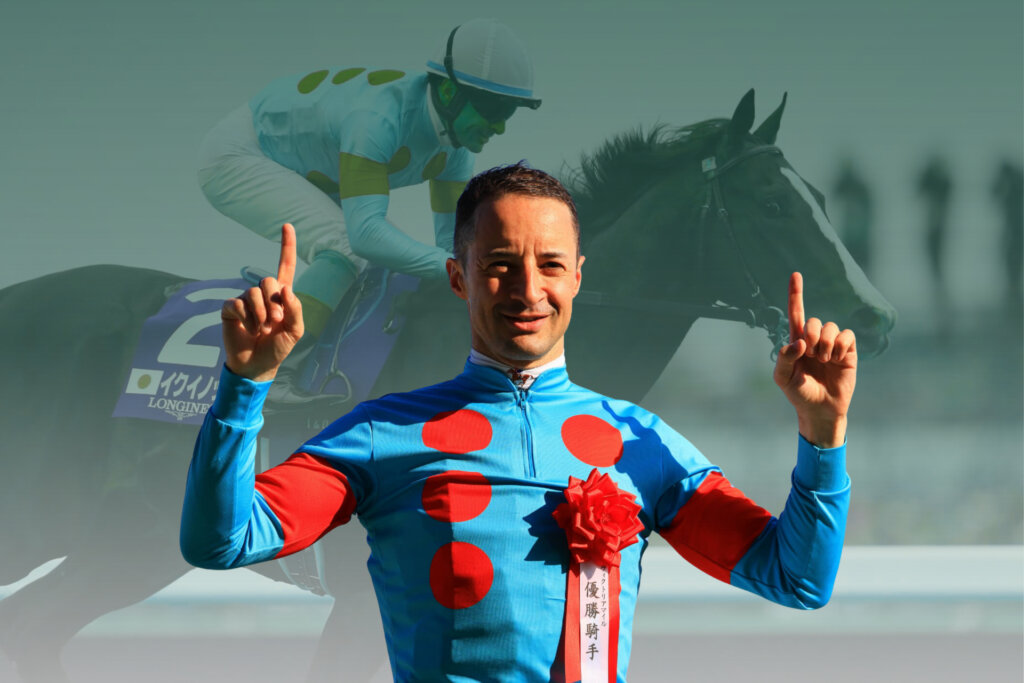
“He is the kind of horse every jockey dreams of riding. He is a force of nature with an enormous engine,” is how his jockey Mickael Barzalona described him. “I hope he can continue proving that he is the best horse on the track.”
Judging by Daryz’s first-up win in the G1 Prix Ganay and this trouncing of his rivals in what used to be known simply as the Prix d’Ispahan – now named for his late owner-breeder – Barzalona’s hope must surely be the same for any fan connected to this sport.
But last Thursday wasn’t all about Daryz, it was also the night of a brave new approach by France-Galop. The French racing authority had thrown out horse racing’s usual conservatism, moved its Group 1 programme from a regular Sunday slot and dropped it into the JeuXdi mix. It was done as part of a positive response to the crisis French racing is battling, a scenario familiar to the sport the world over; of falling betting revenue and an ageing fan base, undermining – even to the threat of collapse – a long-established business model.
“We are in survival mode,” France-Galop’s deputy chief executive officer Guillaume Herrnberger candidly told a small cohort of invited overseas journalists.
“I don’t like the word reinvent, but we need to adapt racing to the new world we’re in, in order to get it back to the heart of the French population.”
He spoke just as the races began and the first of the JeuXdi crowd filled tree-shaded picnic benches around street food trucks or gathered trackside on the sun-washed lawn.
JeuXdi, France-Galop’s spring/summer run of twilight fixtures at ParisLongchamp, was designed specifically to bring young Parisians to the relaxed environs of the famous racecourse within the Bois de Boulogne, the leafy parkland covering the western half of Paris’s 16th Arrondissement. Longchamp on Thursday is a space for sociality, sport, and music playing long past midnight.
Think the after-work crowd at Happy Valley in Hong Kong or Tokyo City Keiba in Japan, but altogether younger, and replace the dark skies and bright lights with a European summer chill-out vibe; the golden hour sun bouncing off the high-rise office towers of La Defense a few kilometres away; the Eiffel Tower poking over the parkland’s verdant canopy; DJs mixing to a mass of a few thousand 18-to-twenty-somethings trackside.
JeuXdi has long been part of France-Galop’s vision to attract a younger audience. It is not new, it has been going since the brighter days immediately pre-Covid, but now it is in the front line to help rescue the precarious situation French horse racing finds itself in.
Its architects hope it will be drawing in fans long after Daryz has left the arena to produce the next generations of elite thoroughbreds.
The son of Sea The Stars and the G1 Hong Kong Vase heroine Daryakana had his future pursuits on his mind – visibly so – when he entered the pre-parade ring before the race. A buck and a kick, he let it all hang for the nearby fillies before regaining composure and focus for the business of being a supreme athlete.
He swept away from his Prix Aga Khan IV rivals with a strong burst of speed and galloped past the winning post three and a half lengths clear. No crisis in his world. Next stop, the G1 Prince of Wales’s Stakes.
Perhaps 3,000 people attended Sosie’s win in last year’s Sunday-staged G1 Prix d’Ispahan; JeuXdi’s sell-out 10,000 crowd ensured more eyes on Daryz’s display; young eyes, too.
And that is the strategy behind the bold race-planning move: that the young Thursday crowd might see top-class Thoroughbreds in action for a change, and feel a connection with the sport, not just the event. How to quantify the effectiveness of that? Who knows? But a good number of the youthful attendees were observed hitting the Pari Mutuel Urbain (PMU) betting terminals, and more still lined the rail four and five deep for the 8:50pm finale, the G1 Prix Vicomtesse Vigier.
And how they cheered, shouted and waved as Caballo De Mar won a thrillingly close finish to the stayers’ contest by a short-neck, shorthead, short-neck and a head back to fifth.

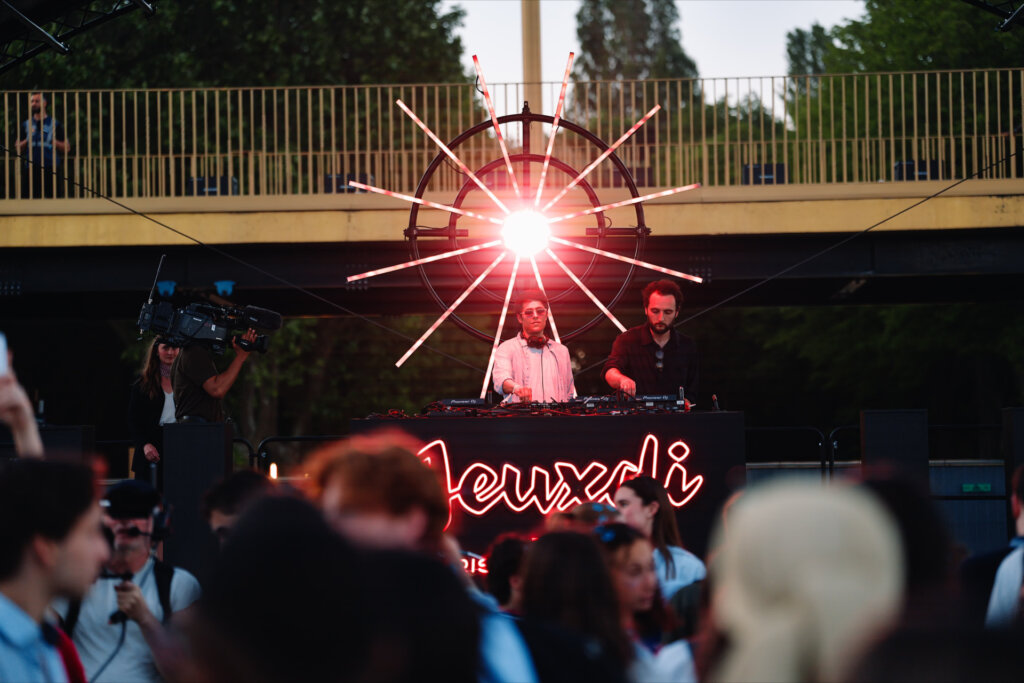
Head of race planning Pierre Laperdrix spoke about the objectives France-Galop had in shaping this particular JeuXdi as a Group 1 offering. It was about creating an event: “festive, attractive, an overall moment with a strong public presence,” he said. “A true experience” that would engage owners, partners and spectators, and that, he continued, was why they placed the Group 1 races late in the card, to capture the attention of the young people arriving later in the evening.
“Traditionally, Thursdays are weaker in terms of racing quality and visibility. By placing two top level races on this day, we aim to rebalance the weekly programme, increase media and public attention, and create new momentum on the racing schedule,” he said, before adding that the move away from the weekend also removed the clash with Ireland’s Guineas weekend at the Curragh, giving their own Group 1 races space to be seen.
Putting Gen Z, DJs and Group 1 races together seemed to work: France-Galop is trying hard to effect positive change. It must. It has little choice.
“Basically, the objective is wide-ranging,” said France-Galop’s president Guillaume de Saint-Seine, speaking as frankly as Herrnberger had. “Overall, we have to think about racing in a different way and not depend 92 percent or 93 percent on the receipts from betting.
“The decrease in the revenue from PMU has got two origins,” he continued. “The first one is, unfortunately, a certain trend of decrease of betting (with PMU) because of the attractiveness of sports betting. Also, PMU has been less present in the media: less advertising, less campaigns, and less presence with its customers.”
Such is the situation in France that earlier this year France-Galop cut €20.3 million from the prize money budget in a country which has 230 racetracks, the vast majority of which are autonomous associations not owned by France-Galop but supported by the administrator, notably in terms of prize money. A five-person Task Force to assess and address the issues – the PMU has lost three million customers since 2010 – was set up earlier this year, which would report its initial phase findings within days of Daryz’s win, and then move on through the summer.
“Hopefully, within the end of summer, we’ll have a better picture of where to go,” Saint-Seine said. “But it’s clear that we are beyond a cycle, and we have to change the paradigm itself and look at the future of the races.”
Herrnberger said tough decisions need to be made and some have already been made which “are giving results,” but that those decisions are “not about reducing prize money (further), not about reducing our number of employees and … not about closing a site.”
But he was clear in his message that “in two years we are out of cash if we don’t move, so we are not waiting to move, we are moving already.
“When you have less money on the top line. You need to adapt your bottom line in order to fit. So, an issue: adapt your bottom line, that means that you do things differently”
Rather than close struggling racecourses, it was suggested that France-Galop could withdraw support to tracks that were not prepared to make any changes deemed necessary to enhance the race-going experience to meet contemporary customer expectations and rescue the business.
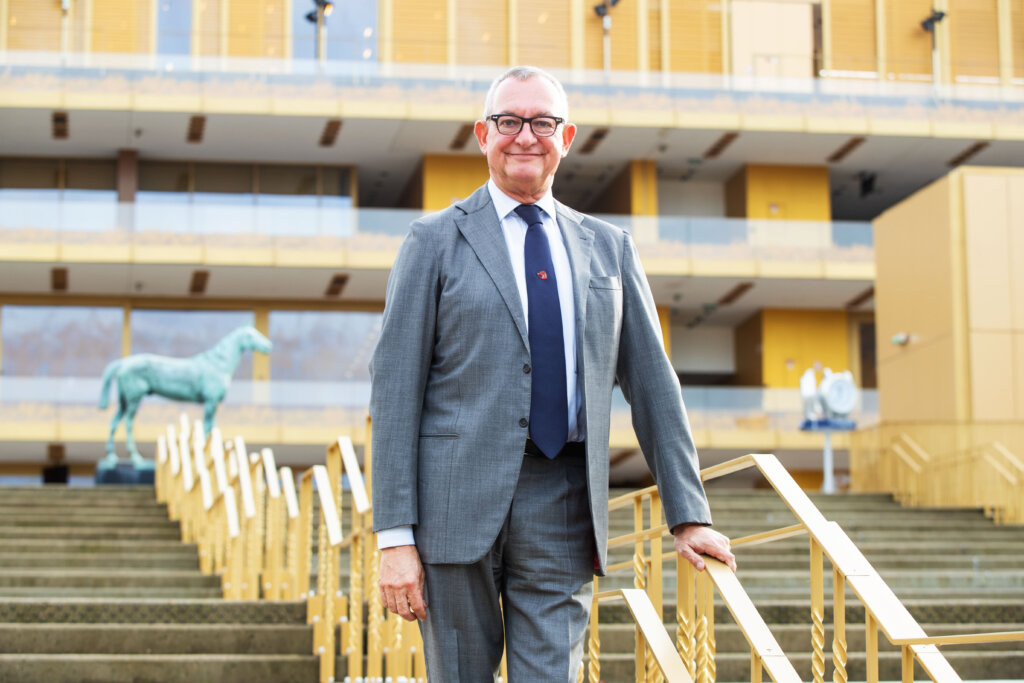

There was no sense of doom and gloom, though, simply hard realism and a determination to act positively. There is general unity behind the need for change, and in terms of a basic quantifying of some measures, racetracks saw a 10 percent increase in attendance last year, boosted by initiatives such as an event in September at the Place de la Concorde, which showcased riders from the jockeys’ school and retired racehorses from France’s retraining programme.
Given the potential upside from such positive public events, Herrnberger also talked about the need to make the most of the sport, and mix revenues, offering those who do attend race meetings better merchandising and hospitality, and develop corporate partnerships. He highlighted the fact that nearby Roland Garros, which hosts the French Open Tennis, makes €260,000,000 out of a two-week tournament.
“People are telling me ‘you’re crazy, you need to focus on betting,’” he said and admitted that it will take a long time to change a mix that is roughly 95 percent betting revenue.
“But we need to start at some point,” Herrnberger continued. “Help the PMU to make as much as possible, but also wake up that we cannot rely on a single source of revenue and develop as a channel of value.
“JeuXdi is a very good example because it’s not only a big moment where we have lots of people, it’s super profitable. Why is it super profitable? Because we sell hospitality. You see over there behind us,” he pointed northward through the large glass grandstand window, “This is the business district of Paris, La Defence. All the HQ of the (major) companies in France are here,” he added, emphasising the partnership and corporate hospitality potential. “So this is a way to diversify our revenue and pass this survival mode we are in.”
And when it comes to connection with fans and media, the necessity for accessibility is seen as being of huge importance. Herrnberger wants to see racing’s participants – jockeys and trainers especially – give interviews in the same way as is expected and required in every other major sport, pre and post-event. But he stopped short of saying France-Galop would make it mandatory.
That identity as a sport, too, will require a change of mindset, “A major change in our DNA,” is how Herrnberger put it, given tradition and the reality that horse racing in France has long come under the government’s agricultural mechanisms and is not considered to be a sport in that governmental administrative context.
But sport it is, and the JeuXdi crowd felt the rush of it when they cheered on their Group 1 picks. Whether that feeling stuck with them as they danced to the DJ’s beats, time will tell.
As the illuminated frame of the Eiffel Tower flashed a searchlight across the Parisian night sky, the hope was that some would have made the connection with the dazzling Daryz and the battling Caballo De Mar.
Will that create a new wave of fans to save the sport long-term? No one can know yet. But at least France-Galop is breaking the aged mould and is trying to steer the change for positive outcomes, rather than wait painfully for the catastrophic change a failing business model would force upon the sport. ∎