Embroidery’s Victoria Mile win was not merely another line on a growing record. It was the result of a spring campaign built around speed, maturity and a deliberate reset after a disappointing trip to Hong Kong.
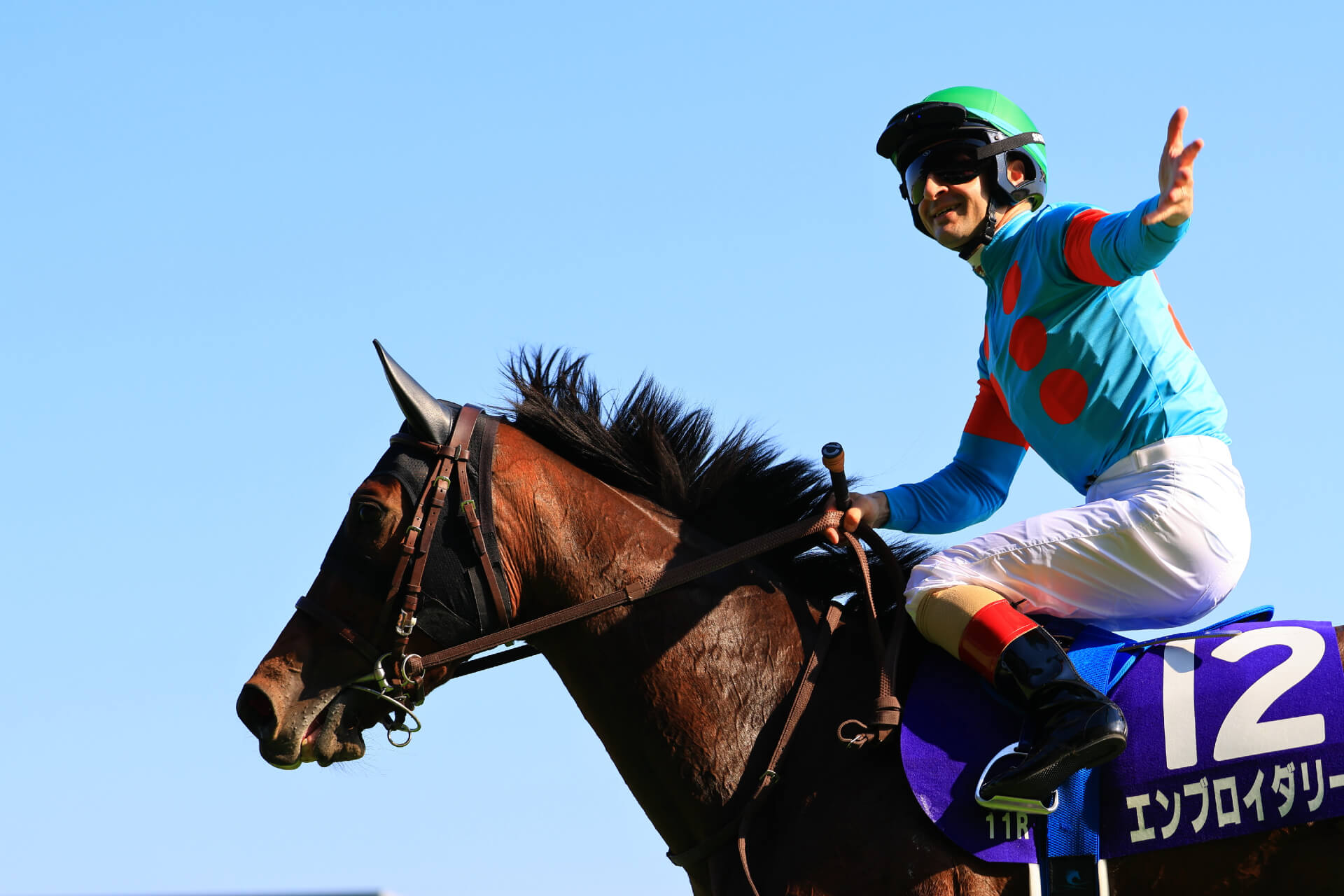
The four-year-old daughter of Admire Mars gave Christophe Lemaire the 100th Group 1 victory of his career when she won Sunday’s G1 Victoria Mile at Tokyo Racecourse. It was Embroidery’s third Group 1 success, following last year’s Oka Sho and Shuka Sho, and it confirmed her standing as one of Japan’s leading female milers. But the more revealing part of the story was not simply that she won, it was how she arrived there.
Trainer Kazutomo Mori said the stable had approached this spring with a clear purpose. Last autumn, before the Shuka Sho, Embroidery’s training had been somewhat conservative after a mild case of tying-up, and because the race was over 2000 metres. In December, she finished 11th in the Hong Kong Mile. This year, the emphasis changed.
“This spring, we targeted two mile races, including this,” Mori said. “We had to give her plenty of trackwork and accumulate solid training to develop the speed necessary to compete against older horses without losing.”
“We made sure to ride her thoroughly during this period,” he added. “While doing so, we managed to avoid any weight loss or spikes in tension, allowing us to execute the training exactly as desired. In that regard, it was a training period where I truly felt this horse’s growth.”
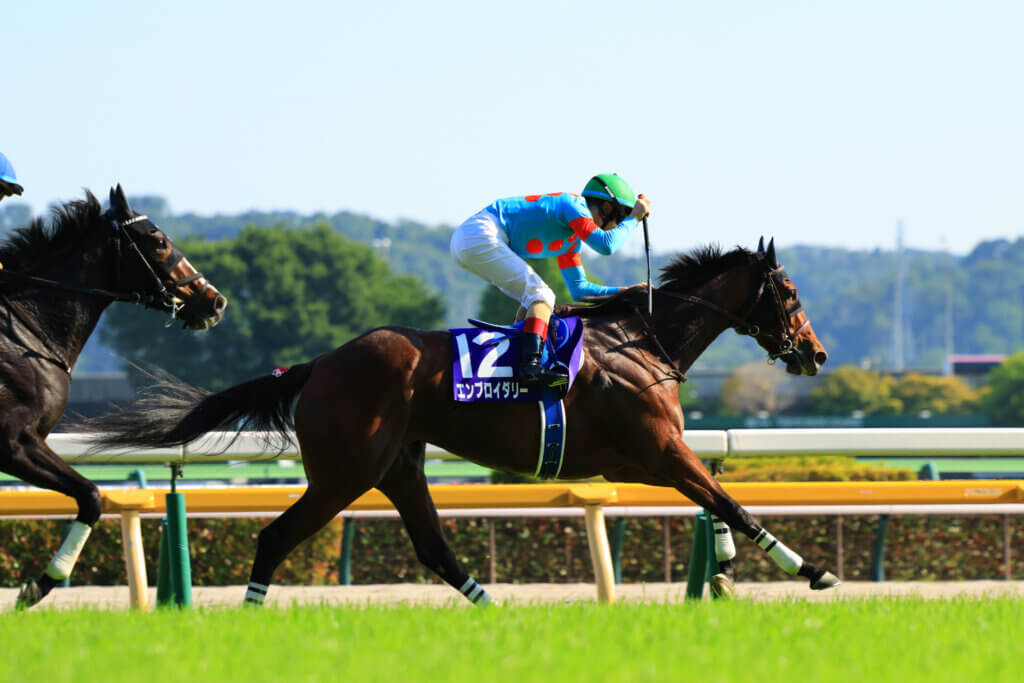
The race itself reflected both that preparation and that growth. Lemaire did not need to force the issue early, but he did want to be positive. Embroidery had made all in the Hanshin Himba Stakes, her previous start, but Mori also expected a different shape this time.
Breaking from stall 12, Embroidery left the gate sharply and settled just behind the pace as Erika Express led and Nishino Ti Amo pressed forward from a wide draw. Lemaire placed Embroidery close enough to use her stride, but not so close that she had to fight the pace. She traveled around sixth, advanced strongly up the Tokyo stretch, and took the lead near the 200-metre mark.
For Lemaire, the decisive moment came before he had fully asked her.
“After entering the home straight, she took the bit on her own,” Lemaire said. “When climbing the hill, I hadn’t made any move yet. She accelerated on her own. She geared up. After climbing the hill, I thought we could win.”
That was the clearest sign of the version Mori had been trying to produce. Embroidery did not have to be dragged into the race. She carried Lemaire into it, then lengthened. Kamunyak followed her into the straight and stayed on well, but the favorite had already put the race beyond reach by the time she passed the 200-metre pole.
Embroidery covered the 1600 metres on firm turf in 1:30.9, beating Kamunyak by 1-1/4 lengths. Queen’s Walk finished third, another 1-1/2 lengths behind. Lemaire’s assessment of the winner was more precise than a simple description of her as a fast filly. He sees speed, but also stamina, strength, and composure.
“She has speed, and she also won a 2000-metre Group 1,” Lemaire said. “She can sustain her run for a long time, and her running style is very powerful. Her back is strong, and her mental side is also strong.”
Mori also emphasised Embroidery’s physical and mental development.
“Her body has grown a size larger compared to last year,” Mori said. “I feel she is approaching her peak. In addition to that, my impression is that her mental growth has been a very significant factor.”
That growth was also clear to Lemaire. Speaking to Idol Horse, he said the heat had “a small effect” and that her coat in the paddock was not as good as he might have liked. But once she reached the area behind the starting gate, his confidence returned.
“When she arrived behind the starting gates, she was perfectly settled, very calm, and very serene,” Lemaire said. “So I had confidence.”

The victory also marked a milestone for Lemaire. It was his fifth Victoria Mile win, following Admire Lead, Almond Eye, Gran Alegria, and Ascoli Piceno, as well as his 60th JRA Group 1 victory and 100th Group 1 win worldwide. But the more immediate question is not where the win places Lemaire. It is where it places Embroidery.
Mori avoided narrowing the options too early. He said there were various possibilities both in Japan and overseas, and that the stable would make its decision while monitoring Embroidery’s condition. As for distance, he suggested her effective range would be up to around 2000 metres rather than beyond it.
Lemaire’s view pointed in the same direction, but with more detail. The Victoria Mile offers its winner an automatic berth in the Breeders’ Cup Filly & Mare Turf, and when asked about that possibility, he did not rule it out. But he also stopped short of calling it an obvious fit.
“Keeneland is a very small racecourse,” Lemaire told Idol Horse. “She has a large stride, so I’m not really sure if it’s ideal for her. But she has the quality, so I don’t know.”
For Lemaire, the type of track that suits her is clearer. Tokyo works for her because it is a wide course. Sha Tin, where she was beaten last year, is not closed off either.
“Sha Tin, if she is in good form, why not?” Lemaire said. “Sha Tin also has wide tracks. Last year, maybe the season had been long, and for a three-year-old, it was difficult to face the champion milers there.
“But at that time, she just didn’t have her real energy.” ∎