
Yet another superstar has emerged in Australian racing, and it’s no surprise that she’s another filly. Sheza Alibi’s win in the Doncaster at Randwick on Saturday was freakish.
She was extraordinary – and what makes it even more remarkable is that she was bought for just A$10,000 (HK$50,000) around a year ago. She’s now won seven from ten, banked A$3.7 million (HK$20m), and she’s the early favourite for the A$10m Golden Eagle in October. She could be a champion.
This Saturday, another superstar female – the unbeaten mare Autumn Glow – will start a dominant favourite in the G1 Queen Elizabeth Stakes at the same track. Autumn Glow is 11 from 11 and has already won A$8.2m (HK$44.3m) in prizemoney.
So why does every new dominant horse in Australian racing seem to be a female?
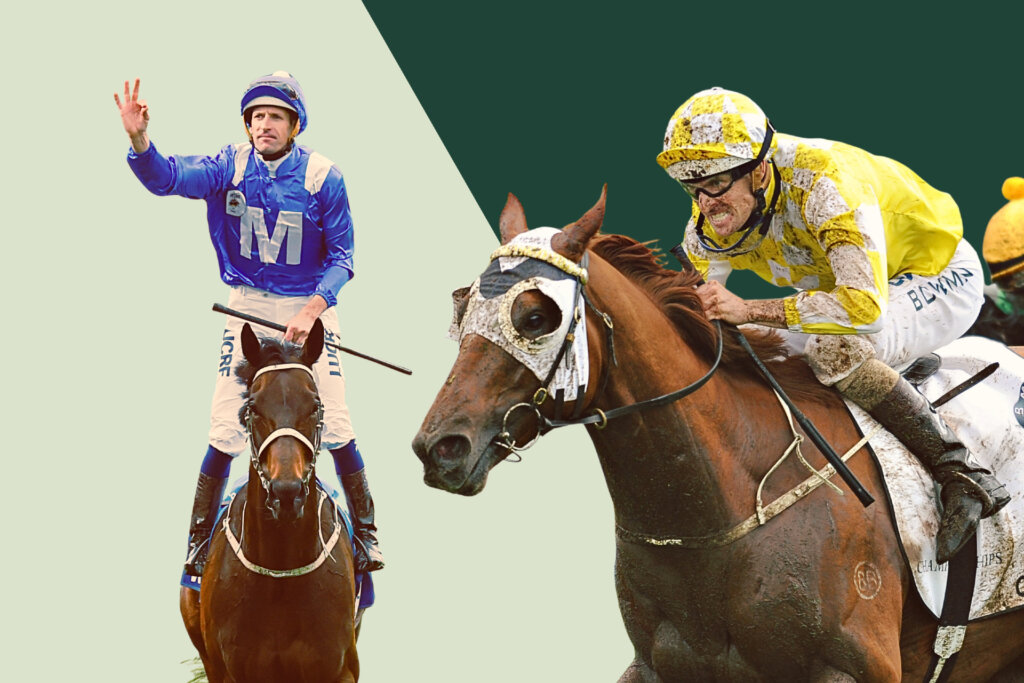
Look at the last twenty years. The three standouts of the era – Makybe Diva, Black Caviar and Winx – were all mares. More recently Verry Elleegant and Via Sistina have built incredible records of their own.
The best historical guide might be the Golden Slipper, Australia’s premier race for two-year-olds. From the first running in 1957 through to 1999, fillies won just 16 of 43 runnings – the colts and geldings dominated, winning 27. Since 2000, that has flipped: fillies have won 15 of 26 runnings, the colts and geldings just 11. And remember, the fillies’ weight allowance was actually cut in 2005, from 3kg to 2kg. The boys got a kilo back, and the girls still kept winning.
The Australian Horse of the Year is the same story. Seventeen of the 26 winners this century have been mares.
There has to be a reason.
One is the banning of anabolic steroids in 2014. Pre-ban, steroids were used legally out of competition right across the Australian industry, and they helped colts and geldings far more than they helped fillies. Geldings especially. Go back and look at the 1980s, 1990s and 2000s – the feature races were full of dominant geldings. We don’t see superstar geldings the way we used to. Steroids simply helped geldings the most, because once a horse is gelded he loses the testosterone the entires still produce naturally, and the females have their own hormonal profile to draw on. Take the chemistry away and the geldings are the group that loses the most.
Another factor is the early retirement of the good colts to stud – and then there are the Hong Kong owners buying promising young horses before we ever get to see them race in Australia. Silent Witness, Sacred Kingdom, Golden Sixty, and now Ka Ying Rising – horses like that being lifted out of Australian racing thin the talent pool every year, and the ones left behind to compete with the mares are weaker for it.
And here’s one factor nobody talks about: the whip. When I was riding I always felt the colts and geldings responded to the whip more than the fillies and mares did. The males needed it to get them going. The fillies, as a rule, didn’t. Since 2009 the whip rules in Australia have been tightened repeatedly – fewer strikes, padded whips, restrictions on use before the final 100 metres. Combine that with the steroid ban five years later and you’ve taken away two things that used to favour the boys, while the fillies and mares race on essentially unchanged.
Because the one thing that hasn’t changed as much is the weight scale. Fillies still carry two kilograms – about five pounds – less than the colts and geldings in races like the Golden Slipper and at weight-for-age, which also guides handicaps in races like the Doncaster. That weight-for-age allowance was set in the 1850s, long before anyone had heard of an anabolic steroid or a padded whip.
The old adage I was always told was that “A good colt will beat a good filly” – and I believed that – but I don’t think it is true anymore. A good filly will always beat a good colt in this era.
A good current example is Sheza Alibi versus Autumn Boy – the best three-year-old colt right now. Sheza Alibi carried three kilograms less than Autumn Boy and beat him by more than four lengths.
The dominance of female horses this century says it’s time for that to change. The playing field has tilted, and the rules haven’t caught up. ∎