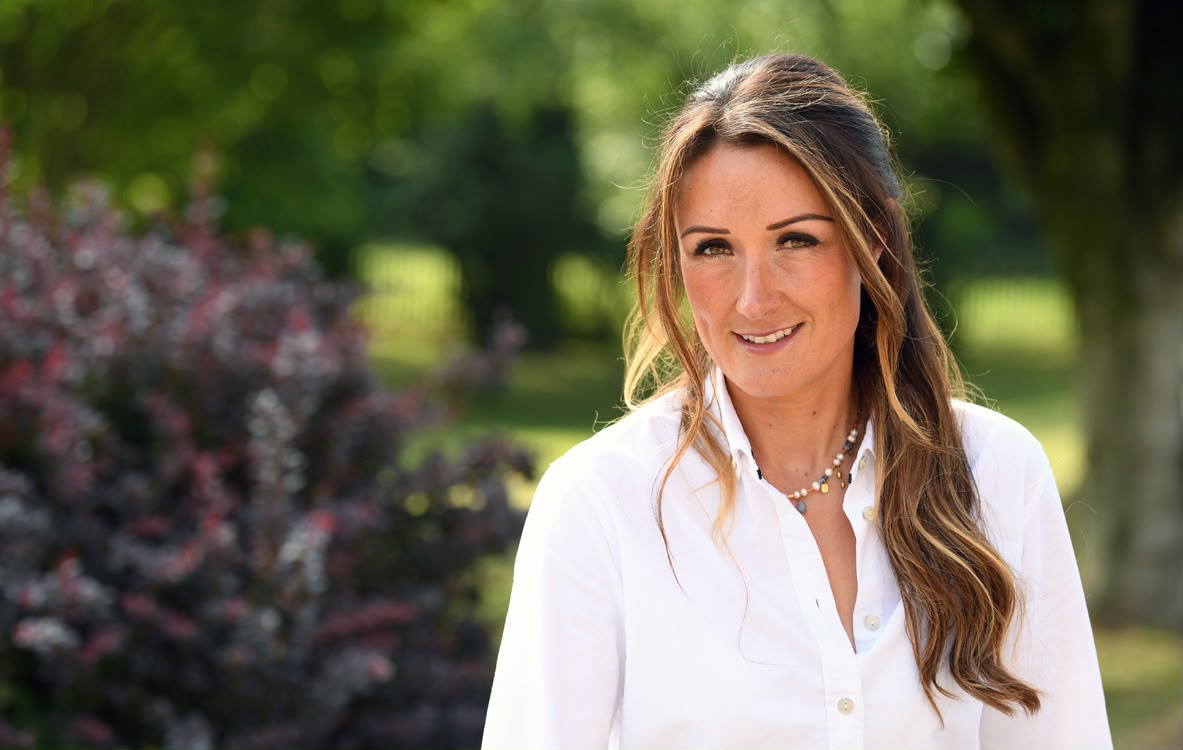
Rebecca Menzies: The Grit And The Graft Behind A Breeders’ Cup Raw Deal
Adonius has been an unlikely dream-maker for Rebecca Menzies and her County Durham team, but when Idol Horse chief journalist David Morgan went to the trainer’s Howe Hills base to talk American targets, tranquility turned to turmoil.
29 October, 2026REBECCA MENZIES could breathe again. For about half a minute she had lain on the ground struggling to draw in a single, desperate gasp of air. Now she was sitting up on the grass verge, cradling one arm and talking.
“I was just winded.”
“Do you need to go to the hospital?”
“I’ll be alright.”
“Is anything broken? I can’t believe you haven’t broken any bones.”
“I might have,” she said with a grimaced half-laugh.
Anna Dawson, the yard’s racing secretary, arrived just then in a white car, concern etched on her face. Menzies told her she was alright and to go and see Kai. She didn’t seem alright, not entirely. How could she be after what just happened?
It was a Friday morning, two weeks out from the stable’s anticipated biggest away day with its flying juvenile Adonius at the Breeders’ Cup in Kentucky, when calamity came out of nowhere to disturb the orderly calm at Howe Hills Stables in County Durham, northeast England.
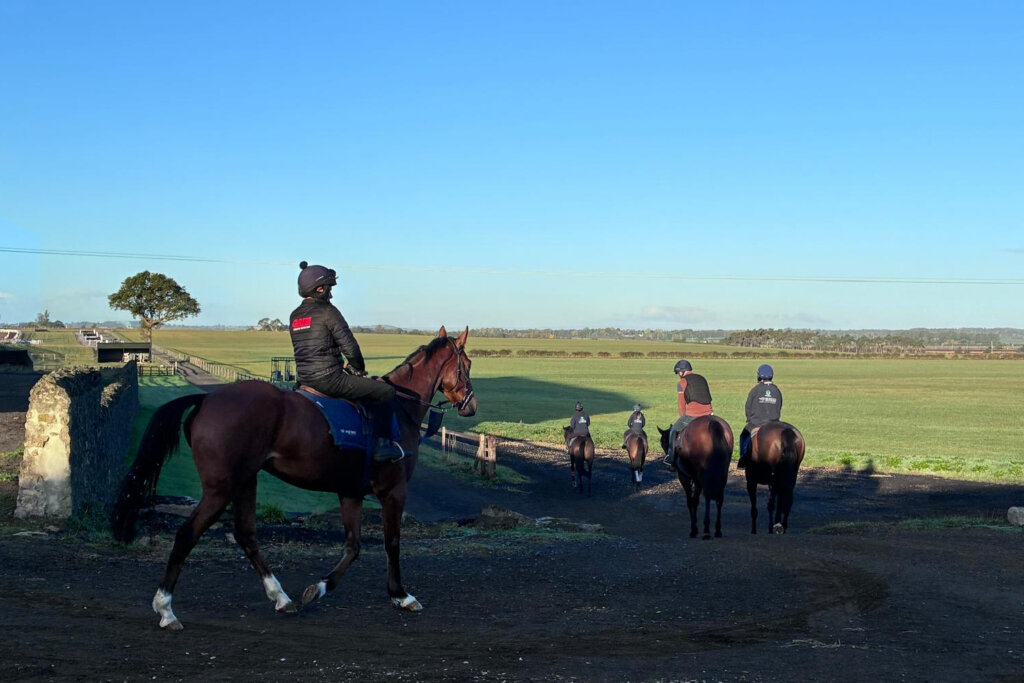
Adonius’s part-owners – Michael Hughes and his boys – had not long left after a bright, bucolic morning watching horses galloping, and talking about the Breeders’ Cup dream. Menzies’ attention had turned to Gordon Clements and two of his horses, new to the stable, about to enter the round canter down the lane from the yard, just beyond the trees.
The distant traffic on the A1 motorway provided a humming bassline to the chatter and whistle of birds in the branches as a couple of fields away the southbound train to far away London King’s Cross, silvern in the early sun, whisked through at high speed.
Menzies leaned her forearms on the fence, hands together, chatting with Clements about his mare Jonquilla and gelding Tigga Time among the quartet. Suddenly, quietly, the tranquillity of the moment was disrupted. An unnamed colt destined for jump racing, last of the four, dipped his head sharply and the rider tipped headfirst over his neck; the birds kept singing, the A1 still hummed, the mind made it slow-motion to the eye.
“That’s Kai, my breaker,” Menzies said, the concern in her tone outweighing the plainness of the sentence.
The rider lay on his back, then he bent his knees up, but still he lay. The errant three-year-old came jogging back down the lane, Menzies hopped a fence, the colt slowed, she grasped the loose reins, turned him around and walked purposefully towards the stricken rider. Then it happened, a second jolt from nowhere. All within a blur of rushing seconds.
Another sudden dip of the head, a swift and powerful jerk upwards and the colt was free, spinning away, unleashing a vicious kick with both back hooves. They struck at his trainer’s midriff like a pair of cannons unloading bone-smashing pounds of force. The impact sent her backwards and sideways and thudding to the ground.
Clements had scaled the fence as it happened: a moment of alarm, but the horse cantered away up the lane to the stables.
“We’ll call an ambulance.”
Menzies raised an arm to the air. She seemed to be gesturing no need for that, trying to get her breath. Then the shock to the solar plexus abated, the diaphragm relaxed, the lungs opened, the air rushed in and up she sat.
Dawson had been quick on the scene. She picked up Kai Wood and was soon back. The injured rider was in the passenger seat bracing his neck. Menzies said to take him to North Tees Accident & Emergency 10 miles away and turned down the suggestion that she join them. She had to be on the road to Haydock races soon, then to Newcastle that evening, she said.
“I’ve too much to do,” Menzies asserted, her voice quieter but steady, masking the shock and pain.
Adrenaline is powerful in those initial moments after a physical trauma, but it passes and then the pain really hits. Menzies leaned on the fence with her one good arm as if the previous minutes hadn’t happened, watching the remaining three horses cantering while continuing to converse.
“Do you need to get that seen to, Rebecca? Is it broken?”
She remained for a few minutes. Then quietly, without fuss, the boss climbed into a small UTV driven by her assistant and “wing woman” Amber Blythe, and away she went.
The word tough is a wholly inadequate descriptor.
“Sorry about that, this morning,” she said in a voice message later that evening. That’s Menzies, it seems: stoic, yet concerned about others, genuine in her friendly manner. She relayed the news that “Kai has broken bones in his neck,” and “My arm doesn’t look too clever.”
Not too clever – that’s code for smashed up.
A phone call on Tuesday evening revealed more: “I’ve had the arm reset twice.” She’d been out of hospital, back at home and on the gallops watching the horses that morning; she described how the medical people had manually manipulated the broken bones to set the wrist and arm straight. She’d also dislocated the ulna, fractured a rib, and suffered a lacerated liver.
Now a blood clot in her “good arm” was giving her concern that she might not be allowed to fly to see Adonius in what at that point was supposed to be the biggest race of his life. She was determined to get there if she could.
“That horse wasn’t even wearing plates,” she said, as if in some way that should lessen the severity of a large mammal kicking her with both barrels.
“If anyone else had let go I’d have said, ‘What an idiot,’” she said, attaching the label to herself. But that’s a harsh take given the circumstance: her human instinct prioritising reaching her fallen team member. Menzies is no fool, far from it, and her dedication to professionalism, to running an efficient, polished operation, meant the fact it all happened at all stung as much as the kick.
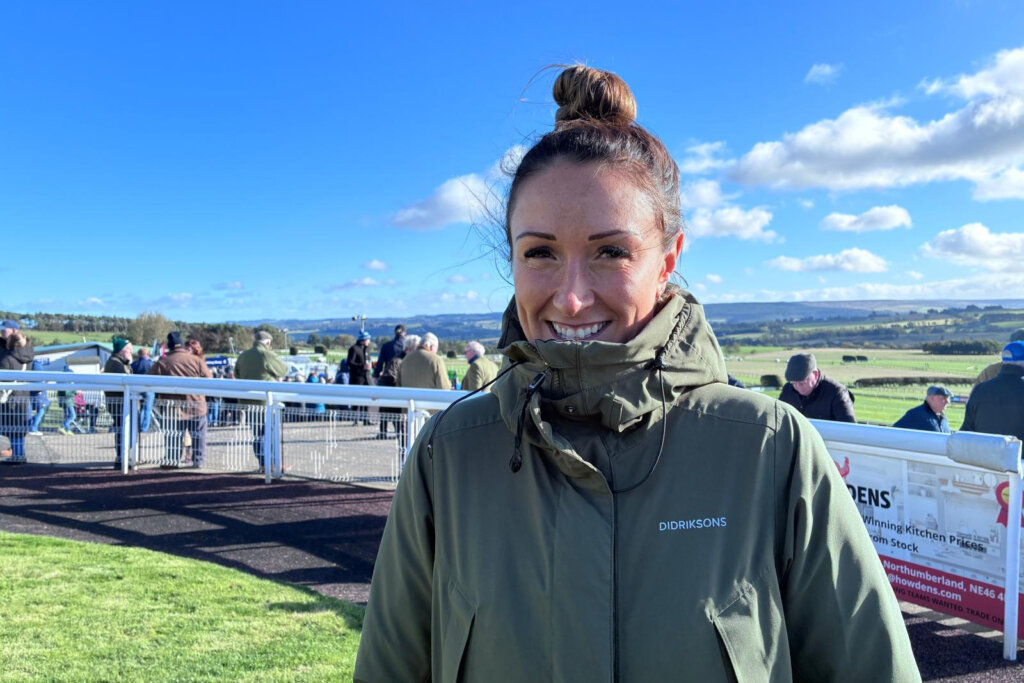
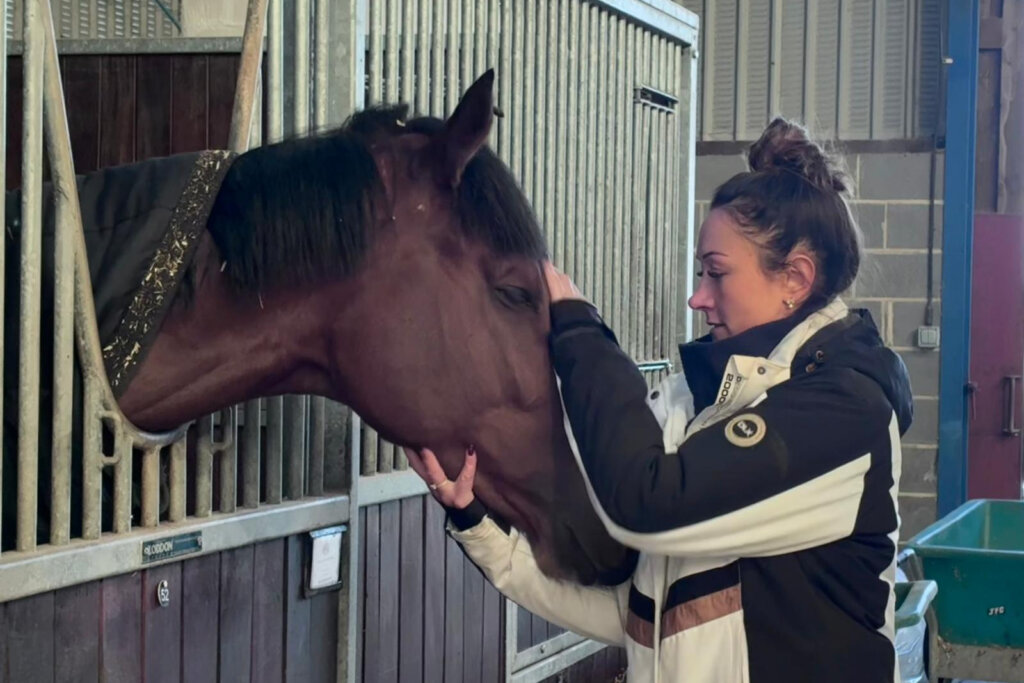
Freakish moments like that Friday morning happen in horse racing, though. They can happen any day at any time to anyone and they’re stark reminders of how dangerous this incredible sport is, and how committed, brave and inordinately tough the people are who care for, train and ride these horses.
Trainers, stable staff, work riders, grooms, jockeys – jolting moments can come in an unforeseen instant, with a stumble, a jink, a bite, a butt, a barge, a swift dip of a neck, one blind-sided kick of a back hoof or two. That’s how it is when you work with racehorses: half-ton, muscled-up adolescents with brute strength, minds of their own and a limited capacity for intelligent thought.
But that kick was the second painful jolt this year for Menzies, who has about 85 horses in her low-key impressive 100-box yard and is steadily improving the quality through bold decisions to move horses on that have reached their marks, investment at the yearling sales, seeking new owners, and expanding her flat racers while safeguarding the jumps horses that are her first passion.
“About four months ago,” she told Idol Horse in that unsuspecting hour before she was kicked, “I’d been riding an unraced bumper horse called Finsbury Fields for five weeks every day and he never put a foot wrong. I was just (cantering) him and he shot forward and he hit the edge of the bank and he tripped and fell: it was a total freak thing but the ground was really hard and I landed on my head and got knocked out.”
There was no debate about whether she was going to hospital on that early summer morning. She wasn’t in a position to disagree: severe concussion; swelling to the brain.
Three days later she was back at home when Blythe – a significant recruit from Dan Skelton, the biggest jumps trainer in Britain – noticed her boss hadn’t been on WhatsApp for some time: for a trainer who is hands-on, across everything, that was unusual. Blythe found her at home unconscious.
A Computed Tomography (CT) scan revealed that the swelling on the brain preceded the fall, it was an infection, meningitis. Memory and speech were affected temporarily.
“It was touch and go at one point whether everything would come back to normal,” she said, in a matter-of-fact way that seemed to almost detach herself from the drama. Then she added, with a raw re-connection, “Luckily, I have, but it was scary.”
Like many in racing, it’s rare for Menzies to reveal any thought of fear; weakness is not displayed; you can be kind, you can be friendly, sure, but you have to be tough to make it. It’s just the done thing for anyone, man or woman – perhaps especially a woman – to play down such things, to carry on as normally as possible. That’s what people do in her sphere; that’s what she does.
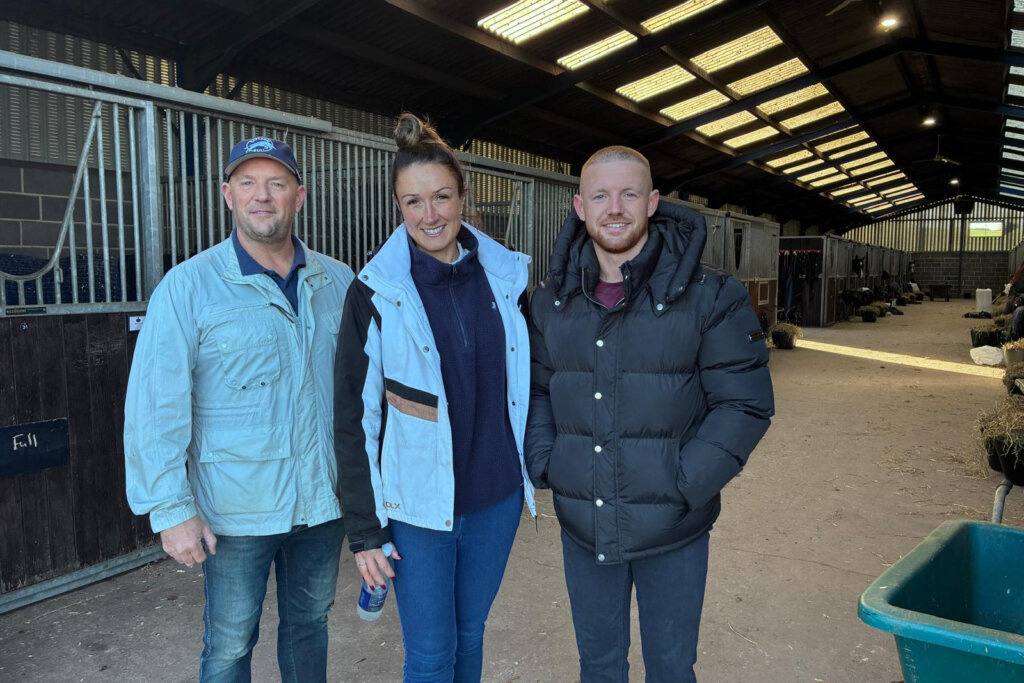
But her own down-to-earth northern-style blend of personable warmth, fresh, upbeat outlook and evident hardiness means she’s a good fit with Adonius’s local owners, Hughes and his family, who had with them at the yard that Friday morning Liam “The Hitman” Harrison, the former world champion Muay Thai fighter with a couple of hundred thousand followers on TikTok.
Hughes and his sons are from a boxing background; he made his money the working man’s way, with graft, building up a drainage and groundworks business from nothing, originally out of the unvarnished former coal-mining village of Trimdon before moving to seaside Seaton Carew a 25-minute drive from Howe Hills.
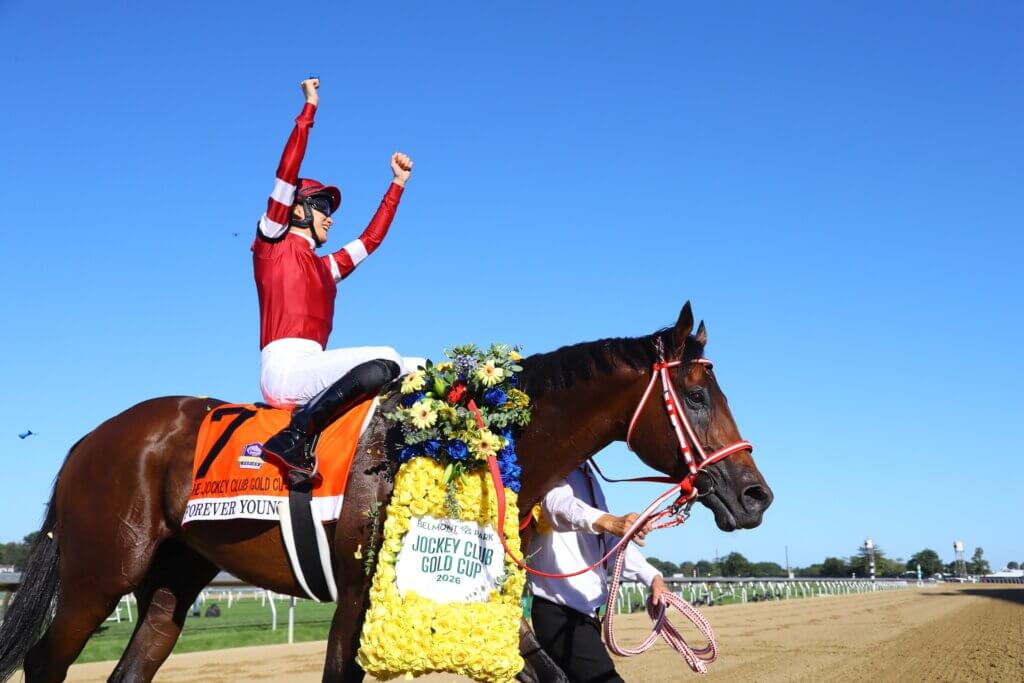
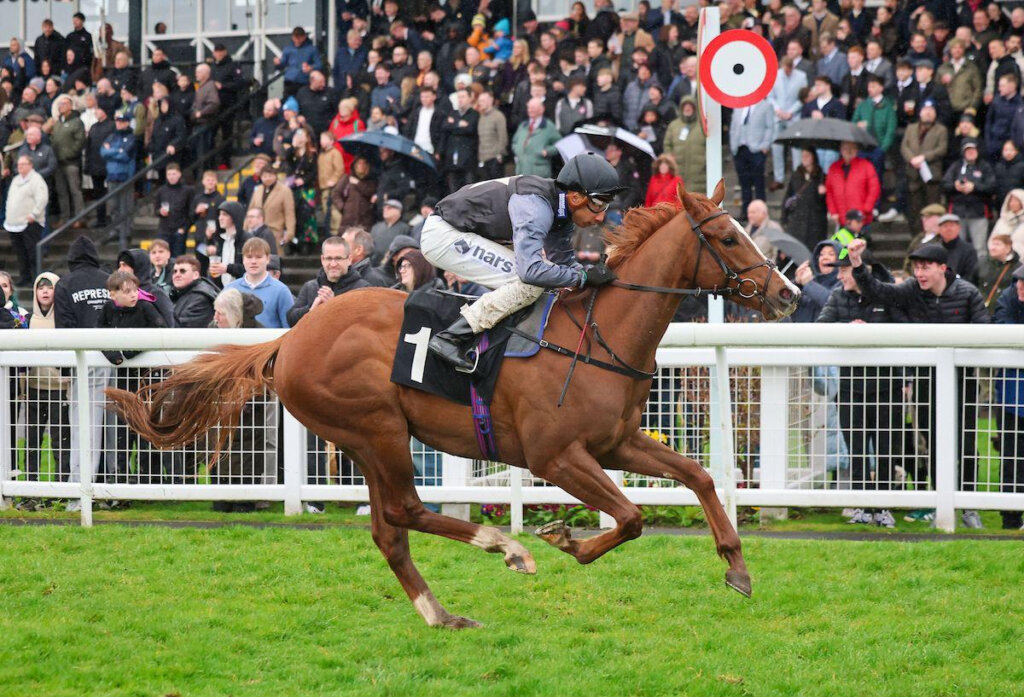
He bought Adonius at Doncaster for £32,000; he liked the little red chestnut, something about his look, his movement, a bit of tiger-eye, perhaps. The horse has taken them to Class 1 days at Chester and a win in the Lily Agnes Stakes, Goodwood for second place in the G3 Molecomb, second at York’s Ebor meeting, and then to Keeneland for a sensational victory under Hall of Famer Johnny Velazquez in the G3 Indian Summer Stakes, Menzies’ biggest career win by some way.
Hughes sold 50 percent to American interests, involving Sean Clancy, after Chester, and it had been decided by trainer and owners that Adonius would probably stay in the States after the planned Breeders’ Cup run. But the story of Menzies and Adonius and the American dream might never have happened.
“My dad called Rebecca and said, ‘Look, we’ve got a bit of a handful, we know you’re a proper horsewoman and will know how to deal with him, will you take him on?’” Hughes’ son Jay said. “A lot of people would have given up on him, if it wasn’t for Rebecca and the team here … He needed time and he needed looked after.”
Menzies admitted that she wavered initially: “I almost didn’t take him in, he’d been very difficult to break and had been at two yards already,” Menzies said on another Friday, one week before the jolting kick and three weeks before the Breeders’ Cup. She was at Hexham races, jump racing heartland, talking while saddling up one in a handicap hurdle.
“I got a phone call from Michael Hughes. I said, ‘How bad is he?’” she recalled. “We were so busy at the time, I nearly said no. But I’ve never said no to a horse before. We’d always bring them in and assess them.
“So, off I went (to Middleham) and it was a Sunday morning, I took the lorry myself and got to the stables. He was out and was sedated in the stable and he woke up halfway home and showed a bit of his true colours. I just gave him a holiday: he went straight in the field and he sat down. I did a lot with him myself to begin with and that’s why I’m so obsessed with the horse and I am obsessed with him. I did a lot of breaking-in with him and one of the lads would just ride him every day.
“His attitude has changed completely,” she continued. “He’s transformed as a horse. He knows he’s good.”
Menzies talks about living in the bubble of northern jumps racing, her comfort zone, but also the importance to her business of growing a profile further afield. Jumps racing is her foundation, but low prize money – plain economics – says she must look to the flat as well. She is ambitious – still young, approaching her late-30s – building a respected team and winning operation where owners experience individual attention amid a slew of quality facilities and a nexus of traditional horsewomanship and innovation.
“It’s like a southern yard, run up north,” she said.
Her drive to achieve is as obvious as her love for thoroughbreds. It was evident when at “eight or nine” years old she noticed the horses that arrived in the field behind her Cumbrian home each summer were not the usual little black and white cobs. These were “big brown and black horses.”
She wrote a letter and popped it into the house adjacent to the field. Her parents – father a pilot, mother a driving instructor (retired), neither with any interest in horses – received a phone call asking about this girl who wanted to help out. That’s how it started: the horses were the summering jumpers from the late Leyburn trainer Ferdy Murphy’s yard, then one of the north of England’s top National Hunt stables. Over time she was given more responsibility until Murphy was paying her £50 a week, cash; by age 14 she was spending school holidays riding out at Murphy’s; she was eventually his assistant trainer.
When Murphy moved to France, Menzies grasped an opportunity, and at age 24 became Britain’s youngest active trainer.
But it was about 10 years ago that her break came at Howe Hills. John Wade was a local businessman who made his fortune out of nearby Aycliffe quarry, haulage, and waste recycling. His big red tipper trucks were a common sight around the area for 40-plus years.
Wade – who passed away two years ago – was also a big National Hunt man: he trained his own horses under permit and developed Howe Hills, the old Durham point-to-point course, into the impressive 200-acre property Menzies now calls home.
“I wouldn’t have got going without John. Definitely not. Definitely not,” she emphasised.
Jockey Brian Hughes introduced Menzies to Wade, who had wound down his training. At first Wade had been reluctant to have anyone in at Howe Hills, but Hughes said he should meet the young trainer. She now owns the whole property, gallops, paddocks, large airy barns and all, which she bought at market rate after Wade’s death.
“That first meeting, John said, ‘How many horses have you got?’ I said, “20,” and he said, “Do you want 20 more?” And I said, “Well, I’d love 20 more.” He said, “I’ll give you 20.” So straight away, when I moved to John’s, the numbers doubled overnight.”
Neither could have imagined then that the place so rooted in the jumps would produce a U.S. stakes winner with Breeders’ Cup aspirations.
But as Menzies knows too well, life’s jolts come unexpectedly. One week before the G1 Breeders’ Cup Juvenile Turf Sprint assignment, she and her team took another blow: bafflingly, Adonius was only among the reserves for the race, despite his Keeneland lead-up win.
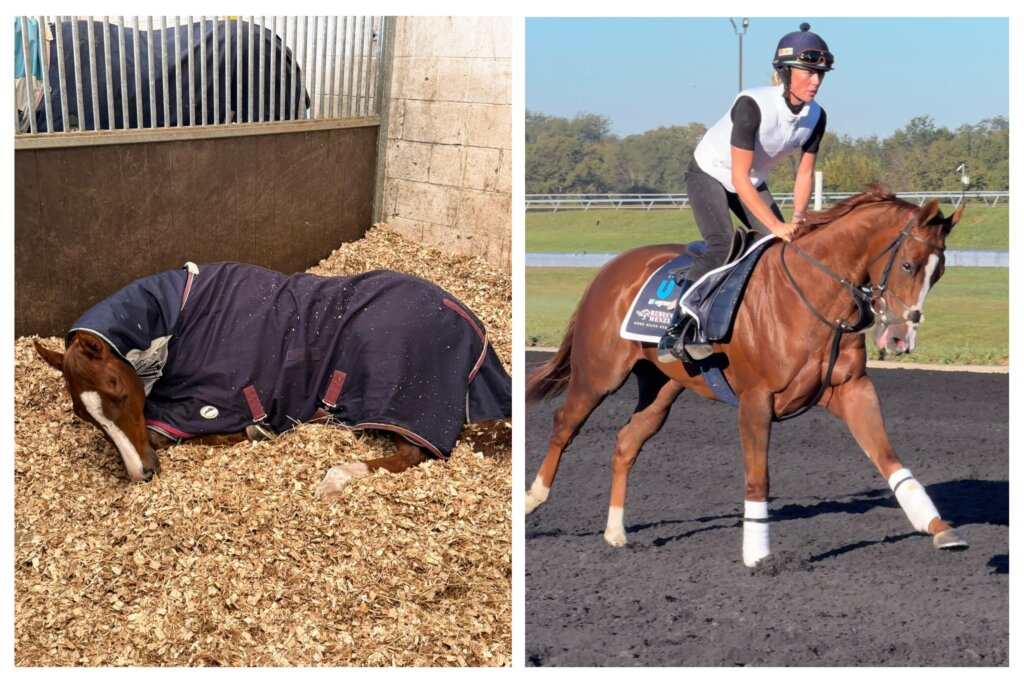
Tuesday morning on the Keeneland backstretch, with the race three days away, the gelding looked a picture of athletic health, his groom and rider Diaz Gibson in the saddle.
“It’s a travesty that horse hasn’t made the race,” one observer was heard to say as they passed by, and that was the general feeling. At that stage, he was a reserve needing three more horses to come out.
Adonius had been at Keeneland for over a month under Gibson’s watch. Menzies and her team have taken him a long way from the troublesome youngster – a “highly-strung, 14 hands, furry ginger thing” – who first showed what he might be in a barrier trial at Newcastle racecourse this past spring. He was ridden that day by work rider Andrew Cooper, who turned up wearing rubber boots and without a whip.
“None of the jockeys would ride him, because they’d all heard these horror stories about him from elsewhere,” Menzies said.
“Our lad was against Connor Beasley and Paul Mulrennan and everyone, and he won the barrier trial hands and heels, so at that point we knew we had something that was a little bit above average but you’re never really sure, are you?”
Adonius was a 12 to 1 shot when he won at Musselburgh first-up by seven lengths under Kaiya Fraser. His record stands at four wins and two seconds from six starts and almost £200,000 in prize money. He was slowly away last time at Keeneland but overhauled the fast pace-setters to win by a thrilling head. His work since, under Gibson and Velazquez, had only boosted hopes.
After the physical and mental jolts Menzies has experienced this year, she knows not to rely on fate’s fickle hand. And after that Friday morning at Howe Hills, sitting stoically on the ground masking her pain, Adonius being left out of the selected 12 runners for the Juvenile Turf Sprint was an added blow to the heart she could have done without.
But Howe Hills is a place where if you’re knocked down, you get straight back up: the work goes on, the winners keep coming; and whether Adonius made the Breeders’ Cup line-up or not, the hands-on trainer and her team, with their collective talent and know-how, have already made an important move. They’ve shown that given the right horse, they can compete at a high level, across a wider range than the northern jumps scene which will always be Menzies’ bedrock. ∎