Hard Penalties Are Needed To Stop “Brutal” Interference
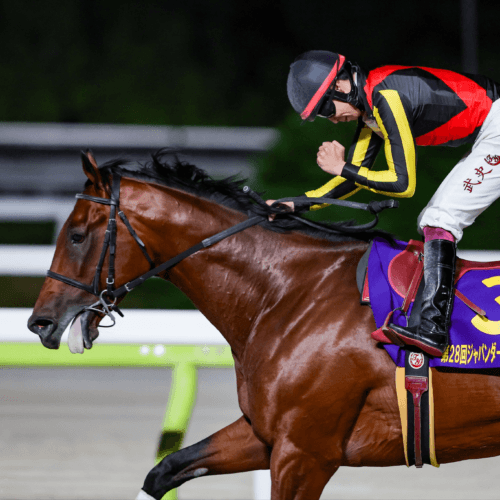
Mirai Iwata at Hanshin on Monday was the latest jockey to win a race after their mount drifted markedly into the path of a rival. David Morgan believes only harder penalties will put a stop to it.
Hard Penalties Are Needed To Stop “Brutal” Interference
Mirai Iwata at Hanshin on Monday was the latest jockey to win a race after their mount drifted markedly into the path of a rival. David Morgan believes only harder penalties will put a stop to it.
24 September, 2026It was just an unremarkable dirt track contest when Mirai Iwata urged Meisho Jinrai to the lead at the top of Hanshin’s home straight on Monday afternoon. Until it wasn’t.
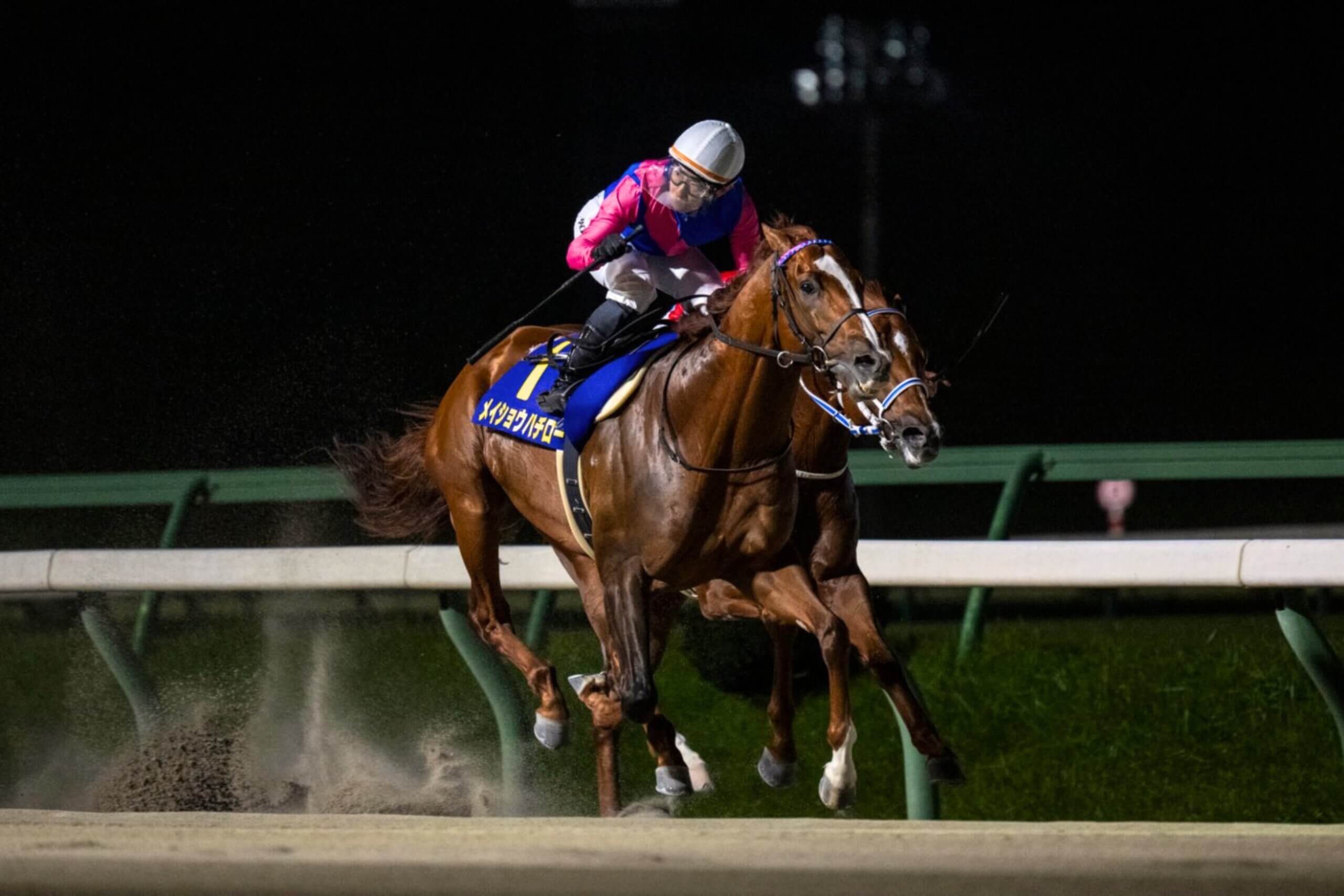
The low-key routine of it all changed around the 100m point: G T America had closed almost to within a length of Meisho Jinrai and that’s when the leader shifted markedly left, taking the challenger’s ground, forcing Yuichi Kitamura to snatch up and his mount to lose momentum.
Meisho Jinrai, the 2.8 favourite, was galloping on a three-wide line but shifted through six strides into G T America’s six-wide ‘lane’. Iwata’s mount was already three strides into his left-hand swerve when he struck him right-handed with the whip. There was no correction until the horses touched.
The Japan Racing Association’s (JRA) unnamed race day stewards investigated. Iwata was given a nine-day suspension for careless riding (four JRA race days), a rule designed to ensure fairness and safety.
G T America was “restricted”, they reported, “However, as the incident was not considered sufficient to warrant an alteration to the placings, the race result was declared official in the order in which the horses finished.”
If that wasn’t sufficient, then what is? It’s a problem that keeps rearing its head under the Category 1 interference rules, Category 1 being most places outside of the United States, which operates under Category 2.
Category 1 is the preferred option of the JRA and the Hong Kong Jockey Club, which has long been on a quest for the Holy Grail of universal rules harmonisation.
It’s also the better option. Category 1 helps ensure the best horse can win even if interference occurs. So, if a winning horse impedes another, but not enough to have prevented the sufferer from defeating the offender, the result stands.
Under Category 2, if the interference cost the sufferer a better finishing position than it achieved, even if it wouldn’t have beaten the winner anyway, the winner is still demoted to a position behind the horse that was impeded.
Hanshin’s stewards decided G T America wouldn’t have beaten the winner, a good few watchers on social media disagreed, and that highlights a flaw, the issue of race day stewards’ interpretations. Putting that debate aside, though, the question for us becomes: was the punishment a sufficient deterrent to a problem that isn’t going away?
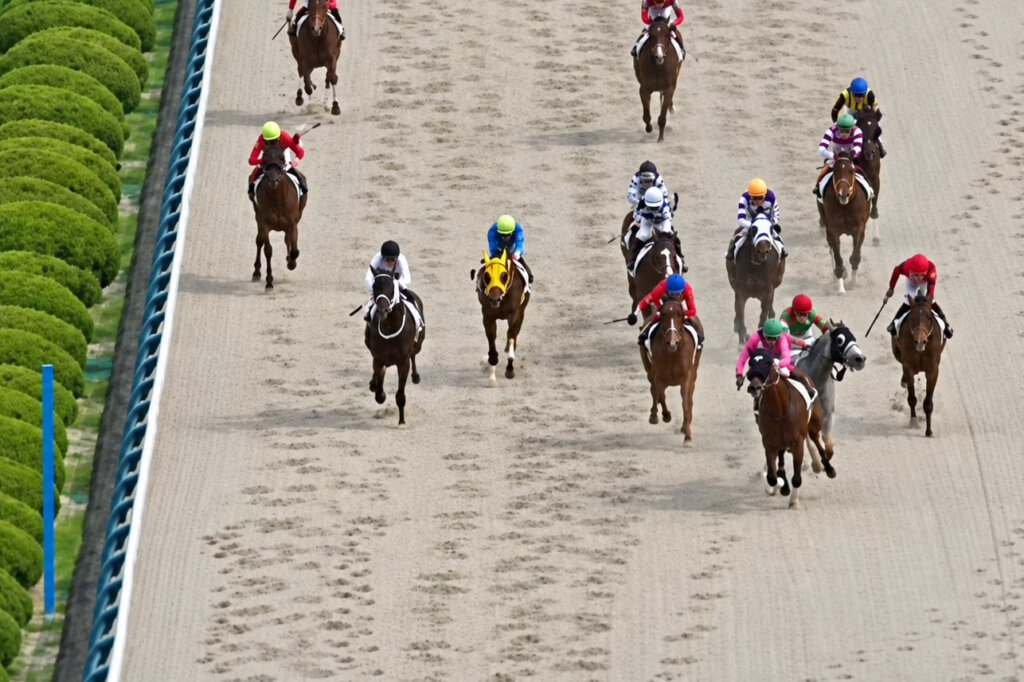
Let’s flash back to Leopardstown when Hotazhell scored a 50-1 win under Shane Foley in the G1 Irish Champion Stakes.
Trainer Donnacha O’Brien described Foley’s ride as “brutal”. It was just the latest example of a winner drifting markedly across rivals, impeding O’Brien’s A Boy Named Susie. Foley didn’t seem to be doing much at all to correct the drift until O’Brien’s horse had been forced by Hotazhell into a pocket, snatched up, and all hope gone.
Allowing such a drift has become so commonplace in Britain and Ireland over the last decade or two that there was uncertainty even among TV commentators.
“Do you think there’d be an enquiry?” asked former champion jump jockey Ruby Walsh, to which fellow commentator Gary O’Brien said after a pause, “They might announce one, I think, mmm … I don’t think there’ll be any change to the result but they might announce an enquiry. Maybe.”
They did enquire. Foley was given 11 days. The jockey had received nine in late June for what looked a cynical ride – deemed improper riding – in which his mount drifted and bumped a rival, clearing space for a winning run.
The nine-day punishment didn’t deter and neither will 11. A jockey has the chance of winning a Group 1, big money, maybe the biggest race of their career: likelihood is they’ll do what they need to do within reason to win and take the punishment of a week and a half on the sidelines.
It’s reminiscent of James McDonald’s eight days and HK$120,000 fine for the interference in the Champions & Chater Cup in June, when he allowed the great Romantic Warrior to shift and impede third-placed Deep Monster. Ordinarily, Hong Kong’s stewards are the industry standard in the demand for clean, straight riding. Not that day.
The punishments must be stiffer. Longer suspensions and the forfeiting of some winning prize money: 50 percent? All of it? Why not? It might need something so severe to stop all of this before someone gets seriously hurt.
It needs to be ‘harmonised’ around the world and the stewards need to do more to set the standard and maintain it day in, day out.
None of this is to say Iwata, Foley and McDonald are bad jockeys out to cause carnage, they’re patently not. And we’re talking split-second decisions made by humans at speed in the heat of competition, but, then again, to quote the former Manchester United captain turned football pundit Roy Keane, “That’s their job.” It’s a dangerous job.
Then there’s the optics of it. Racing’s significance in the sporting landscape is diminishing globally and sports betting is in turn gobbling up vast chunks of the gambling market share. Racing must be seen to be a clean and viable investment for punters and sports fans.
And, while we’re talking optics, how bad does it look for the JRA to hide away the race day stewards, their names unknown? No elite sport in the world keeps secret the identities of its referees, umpires and stewards. It doesn’t exactly scream transparency, integrity, or serious sport.
Global Blackbook
Neo Romane was the week’s eyecatcher and he was pretty hard to miss. The two-year-old, a grandson of the 2011 Japanese Oaks winner Erin Court, stepped out for his debut in a 2000m newcomers race and clearly relished the whole experience.
Jockey Takeshi Yokoyama was urging the colt onwards at the turn into the home straight, but Neo Romane had his ears pricked, head up, willingly striding away from his rivals on the rain-affected track. The farther he went, the better he looked, drawing well clear of the race favourite Tempo Animato to win by eight lengths, with a further three lengths back to the third horse.
A hint of caution would be wise, given the yielding track conditions, after all, Japan’s turf tracks ride fast more often than not. But the manner of his win was impressive nonetheless and he will surely come on for the experience.
Neo Romane’s lineage is interesting. His sire, Reach The Crown, was high-class at his peak, running second in Logi Universe’s Derby and winning the G2 Yomiuri Milers Cup before diminishing into an also-ran. But being a son of the champion Special Week, with a top-class female line that produced the stallion Chief’s Crown, he earned his place at Arrow Stud as a second tier prospect. Early success resulted in a move to a coveted spot on the Shadai Stallion Station roster, but he never quite kicked on and was moved back to Arrow. His most prominent offspring is Crown Pride, winner of the G2 UAE Derby.
Put that together with Neo Romane’s grandmother’s classic achievement and freshman trainer Takuya Matsuo might already have a Derby prospect on his hands.
This Week In Racing History
The sport’s first triple dead-heat using photo finish was called on September 21, 1940 at Willow’s Park, Victoria, Canada.
The Lebon/Cinzano ringer scandal played out at Belmont Park on September 23, 1977. A bettor walked off with a cash payout from the window of US$80,000 after the 57-1 longshot known as Lebon won a minor race. It transpired that the low-grade claimer racing that day as Lebon was actually the Uruguayan champion Cinzano, imported and switched with the real Lebon by veterinarian Mark Gerard who was given a one-year prison sentence. Lebon, also a Uruguayan import, had died sometime prior to the running of the Belmont race.
What’s Coming Up
Golden Rose Day
Rosehill, Sydney, Australia, September 26
Australia’s emerging sprint star Guest House will attempt to enhance his claims as the horse to rival the great Ka Ying Rising in The Everest next month when he steps out over the 1400m at Rosehill. Last season’s G1 Golden Slipper hero is seeking a hat-trick of wins at the track, having opened his account for the season in the G3 San Domenico at the end of August. Zac Lloyd will be in the saddle again. Rosehill regular Warwoven handed the lightly-raced St Gotthard his first defeat when that duo was first and second in the G2 Run To The Rose at Rosehill last time.
Preis Von Europa
Cologne, Germany, September 27
Goliath and Dubai Honour have clocked plenty of miles in their careers and the two globetrotting veterans will clash over a mile and a half in Germany. The Group 1 stalwarts are the only two foreign challengers in the field of seven. The four-year-old Hochkonig could be the pick of the home defence, but he has not won since last year’s German Derby. ∎