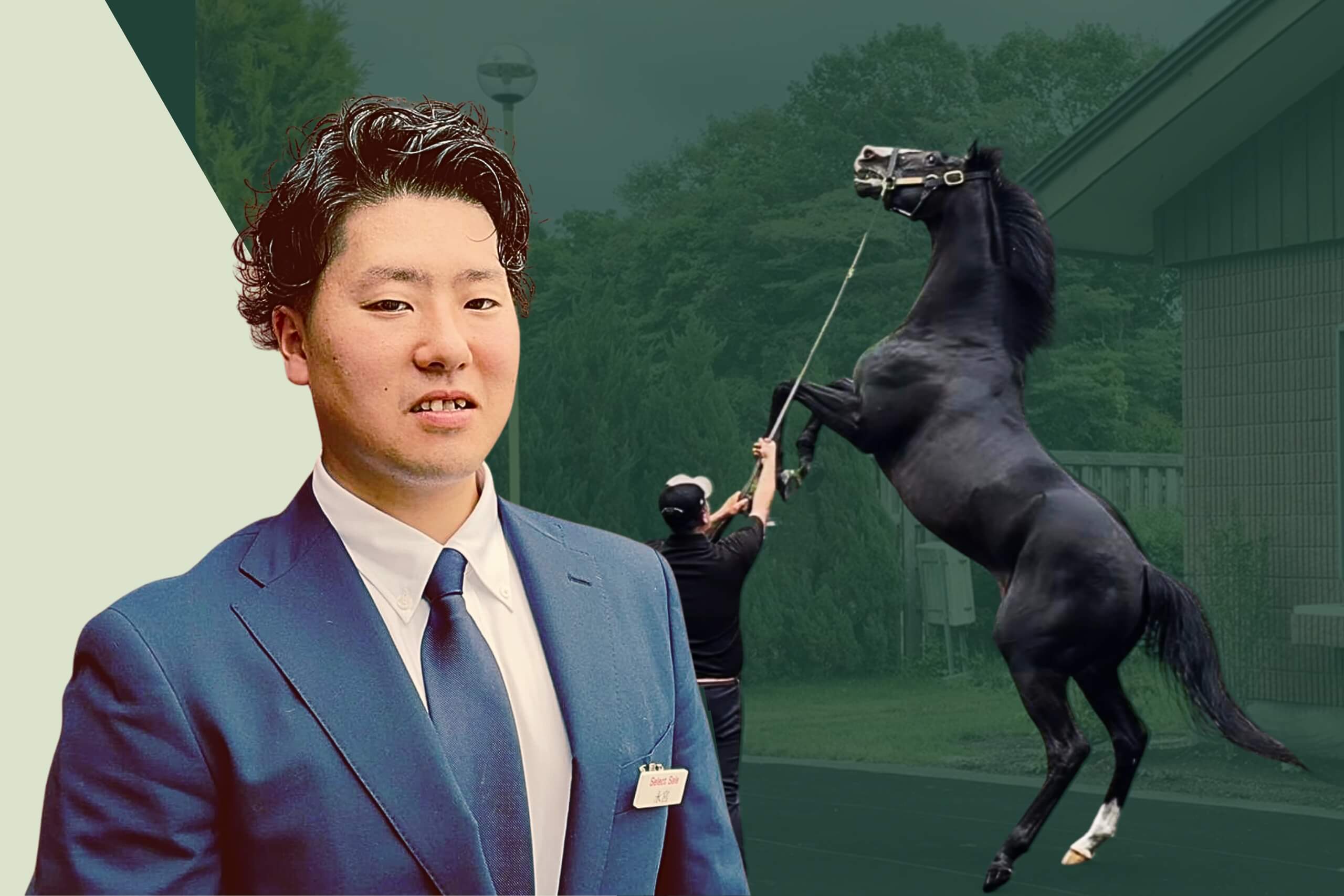
Daiki Nagamiya was at a crossroads. He was heading into his late 20s, still young enough to change his life’s direction but old enough to feel the pressure of time’s passing. It was now or maybe never.
He was born and raised in Hokkaido, along the southern coast of Japan’s northern frontier, where agriculture meets the island chain’s awesome last true wilderness of vast forests and mountainous volcanoes. But his Hokkaido was working class urban, the coastal manufacturing town of Tomakomai, home to the Red Eagles Hokkaido ice hockey team, a place where work is tough and winter bites without the picture postcard deep snowfalls.
Nagamiya was 26 years old, he had been working at the Aisin auto-parts factory since leaving school, making Toyota engines for the most part, and there seemed no great future in continuing: he felt life could offer more, that he needed to break the mould in which he was cast.
“My family was concerned about my daily life rhythm, and after discussions with them, I started thinking about finding a new job,” he tells Idol Horse.
He wanted to do something that would bring a better lifestyle for his wife and child than factory work would ever do for them.
“So, I thought, if I’m going to find a new job, why not find a job that you really want to do? So, I found this place.”
Nagamiya is only a few miles from the old Aisin factory and the day to day existence of the industrial noise and exertion of the monotonous auto-parts production line he walked away from. But in reality, the rural peace of Shadai Stallion Station is a world away.
To be where he is now, working as the trusted groom to one of the world’s greatest stallion prospects, is a leap most would never think of making at the age he did, being from the background he was from. He had no family connection to horse racing, no history with horses beyond a liking for the sport, which was sparked when a friend took him one summer to the races in Sapporo, 40 or so miles away.
“I found horse racing was a lot of fun to watch,” he said.
And that visit ultimately changed his life. It is six years since Nagamiya applied to work for the Yoshida family’s world-famous stud farm; six years since he left behind the prospect of a lifetime grind in Tomakomai’s factories; and it is little more than two and a half years since Equinox arrived at the farm.
“Through my fondness for horse racing, I was able to find a job like this,” he says. “I chose to apply to work at this place simply because there were a lot of horses that I knew of their achievements. That made me interested in Shadai and I applied.”
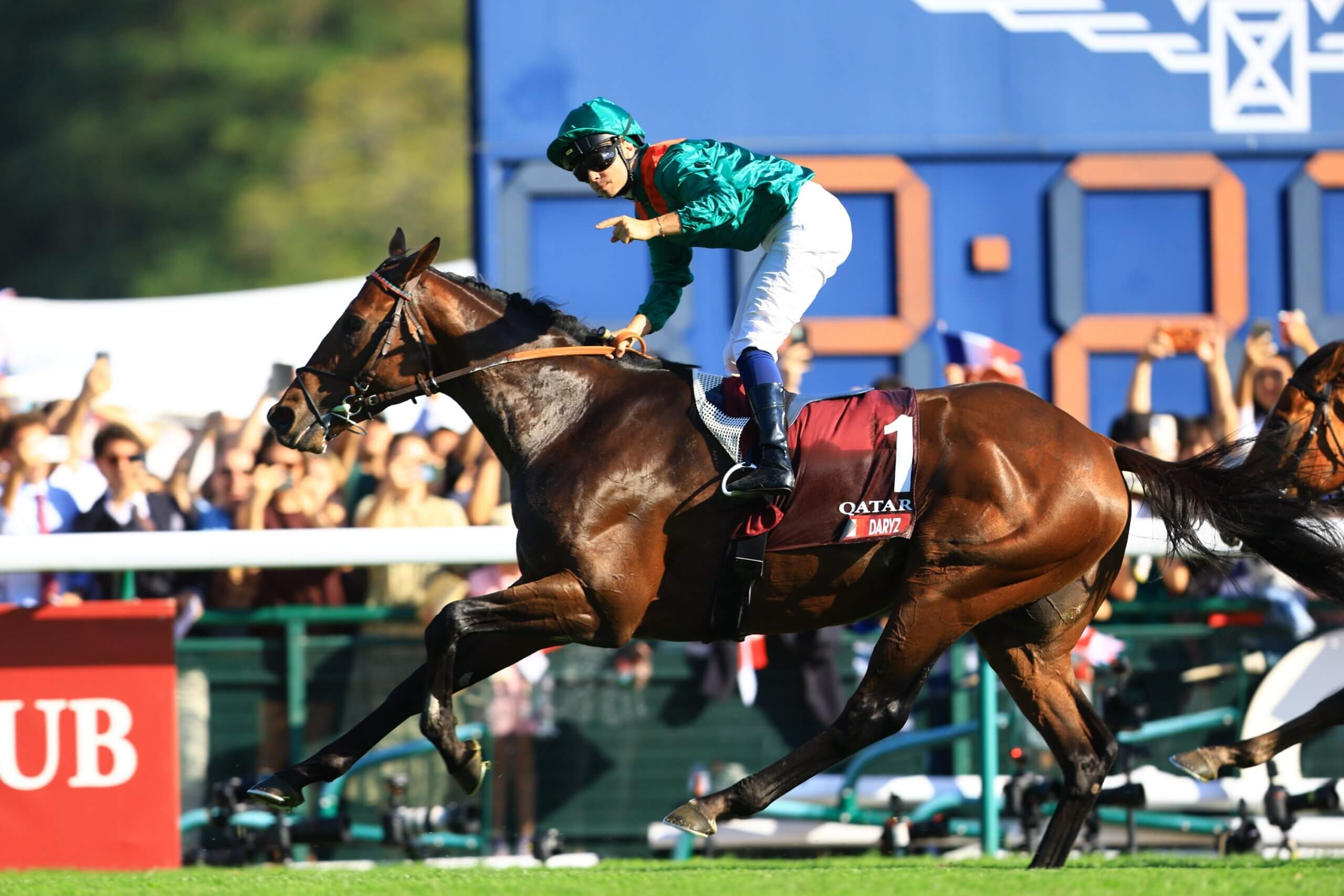
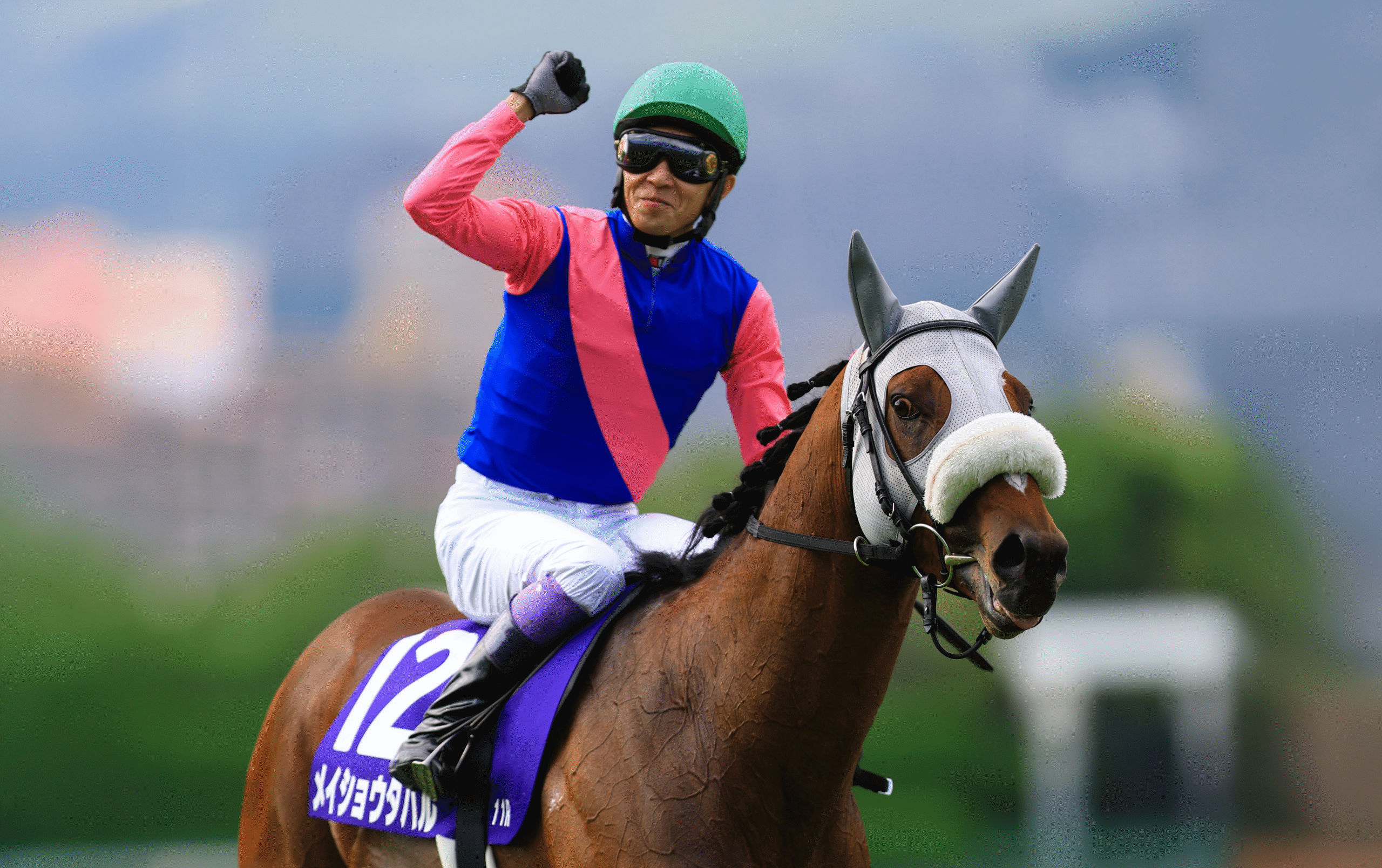
Nagamiya was new to his job at Shadai when he was watching Equinox’s races on TV: the Arima Kinen, the Dubai Sheema Classic, which announced the colt’s brilliance to the world, the Takarazuka Kinen, two Autumn Tenno Shos, the Japan Cup and his crowning by the International Federation of Horseracing Authorities (IFHA) as the World’s Best Racehorse of 2023.
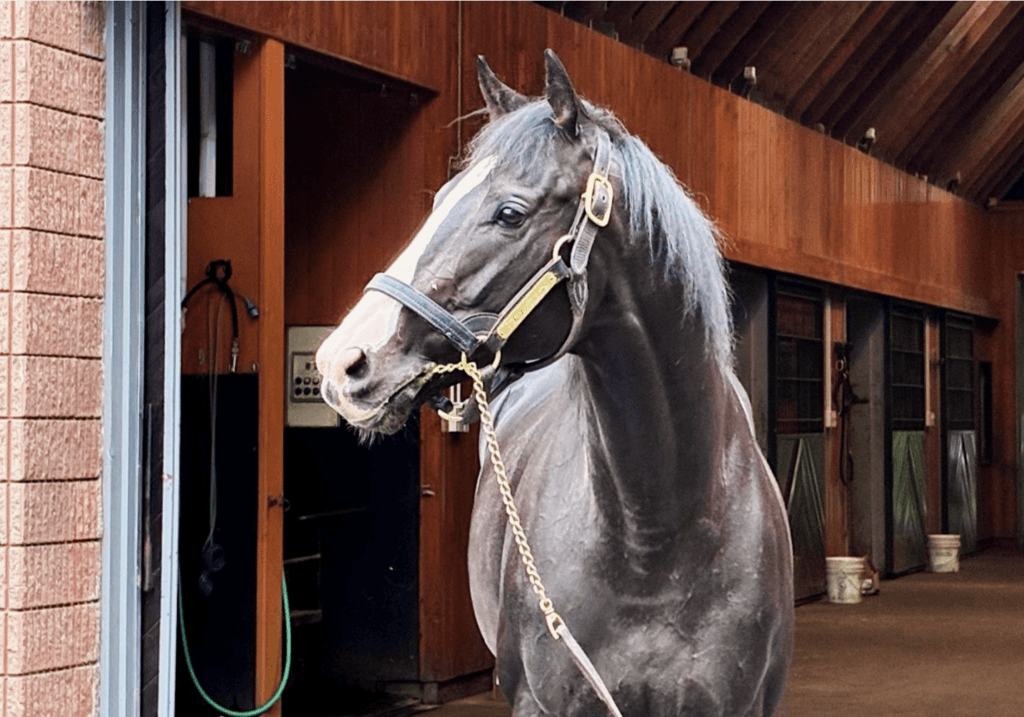
Equinox raced for the Yoshida family’s Northern Farm’s affiliated racing club, Silk Racing, and he arrived at Shadai in December 2023 as one of the decade’s hottest stallion prospects, a son of Kitasan Black, carrying the potent genes of his legendary great grandsire, the breed-shaping Sunday Silence.
The former engine parts maker was given the weighty responsibility of being Equinox’s groom.
“My boss asked me if I’d like to give it a try, and I did,” Nagamiya says. Asked if he felt it a big responsibility he answers, “Yes, indeed,” and when it is put to him that his boss must trust him to give him such a responsibility, he laughs self-consciously at the praise.
“The fact I’m asked to look after such a great horse has motivated me a lot,” he says.
Shadai Stallion Station’s general manager Eisuke Tokutake, says of Nagamiya: “He came from a car manufacturing company, but he became proficient in a very short period of time as he has very good athletic abilities.
“He is very good at dealing with horses. We train all of our new employees who have no experience in horses, so we would find somebody who is not from our farm to specifically train them, and he learned everything very quickly. I think no previous experience actually benefited him as he was not doing things in his own way; he learned everything from scratch from a professional (mentor) and absorbed everything really quickly. We trust him a lot.”
Tokutake understands something of Nagamiya’s life path to Shadai. He too made a career move in his late 20s: with some experience riding horses at a club in his youth, he left an ordinary company job, took work at a small horse farm for a year and a half, then moved to Shadai at age 29. That was back in the early 1990s when Sunday Silence’s first foals were being born in Hokkaido.
“I didn’t know much about horses when I first came here,” Tokutake says, smiling at the memory.
“At that time Sunday Silence offspring had begun coming to ground, and everyone had high praise for them. But I didn’t know what was good about them, as in my eyes they looked skinny and twisted. I just thought, what on Earth were they talking about? I didn’t know anything at that time. Their legs were long, they looked skinny and twisted, and they said that’s because their muscles were soft and flexible. I didn’t know what that meant, and I thought they were in some kind of cult,” he adds with warm amusement. “But every staff member here told me so. I was like, what is this place that I got myself into?”
Nagamiya’s knowledge was very limited, too, when he arrived. He did not know much of anything about the worldwide reputation of the Yoshida family’s stud farms before he started working there either.
“I’d heard of the Northern Farm,” he says, but his knowledge came only from what he had picked up as a racing fan.
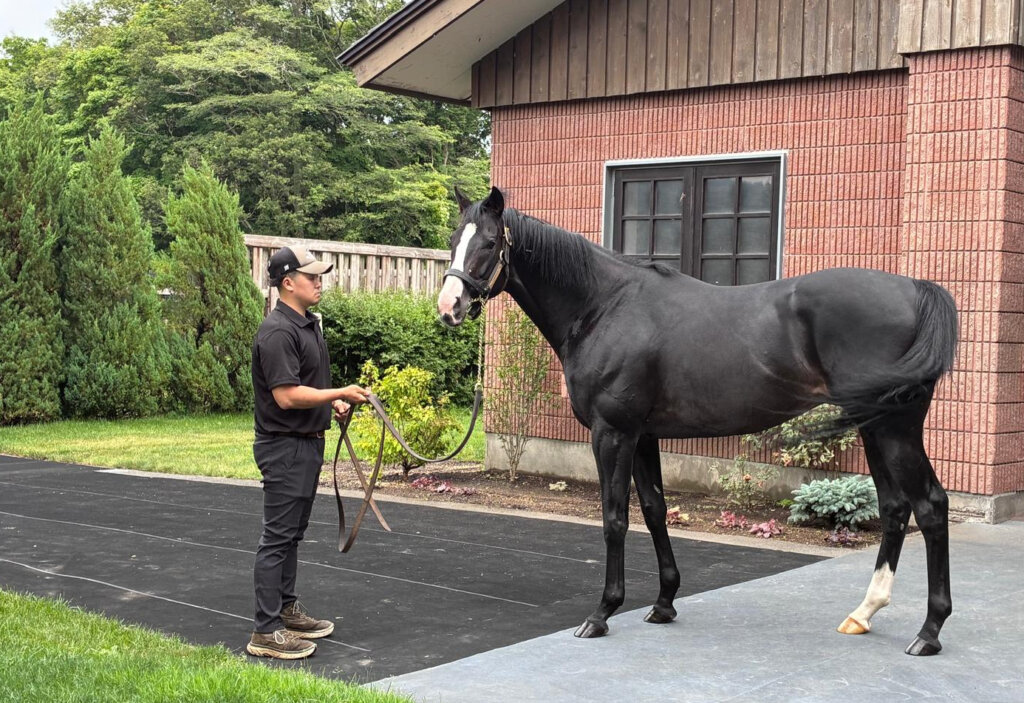
Yet, seeing Nagamiya handle Equinox, this powerful stallion in the prime of his life, it is difficult to believe the groom has been around horses for such a short portion of his life. He is unfazed when the champion rears high on his back legs not once but twice, adjusting his hands easily to let the lead leather slide long, then calmly shortening to bring his charge back to him. Equinox appreciates being allowed his moment of exhibitionism and with that out of the way, he acquiesces to his groom’s every request, standing calmly, walking back and forth smoothly, posing to show his striking head.
“He is usually very calm and easy, but when he becomes switched on, for example when he is going to the mares, he will become sometimes a little bit too keen,” Nagamiya says, and adds that he is in some awe of the stallion when he sees him tap into his competitive instinct and shift through his old paces in the paddock.
“He tends to be affected by other horses, so if he sees other horses running, he will run as well, and he always impresses me how fast he is.”
The next two days see Nagamiya at Northern Horse Park. Gone are the cap, polo shirt and cotton pants of his day job: here he wears the uniform sharp navy suit and tie, buttoned-down white shirt for his role leading the yearlings and foals into the hallowed sale ring at the Japan Racing Horse Association (JRHA) Select Sale.
Equinox’s first yearlings are selling, followed by the first of his second crop foals. There is anticipation and expectation around the sale ground in equal measure.
Equinox’s first yearling sells for ¥82 million (US$506,173) to big-spending billionaire Susumu Fujita of dirt track champion Forever Young fame. A good start, for sure. The pinnacle, though, comes later when Masahiro Noda of Danox Co, Japan’s 15th richest man with a net worth of US$3.3 billion according to Forbes, pays ¥420 million (US$2.59 million).
The stallion’s 13 yearlings that sold did so for a combined ¥1.98 billion (US$12.2 million), while his 16 foals went for a total of ¥2.18 billion (US$13.2 million).
“I don’t really know about his offspring, but based on what I’ve heard I do know they are very highly anticipated. That actually gives me pressure,” Nagamiya admitted pre-sale.
But rather this than the pressure that comes with the grind of factory work. The rewards of what he does now are more than financial, they’re also found in the better home-life balance, the workplace environment, the mind-calming tranquility of Shadai’s rural setting, the sense of achievement that comes with each new day and each new encounter.
There is routine of course, but not the monotony of a factory production line. Most of all is the inwardly rewarding connection that comes with caring for Equinox, a living, breathing individual, not just a champion racer and high-value stallion.
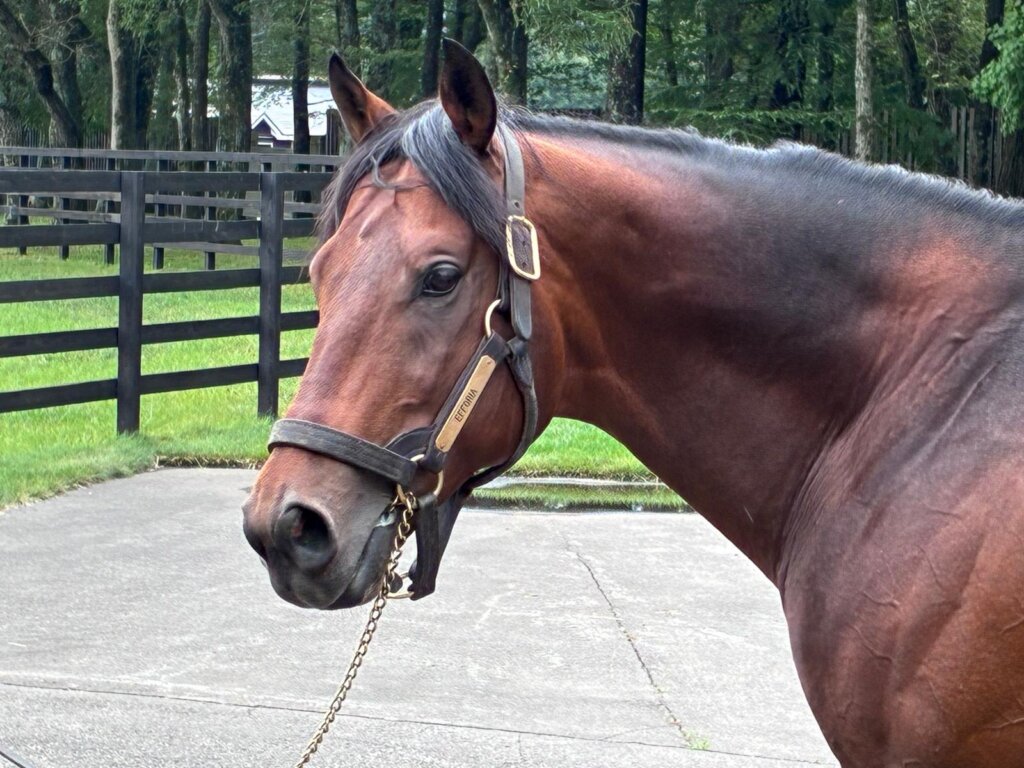
And Equinox is not the only stallion the groom works with, there’s Efforia, too. Others he has worked with are Nadal, Bricks and Mortar, Danon Kingly and Mikki Isle.
Efforia has also made a bright start to his stallion career, with six two-year-old winners already from his first crop this year, from just 19 runners. Two of his yearlings sold for more than US$2 million at the Select Sale.
“Efforia usually is also pretty calm and quiet, like Equinox,” Nagamiya says. “But I never thought he could have this much success at such an early stage. I kind of felt he would succeed, but didn’t expect this early.”
The same could be said of Nagamiya. Just six years in, looking after two of the world’s brightest stallion prospects, one a world champion no less.
Not bad for a one-time auto parts maker from Tomakomai, a man whose natural horse sense might never have been unlocked but for that life-changing decision to break the mould. ∎