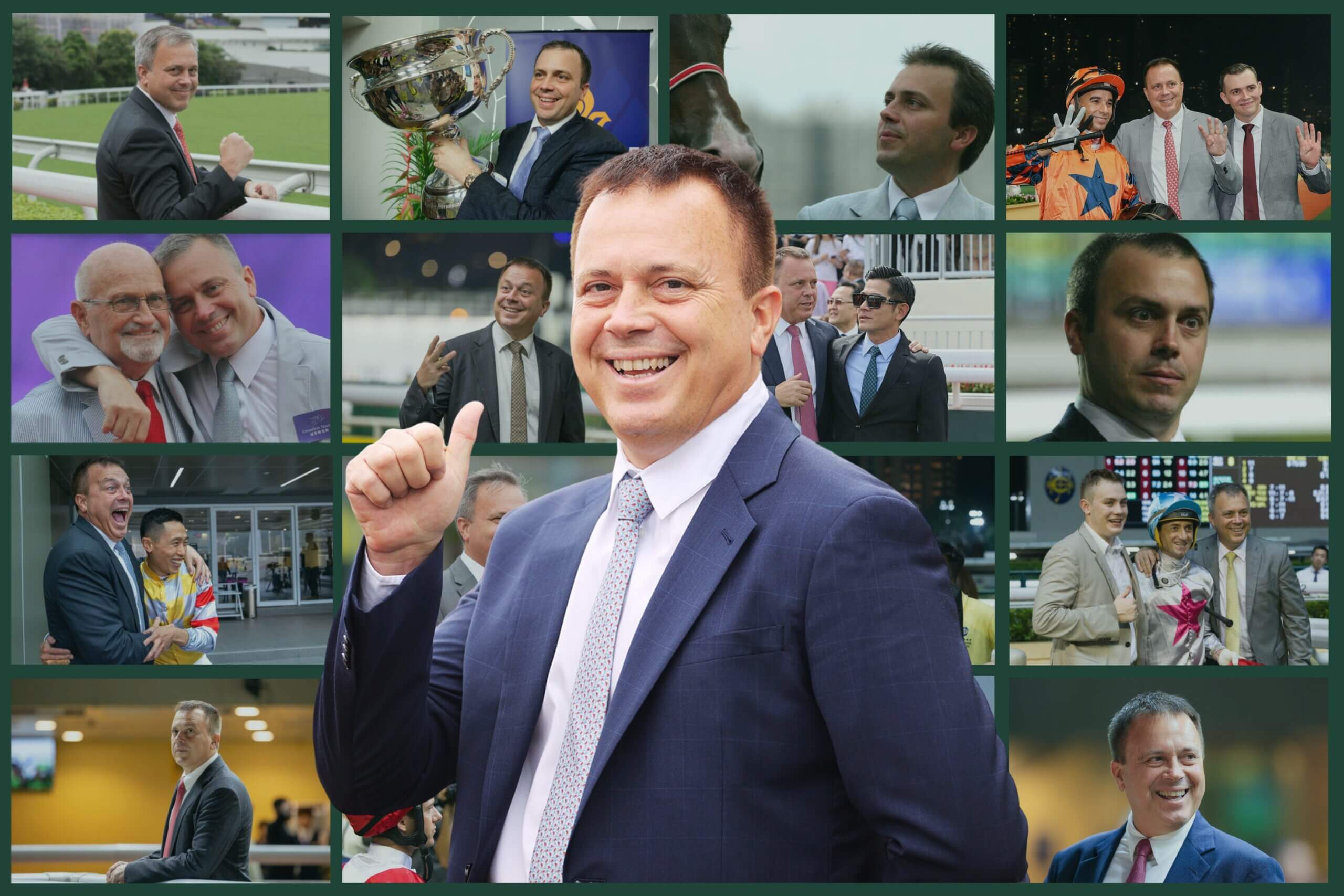
From The Himalayas To Happy Valley: How The Fownes Family Found A Home In Hong Kong
On the brink of a fifth championship, Caspar Fownes talks Calcutta, catapults, “Curry Fownes” – and the values his father Lawrie drilled into him.
From The Himalayas To Happy Valley: How The Fownes Family Found A Home In Hong Kong
On the brink of a fifth championship, Caspar Fownes talks Calcutta, catapults, “Curry Fownes” – and the values his father Lawrie drilled into him.
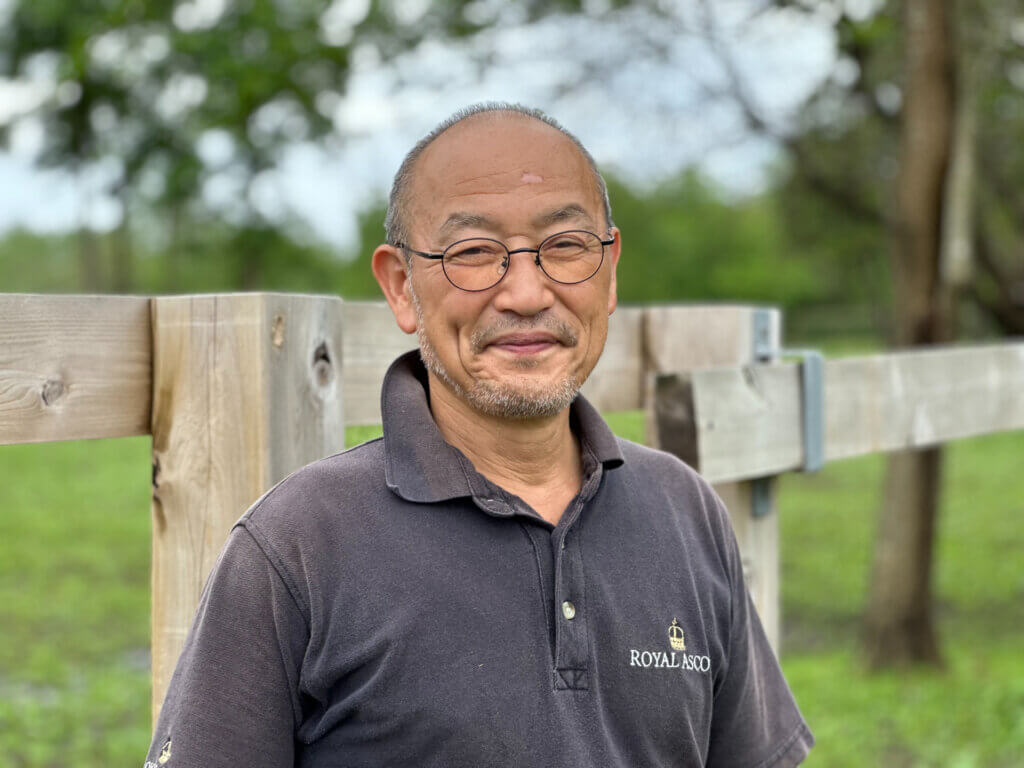
10 July, 2026CASPAR FOWNES slides into the booth at Woodlands in East Tsim Sha Tsui like a man coming home. He opens a menu he has seen many times and orders with an authentic Hindi pronunciation that would startle the waiters were they not so familiar with him. We’re calling for reinforcements before the first plates are cleared.
“More sambar and chutney, please.”
There could hardly be a better room for him. Woodlands is an Indian transplant that stopped feeling foreign in Hong Kong a long time ago – Chinese families at one table, Indian regulars at the next, two racing people down the back, all working through the same South Indian food. It’s a polished operation these days, franchised even, but it became local the honest way: by being loved for long enough.
A lot like Fownes himself.
Between mouthfuls, he turns his phone face-up on the table, glances at it, turns it back. He does this every few minutes. He doesn’t explain it. Not yet.
He is chasing a fifth trainers’ championship – but that’s the end of the story. The beginning is a long way from here, in Calcutta, where he was born. Ask him about it and his eyes light up.
“Beautiful memories,” he says. “What a place to grow up.” History, culture, family, safety – he reels it off like a man defending somewhere he loves. He schooled down south in Bangalore, but the racing was in Calcutta, where his father Lawrie trained and where the boy spent every break he could get.
“My dad was a complete and utter idol,” he says. “I just loved to follow him around and be his mate.”
The love of horses that has run his whole life wasn’t a decision. He caught it young, off a world that ran on them – raw, unrefined Indian racing with a rich history and an unmistakable soul. He speaks most fondly of the handlers, one man to a horse, who slept on bamboo and canvas beds outside the stables.

The Fownes name had arrived in India two generations before him, carried by his great-grandfather – “Smiling” Jack Fownes, who came out with the Royal Hussars at the turn of the last century and stayed. Smiling Jack’s sons, Major Eric and Captain Dinky, were also cavalrymen who became trainers. The dynasty was three deep before Caspar was born into it.
Fownes speaks of those formative years with warmth. “We grew up with a catapult in our hands,” he says – knocking lizards off walls, that sort of thing. Just boys, and guns, and time.
One of the gun stories resulted in a .22 slug in the shin but Fownes tells it like it was a scraped knee. He and his cousins – another branch of the racing family tree, the Woods brothers – were mucking around with a .22, and Caspar caught one in the leg. He still has the scar. What he won’t give you, more than forty years on, is a name.
“They shot me,” he says, cheerful about it. “Sean or Wendyll, I don’t remember which.” He didn’t give his cousins up that day, and he isn’t starting now.
And that wasn’t even the worst of the shooting. Another day, matchboxes lined along the top of a wall for target practice, a third brother – Dwayne – lifted his head from behind the wall at exactly the wrong moment and took a slug clean between the eyes. He had to be driven to hospital to have it dug out.
The cousins didn’t stay behind in India. For a time they came east too – Wendyll to ride as Lawrie’s stable jockey, Sean to train in his own right. The whole world of that childhood – family, horses, rivalries – packed up and reassembled itself in Hong Kong.
The reassembling was rough.
In July 1981 the family flew east, and the Jockey Club put them up at the Lee Gardens Hotel while the flat at Sha Tin Racecourse was made ready. Caspar was thirteen, his sisters Stephanie and Fenella a couple of years ahead of him. And the story he reaches for to catch the culture shock isn’t about horses. It’s about fruit.
“We come from a country where fruit was so cheap they were virtually giving it away,” he says. Then Lawrie stopped at a street stall and was quoted twenty-five Hong Kong dollars – for half a watermelon. “This is 1981. Half. We could’ve got thirty watermelons in India for that.”
You can still see the sum landing on Lawrie’s face in the way his son tells it: a man who has just bet his family’s future on this city, doing the arithmetic on a footpath and not liking the answer.
It got worse than expensive fruit. In that era you couldn’t move money out of India directly – you handed it to someone who took a cut and trusted the rest would surface in Hong Kong. Lawrie trusted a family friend. It never came.
“Came here with nothing,” Caspar says, the humour gone out of his voice for the first time. “Start again. Start again.”
A twice-champion trainer of Calcutta – 650 winners, every major race on the calendar, the darling of owners and press – starting from zero in a strange town, the family under pressure from the word go.
Lawrie put it plainly, years ago over lunch: “It was extremely tough. I went from the top of the tree to an also-ran in a heartbeat.”
It was Pamela – the wife whose feistiness he’d first clocked at a monsoon-season race meeting decades earlier – who’d pushed him to give up the Indian comfort for a better future. She thought he was wasting his talents. She was also the one who watched the cost of leaving that comfort zone land on the whole family.
“We knew everyone in India,” she recalled. “Here, we knew no one. We heard all the remarks – people were calling him ‘Curry Fownes.’ The pressure was on the whole family. We didn’t know what would happen.”
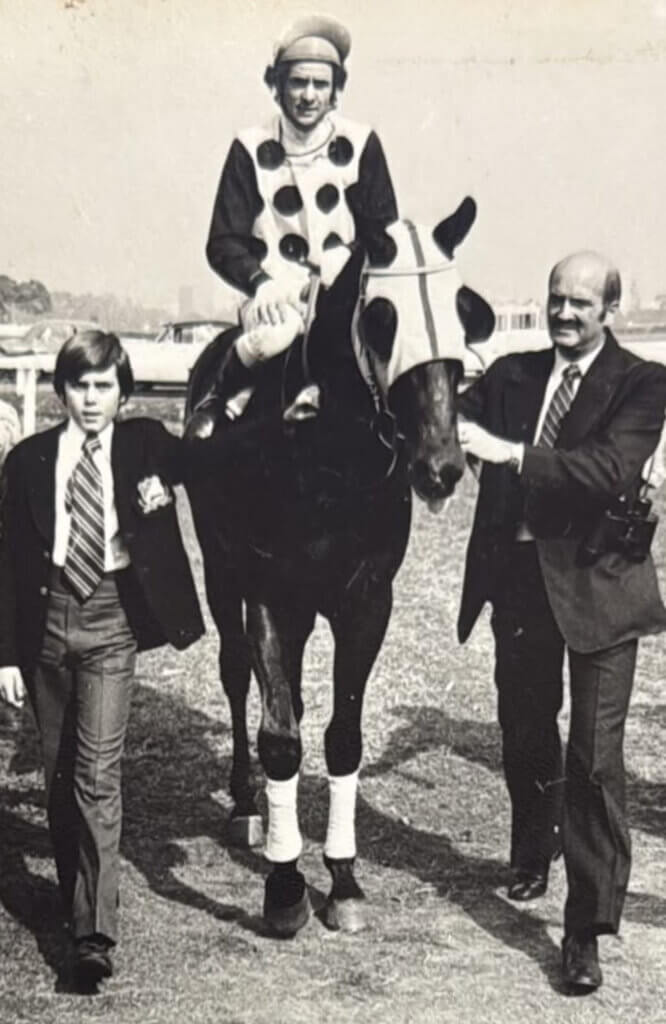
In his first Hong Kong season, Lawrie finished last in the championship with six winners. Ten winners the year after. And then, slowly, it turned.
What turned it wasn’t luck, and it wasn’t a headline horse or single breakout win. It was the thing Caspar circles back to all lunch: his father’s refusal to bend.
Lawrie had been handed a ten-horse stable of broken-down horses and dropped into a scene where a trainer’s word counted for little. Stable staff answered to a union so powerful that, in Caspar’s telling, even the Club stepped around it. The jockeys ran much of the rest.
“Trainers had no respect,” he says. “He changed all that.”
And behind it sat an outside element with its fingers in the game – “puppeteers”, Caspar calls them. It was the Shanghai Syndicate era – a dark time for the sport – and faceless owners were working thirty, forty, fifty horses through other men’s names.
His father didn’t fight it with noise. He fought it by being right, over and over, until the place had to move. He took the wrecked horses – tendon trouble, suspensory trouble, barrier rogues – and won with them. He refused to let jockeys run his yard.
“The battle was won,” Lawrie once explained, “when they realised I wasn’t going to take horses and have them run by the jockeys.”
Caspar is careful about how this part gets told. It isn’t that anyone got put in their place, he says. It’s that the standard rose. Accountability arrived where there had been none, and working conditions improved with it. Everyone came up together.
But the inheritance he’s proudest of isn’t the winners. It’s the values, and he can recite it because it was drilled into him by Lawrie.
“If you’re in the right, you fight,” he says. “And if you’re in the wrong, you put your hand out and apologise – look the person in the eyes and say I’m very sorry. That’s instilled in me.”
There’s one story that sums up Lawrie’s character, and it’s told best not by Caspar but by Cyrus Madan, the former chairman of the Royal Calcutta Turf Club. The 1974 Bangalore Derby, Lawrie had just led out his own runner, Skyline – a real handful, a 20-1 shot. Then a rival, Mauritius Pearl, refused to load. Without a second thought, Lawrie jumped the fence and helped get the rival horse in.
The two dead-heated, in the most dramatic finish the race had seen.
“That says so much about the type of man Lawrence Fownes is,” Madan says. Caspar adds: “Imagine that? Lawrie jumped the fence and got the horse loaded – only he could do something like that.”
Darjeeling’s cool hills gave way to the density of Causeway Bay. Caspar went to King George V – “KGV”, one of the city’s best-known schools – but his real education was trackwork. Every morning before class, he was at the stables.
“4am,” he says of the start time. “Back home for a quick brekkie, then on the 7:40 bus to school.”
He learned the game from the ground up, grooming horses at thirteen, watching his old man stare down the mafoos and the union and the puppeteers and win. By the time he was assistant trainer, he’d absorbed Hong Kong racing like oxygen – the handicap system, the rhythms of trackwork, the politics of owners, the psychology of jockeys.
But the next chapter nearly didn’t happen.
When Lawrie hit the compulsory retirement age of 65, the family line of trainers came within a whisker of snapping. In 2003 – absurd as it sounds now – Caspar was denied a licence. Not one to beg, Lawrie poured his heart out in an open letter on the back page of the South China Morning Post: eighteen years his son had worked alongside him, learning the craft, and this would be the first time in more than sixty years that a Fownes did not hold a licence.
“Hold your head up high, son,” he wrote. “I’m proud of you.”
It was the establishment doing to the son what it had once tried on the father. Both outsiders. Both made to wait. An eleventh-hour departure by another foreign trainer, Peter Chapple-Hyam, late in the term, finally cracked the door. Caspar walked through it and hasn’t looked back since.
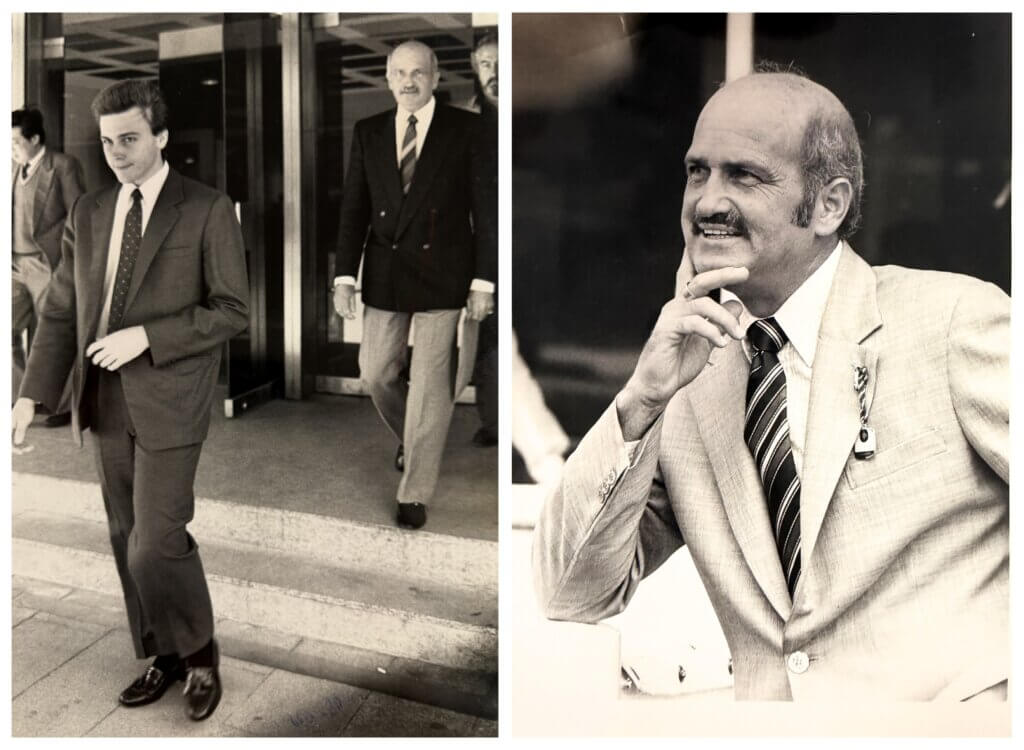
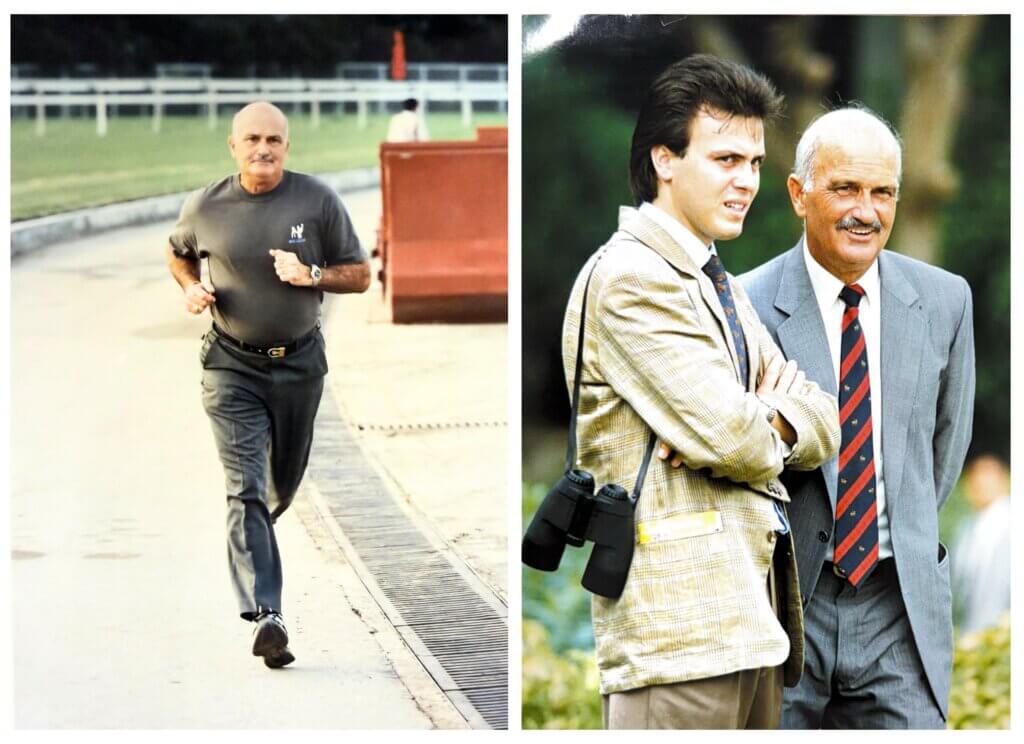
He hit the ground running, and the results kept climbing – to the point where Lawrie himself, no soft marker, conceded the son had become the better trainer. Ask Caspar for his self-assessment and the humility kicks in; he won’t ever say he is the better trainer. He has had access to better jockeys, he offers eventually.
I put it to him that his father may have been loyal to a fault, and he doesn’t dispute it. Lawrie would stand by a stable rider out of sheer loyalty. Caspar won’t. A ride that isn’t good enough is a ride that isn’t good enough – “doesn’t matter who you put on it” – and the rider will hear about it.
“You know where the door is,” he says, matter-of-factly.
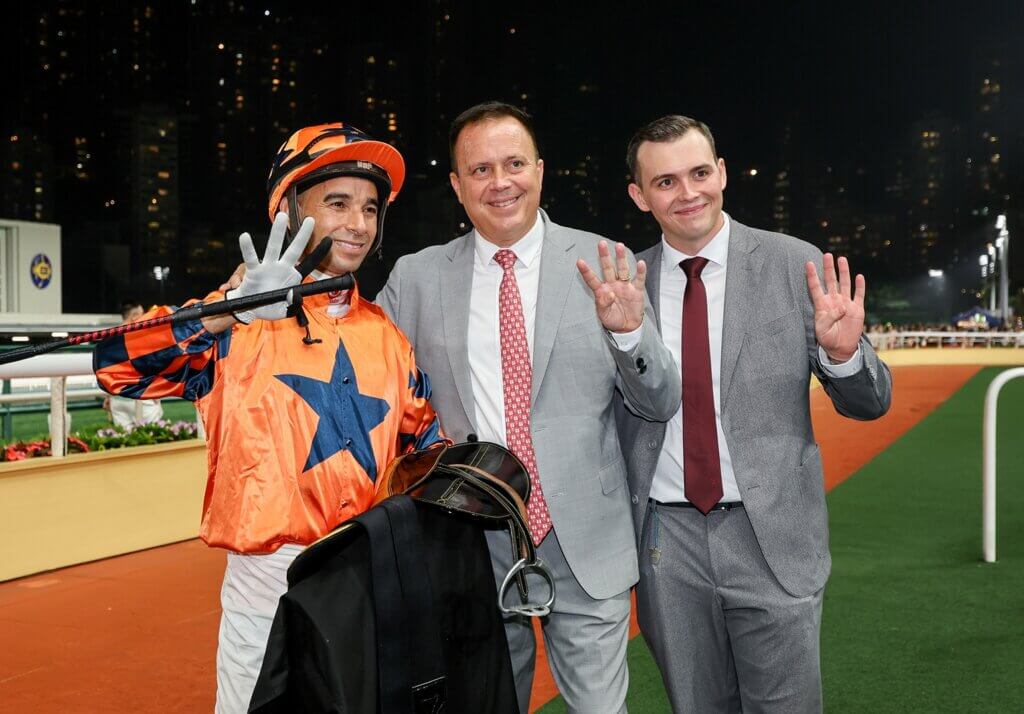
Of his 69 winners so far this season, 46 have come at Happy Valley – three of them on an electric night last Wednesday when his gun-for-hire stable rider Joao Moreira steered a treble. This will be a championship, in effect, built on Wednesday nights.
So why the Valley? A feel for which horses will fire there, an instinct for getting the best out of them. He’s taken horses no one would pick as Valley types and watched them come alive, then return to Sha Tin the better for it.
“It can actually develop a horse,” he says. “Something about the trip across town, the tight turns and the whole experience can bring a horse on. Take them there and they often come back and win a few races at Sha Tin.”
“But I love the track itself,” he says. “It’s in my heart.”
It has been that way since he was a boy, watching the old man race there. “You’re right on top of the action. The fans stacked five, six, seven floors up, the noise coming straight down.”
And he loves the theatre of it – where he is often the leading man. Fownes’ boisterous celebrations are part of the atmosphere. On Wednesday night after rival Danny Shum trained two consecutive winners and Fownes hit back with his third he yelled, “You want a fight, I’ll give you a fight!” as he fist-pumped his way out into the parade ring. Anytime a Fownes-trained horse is looming in a race you will hear its trainer’s voice before you see the run.
There’s a version of Caspar Fownes that a certain vintage of racegoer will never forget: the one who, at a daytime fixture at the Valley in 2010, trained six winners to equal the record for most wins in a meeting by a trainer – and then lost himself completely in the parade ring and busted out some disco-dancing moves. It began as a rolling of the arms, gathered momentum, and resolved into a Travolta-like point straight out of Saturday Night Fever. Where it came from, he can’t tell you.
“It’s just something that came out of me,” he says. “I don’t know who lives inside my brain.”
He doesn’t apologise for it. If anything, he thinks there should be more of it. “It’s a sport,” he says. “Celebration should be encouraged.” Class Five or Group 1, it’s the same to him – “I honestly ride them home and I enjoy it.” Lose that, he reckons, and you’ve lost the whole thing.
And the reason he can’t fake the joy is that he knows what sits behind each win. “People see them come out and win and think it’s easy,” he says. “You don’t realise it sprang a temperature a couple of weeks ago, or it was sore.”
When the talk turns to the two horses lighting up Hong Kong right now – Ka Ying Rising and Romantic Warrior – Fownes the champion trainer moves aside and Fownes the fan takes the chair.
They aren’t his horses – which is exactly why it moves you to hear him.
“We’re not worthy,” he says of Hong Kong’s two all-time greats. “To see those two champions – honestly, incredible.”
Ka Ying Rising scares him, in the best way. “It’s a freak of nature. A machine.” He’s convinced it would beat the best milers in the world if it were ever asked the question. And he wants everyone to see them while they can.
“If you’re a racing fan, you have to come and see them perform. It’s like going to see the World Cup, or the Masters.”
And here’s what makes his own title chase strange, and adds a serious degree of difficulty: he’s doing it without one of those monsters in his yard. No Group winner in the stable – he hasn’t had a Group 1 runner, let alone a winner. No horse of his has won more than three races all season. Of the seventy boxes he’s allowed, thirty-five – exactly half – hold horses rated 60 or less. His rivals have the multiple-race winners, the Derby horses, the big names. He has honest triers and a plan.
“It’s like a chess game – you’re thinking four moves ahead.” Placement, patience and pouncing when opportunities present. It has been, he insists, anything but easy: he traded the lead all season with Shum and Mark Newnham, got run down and dropped to third, clawed back to second, then to the front.
“It looks easy from the outside. But it’s been emotional. It’s been challenging.”
When the talk turns to the city of Hong Kong itself, he slows down for the first time all lunch.
“I love the Hong Kong people, I love the Chinese people, I love the culture,” he says. “I love everything about the place.”
He’s watched it take its hits. “We’ve hit some flat spots,” he says. “Really flat spots, recently. But it always bounces back.” He says it the way you’d talk about family – maybe it’s a quality he recognises, because it’s his own family’s code: the city that starts again is the one that took in a family that had to start again.
And through all of it, he reckons, the racing has been the constant – the lights, the movement, the horses, the characters, twice a week, whatever else the city is going through. “They’ve got something to go to, something to look forward to,” he says of the fans. “A bit of a release. Even if they’re gambling, they feel they’re doing something – putting some effort into a result.”
He’s one of the main characters now, and he embraces it. On the way to this lunch, the staff of a nearby bank asked for photos, and he obliged. Then somebody yelled “gaa yau!” (add oil, in English), the most Hong Kong of encouragements, the thing this city shouts at anyone it’s decided is one of its own – hurled across a Kowloon street at a man with a British passport, born in Calcutta, schooled in the Himalayas, married to an Australian, and claimed, utterly, by Hong Kong.
The boy whose father was floored by the price of a watermelon has become part of the social fabric.
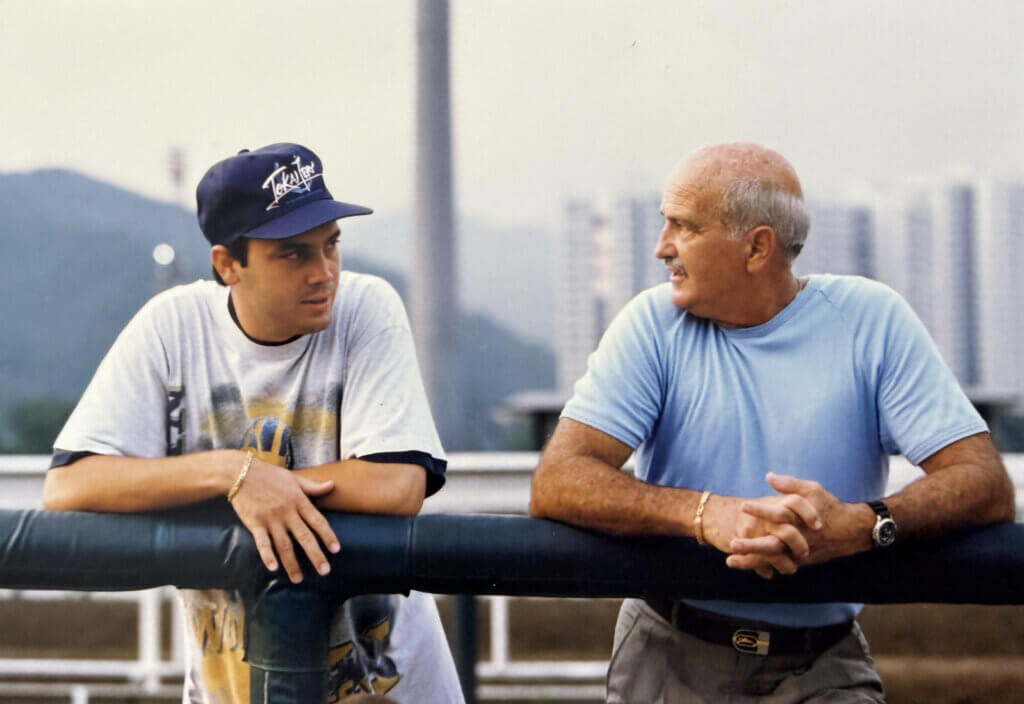
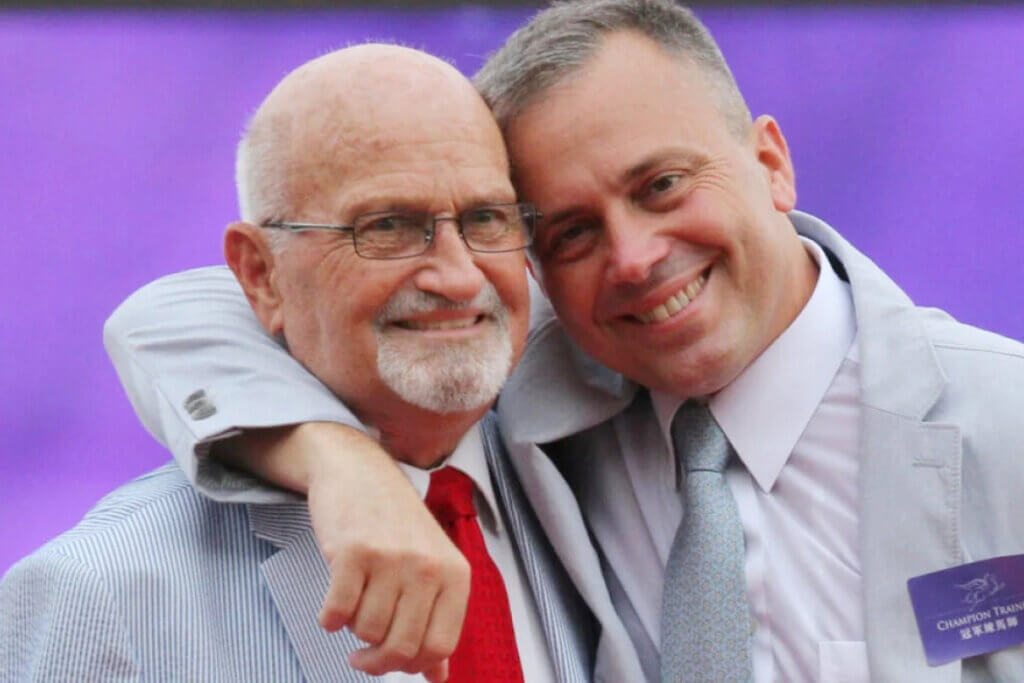
Fownes’ previous four titles didn’t carry equal weight. The third was the heaviest: it came with Lawrie battling cancer, and in April 2015 his father died at home in Tai Po, seventy-seven, with Pamela and all three children around him.
“The last few days he was fighting and his mind was so sharp until the end,” Caspar said in the days after, “but his body failed him.” He had lost, he said, not only his father “but also my mentor and my best friend” – a man who’d tried to instill in him honesty, integrity, compassion, love and forgiveness. And then he said this: “I’ve just been blessed to have him in my life, and I just hope I can be as good a dad to my boys as he was to me.”
Which is why this fifth title, if it comes, will mean more than the four before it – because of who’s in the yard with him now.
His sons have grown up the way he did, trailing their father around a stable until the sport got its hooks in. Ronan is his right-hand-man – the next Fownes already in the trade. Older brother Ryan has a keen interest as well. Riley, the youngest, is coming along behind, still at school. Fownes says his wife Alix has wanted this one badly, wanted him to show everyone what he’s worth, and this season he decided to knuckle down and do exactly that.
“Huge family element,” he says of his motivation. “My boys are growing up. They’re part of the team.”
It’s the same shape the story has always had. In what turned out to be his final months, sitting in the Jockey Club’s Sha Tin clubhouse to talk about that third championship, Lawrie made sure you didn’t forget the part his daughter Fenella was playing in the stable back then – “it’s a team effort.” Caspar trailing Lawrie became Caspar’s boys trailing Caspar. What passed down the line wasn’t the money – that was stolen before it ever reached Hong Kong. It was the thing that can’t be bought: family values and a love of the game.
By the time the plates are cleared, the sky over Tsim Sha Tsui has broken open. A typhoon warning has been hoisted and rain comes down in sheets, sluicing off the roofs of the buses in waves onto the street. And now, finally, the phone makes sense – the glances all through lunch, the divided attention. There’s an ailing horse back at the stable, struggling with colic symptoms, and he has been checking video updates the whole time.
He’ll cut through the rain to the nearby Shangri-La Hotel, he says, grab an Uber from there, get back to the horse.
Look after the horses and the owners first – the thing Lawrie drilled into a boy in another country, a lifetime ago. And here is that boy, fifty-eight now and two meetings from history, hurrying out into a Hong Kong rain storm to do exactly that. Horses first. ∎