Every second raceday in New Zealand, you’ll likely find a heavy track. The one where the stewards trudge down the straight in gumboots, poking holes in the greenest of green grass to see how squelchy it is. Can we race today or are we going home? It’s not called the land of the long white cloud for nothing.
So, if you’ve been around New Zealand racing long enough, you’ve probably seen enough races where jockeys dart for the outside fence after turning for home, hunting a drier bit of ground. Some are so wide they can high-five punters clambering over the rail. Those are the jockeys who usually win. There is no point moaning about it, it’s just a fact of life racing in New Zealand. Adapt faster than the rest.
“After a while you just knew the patterns on the tracks,” shrugs long-time trainer Richard Collett.
Which was particularly so for Ellerslie, the Auckland track which hosts a lot of New Zealand’s biggest races.
When Richard’s son, Jason, was about to be legged aboard for his first race ride as an amateur at Ellerslie, you would expect the trainer to have to calm the nerves of an excitable young jockey. Jason was about to ride on a track rated a Heavy (10), the wettest setting before a race meeting is called off. There was a strip of grass, Richard thought, which was a proverbial autobahn compared to the bog inside.
“These riders aren’t experienced,” Richard told Jason.
And his son was?
“The track is heavy and the track is better wider out,” he continued. “Don’t go crazy early. Try to keep up with them and just try to keep in touch from the 800 (metres). If you get back a bit, don’t panic. You’re on the best horse.”
Jason nodded.
His best mate, Scott Cameron, a former jockey turned Melbourne-based trainer, was also riding in the race. Scott’s dad, Russell, had set up a horse he thought could win for the family. The Colletts wanted Jason’s first ride on a horse called Bobby Dazzler to be memorable, too.
“A half-mile out he was 25 lengths from them,” Richard laughs. “He’s cut the corner, worked his way out the middle of the track and this horse has been strong late … and it’s got up.
“My mate was the stipe and when he was weighing in, I said to Jase, ‘you don’t think you got too far back?’ He said, ‘you told me I was on the best horse dad, so I had no need to worry’. My mate looks at me and just laughs.
“That sums him up.”
Jason reckons the winning time might have been one minute and 47 seconds … for a mile. The field went up and down, until the kid having his first ride showed he had the coolest head. Not much has changed.
If there was a jockey you had to stake your life on for having the lowest resting heart rate, it would be Jason Collett. There are patient jockeys, then there’s Jason Collett. You can imagine if the legendary Melbourne Cup king Bart Cummings was still alive, Jason Collett would be one of his favourite jockeys. There wouldn’t have been much said in the pre-race summit, because they would have known what each other wanted.
For years, Jason Collett has been the quiet achiever’s quite achiever. A jockey perennially rated the most underrated in Australia, maybe because he never quite believed how good he was.
More than a few trainers have wanted to give him a good shake after he’s returned to scale on a horse which has been ridden quiet, dived late and just missed. But maybe the only reason their horse finished off the race so well is because Collett spent years perfecting his craft on waterlogged New Zealand tracks, balancing them, cajoling them, kidding them until they mustered the strength and confidence to surge through the mud at the end.
“I have always liked to get them relaxed and into a rhythm,” Collett says. “I’d rather that than really having to bustle them along and get them out of their comfort zone. That’s probably how I see it.
“That’s not to say I enjoy backmarkers, but I enjoy horses that bounce into a rhythm and they can finish off that. That’s what I like.”
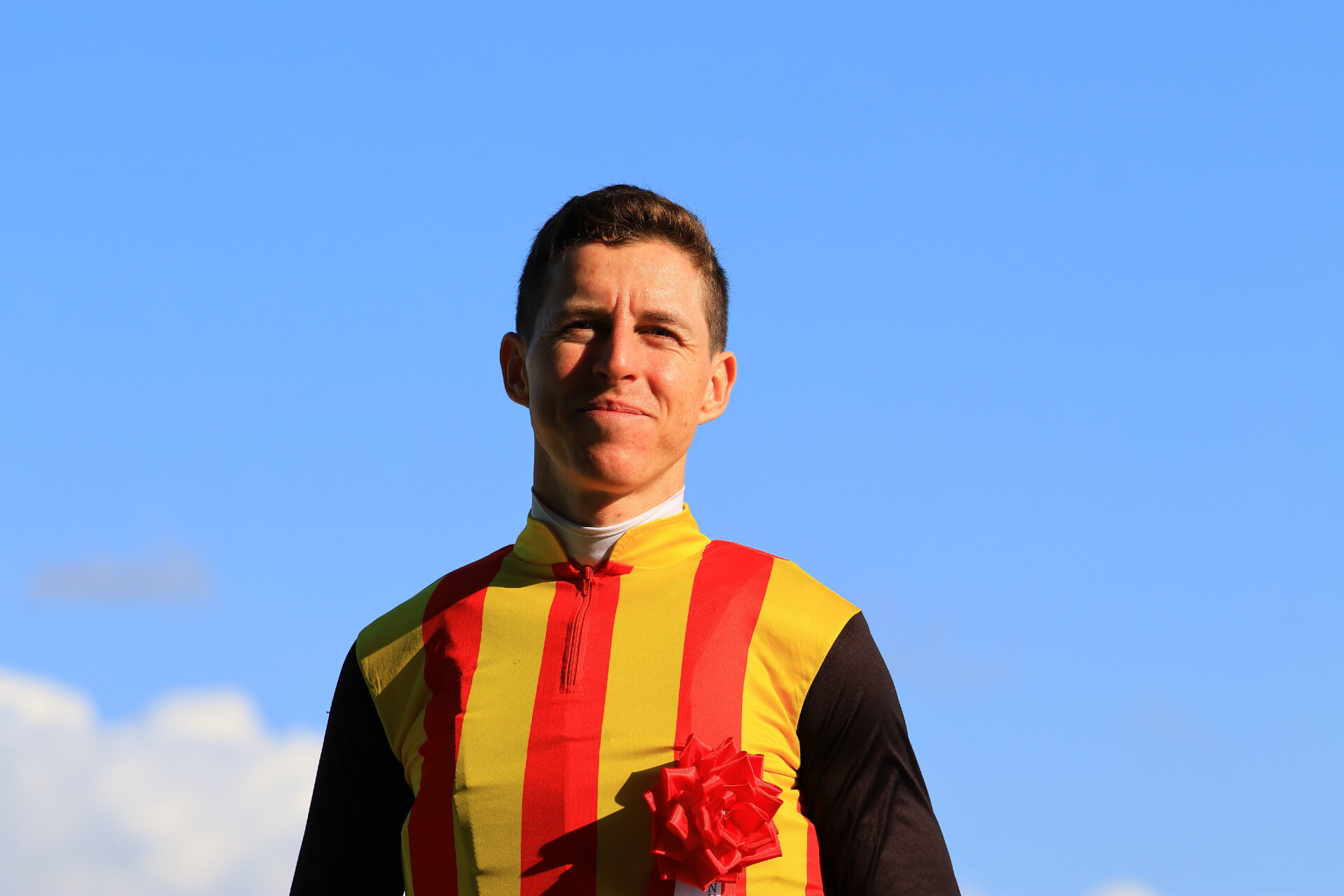
It’s a busy Friday morning at a local shopping centre near Collett’s Sydney home where the father of three, who will become the latest Australian-based jockey to ride in Japan in late June, is talking through his evolution. He’s rarely ridden overseas, but has long harboured an ambition to ride in Japan. The Japan Racing Association has granted him a short-term licence to follow the likes of Craig Williams, Damian Lane and Rachel King in recent years.
The noise of the nearby supermarket scanners almost force Collett to raise his voice when he talks about how long it has taken him to be the versatile jockey a demanding jurisdiction like Sydney, lorded over by James McDonald, demands.
So, how has he refined his style in the last 10 years?
“Tactically,” he fires back. “Trying to be sharper from the barrier and getting my horse into a good position. That’s what you need to do to win a race here in Sydney.
“James McDonald, I’d say 80 per cent of his rides are in the first three, four, five or six spots (in the run). He’s riding the best horses, but he’s still putting them in those spots. It took me a while to realise.
“I wanted to ride how I liked to ride, but you come unstuck because of that.”
It’s been seven years since Jason Collett won his first Group 1 race on Invincibella in 2019 for another New Zealand ex-pat, trainer Chris Waller. For a long time, Collett had the dreaded tag of “best jockey yet to win a Group 1”. Even he believed the day might not have come.
Did it weigh on him?
“It did,” Collett says. “That’s where I saw the psychologist a year or two before.”
He started pursuing other self-help techniques as well.
“I started reading quite a few books into it,” he says. “I was probably able to educate myself on the basics of it in dealing with pressure and understanding why you may think this way, how to control it, or try to control it.
“I just like learning. I’m 35 and I’ve only realised more later in life to do it. I wasn’t doing it in my early 20s. I got to my mid-20s and started realising, how can I improve?”
Says his longtime manager Bryan Haskins: “I don’t think he thought he was as good as some of the other guys. Now, he knows he is. He’ll rely on his feel in a race where he should be and what he should be doing.”
His feel was what won the day on Invincibella, ending a run of 10 Group 1 runner-up finishes before jagging a win.
“Relief,” Collett says. “F—, finally. I think I crossed the line and I was like, ‘yeah, we won. We won. We won!’”
Finally, Collett knew he was capable of mixing it with the best. And even now, Waller has to remind him about the gap to a jockey he grew up competing against in New Zealand.
“You’re not as far away from James McDonald as you think,” Waller tells him.
Now, Waller tells Idol Horse: “It’s very hard for a person like Jason because he’s so grounded. He’s done it the hard way. He hasn’t had the brilliant rides. He’s had to work and toil and prove himself. He’s always been a good jockey, but he’s had to bridge the gap against some very good jockeys. He continues to bridge that gap every six months. He’s done it himself and he hasn’t had any help to do it.
“But now he’s getting recognition, and recognition from his peers. James McDonald respects him, which is a good example. He never gets flustered, he never gets angry, he’s a really good person.
“I know an ambition was always to travel to Hong Kong, and whether he goes there or to Japan, he will continue to evolve.”
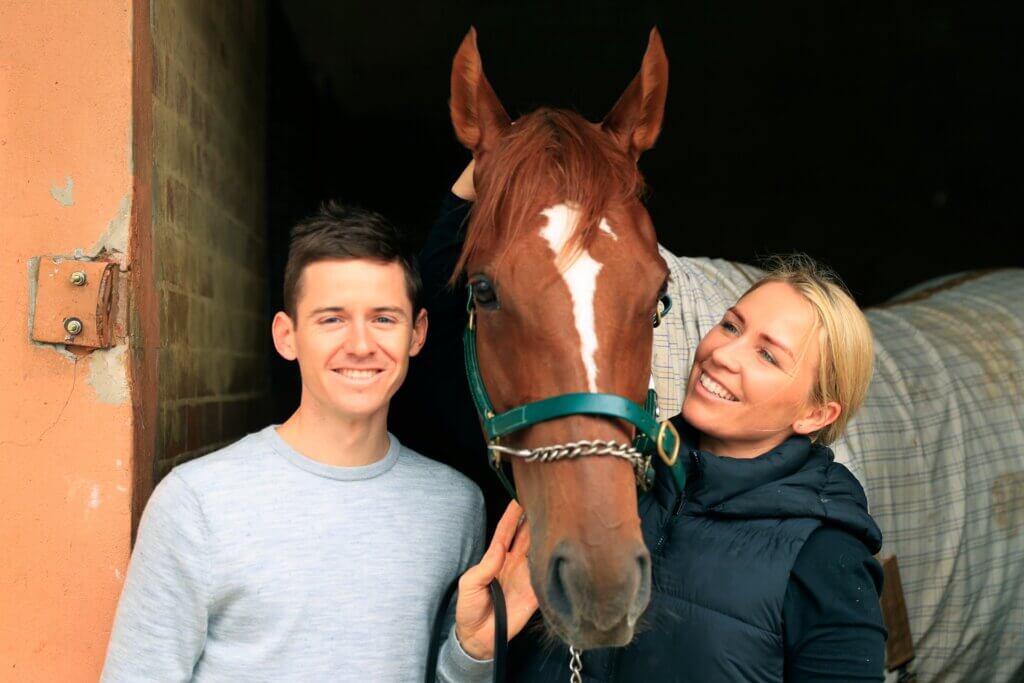
Richard Collett would know better than most the pressure of trying to be a topline jockey. He was an old-school rider who graduated to a rider’s usual finishing school: training racehorses.
He might be the best stallion New Zealand has ever produced, but you won’t ever see his name on a pedigree page. He and wife Judy have three kids: Natasha, Jason and Alysha. All have ridden with distinction, all with Group 1 wins next to their name, all wet track specialists thanks to their upbringing. Jason is the most laidback of the lot.
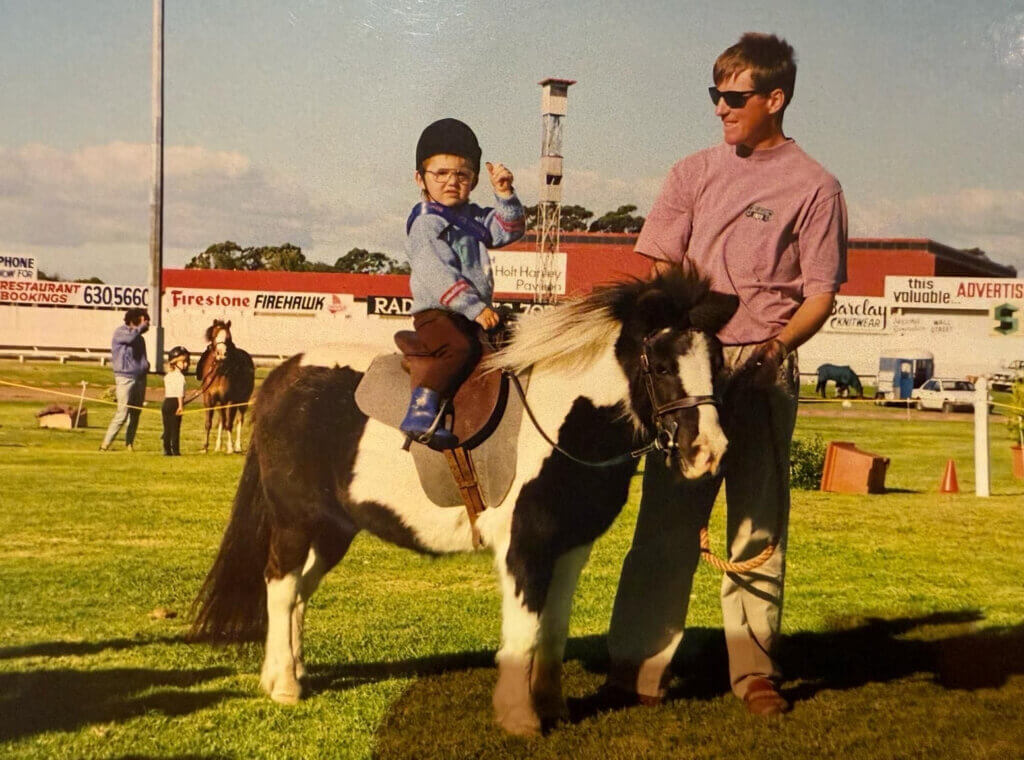
He had a pony from a very young age on the family property at Pukekohe, on the outskirts of Auckland. His eyesight also deteriorated at a young age, and he was wearing glasses even before he was at primary school (he uses contact lenses to ride). His sight was never always set on being a jockey.
Like most young New Zealand boys, McDonald included, Collett’s first ambition was to be an All Black, the country’s famed rugby union team. He was a handy player, too. With its large Maori and Pasifika population, New Zealand rugby authorities mandated kids play according to their weight rather than age. Collett would play against younger kids because he was lighter, but in the space of a year he went from trying to put on weight and grow to wanting to lose it so he could edge towards an apprenticeship as a jockey.
He had designs of making big money as an accountant, but found it too boring, and also considered a career in the construction sector. But when your last name is Collett, there’s a good chance you’ll be a claiming apprentice before long.
“He was always quite natural,” Richard says. “He’s a very cool thinker. He’s toughed it out, grinded away and learned a lot off a lot of good riders that aren’t there. That’s how you slowly get to the top of the tree.”
There was a time when Collett didn’t want to make it in Australia, going home after a short scholarship with Waller, which he handed out to a New Zealand jockey each year. His homesickness was brutal.
Collett continued riding in New Zealand, but after a terrible fall which left him with a brain bleed, he used the time off to determine he wanted to give Sydney racing another crack. This time with a claim after the Sydney rules were amended, he wouldn’t look back.
“I got a taste of it (in the first Sydney stint), but you go back home and reality strikes,” Collett says. “I’m riding for NZ$5000, or whatever it was.”
Even before he’d ridden his first Group 1 winner for Waller, Collett was riding Winx before she was Winx. He was aboard the wonder mare for her first two wins, and another three defeats in her three-year-old season. Winx would later win 33 straight races to end her career, arguably the greatest racehorse in Australian history.
But his greatest achievement was starting a family with Clare Cunningham, Peter Moody’s Sydney foreperson before she became a trainer in her own right. The couple have three kids.
“When something frustrating is happening at work, somebody outside wouldn’t understand it,” Collett says. “I do think it’s good having someone in racing (to go home to).
“That’s what’s cool, how our relationship works. It’s made our relationship better because we’ve been able to see the best and worst of each other. Then you bring the kids into it. You hear some couples do struggle when kids come into it because they haven’t seen each other under pressure, whereas we’ve been through it trying to train.”
Cunningham was a very successful trainer in her own right, producing stakes winners ridden by her husband. But it doesn’t come without tribulations when the jockey doesn’t ride to instruction.
“I had a trial one day and we had a horse called Travancore,” Collett laughs. “The horse got held up and she was blowing up because I needed to do more on it. You had to get over it quickly though. You couldn’t sit there and be dwelling about it because you have to go home and live with them.”
Collett lives in a place where his family has transported their New Zealand life. Richard trains a small team at Warwick Farm, Natasha and former jockey Andrew Calder’s family live nearby, and Alysha is a regular of the Sydney riding scene, and her races are often called by her partner and gun broadcaster Luke Marlow.
They’ll all be watching when Collett takes his talent to the other side of the world.
“I’ve wanted to go to Japan, more so as I’ve gotten older, for the culture,” he says. “I like that about the place.
“I remember Japanese racing as I was growing up and it is so much stronger and elite (than it used to be). We wouldn’t get near them now. Their breeding of middle-distance horses in a short space of time has been phenomenal.
“And I just want to ride somewhere different too.”
And that place will be a long way from the mudpits of New Zealand when Collett was a teenager. Just don’t bet against him finding the Japanese fast lane, and getting to the post in the nick of time. ∎