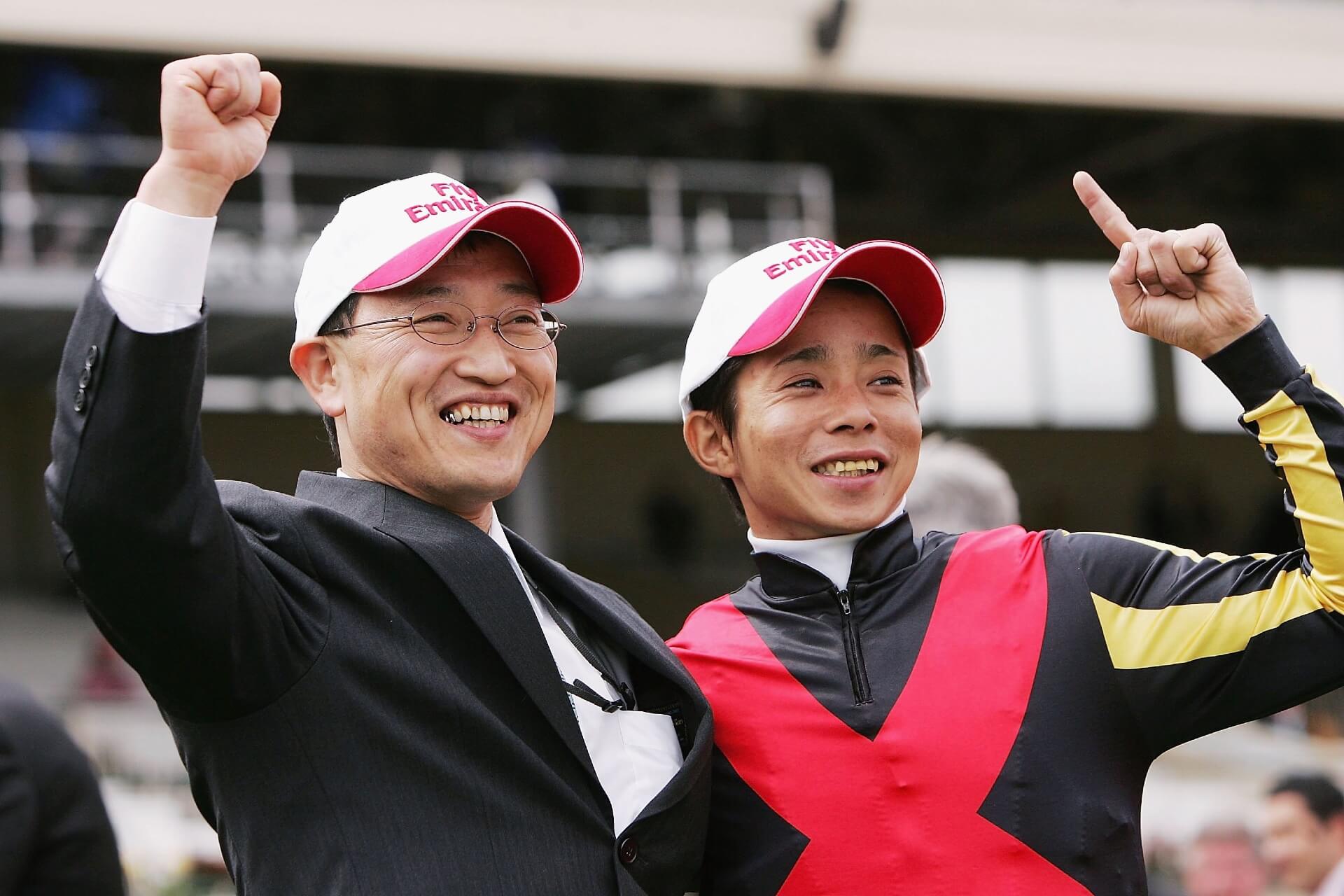
Before Yasunari Iwata arrived in Australia late afternoon on Melbourne Cup-eve, trainer Katsuhiko Sumii was already worried.
Iwata was a raw talent – 32 years old, fresh from the rugged NAR dirt circuit and yet to win a domestic Group 1 as a licensed Japan Racing Association (JRA) jockey. Other than a holiday to Honolulu, this was his only trip abroad.
When Iwata cleared immigration Sumii was relieved – but as his jockey came into view, he was now even more worried than before. “His face was pale,” Sumii recalls. “He was so nervous.” Iwata had arrived with his wife, but company wasn’t much comfort. “I couldn’t eat anything,” Iwata says. “I went to dinner with Sumii’s staff the night before the race, but I just couldn’t eat.”
It was about to get worse. And the way these two tell the story, two decades on from their famous win – you wonder how any of it happened at all.
To settle Iwata’s nerves and get him acclimatised before the big race, owner Katsumi Yoshida arranged a ride for him earlier in the day, aboard a Gai Waterhouse-trained runner named Anapine. Waterhouse, never short of instructions or volume, delivered her orders to a quivering Iwata. “We got a wide draw,” Iwata recalls. “She told me to go inside.” The directive was clear enough, even across the language barrier.
Iwata did not go inside. “I was racing wide the entire time,” he says. The Waterhouse debrief that followed needed no translation. “She was so pissed,” Iwata says, with a grin that suggests 20 years has made it funnier. “I didn’t understand what she was saying but I could feel it.” He raises both index fingers above his head – the Japanese gesture for someone demonically, horns-out furious. “I had to carry that feeling into the Melbourne Cup.”
Sumii, watching from the sideline, was not encouraged. “He ended up pissing the trainer and everyone off,” he says simply. “I thought we were doomed.”
Still, Sumii tried. With Iwata visibly rattled, Northern Farm’s Katsumi Yoshida stepped in with the best piece of tactical advice the jockey had ever received – and it came from an owner, not a horseman. “He said, ‘Why are you so nervous? There might be 24 horses in the field, but if you lead the race, you only need to mind yourself,'” Iwata recalls. “‘Just go to the front without thinking.'”
The advice worked – even if things didn’t go exactly to plan. “That actually encouraged me a lot,” Iwata says. “If I led, it would be my own race.”
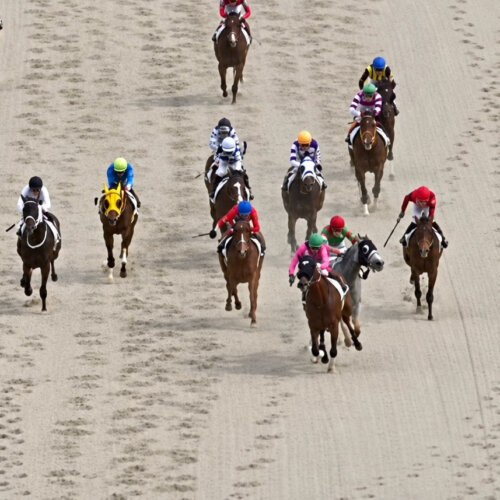
What followed was one of the most unlikely performances in Melbourne Cup history. Iwata led at first, settled and handed up the lead passing the post for the first time, and then, rounding the third turn, made the kind of blunder only a man riding Flemington for the first time could make.
“I made a mistake and thought it was already the final straight,” he says. “I started to make a move – but then I saw the grandstand coming up beyond the next turn.” There was still a long way to go. He had shown his hand far too soon. “The racecourse was just so huge.”
Back in the stands, Sumii was suffering. “He did tell me after the race: ‘How could the straight be so long?'” Sumii says. “It was a tough watch.” Though, it should be said, Sumii’s eyes had barely been on Delta Blues anyway. With the more-fancied Pop Rock also in the field – joint favourite and his other runner – the trainer had spent the race roaring at the wrong horse. “My focus was on Pop Rock. I was shouting, ‘Go, Pop Rock, get there!’ And only in the last moments did I realise both were my horses.”
“Whoever wins, I’m good,” Iwata had told himself when he saw Pop Rock looming. “We are all from Japan and we are guaranteed a one-two finish.” Delta Blues held on. Pop Rock was second. An iconic quinella – and one of the great accidental masterclasses in race-riding history.
“I rode without a clue,” Iwata says. “It was pure luck that I could win.”
The comedy wasn’t quite over. As Channel 7 commentator John Letts tried to get to Iwata for the traditional horseback post-race interview, Sumii is convinced his jockey spotted Letts coming and attempted to ride away. “His English was so bad,” Sumii says, laughing. “He tried to run away.”
Letts, improvising magnificently, opened with the most direct question available to a man with zero Japanese and a fleeing jockey.
“Happy?”
“Happy, happy!” Iwata replied.
“Super horse!” he added, for good measure.
Sumii can’t tell the story without bringing up Keita Tosaki, the Japanese jockey who went viral with his post-race declaration of “Very very horse!” after winning the Dubai Sheema Classic last year aboard Danon Decile. “It was just like Tosaki’s ‘Very very horse’,” Sumii says. “Iwata did it first. The original one.”
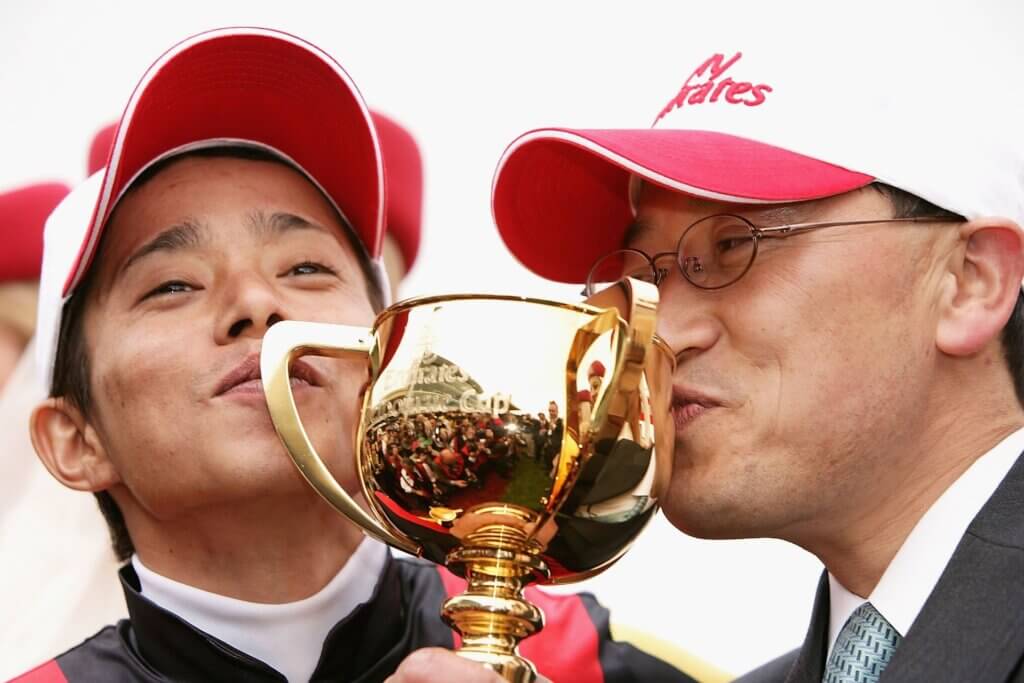
The morning after the Cup, the full scale of what had happened began to sink in. “After I woke up and got out of my hotel room, everybody was waiting for me and cheering,” Iwata says. “They were just pointing at me and shouting, ‘That’s the Melbourne Cup winner!’ From the hotel, all the way to the airport, until the moment I boarded the plane.”
And it never really stopped. Iwata’s eldest son visited Melbourne a few years ago to study English. When locals discovered his surname, the questions came. Was he the son of that Iwata? “After they knew he was, they were like, ‘Woah,'” Iwata says. “It is amazing how they still remember me after all these years.”
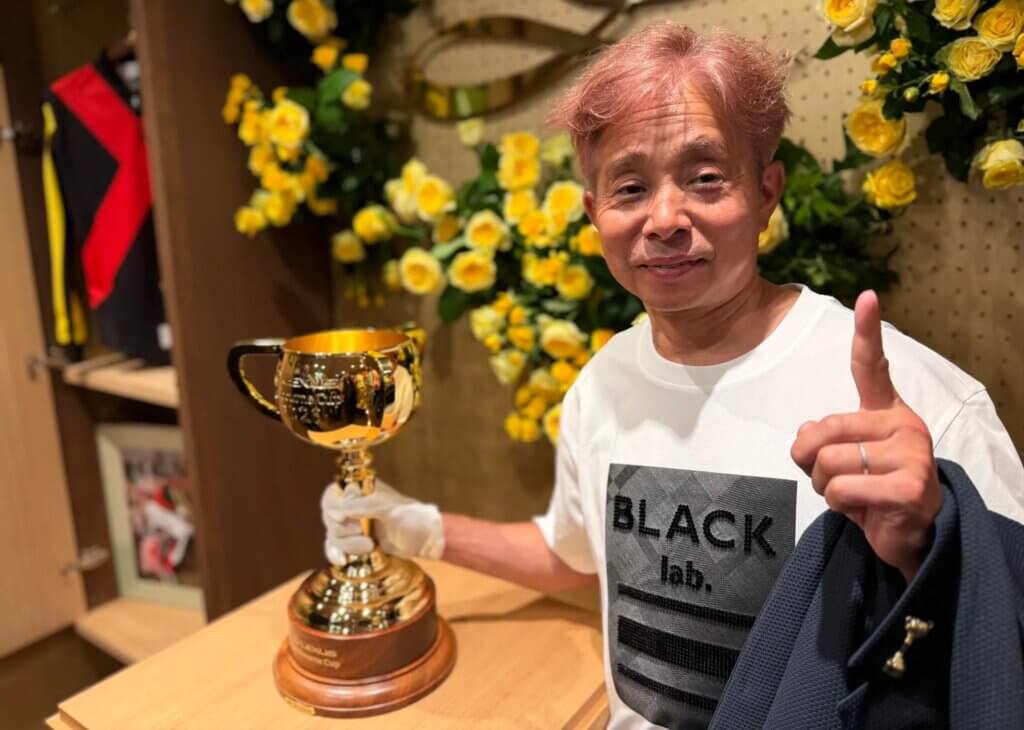
In Kyoto today a typhoon brought rain. We are inside jockey Christophe Lemaire’s CL fashion brand’s flagship store, and the actual Melbourne Cup – on the first stop of a world tour that will end at Flemington on the first Tuesday in November – sits under lights like a trophy in a shrine.
Lemaire, who knows a thing or two about winning it (Dunaden, 2011), is hosting. Damian Lane is here, and so is Kiwi Michael Dee – two of Australia’s best jockeys, neither of whom has managed to get their hands on the Cup.
A French, Japanese, New Zealand and Australian jockey walk into a fashion store in Kyoto in a typhoon. It could be the set-up to a joke. The punchline is that two of them have won the Melbourne Cup – and it isn’t the Australian or the New Zealander. It says something about the changing face of Australia’s greatest race that Lane or Dee’s best chance might be getting a ride on a visiting Japanese horse.
Iwata looks at his miniature Cup replica, donated to the store for the day, and turns the golden whip – presented to him in 2006 – over in his hands.
“I went to Australia,” he says with a grin, “rode like a clown in two races – and won the Melbourne Cup.”
He is, of course, being modest to the point of absurdity. In the twenty years since that chaotic Cup day, Iwata has taken his career tally to more than 1,800 winners, including 25 top flight victories in the JRA and three international Group 1 wins: Delta Blues and back-to-back Hong Kong Sprints aboard the great Lord Kanaloa.
He turns the golden whip over in his hands one more time and smiles at the little Cup that usually takes pride of place in his home, reflecting on the improbable Tuesday that changed his life.
“It might be a little bit exaggerated to say winning the Melbourne Cup changed my life,” he says. “But when I first arrived at the Melbourne airport, the Australian people told me I could be a national hero – and I only knew what they were talking about after I won the race.” ∎