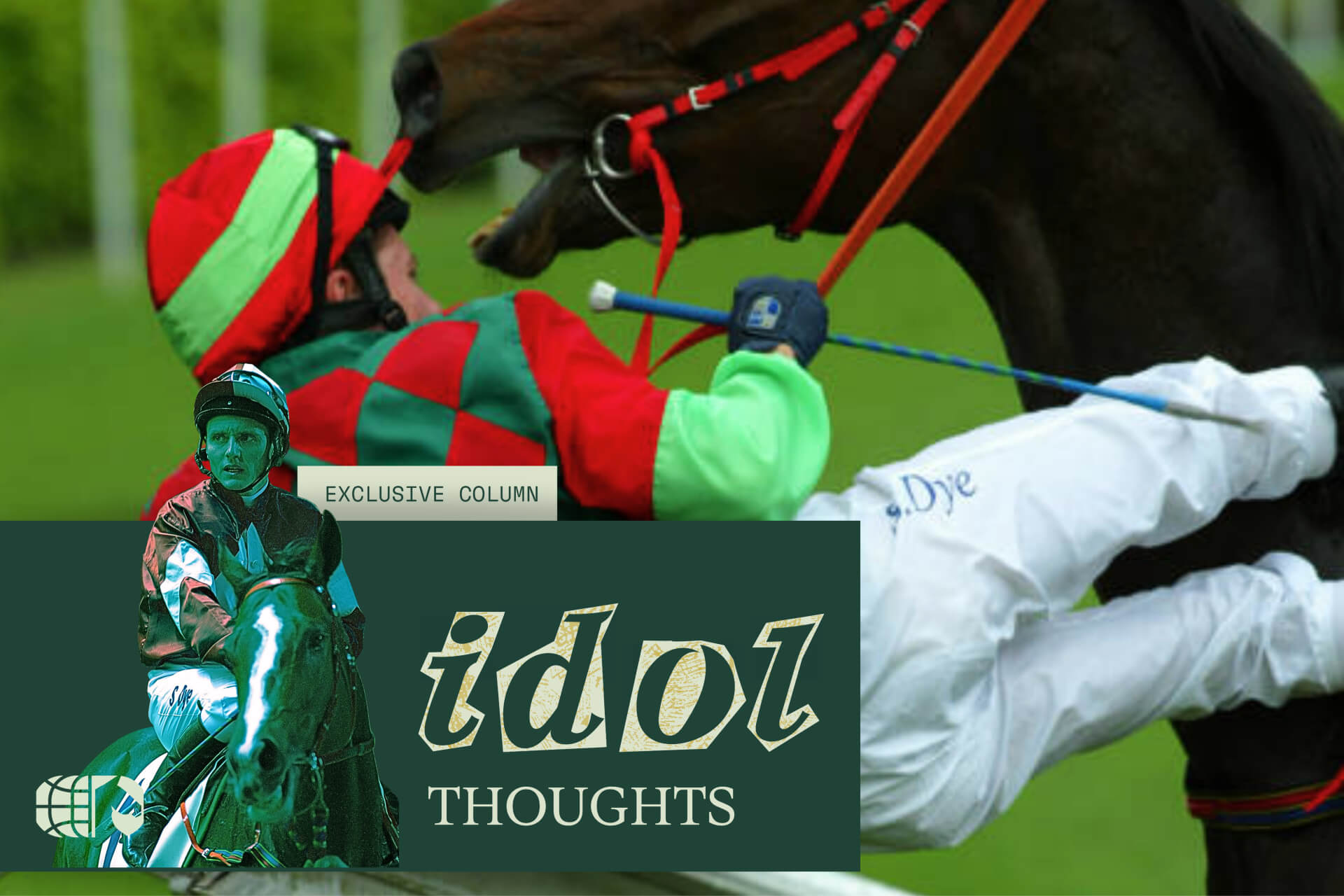
Since we started theseIdol Thoughts columns, a lot of readers have asked me about my major fall at Sha Tin in June 2006. I understand why – it is a moment people remember, and it was also, in my own mind, the end of my career.
But this might surprise a few people: I also believe it was the best thing that ever happened to me. Let me explain.
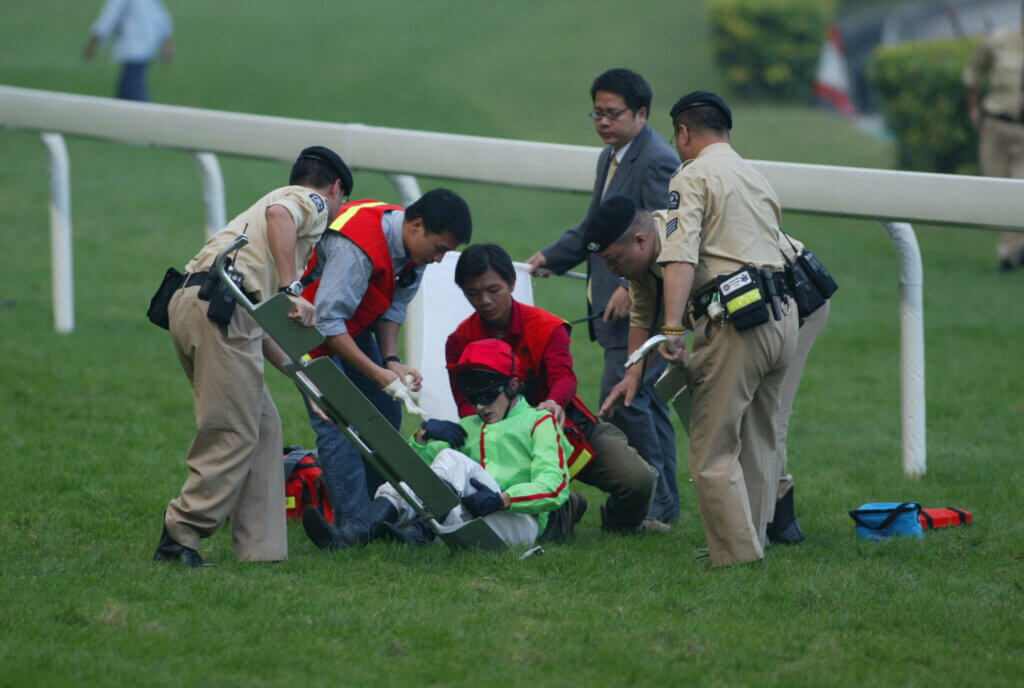
Nobody wants to go through something like that. Nobody wants to be lying there, badly hurt, with doctors rushing around and your life suddenly out of your own hands. But I was very lucky – there happened to be a renowned surgeon on course that day, Professor Wai Poon, and he was substituting as racecourse doctor. He had the experience to know something was seriously wrong and they had me at the hospital, operating on me to relieve a brain bleed, within an hour. I nearly died and I do not take this second chance at life for granted.
When you come that close to dying, you do not look at life the same way again.
Before the fall, racing was everything to me, and I do not mean that in a casual way. It was my whole life. All I ever wanted to be as a kid was a jockey, and from the time I was an apprentice, I lived it completely – the work, the pressure, the wasting, the big races, the competition. That was the life I had chosen and I loved it.
And when you are the number one jockey, riding well, winning big races, and people are talking about you, it is easy to think certain things matter more than they really do.
Before the fall, I had boxes of videos of me riding – tapes of big wins, appearances on television, all those reminders of who I had been and what I had done. I had 30 scrapbooks of everything that had ever been written about me. After the fall, I sent them all back to my mum in New Zealand. Not because I was angry or bitter. I just looked at them differently.
You realise, when you have nearly lost everything, that a lot of what you thought was important does not mean as much anymore. Wanting a bigger profile, wanting people to remember you, wanting to be seen a certain way – all of that fades. I do not read about myself and I do not sit around watching old replays. I choose not to. The fall stripped away the vanity.
That is not to say racing stopped mattering. Racing is my life, it still is, and it always has been. But a near-death experience changes the order of things. You stop treating small inconveniences like disasters: waiting too long in a line, poor service in a restaurant, someone annoying you. None of it matters, not when you have been on the other side of it.
We have a very special thing called life, and to be given that life is a blessing. I know that can sound simple, but it is the truth. When you nearly lose it, you understand it properly. You do not just say it, you feel it.
The other thing you realise is that everybody has a time when the thing they are known for comes to an end. A lot of sportspeople struggle with that. They miss who they were, the feeling, the competition, the adrenaline, the part of themselves that only came alive when they were out there doing it. I understand that, because riding meant everything to me. But I also reached a point where I knew my time was up.
That is not a sad thing to say. It is an honest thing to say. But some people just can’t accept that their time in the limelight is over.
The whole time I rode, from day one as an apprentice until that fall, I was dominant in the way I rode. I saw things quickly, made decisions quickly, saw half a run and took it. After that fall, something changed. I could still ride winners, but I was not the same jockey.
After the fall I kept breaking my ribs and tearing ligaments in my rib cage. When I had an exam on my body they found that I had arthritis and osteoporosis.
The doctors told me to go somewhere hot to recover, and swim every day to help, so I went to Mauritius. I rode well there, I won the premiership the first season I was there – my body even recovered. My doctor was right – the Indian ocean and sun healed me – but after 18 months I gave riding away. I always wanted to bet but as a jockey I was never allowed to, so I thought: alright, let’s start.
I consider that fall in June 2006 the end of my riding career. And I have no regrets.
The fall was a blessing.
Why It Was So Hard To Get Back To My Best
People think a jockey comes back from a fall when the body is right, but that is only part of it. Most jockeys, including myself, come back too soon. You can be fit, pass the medicals, ride trackwork, ride trials, ride in races and even ride winners. But that does not mean you are back to being the person you were before.
The easy part is handling the pain and blocking that out. The hard part is actually riding itself. Some aspects of riding that came easily before the fall, suddenly become difficult.
The thing about a brain injury is your balance can be affected. When I got back on a horse after the fall my balance was never the same. There was no jockey who rode with a shorter stirrup length than me – I rode like that because it made me feel part of the horse – but I was only able to ride like that because my balance was perfect.
Then there is the psychological aspect. Before the fall, I would see half a run and just take it. That was how I rode – I did not need to think about it. If the gap was there, I was through it. At the top level, that is the difference. You cannot be having a discussion with yourself halfway through a race.
After the fall, I would see the same run and it looked tiny. That is the psychological part of it. You go home and watch the replay and the gap looks huge – you think, why didn’t I go through there? But when you are out there in the race, travelling at speed with horses shifting around you and riders making decisions and everything happening in a split second, it does not look like that at all.
Before, I wanted the gap.
Afterwards, I hesitated.
And in racing, hesitation costs you. It might only be half a second, but half a second is a race. Half a second is the difference between being where you should be on the fence and being three wide, asking yourself why you did not get in there earlier.
That is not about strength, it is about reflexes. Your reflexes are what make you as a jockey and after my fall my brain didn’t think as quickly as it used to. The best jockeys react before everyone else has even seen the problem, and that was always one of my strengths – I could see the race, feel the speed, sense the horse underneath me and make the move. After the fall, I still knew what to do. But knowing and doing are not the same thing.
What did not help was that I had another fall at trackwork after I came back. A horse reared up, I went over the side. I tore ligaments and fractured ribs. Compared to the Sha Tin fall it was nothing – simple, ordinary, the sort of thing that can happen around horses. I even tried to get back on. But my body had been weakened and hadn’t healed.
That moment told me plenty. It was not the fall itself, it was the feeling. I had come back way too soon. Something inside me had changed. The body was trying to protect itself, the mind was saying be careful, and that is not how I had ever ridden.
I rode a winner on my first day back, so it was not as if I could not ride anymore. But there is a big difference between being able to ride and being able to ride the way I had ridden before. Some people come back from bad falls and get through it. Some people never do.
My mind and body struggled. That is the honest answer.
Knowing When Your Time Is Up
Like I said before, all I wanted to be when I was a kid was a jockey. That was the dream – not part of the dream, the whole thing. For that reason people say it must have been hard to stop … but it was easy. It would have been harder to keep pretending that everything was OK.
A lot of sportspeople get trapped there. They keep chasing the old feeling, wanting to be the person they were at their peak, missing the crowd and the competition and the dressing room and the pressure – the part of life that made them feel important. I understand that completely. But everybody has their time.
That is life. No matter how good you are, no matter how much you have won, no matter how much you love it, there comes a moment when you have to be honest with yourself.
I was not the same after the fall. That does not mean I was hopeless, and it does not mean I could not ride a winner – I did ride winners, and I won the premiership in Mauritius. But I want to emphasise again that the Shane Dye before the fall and the Shane Dye after the fall were not the same jockey.
And once I accepted that, I was free.
That is why I have no regrets. Regret comes when you think something was taken from you and you spend the rest of your life trying to get it back. I do not see it that way. I had my career. I rode great horses, won big races, and lived the life I wanted from the time I was a boy. I was lucky to do that, and I was lucky to survive the fall.
When you think like that, retirement does not have to be a tragedy. It can be the start of something else.
What The Fall Left Behind
There are things you carry with you. People do not always see them, but they are there.
I had at least 16 raceday falls in my career and about 14 concussions that I can count. Some of those you get up from and it does not matter – you have broken bones, you are sore, but you are fine. The ones that change you are the head injuries. And the fall at Sha Tin changed me permanently.
When I came out of the coma, I could not read for a while. I had no idea. I would look at words and nothing would connect. I remember coming home and watching a movie, and I knew the actor on the screen – I recognised his face, I knew who he was – but I could not think of his name. It was Tom Cruise. Everyone knows Tom Cruise. And I am sitting there going, what is his bloody name?
That is what it did to me.
To this day, I cannot remember horses’ names properly. It is just gone. But the funny thing is I can remember barrier draws, I can remember numbers, I can remember form. So if someone rings me up and asks what I like in race five, I will say the horse drawn barrier nine. They will look it up and tell me the name and I will say, yeah, that is the one. I have found a way around it.
My pronunciation is not what it was either. People have made comments about that over the years – negative things, having a go. I just laugh. I think it is funny, actually, how small some people are that they want to attack someone for something that comes from nearly dying. It is not the big picture. It never will be.
I know that one day CTE will probably catch up with me. I have had too many head injuries for it not to. I know that dementia is a real possibility down the track. But I will worry about that then. I am 59 now. I had the fall when I was 40. That is another 19 years I have lived, and they have been fantastic years. I would take that every single day over the alternative.
The flip side of a bad memory is being dead. I have got two wonderful kids, a beautiful girlfriend, and I am still here. So I will take the trade.
If you speak to anyone who has had a near-death experience – anyone who should be dead and is not – they will tell you the same thing. Your life changes for the better. What you prioritised before, you do not prioritise anymore. You see other things, you want other things, and you become a different person.
I am a different person. And I am grateful for it.
Life On The Punt
I always wanted to bet – that was in me from the beginning. As a jockey you are not allowed to, so there was never any question of doing it properly while I was riding. But racing was my life. Reading a race, understanding horses, working out speed and pressure and fitness and intent – that was what I had done since I was a boy, and when I stopped riding, the punt became the next part of that life.
People think betting is just about the thrill, and there is a thrill, no doubt, I would be lying if I said there was not. I got that rush from riding and I get a version of it from the punt. But if you are serious about it, it cannot just be about adrenaline. It has to be about work.
My favourite quote in life is ‘the only time success comes before work is in the dictionary’. Nobody who is successful does not work for it. That was true when I was riding and it is true doing the form.
Winning big races was sensational – all the work, all the mornings, all the wasting, all the pressure, and then the moment comes and you get it right. It is hard to describe that feeling. It is joy, excitement, relief and adrenaline all rolled into one.
The punt gives you something different. You do the work, you make your assessment, and once they jump it is out of your hands. In the saddle you still have some control – you can make a decision, you can change the race. On the punt, you have to live with the work you have done. That takes a positive mindset.
If you are a gambler, there are going to be ups and downs. You have to take the wins and losses equally – you cannot tell me, on any given day, whether I have won or lost.
You can have an unbelievable day, and you can also have things happen that are completely outside your control – horses with underlying issues, races run differently to what you expected. Things go wrong, and you have to accept that.
As I’ve said, a lot of sportspeople struggle when they retire and the reason for that is because they lose the thing that made them feel alive. They miss the competition, the rush, the sense of waking up with a purpose. I was lucky – I found mine.
There are two types of people in life: people that live to work, and people who work to live. Most people think the second one is the aim.
Not me.
I live to work, and I always have. Whether it was riding or doing the form, it is the same thing to me – concentration, discipline, trying to get it right.
The fall took one life away from me. But it gave me another one. ∎