Latest News
24/09/2026
Hard Penalties Are Needed To Stop “Brutal” Interference
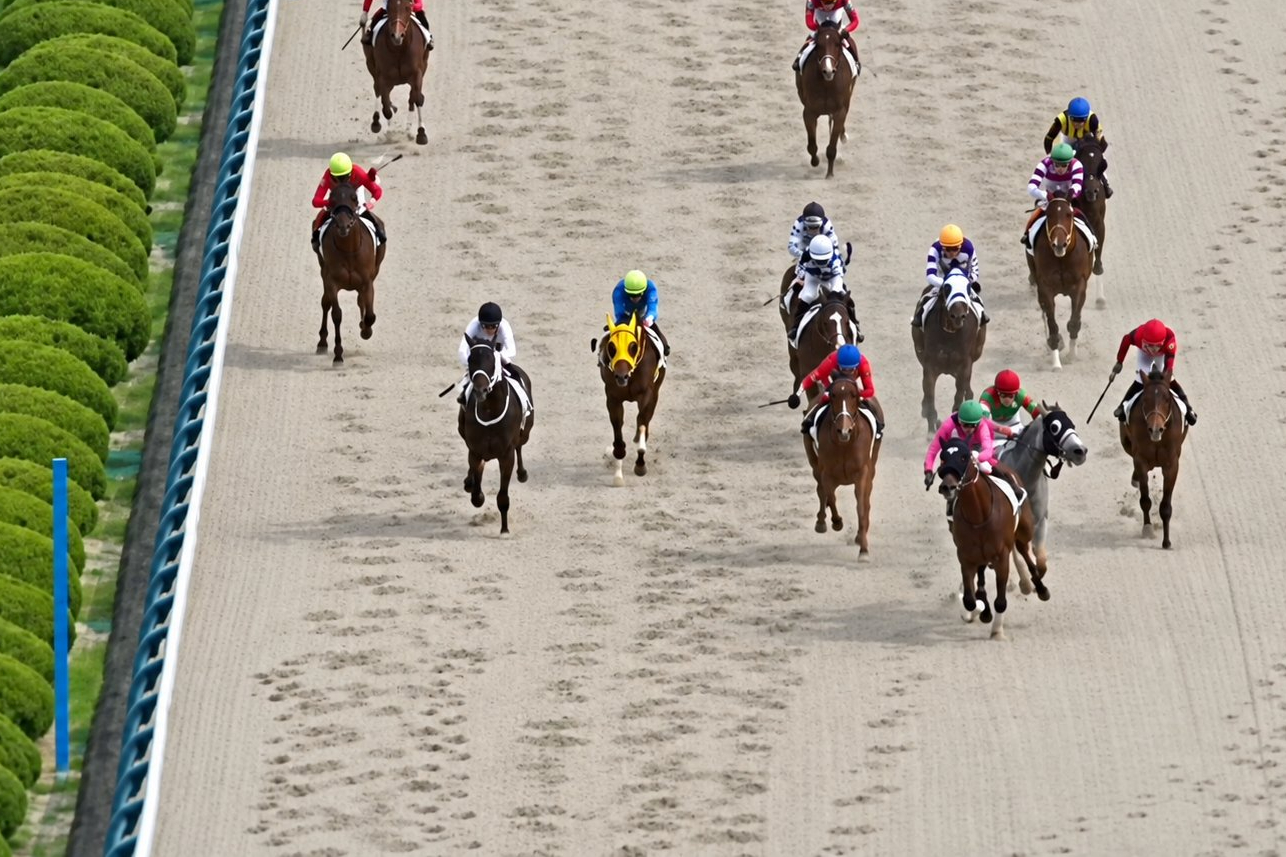
Mirai Iwata at Hanshin on Monday was the latest jockey to win a race after their mount drifted markedly into the path of a rival. David Morgan believes only harder penalties will put a stop to it.
David Morgan
22/09/2026
Lovcen Has “Another Level” As He Stokes Triple Crown Dreams
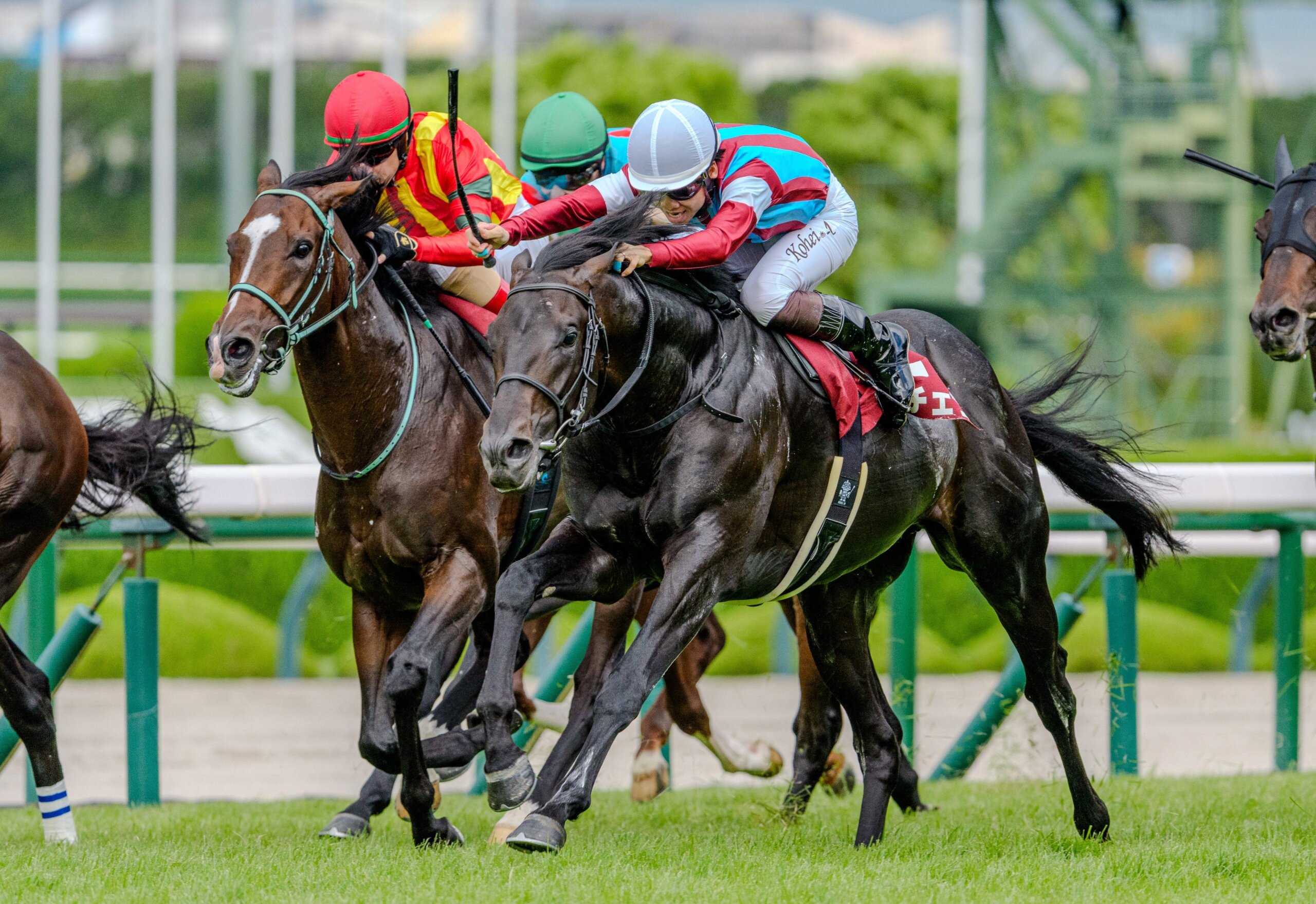
Japan’s star three-year-old scraped home in his prep race for the St Leger but a win is a win and his jockey Kohei Matsuyama feels Lovcen will improve for the tune-up.
David Morgan
12/08/2026
Daisuke Sasaki Is Close Enough To Know How Far Away It Is
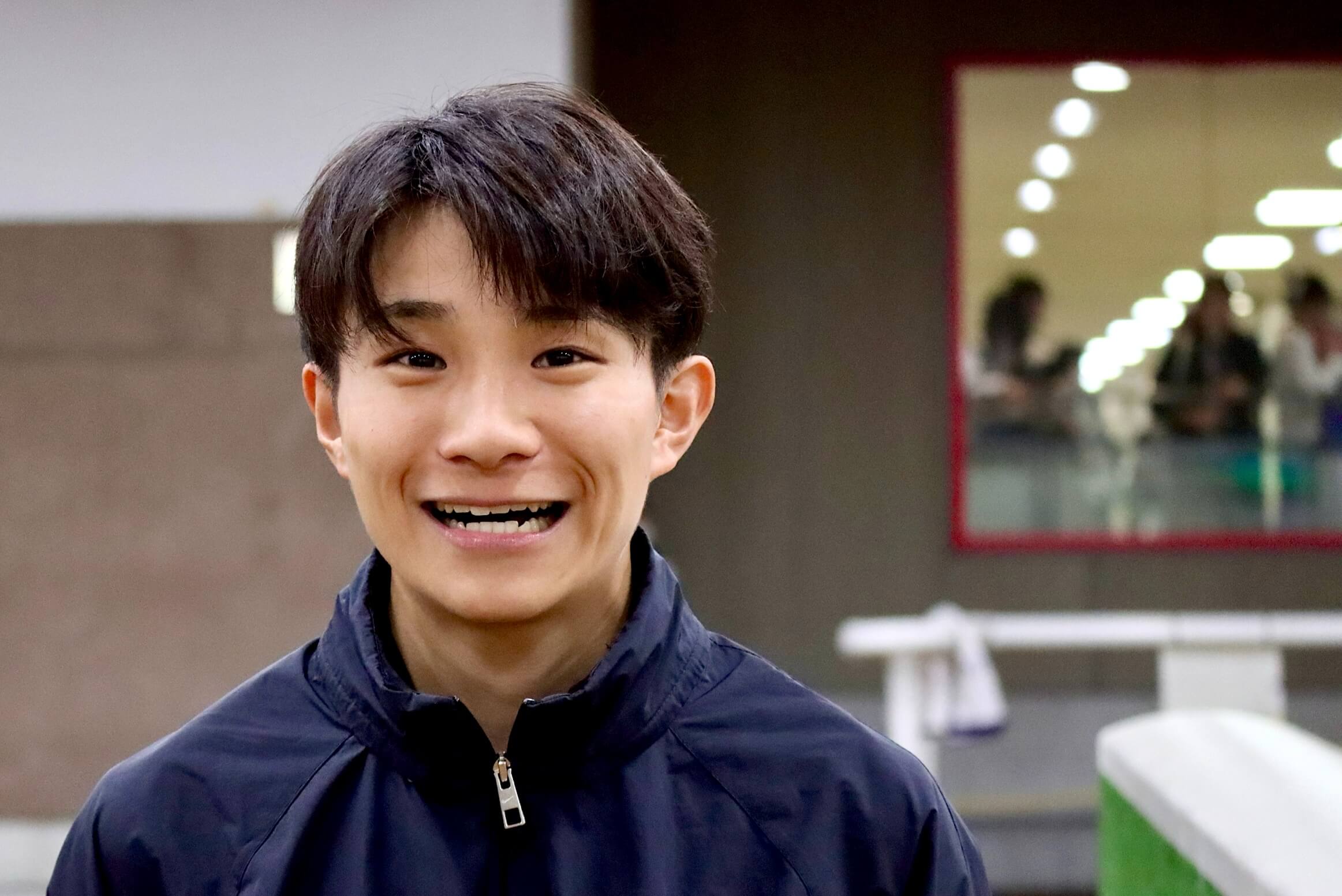
Summers in Hokkaido had been the platform for Daisuke Sasaki’s rapid rise, and with his win count down and the Group 1 winning post seeming far away, he was in need of a reboot at Hakodate and Sapporo.
Shuhei Uwabo, David Morgan
03/08/2026
Suraj Narredu: How The Shergar Cup Nudged Japan’s Door Ajar
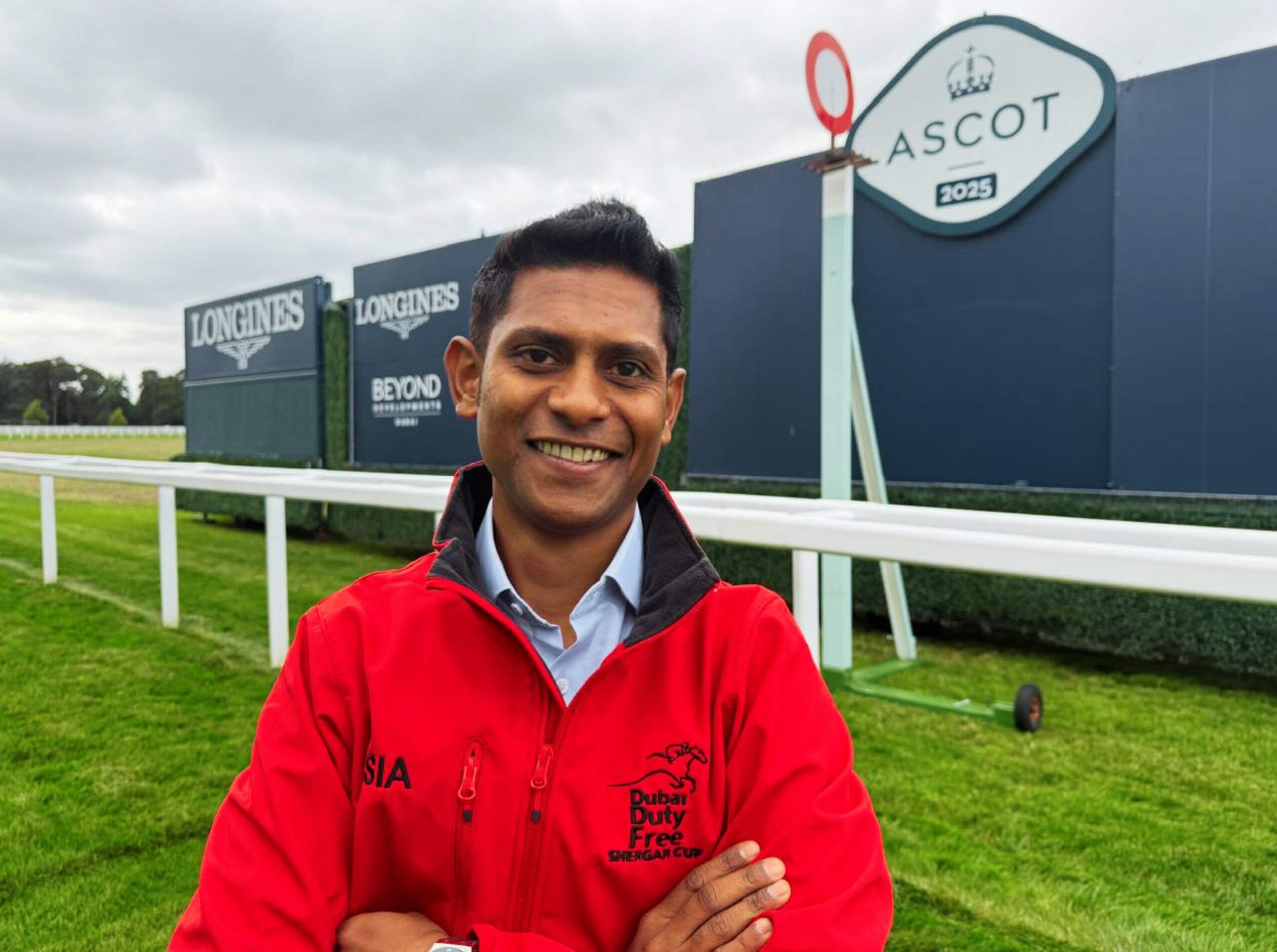
India’s top jockey had tried to land the dream break riding in Hong Kong or Japan without success, but his Shergar Cup exploits last year lifted his profile and now he’s off to ride in the World All Star Jockeys challenge.
David Morgan
28/07/2026
JRA Expands Overseas Betting Menu With Every Hong Kong Group 1 And Australia’s Spring Majors
A revision to Japan's Horse Racing Law adds a range of new international races to the JRA's simulcast offering, from Sha Tin to Flemington.
Michael Cox
Race Information
- Date Sunday, April 05
- Racecourse Hanshin (Right-Handed)
- City Takarazuka, Hyogo
- International Status Group 1
- Local Status Group 1
- Conditions 4YO & Up
- Surface Turf
- Distance 2000m
- Prizemoney (Local) ¥651,000,000
- Prizemoney (USD) US$4,083,181(Approx.)
- First Run 1957 (Sankei Osaka Hai)
History
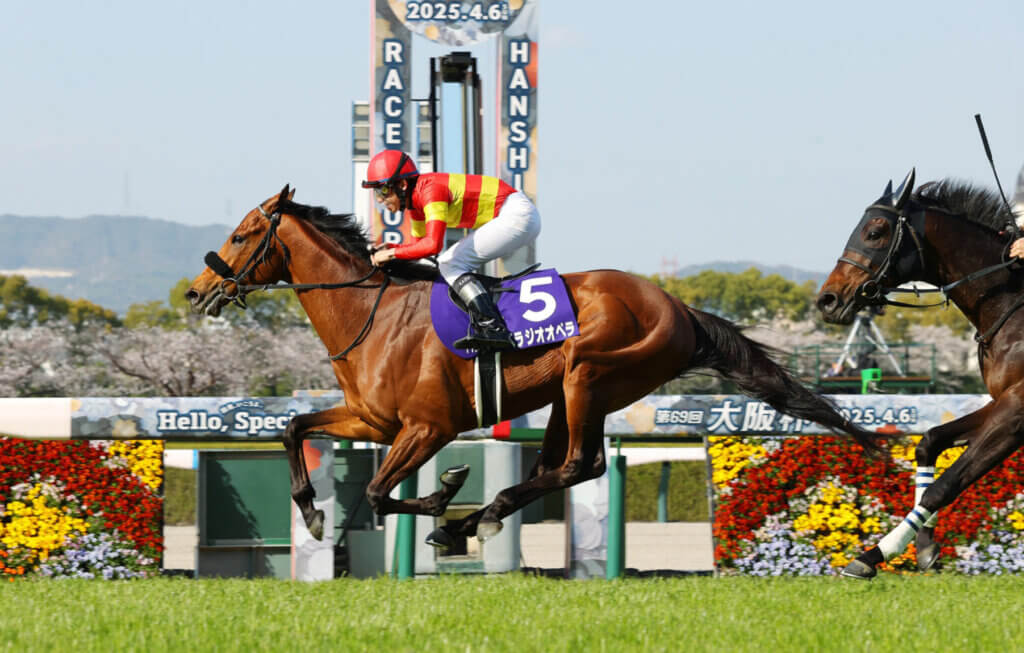
The Osaka Hai is the JRA’s first 2000-metre Group 1 of the season. It serves as the premier stage for elite middle-distance stars, bridging the gap between the season-opening sprints and the staying test of the Tenno Sho (Spring).
Held at the right-handed Hanshin Racecourse, the race is a relatively new addition to the top-tier calendar. Established in 1957 over 1800m, the distance was extended to 2000m in 1972. It was upgraded to Group 2 level in 1984, providing a prestigious platform for spring campaigns.
The JRA elevated the race to Group 1 in 2017 presenting a top-level domestic target for horses suited to the classic ten-furlong trip.
The contest is unique for its tactical demands; the short run to the first turn and the undulating homestretch require a blend of tactical speed and raw power.
Legends like Orfevre and Kitasan Black feature on the honour roll and it remains a fiercely contested domestic prize and often a final local appearance for stars heading to the QEII Cup in Hong Kong.
In a racing culture that prides itself on the ‘Classic’ distance, the Osaka Hai stands as the benchmark for 2000-metre supremacy.
Statistics
Top Contenders
CROIX DU NORD (Kitasan Black x Rising Cross); 4YO
Trainer: Takashi Saito
Jockey: Yuichi Kitamura
Biggest Win: G1 Tokyo Yushun (2025)
While Masquerade Ball and Museum Mile, both from the same generation, have stepped into the spotlight with Group 1 wins, the Tokyo Yushun winner is hardly going to sit back and watch in silence. Croix du Nord begins his four-year-old season by renewing his rivalry with Danon Decile, the Tokyo Yushun winner from the year before him.
Croix du Nord was sent to France for an Arc campaign last autumn and in the G3 Prix du Prince d’Orange, his prep race, he defeated Daryz, who would later go on to win the Arc. But in the Arc itself, the Tokyo Yushun hero finished a well-beaten 14th. Then in November’s G1 Japan Cup, Calandagan and Masquerade Ball swept past him with ease, and he ended up fourth, one place behind Danon Decile.
Partly because the Osaka Hai usually clashes with the Dubai World Cup meeting, the most recent previous-year Tokyo Yushun winner to capture this race was Kizuna in 2014. Another potential challenge is Hanshin Racecourse, where he will be racing for the first time.
DANON DECILE (Epiphaneia x Top Decile); 5YO
Trainer: Shogo Yasuda
Jockey: Ryusei Sakai
Biggest Win: G1 Dubai Sheema Classic (2025)
The 2024 Tokyo Yushun winner Danon Decile defeated Calandagan to win last year’s G1 Dubai Sheema Classic but then went to Britain five months later and finished a below-par fifth in the G1 Juddmonte International Stakes at York.
In last year’s Japan Cup, his first run back in Japan, he finished third, beaten two and a half lengths by Calandagan, and he followed that with another strong third in the G1 Arima Kinen, finishing just under a length behind the winner Museum Mile. Both efforts were the kind of runs that enhanced his reputation in defeat.
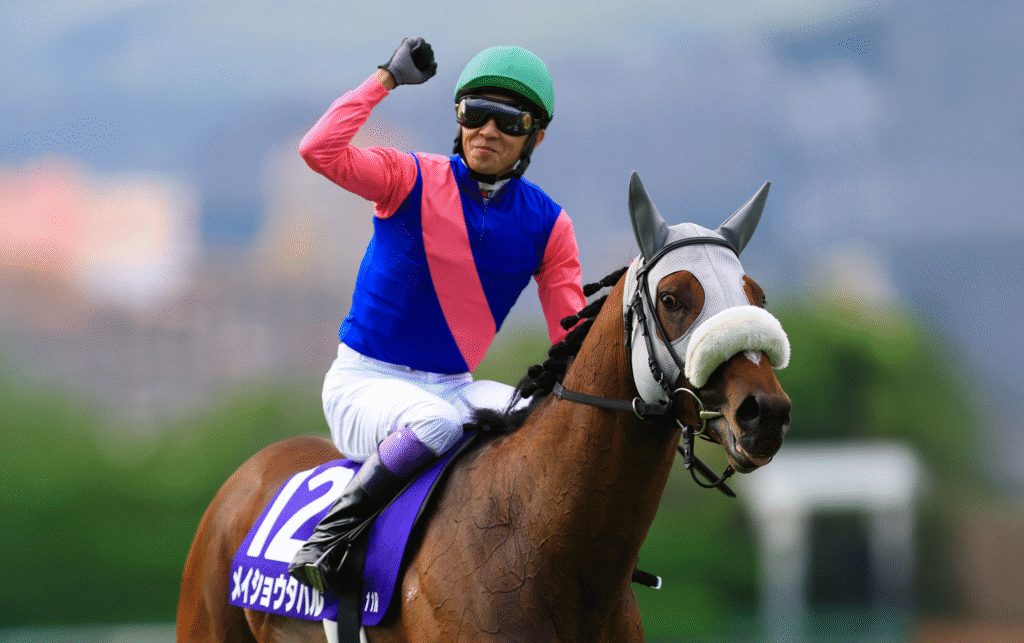
His regular jockey Keita Tosaki has talked about the horse’s immaturity and propensity to do silly things, but he is now a more mature five-year-old and since 2011 the Osaka Hai has been won by either a four-year-old or a five-year-old. Now, with Tosaki suspended, Ryusei Sakai will take over the ride.
MEISHO TABARU (Gold Ship x Meisho Tsubakuro); 5YO
Trainer: Mamoru Ishibashi
Jockey: Yutaka Take
Biggest Win: G1 Takarazuka Kinen (2025)
The Osaka Hai is run on Hanshin’s inner course and all of the past 10 runnings have seen at least one horse that turned for home positioned in the first three finish in the placings. So, is there any real reason to ignore Meisho Tabaru, a natural front-runner, and Yutaka Take, one of the finest pace-setting jockeys in the race?
Lei Papale, who went wire-to-wire win the 2021 Osaka Hai, and Jack d’Or, who did the same in 2023, had both been away from the races for more than three months beforehand. Meisho Tabaru also comes here off a break, with his last run having come in December’s Arima Kinen. The chance to race in a fresh state should work in his favour too, given how effective he is first-up.
LEBENSSTIL (Real Steel x Tokai Life); 6YO
Trainer: Hiroyasu Tanaka
Jockey: Christophe Lemaire
Biggest Win: G2 Nakayama Kinen (2026)
Lebensstil has already won five graded stakes and now sits about as close to the front of the waiting list of G1 winners as any horse could. Can he finally break through at the top level this time? He scored a dominant victory in the G2 Nakayama Kinen a month ago and now heads to the Osaka Hai, a race that looks well suited to his running style, in search of a first Group 1 triumph at the fourth attempt.
Until now, his difficult temperament has also worked against him, and all of his wins have come only at Tokyo and Nakayama, tracks close to his stable at Miho. But his trainer Hiroyasu Tanaka has tried to ease the burden of long-distance travel by sending him to Ritto a week before the race.
You have to look back to 2010 to find the last horse aged six or older to win the Osaka Hai, and in the past 10 years, only in 2025 and 2017 has a horse from that age group managed to finish in the placings. For Christophe Lemaire, who is chasing a JRA Group 1 calendar hat-trick after the February Stakes and the Takamatsunomiya Kinen, this looks set to be quite a challenge.
SHOHEI (Saturnalia x Oro Trajet); 4YO
Trainer: Yasuo Tomomichi
Jockey: Yuga Kawada
Biggest Win: G2 American Jockey Club Cup (2026)
Shohei still lacks that MVP in a Group 1 race but his profile and his flawless victory in January’s G2 American Jockey Club Cup hinted that this could be the season he takes a major step forward. Settling just behind the leader and quickening from a prominent position, his racing style looks tailor-made for the Osaka Hai.
He made good progress last spring to emerge as a strong presence in last year’s Classic crop with his third place in the Derby, but Shohei now appears to be progressing again as a four-year-old. His trainer Yasuo Tomomichi, who won the Osaka Hai four years ago with Potager, has also expressed confidence, saying that “he has every chance”.
Expert Analysis & Selections
Masanobu Takahashi
Angle: 4YO and 5YO
The fact that a horse aged six or older has not won the Osaka Hai for more than 15 years is too significant to be dismissed as a mere trend. Over the past decade, that pattern has become even stronger, with only two such horses even managing to finish in the top three.
That alone narrows the field to eight realistic candidates. The class horse is probably Danon Decile. He has the tactical versatility for a race like this, having won the Tokyo Yushun from a stalking position just behind the leader. Meisho Tabaru and Croix du Nord also have running styles that look well suited to the Osaka Hai.
It is difficult to decide whether Shohei should be included as one of the picks, but I want to rate Ecoro Dinos highly. In the G2 Kyoto Kinen, he showed real tenacity to hold on for third all the way to the line. He should not be underestimated.
Selections: #4 Danon Decile, #6 Meisho Tabaru, #15 Croix du Nord, #7 Ecoro Dinos
Homan
Angle: Chasers
Hanshin’s 2000m is quite a biased track compared with other courses at the distance in Japan. The home straight is just around 350m as the horses will race on the course’s inner circuit. Therefore, horses who can lead or stay behind the leaders will have an advantage. For backmarkers, they are required to start their acceleration at the back straight, like Suave Richard in 2018 and Rousham Park when 2nd in 2024.
This could be the best field since the Osaka Hai was upgraded to Group 1 in 2017. There are two Derby winners, Croix du Nord and Danon Decile, and the G1 Takarazuka Kinen winner Meisho Tabaru in the field. Although Croix du Nord was beaten in the Japan Cup, his form at 2000m is a consistent 3:2-1-0. He should be one of the handy chasers in the race and will benefit from the track bias.
Ecoro Dinos will be an interesting longshot. He has performed well in Hanshin at 2000m, with a record of 2:2-0-0. His class is yet to be proven but his experience in this course and distance could see him get a great result. As far as 20-1 longshots go, he’s worth a try.
Selections: #15 Croix du Nord, #7 Ecoro Dinos, #5 Shohei, #4 Danon Decile
Shuhei Uwabo
Angle: Young guns hold the edge
The Osaka Hai is a tough race for older horses. In the nine runnings since it was promoted to G1 status, every winner has been either four or five, while the only horses aged six or older to finish in the top three were Yoho Lake last year and Staphanos in 2017. Naturally, the focus falls on the younger runners, above all the two Tokyo Yushun winners in the field.
Croix du Nord comes here off a fourth-place finish in the Japan Cup. However, perhaps this horse is at his best over a mile and a quarter. Now more mature after his overseas campaign, the 2000m on Hanshin’s inner course may well represent his optimum conditions.
Danon Decile makes his return from a break after finishing third in both the Japan Cup and the Arima Kinen. In both races he showed strong tactical speed and the ability to hold a good position, so if he can enjoy an economical trip, he should be right in the mix.
I would also side with Ecoro Dinos over Meisho Tabaru, whose tactical options are more limited, and Shohei, who is trying 2000m for the first time. Although he did not contest the full Triple Crown series, he finished third in the G2 Kyoto Kinen last time out. Even on his first attempt at Group 1 level, he looks more than capable of running a big race.
If any of the veterans are to get their chance, Yoho Lake is the one I would choose. He is a proven repeat performer in this race and has shown admirable consistency over 2000m.
Selections: #15 Croix du Nord, #4 Danon Decile, #7 Ecoro Dinos, #9 Yoho Lake
Steven Ho
Angle: Distance has it
This year’s Osaka Hai promises to be particularly noteworthy since its elevation to Group 1 status. Typically, the proximity of the Osaka Hai to the Dubai World Cup results in many top contenders opting to compete in Dubai rather than participating here. Nevertheless, this season it is anticipated to feature one of the most competitive fields yet.
Four- and five-year-old horses have dominated this race, accounting for 28 out of 30 placegetters over the past decade. As already mentioned, there have been no winners aged six or older during this period and that’s a trend that cannot not be ignored. With elite horses bypassing the Dubai World Cup meeting, these factors are expected to further diminish the prospects for horses above five years old.
In comparing the two Derby winners, Croix du Nord emerges as more promising over 2000m. He boasts two victories from three starts at this distance, whereas Danon Decile has secured one win and failed to place in his other two attempts. Additionally, Croix du Nord demonstrated his proficiency at 2000m by defeating Prix de l’Arc de Triomphe champion Daryz in the Prix du Prince d’Orange last year.
Meisho Tabaru, with an unblemished record in three starts at Hanshin Racecourse – including last year’s G1 Takarazuka Kinen – also appears well-positioned, especially under renowned jockey Yutaka Take.
Ecoro Dinos has exhibited consistent performances recently. While he lacks experience in Group 1 races, his reliability at home in Kansai, including two wins and a placing from four starts at Hanshin, renders him an intriguing participant in this year’s field.
Selection: #15 Croix du Nord, #6 Meisho Tabaru, #7 Ecoro Dinos, #4 Danon Decile