
The way some people describe it, riding a frontrunner is easy. They think you pinch a few cheap sectionals early, then dash home the last 400m and make it impossible for anything behind to catch you. That sounds good in theory. In practice, it doesn’t work like that.
The mistake people make is thinking the goal is to go as slow as possible in front. Save everything for the straight. Make it a short sprint home. The logic sounds appealing – ‘stack them up’, then outsprint them in the straight. Some leaders might be suited by that, but not all.
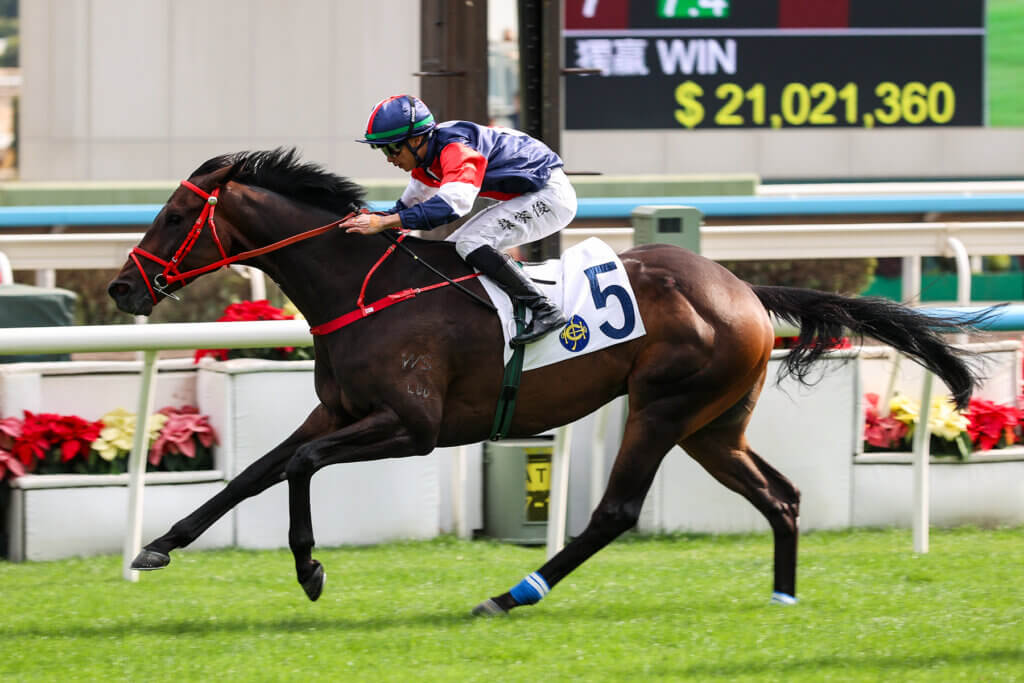
In Sunday’s BMW Hong Kong Derby, jockey Derek Leung has an important job to do on Numbers because he is the type of horse that isn’t suited by that style. On a horse like Numbers, going too slow in front does not protect you. In fact, it can throw the race away.
Here is what actually happens if you go too slow down the back straight in a Derby – backmarkers can improve from the 1000m without doing any real work. They loop the field, get up to your outside under their own steam and by the time you turn for home they are ready to sprint – and they have momentum, and you don’t. You have turned a staying test into a sit-and-sprint.
The 2023 Hong Kong Derby was a perfect illustration of what can happen when a leader goes slow. Leung actually rode Keefy in front and I want to be clear: there was nothing wrong with that ride. In fact, for that horse it was a very good one. Keefy was an outsider with a genuine distance query and Derek was right to try and help him run the trip. He nearly pinched the race. But because the sectionals were slow early and middle stages, Alexis Badel was able to bring Voyage Bubble from last, saving energy, gaining ground easily around the field at a comfortable tempo – better still, he was doing it down the back straight and not covering any extra ground. He was four wide at the 600m, but he hadn’t wasted energy and he was poised to strike. It was one of the great rides, but it was only possible because the pace allowed it.
The other risk of going too slow is that it can invite a mid-race move. Blake Shinn showed that in Golden Sixty’s 2020 Derby, when he peeled from last on Playa Del Puente at big odds and nearly stole the race. When the pace slackens enough, a horse can improve around the whole field and catch rivals napping. The horse that makes the midrace move hits the straight with momentum and can be hard to catch.
That is why Derek has such an important job on Numbers on Sunday. He is the obvious leader and he has proven he can run 2400m – 12 of the 14-horse field haven’t raced at 2000m or further. That is why Derek has to make it a test.
So what does a test mean? It means taking it easy early, going to the front, because you actually want the horses behind you, especially those first time at that distance, over-racing and wasting energy. You don’t want to go too fast into the first turn and allow the horses behind you to get into a rhythm without pulling.
Once into the back straight that is where your race begins. You can’t go too fast, but you definitely should not go too slow. Numbers’ strength is stamina and Derek has to use it. He has to make it a genuine staying test – picking up the pace gradually from the 1000m and forcing those behind him to work with wide runs.
The key is building pressure 1000m from home. Not running away, not burning your own horse up, but gradually lifting the tempo so the horses behind cannot circle the field for ‘free’. It is near impossible to sustain a run from the 700, wide on the track, when the pace is fast. If they have to work around the bend and into the straight, it takes something out of them. If Derek gets it right, the horses chasing will hit a brick wall with 100m to go.
The Other Jockey Under Pressure: Vincent Ho
Vincent Ho has the opposite job to Derek when he rides the Classic Mile winner Little Paradise – who doesn’t look, at least by breeding, to be a true 2000m horse. Vincent’s job is to get his horse to relax and not pull. Depending on what barrier he draws, he could be as close as fourth or fifth, or if he draws wide, he will be back in the field.
Little Paradise can’t win if he goes forward from a wide gate, because he will have to do too much work early to get across and then he will pull and burn energy. If he does that his race will feel like 2200m, not 2000m. If he has an inside gate, he can lob fourth or fifth very easily and get a perfect run.
We have all seen what he did in the Classic Mile when he won easily and then the Classic Cup, where a few things went wrong and he finished off strongly.
Little Paradise can win. But if Derek gets it right out in front on Numbers, he can really hurt Little Paradise’s chances because he may not have the stamina to unwind with a long run – his strength is a shorter, sharp sprint.
How Do Jockeys Know How Fast They Are Going?
One question a reader asked is how do jockeys know how fast they are going. You start learning early – for me it was at Matamata in New Zealand when I was 12 years old with trainer Dave O’Sullivan.
On the track, there is a marker pole every 200m – at the 1200m mark, 1000, 800 and so on – so when you are young and riding trackwork you are told to go “15 seconds to the furlong” – a furlong being an old word for around 200m. Fifteen seconds to the furlong is what is referred to as “three-quarter pace” – it is not slow, but it is not top speed. As a kid starting out you must learn that.
So how do you learn? You learn by counting seconds, I would count while I was riding “One-and-a-two-and-a-three-and-a-four …” getting the rhythm right so that I was counting every second. So if you have taken 12 seconds from the 1200m to the 1000m – you knew you were going too fast and could try to adjust.
Over time you don’t need to count, it becomes feel, and that is what good jockeys – and trackwork riders – can do. And that is what is meant when somebody says that a jockey has “a clock in his head”.
One More Thing Derek Must Get Right: Track Bias
Derek Leung has one more factor to think about on Numbers after he gets his sectional times right – reading the track bias. This season the ‘A’ course has been very biased and inconsistent. On Hong Kong International day in particular, the inside section near the rail was ‘off’ and was five to 10 lengths slower than the outside, and you had to come wide.
Then on January 18, the inside was off again. On February 19, there was again a huge bias favouring midfield and middle of the track – at least before it was rolled halfway through the day and the track began favoring on-pace horses. I have never seen a track change mid-meeting in Hong Kong as much as it did that day.
The good thing about the Derby, for Derek, is that it is usually race eight or nine, so he can watch every race before the big one, and work out which is the best part of the track to position Numbers.
That is what Zac Purton was able to do on Ka Ying Rising in the Hong Kong Sprint while leading. He was never truly on the fence during the race, then when he came off the home turn, he moved four or five horses out in the straight.
This is Derek’s chance – and maybe only chance – for him to win what every local jockey dreams about, the number one race in Hong Kong, the Derby. ∎