If you’ve been betting on Hong Kong long enough, you’ve seen it a thousand times.
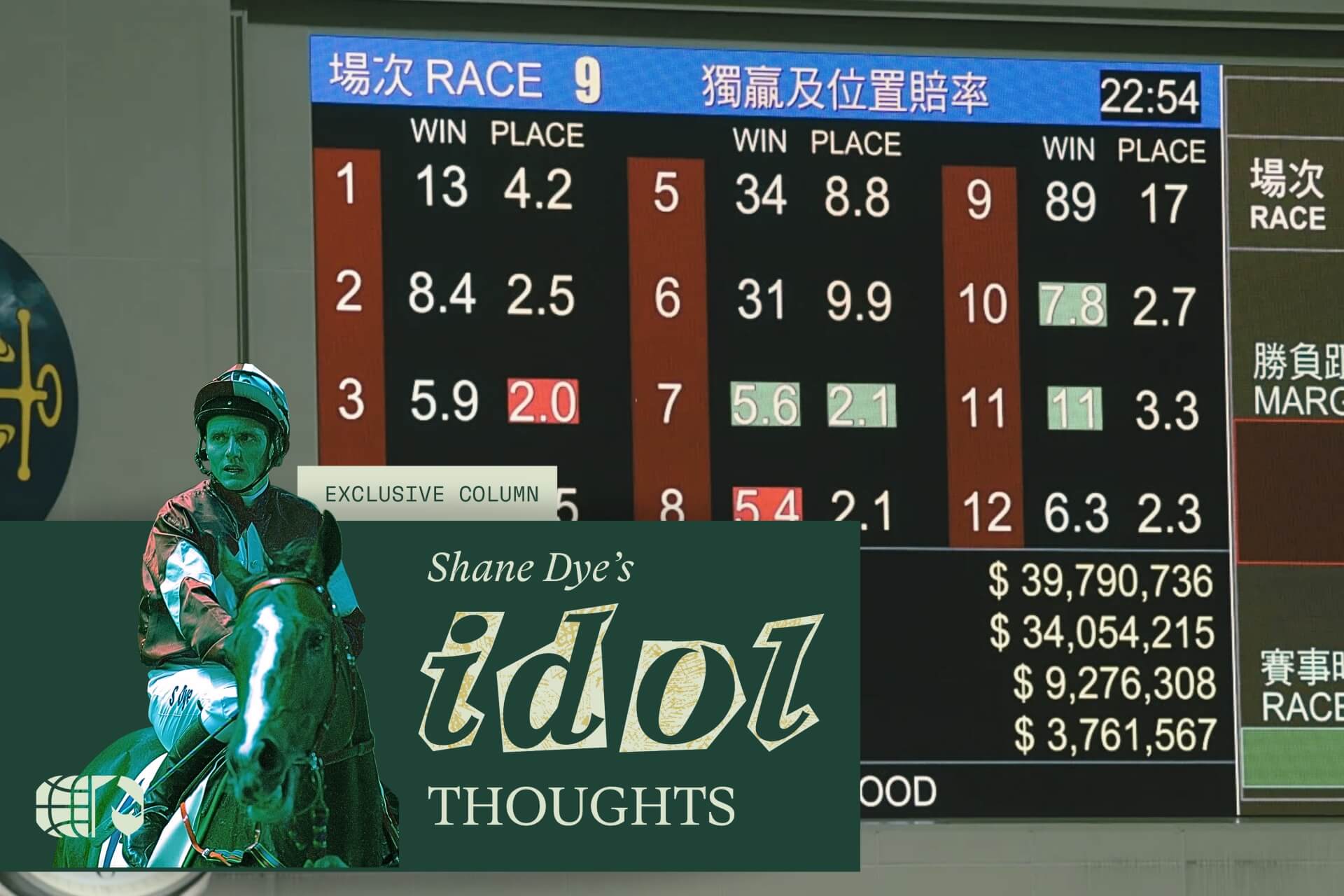
A horse is 15-to-one … and then bang – the last minute hits, the board lights up, and suddenly it’s five-to-one. People look at the green and brown lamps that indicate price movements, look at the crash and assume someone’s got ‘a tip’.
Most of the time, it’s not a tip. It’s a price correction.
That’s the first thing punters need to understand about modern wagering: a lot of the late market is being driven by professional computer teams running mathematical models. And when their numbers say the price is wrong, they bet – and they bet hard.
The roots of it go back a long way. Long before ‘algorithms’ became a buzzword, as far back as the 1980s, Alan Woods and Bill Benter were treating racing as a data problem. They collected everything they could, turned it into numbers, built models and bet only when the price on offer was bigger than what their model said it should be. That edge, applied over and over again, has changed the game.
Like most things that work, it didn’t stay contained. Teams split. People left. Knowledge was shared. Variations of the same core ideas spread through Hong Kong and beyond. Different outfits, different resources, different refinements – but at heart, many of the models are built on very similar principles.
And it’s not one person in a backroom pressing a button.
At the serious end, it’s an operation. People doing form. People watching replays. People tagging track patterns, trials and sectionals. Others feeding information in from different jurisdictions around the world. Then you’ve got the modellers – the ones turning that mountain of data into a price. Some computer teams have more than 200 people working for them.
That’s why the big moves often come late. Not because someone’s tipped a horse in the last minute, but because bet timing is part of the strategy.
Tote pools are sensitive. Every team is different – but most want to bet as late as possible. They are not betting before horses are moving into the gates. The later the teams bet, the more information you can have. You can get information on how a horse paraded, how their behaviour was on the way to the gates – they all want to consider those factors.
The second factor is that if a team bets too early, and the lamps light up, the public money will follow and eat into their price. When there are so many teams applying the same principles, the price can change dramatically.
So when a horse plunges late, what you’re usually seeing isn’t inside information – it’s the tote finally catching up with what the professionals thought was its right price all along.
This is where the game has really changed. Years ago, punters wanted to know what the trainer or jockey were tipping. Computer teams don’t want to know their opinion. Not because trainers and jockeys don’t know horses – they do – but because their algorithmic model is smarter than any trainer or jockey.
Trainers and jockeys are usually focussed on their own horse and if it ‘can win’. The computer teams are only focussed on one thing: is the price wrong? Often the teams will bet multiple horses in the same race, because their model says that they are all ‘over the odds’.
So what can the everyday punter do?
Honestly, the first thing to accept is that you can’t beat them at their own game. Without their data, their manpower and their rebates – the discount available for big bets – you’re not playing the same sport.
But you can stop being spooked by it.
Those lamps don’t mean you’ve missed ‘the mail’. More often than not, they mean the market has finally corrected itself.
And if there’s one simple way to look at late money, it’s this: Was it a late move or a late correction?
Some Factors The Teams Like
Something I know computers look for and like are leaders from outside gates. If a horse with a wide barrier is likely to lead and is showing 10-to-one, it will jump at closer to six-to-one, provided the circumstances are right.
People assume a leader from an outside barrier is disadvantaged, but it is not – in fact, it is an advantage.
Here’s why. One, you can cross at your own pace and not be dictated to. When you are on the inside and want to lead, you have to fight for position and use more energy, you can’t lead at your own pace in a lot of situations.
The other thing is, many times from a wide gate you are on the better part of the track for the first 200 metres – especially when it is rain affected.
Another factor computer teams like are blinkers, or other gear changes, for the first time.
Akashvani: A Case Study
On Sunday, Akashvani was showing greater than 40-to-one in early betting, the ‘brown lamp’ indicating a 50% price drop was lit – and he started 17-to-one. He was bet through multiple quinella combinations as well.
Before the race, I made the following comments on his previous start in relation to Sunday’s race: “Went back from bad gate, back wide turn, ran on with a last 400m sectional of 22.43s. That was seven days ago. Hasn’t placed in the last four starts but had excuses every run. Two unplaced runs at this distance but last time he handled the distance.”
This line is the key though: “This time from barrier eight he should be ridden closer. This isn’t the worst. Place chance.”
If I have comments like that, the computer teams also know he has been unlucky in his past few starts, he got a bad ride last time and expect that he will be ridden closer this time around – you just know he is going to start shorter than 40-to-one.
I don’t have a computer model, I put a lot of work into what I do – I watch every horse in every race and make comments like that, which helps me find a winner at odds like Akashvani.
When you saw a plunge come off in the old days, everybody thought it was crooked – and maybe people still get suspicious – but I can promise you there is nothing corrupt about a late price movement like Sunday’s.
Of all the jurisdictions I rode at around the world, Hong Kong was definitely the cleanest place I rode.
Akashvani wasn’t that hard to find if you were doing the work of watching replays. What you are looking for is horses that haven’t had the right runs in recent starts and could get a better opportunity to win next start. ∎