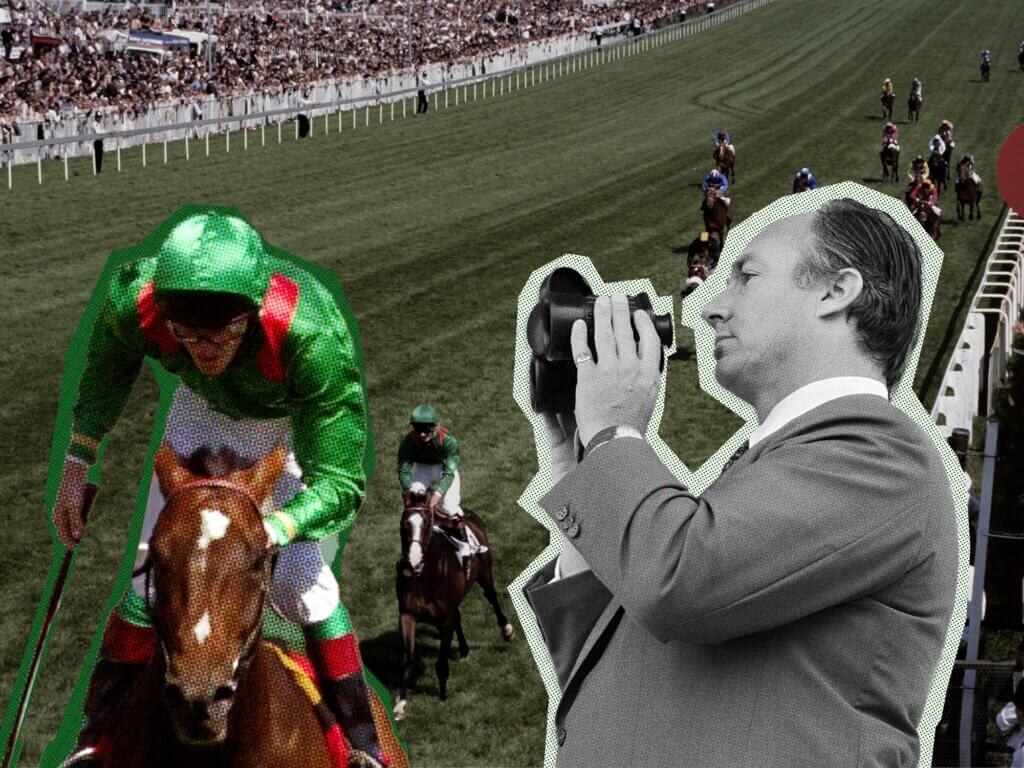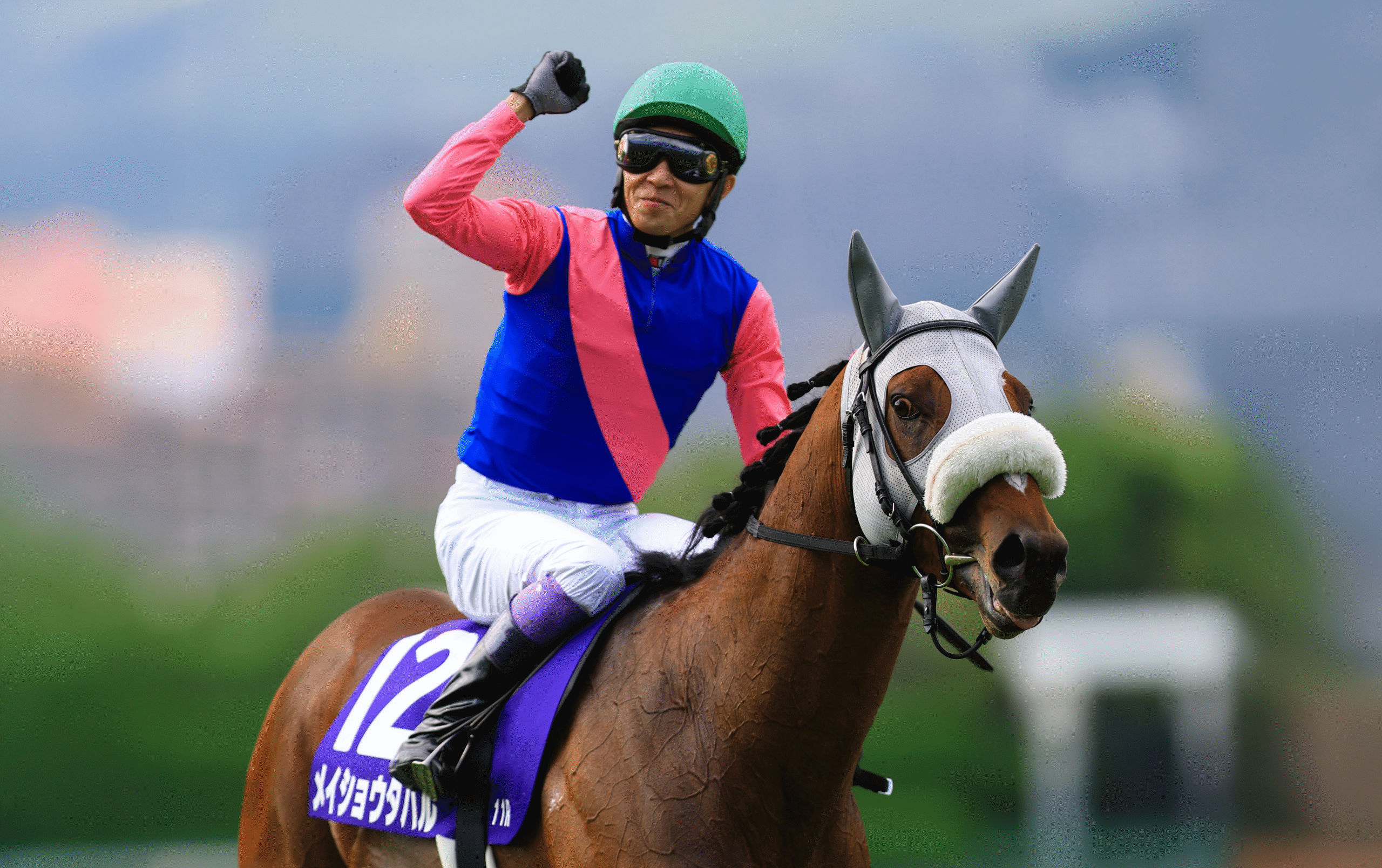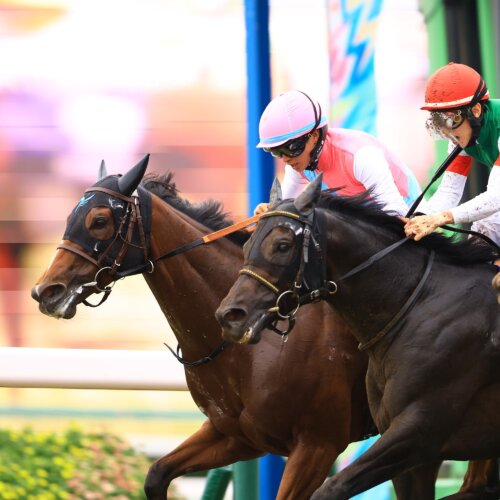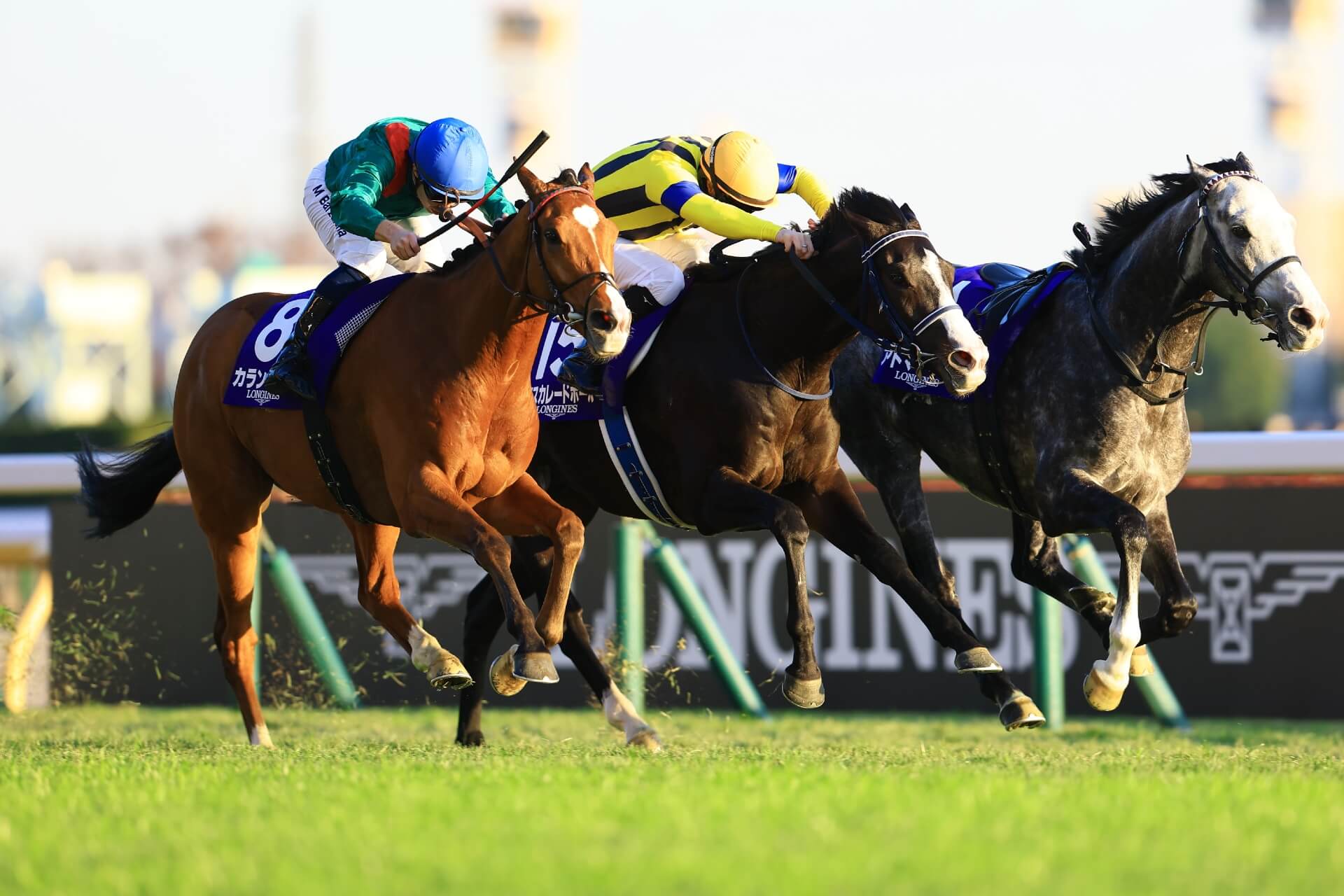
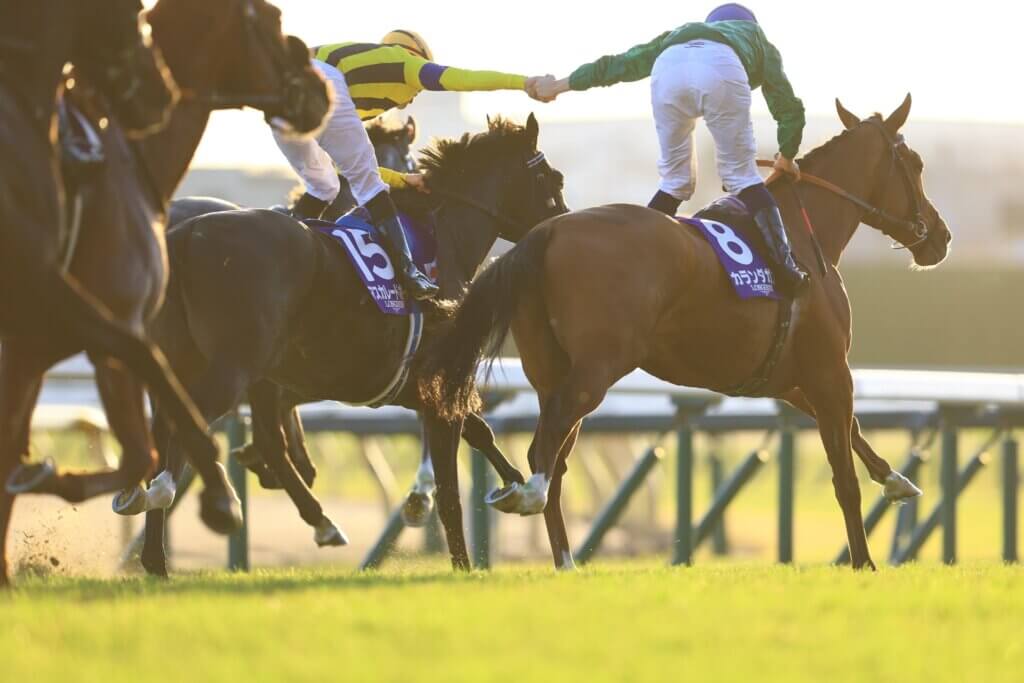
When Mickael Barzalona reached out after the line and locked hands with Christophe Lemaire, it was more than a moment of sportsmanship, it felt symbolic. A French jockey one-two in Japan’s great international race – a 34-year-old beating a 46-year-old who once wore the Aga Khan’s green silks – a gesture that stitched together generations and geography.
Barzalona had just won the Japan Cup on Calandagan. Lemaire, on Masquerade Ball, had come within a head. If Lemaire losing the Aga Khan job years ago sent him on the unlikely path to Japan, then Barzalona’s win – for the Aga Khan – closed some sort of circle.
But there was something bigger happening – the win may have just saved the Japan Cup as an international event.
How many times in horse racing does a matter of inches create an entirely different reality? A stride the other way and the conversation today is bleak: another foreign horse beaten, another reason for Europeans to stay home, another reminder that this race – created in 1981 to lift Japanese standards – has become almost impossible to win from outside.
The numbers tell a story. Since Alkaased in 2005, 62 foreign raiders had run without winning. Of them, it took a top horse in Ouija Board to place in 2006 but since then no foreign horse has finished top three – 46 of the 62 finished eighth or worse. In the last decade the international presence had thinned further, the numbers diminished by COVID but also through fear of firm tracks and even harder opposition. Trainers saw no upside in sending top horses halfway around the world to get beaten, even when lucrative bonuses were introduced to tempt them back.
Which is why this mattered: If Calandagan – fresh off three Group 1 wins in Europe and rated the world’s top turf horse – couldn’t win, then who could? Another defeat and perhaps the pipeline dries up completely.
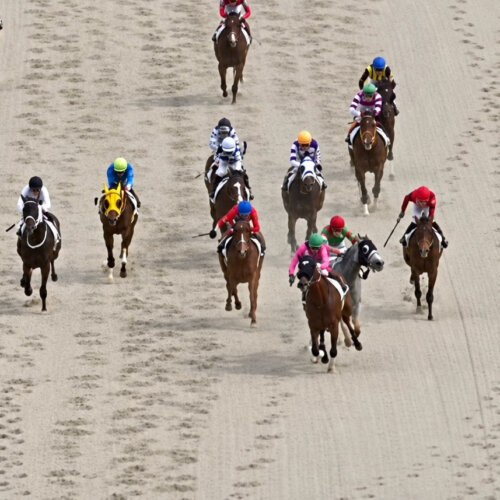
Instead, we got proof it can be done – and not against a soft field. The form stacks up: It was the Tenno Sho (Autumn) winner Masquerade Ball beaten a head, Danon Decile, the Dubai Sheema Classic winner – and one of only two horses to beat Calandagan this season – third, and Tokyo Yushun winner Croix du Nord in fourth.
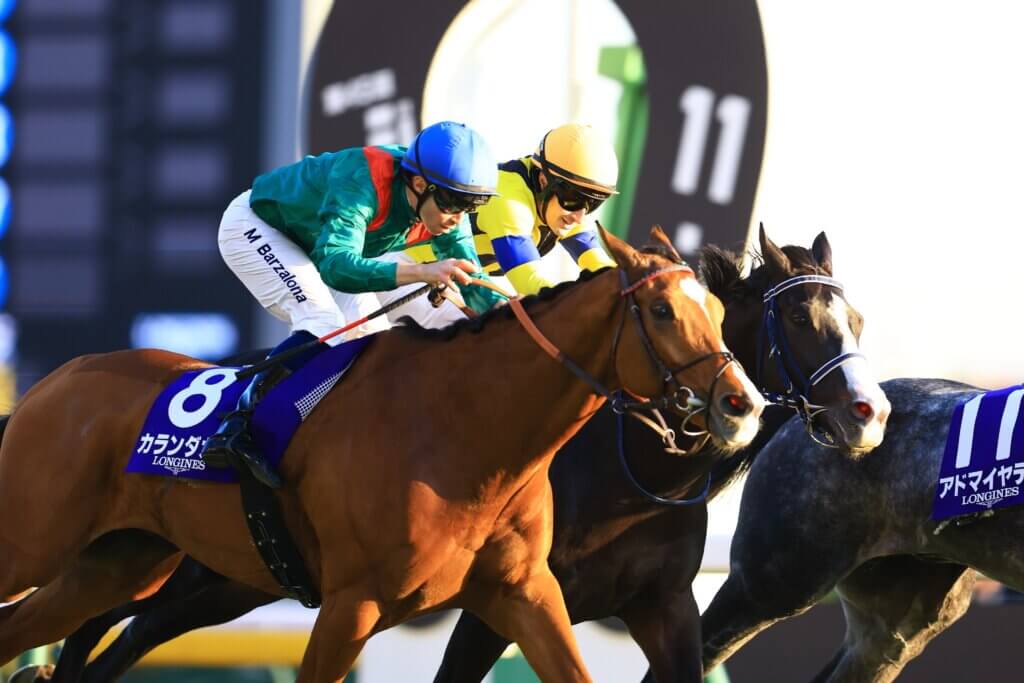
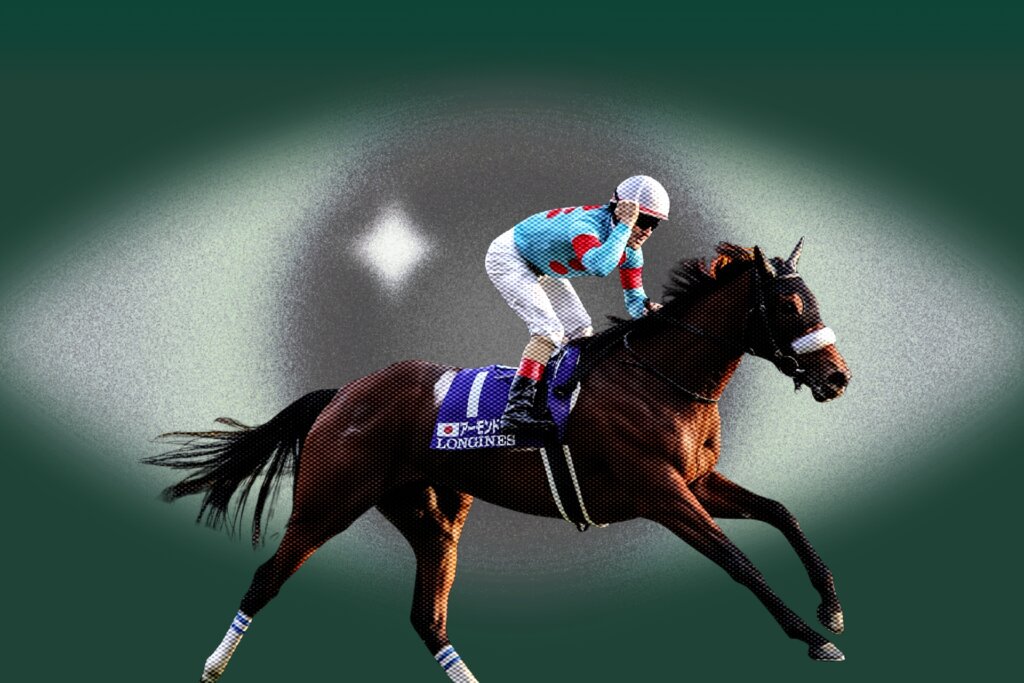
This was a proper, global-calibre Japan Cup, won in track-record time, 2:20.3 – the fastest ever run, beating Almond Eye’s iconic 2:20.6.
That passing of the torch, from champion to champion, was not the only reason why the result triggered such an emotional reaction from fans. The Aga Khan IV, Shah Karim al-Hussaini, passed away in February and Princess Zahra admitted this year felt “the best year we’ve had in a very long time,” but it was also one filled with absence and memory. She spoke about Calandagan as “a good horse … an improving horse”, and about how trainer Francis-Henri Graffard “brought him to the best place at the right day at the right time.”
They had never won a Japan Cup before – “we didn’t have the horse for the day.” Now they do.
Graffard, the rising star whose 14 Group 1 wins in 2025 so far passed André Fabre’s record for the most top-level wins by a French trainer in a calendar year, has an appetite for travel and a horse made for it. “He’s very well-balanced … able to accelerate for a long period and keep that acceleration,” he said. “A real champion.”
Barzalona was more direct: “I was on the best horse in the race.”
The Japan Cup had entered 2025 with a kind of existential challenge – still a great race, still watched by 77,000 on track this year with an astronomic handle of ¥ 26,008,143,100 (USD$166,711,911) as Japanese racing rides a surge of popularity from an encouragingly young audience. But Japan’s global shop window event had become increasingly domestic.
Then Calandagan came riding a three-race Group 1 win streak – Grand Prix de Saint-Cloud into King George and then the Champion Stakes. A world champion coming to test Japan’s best on their home track, the way the race was meant to be.
If he loses, nothing changes. If he wins – in record time, against a Tenno Sho winner, a Derby winner and the horse who beat him in Dubai – then the Japan Cup becomes viable again.
Now the conversation is different. A Japanese horse, Forever Young, wins the Breeders’ Cup Classic. A French horse wins the Japan Cup. The cycle of exchange the sport needs so desperately to thrive has new life and is flowing both ways.
Princess Zahra even hinted they may return: “If it’s the right horse on the right day for the right course, we will travel. If we can, we probably will.”
The Japan Cup needed a result just like this. And it arrived by a head. ∎