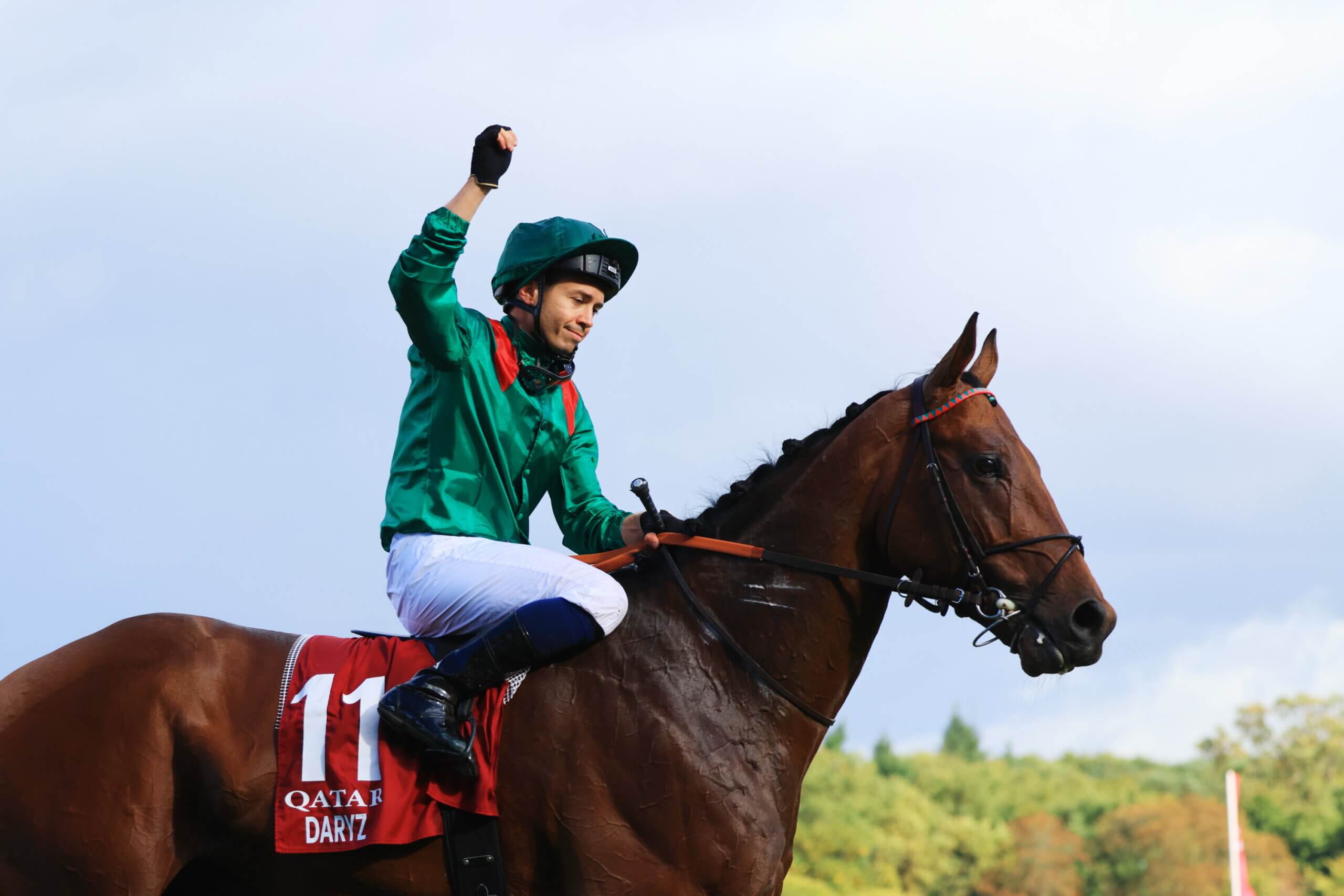
Daryz will attempt to do in Sunday’s G1 Prix de l’Arc de Triomphe what no colt has been able to achieve in 48 years: win the Prix de l’Arc de Triomphe in back-to-back years. That would put the Aga Khan Studs homebred in rare company, but then, being a rarity is Daryz’s thing.
When he carried the famous green silks to victory in last year’s Arc, the immediate assumption of anyone who had followed the late Aga Khan’s horses for any duration would likely have been that that was the end of that. A three-year-old colt, by the stallion-making Sea The Stars, was surely destined to be whipped off to the stallion shed forthwith.
Why would he not be? Try naming an Arc-winning three-year-old colt in those colours that wasn’t retired at that point in their lives? There hadn’t been one: Sinndar, Dalakhani, even the fillies Zarkava and Akiyda, were packed off to produce progeny rather than race on at four and show the world how great they might have been.
But Daryz was different. Princess Zahra Aga Khan and her team, which includes trainer Francis-Henri Graffard and racing manager Nemone Routh, had a refreshing new perspective which broke the trend.
“It’s a new challenge for us,” Routh said. “We’ve never tried this before, even to be here a few days before the Arc.
“We were all in agreement that we should keep him in training: everyone, it was a unanimous decision, it was quite easy for us to take. We felt that he’s always been a big horse and he was born quite late, and he’d taken all of last year really to get to his full maturity, so we felt it would be a shame to rush him off to stud.”
When Daryz won the race last year, by a head from the Oaks winner Minnie Hauk, the pair well clear, he climaxed a season that started with four wins, then entered the hard learning phase with defeats in the G1 Juddmonte International at York and by just a head behind Japan’s star three-year-old of the time, Croix Du Nord, in the Prix du Prince d’Orange. His Arc win on soft ground seemed to fit a late-maturing French stamina profile.
“I think Daryz is a 10-furlong good ground horse with a massive turn of foot, and I think the only reason he won the Arc on soft ground over a mile and a half is because he’s a very good horse,” Graffard said.
Routh’s personal view is that giving Daryz the opportunity to show that side of himself as a four-year-old has been the right approach.
“It was a good decision, because I think everyone has seen that he’s not just a horse that’s a mile and a half horse on soft ground,” Routh said. “He’s capable of winning Group 1s over a mile and a quarter and even a bit less. He’s got an amazing turn-of-foot, he’s adaptable to any ground.”
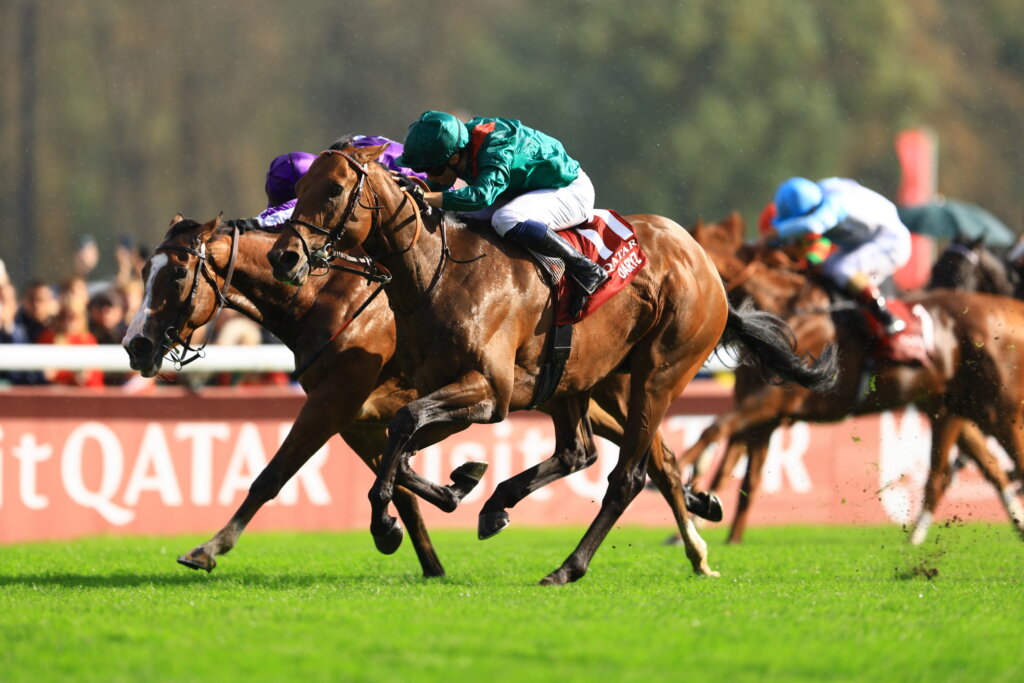
The stallion master’s loss this year has certainly been the racing fans’ and the Graffard stable’s gain. Two brilliant wins in the spring on quick ground at 10 and nine furlongs suggested this was a genuine champion in the making.
But the molding of Daryz as a four-year-old goes back to the winter months and a hard decision for Graffard.
“During the winter, he was starting to be very dominant, so I had to make a hard decision to change his morning rider, and so we have a very well-experienced rider that doesn’t let him play too much,” Graffard said. “I think it was very important to keep the horse focussed to the job he had to do.”
The man he gave the riding job to was Jean-Philippe Bresler, someone he has known since their days working under Alain de Royer-Dupre. Bresler won the Dévouement pour les Courses at the Godolphin stud and stable staff awards in France last year for his lifetime dedication to the sport.
“It was a worry and winter is difficult, because you have to slow down the horses, and so they can become a bit fresh, but I never thought I was not going to be able to manage it,” Graffard said.
“But I had to make a hard decision, as you can imagine, it’s always hard to take a horse from a lad that has done such a good job. I mean, we just won the Arc with the lad.”
But a strong colt, proving to be a handful, a growing, maturing animal full of hormones and power, needed the wisest of heads and the most experienced of hands.
“He’s a wonderful man, a very good rider, very experienced,” Graffard continued. “You need to reprimand the horse at the right time, especially this type of horse, and he knows how to do that. It’s important with these horses. So as soon as we changed, things went differently.”
Those spring wins in the Prix Ganay and Prix Aga Khan meant hopes were high for Royal Ascot and the G1 Prince of Wales’s Stakes, but Daryz was a disappointing third. A rest ensued, then a return, a fine Arc prep win in the G2 Prix Foy.
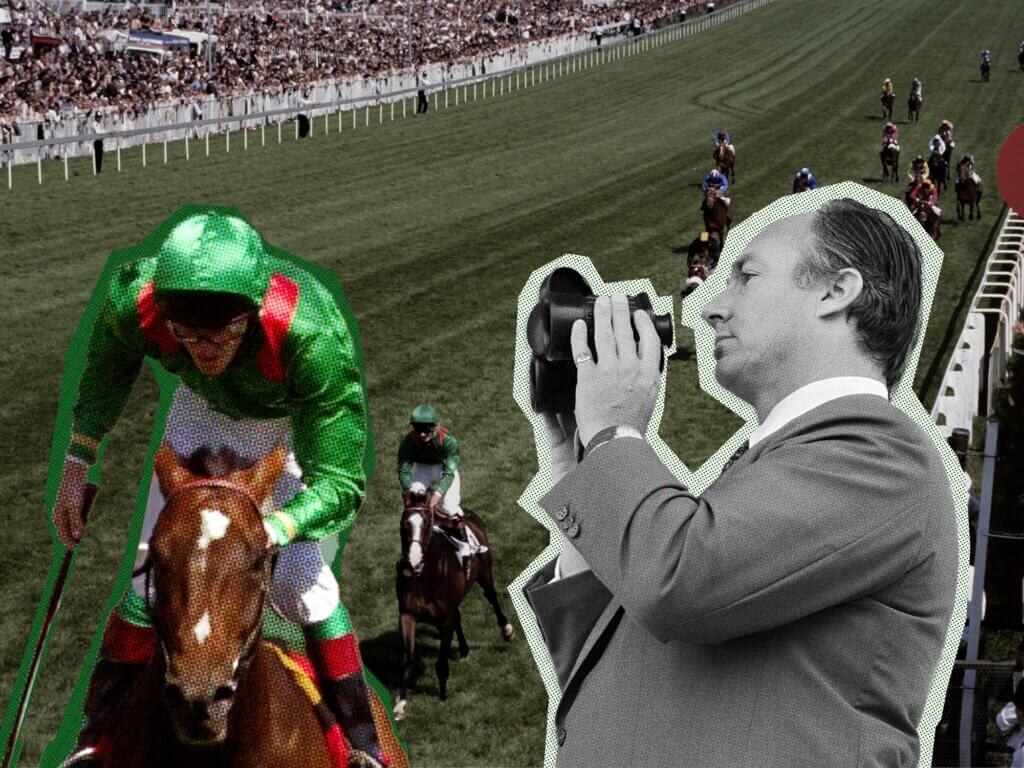
Alleged was the last colt to win the Arc back-to-back, under Lester Piggott in 1978. Before that, you have to go back to the great Ribot in 1956; Tantieme in 1951 and Ksar who won his second Arc on the bounce in 1922 are the other two. That’s high company indeed.
Several talented colts have tried and failed since Alleged: Workforce was 12th in his double attempt in 2011; Hurricane Run was third in 2006; Bago was third in 2005; even Montjeu was only fourth in 2000; the brilliant Helissio was sixth in his 1997 double bid; Carnegie was sixth in 1995.
“He didn’t perform to his full abilities at Ascot, but we know the reason why, and he still managed to run a decent race even though he was not right that day,” Routh said, adding: “Look, we think he’s a champion, but he’s still got Sunday to overcome.”
Graffard, who will also run the improving three-year-old Varandir for the Aga Khan Studs, said Daryz is not a horse that blossoms or shows a lot in his morning work, but he displayed his wellbeing Tuesday morning on the Chantilly gallops in a group of four, including the lead horse.
“His work this morning went well,” Graffard said. “Daryz was sitting at the back and he came really nicely under Mickael Barzalona. Mickael was very pleased with him and he reported that the horse was very tonic and happy to get up this morning and he had a normal blow afterwards. So we were very happy with his work this morning.
“He’s a physically very impressive horse, who has a very strong, powerful backend that can really produce acceleration, and that’s why I think when he is right and things go his way, good pace and everything, he is probably the best I have had.”
What the plan will be for Daryz after the Arc will be decided in the days following. Routh would not be drawn on specifics, but did say there are options to run after the Arc “internationally”. That could bring the Breeders’ Cup and Japan Cup into serious consideration, and maybe even the Hong Kong Cup given that his mother Daryakana’s greatest win was at Sha Tin in the G1 Hong Kong Vase.
Bresler, the work rider, was supposed to retire on October 1. He has delayed that until after the Arc.
“I think he said he’ll stay as long as Daryz stays in training,” Routh said. “So, he’s going to finish his career when Daryz finishes his career.”
Another season might be too much for Daryz’s fans to wish for, but if he wins on Sunday, one last run far from Europe to cap it all would be a rich bonus for a sport that needs more of its best colts racing for as long as possible. ∎