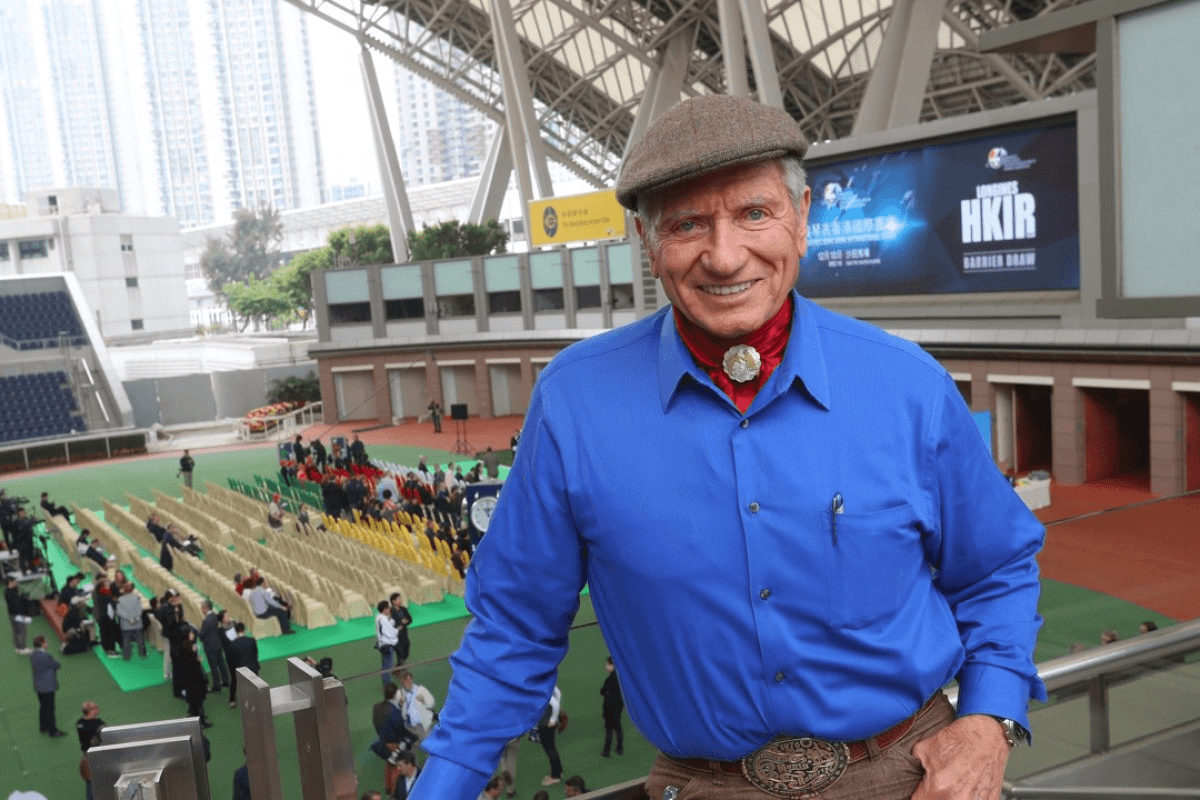
When Douglas Whyte first drove out to Flag Is Up Farms, he arrived much as men often do at the height of their powers – quietly sure there was little left to learn.
“The first time I was young and arrogant,” Hong Kong’s 13-time champion jockey admits. He would visit four times in all, and each visit stripped away a little more of that certainty. “It is the horses that are doing the work. We’re the ones on top of them, and I needed to better myself in order for them to work as a partner with me. He taught me that.”
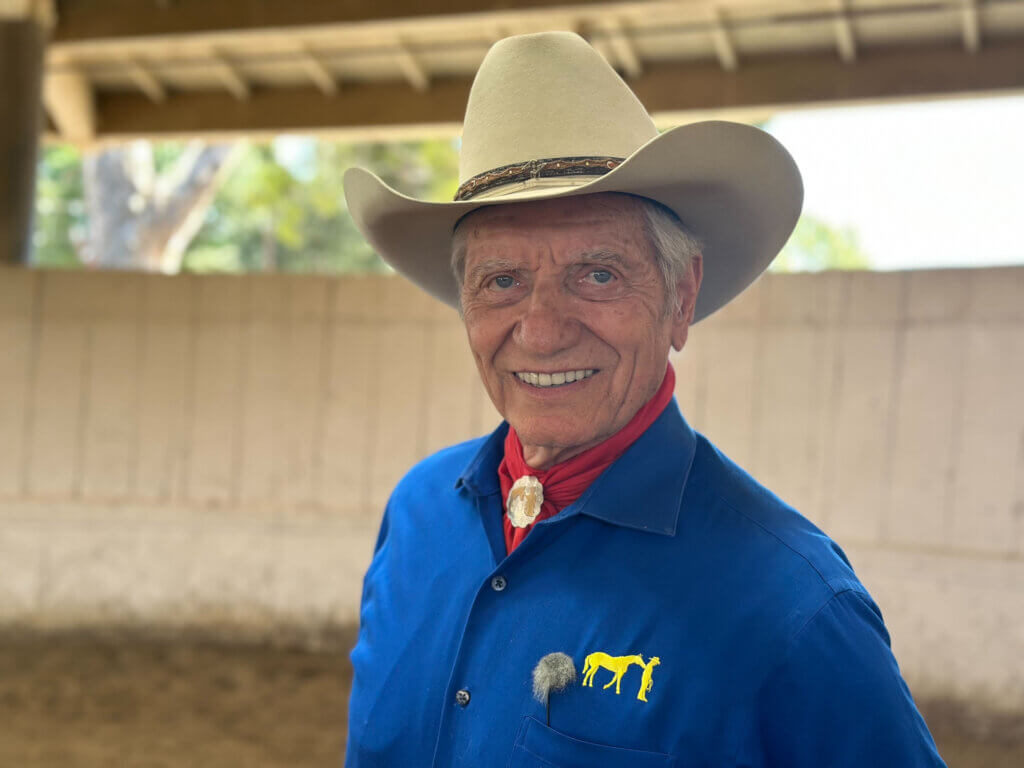
Monty Roberts, who died on Friday at his California ranch aged 91, spent a lifetime teaching that lesson – to horses, and, as those who knew him best understood, to people. His daughter Debbie Roberts Loucks said the cause was complications of an autoimmune disease.
The world knew him as the man who listened to horses, the cowboy who defied 4,200 years of breaking-by-force and replaced it with something quieter. He called it Join-Up: a horse, its flight instinct calmed, choosing to come to him rather than being made to. Nearly six million people bought the book. Queen Elizabeth II, who summoned him to Windsor in 1989 and kept him close for three decades, called it something simpler. As Roberts recalled in a 2022 New York Times piece, she believed “no one should ever say to any human being or animal, ‘You do what I tell you to do or I’ll hurt you.'”
Whyte felt the full weight of that philosophy the first time he completed a Join-Up himself, and the memory still catches in his throat.
“I don’t think, if anybody has done a Join-Up, that you would ever experience that connection anywhere else,” he says. “He afforded me that.”
What undid the champion, he explains, was the honesty it demanded. “You get into that round pen and you’re vulnerable, and the horse senses that. When you’re vulnerable and you’re not honest, the horse won’t approach you. You have to let go of everything – and only then will the horse trust and come up and join up.”
It brought him down a peg, he says, in the best possible way. “It allowed me to continue doing what I was doing without thinking I’m a champion and being arrogant. It brought me down to another level and afforded me the opportunity to work side by side, in partnership, with horses.”
If there was one racing cause he pressed harder than any other, it was the whip. Roberts never called it cruel – he doubted it caused much pain at all, especially the padded whips in use now – but he was certain it did nothing to make a horse run faster.
“If you have to whip him to feel like you’re getting the most out of him, to me, that’s not exciting,” Roberts told Idol Horse in an interview 12 months before his death.
His theory was that the whip actually slowed a horse down: struck near the finish line, he said, the animal’s ear, eye and body all lean toward the blow, costing it ground at the very moment it should be finding more. It was a conviction Whyte had carried to Hong Kong himself, having arrived in the city a young rider wary of the whip. He found an ally in Roberts, a man who had proven another way was possible.
“If you can get a horse to run for you with your hands and with balance, they can’t run any faster,” Whyte says. “It doesn’t matter how hard you hit them.”
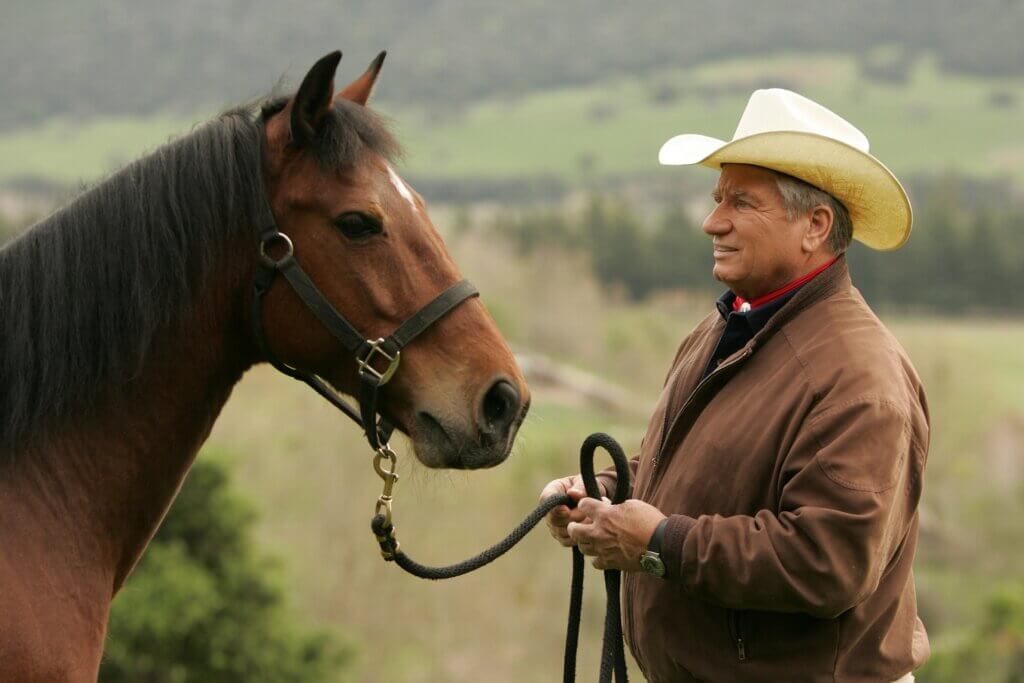
Roberts’ influence ran a long way down that road east. It reached Hong Kong and found not only Whyte but Felix Coetzee, the South African champion rider turned Hong Kong Jockey Club Apprentice Jockeys’ School riding coach, who made his own pilgrimage to Flag Is Up Farms and folded Monty’s methods into the education of the next generation.
“I’m a huge fan, and Monty is so generous with his time and knowledge,” Coetzee said after watching him work a nervy, spooked horse calmly over a tarpaulin. “It’s incredible to watch how the horses respond. I just can’t get enough of the work.”
The remedial roll call in Hong Kong alone tells the story – Pakistan Star, who won two Group 1s after a Roberts consultation, ten months on from stopping altogether in the middle of a race.
But it is not the horses Whyte returns to when he searches for what Roberts truly was: “I think he saved millions of horses. But I think he saved a lot more human beings as well.”
Whyte watched it happen first hand. “I was there when war veterans came in – that is when I realised how gracious he was towards humans. Everyone thinks he’s just horses … but he was so gracious towards people, especially people who couldn’t cope when they came out of war. He took them in.”
He took in others the world had given up on, too. “He took young people out of the prisons – the prisons allowed him to take them into his own house and live with them. Teenagers who were going to spend years there. He said, ‘I’ll rehab them.'” Whyte pauses on what became of them. “All of them have come back to him, year in and year out, with their families. They’ve all got children, they’ve all put them through school. People don’t realise what he’s done for humans. They just think he’s a horse person. He was a rehab for people.”
The graciousness, Whyte insists, was shared. He speaks with real warmth of Roberts’ wife, Pat – from whom he has bought four sculptures – who bore the weight of that open house alongside her husband.
“Pat’s an unbelievable woman,” he says. “She had to deal with all these children coming in, rehabbing them, putting them up in their home.”
Roberts himself understood where it all began. His own father had beaten him with a chain, once so badly he was hospitalised, for the crime of showing kindness to a young stallion. He never fully made peace with the man, but late in life he came to something like acceptance. “If it wasn’t for my father’s really tough handling of horses, I probably never would have been dedicated enough to do what I’m doing. He swung the pendulum so far toward pain that he caused me to have to find a better way.”
He spent the rest of his life finding it, and teaching it to anyone who would climb into the round pen and let go. Whyte was one of them.
“It takes a lot of tranquility, forgiveness and humbleness,” Whyte says of what Roberts gave him. “Getting there with an open mind – and they’ll join up with you. That gave me a lot of momentum going forward with where I needed to go with horses. And with people, I suppose.”
There was one horse above all the others for Roberts. In 1997, in the high desert where his own understanding had begun, Roberts tracked a wild mustang for three days and, without rope or force, invited him to come in from the wild. The horse chose him – turned from his own herd and walked back to the man. Roberts called him Shy Boy, wrote a book about him, and for nearly thirty years kept him at Flag Is Up Farms, where the once-untamed stallion greeted thousands of visitors. He was the living proof of everything Roberts believed: that trust, freely given, outlasts anything taken by force.
Shy Boy died this past March, aged 33, a few months before the man who had listened to him. Roberts, by then in failing health, wrote a farewell that reads now like his own.
“No horse will ever remain in my memory more than this wonderful American Mustang. He loved virtually everyone and all the horse world loved him,” Roberts wrote. “I am now in my 90s and I’m sure it won’t be long until I am with him again. All who knew him will agree he should be in everyone’s memory. I love you Shy Boy and I am sure I will see you soon.” ∎