
A thunderstorm swept the bluegrass before dawn and by mid-morning the rain had stopped, leaving the paddocks of Lane’s End Farm impossibly green.
“Just see how everything is after the rain,” says a proud Bill Farish, stepping out of his car at the stallion barn. Groom Miguel Morales leads the bay horse outside and a barn cat named Bruce wanders across the path, brushes past the most valuable young stallion in America, and carries on. Flightline doesn’t move. He rarely does.
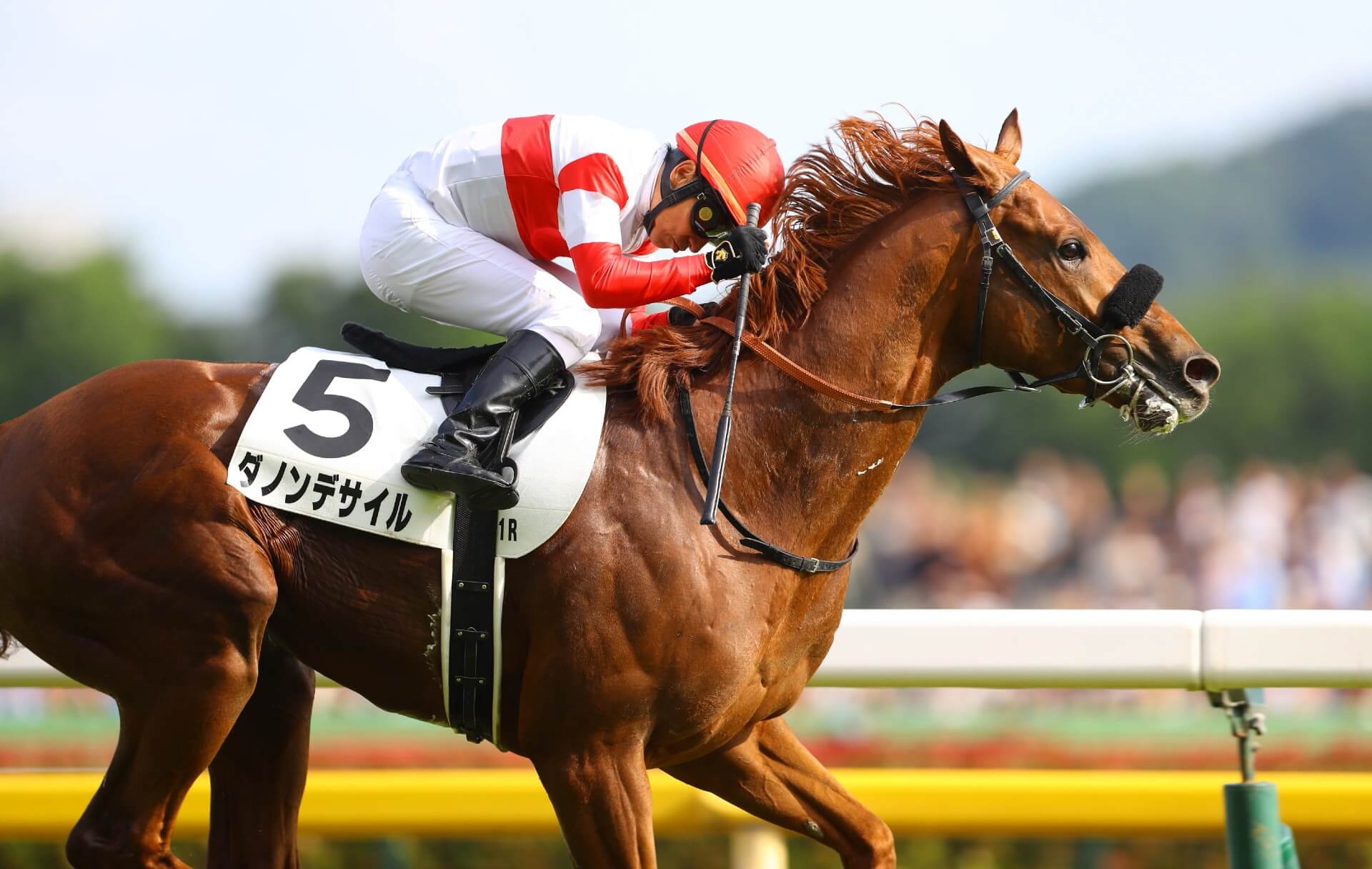
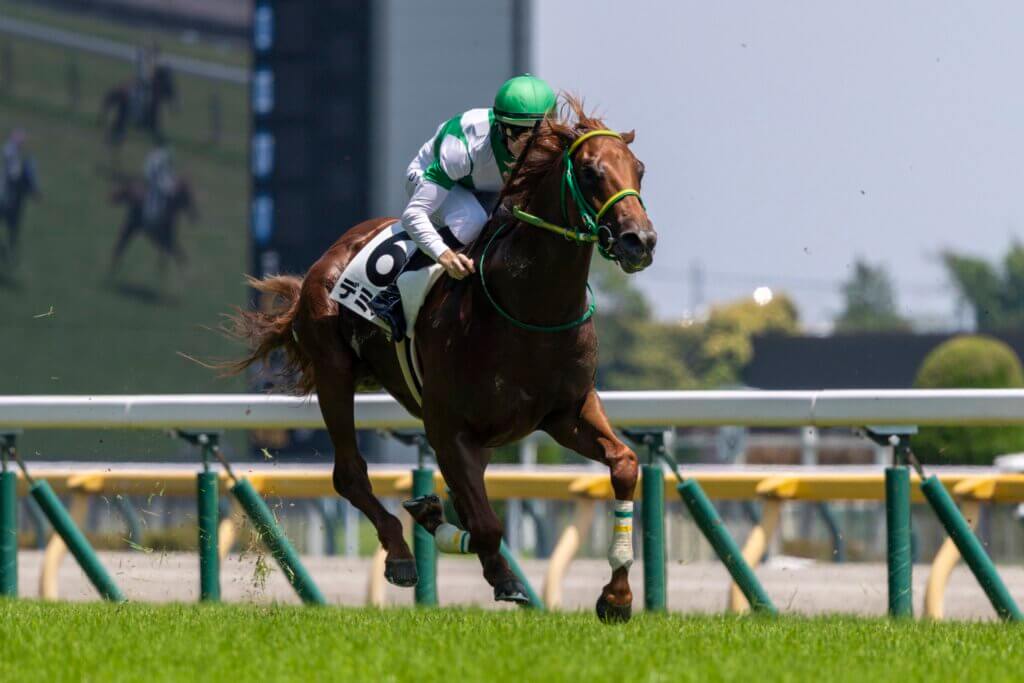
A day earlier, a colt named Flight Command had won by ten lengths at Aqueduct – Flightline’s first winner on American soil. But his first winner anywhere had come weeks earlier, and a long way from Kentucky: on the turf, in Japan.
The colt’s name was Demian, and Farish watched the replay almost immediately.
“Definitely was a surprise,” he says.
It should have been. Flightline was a dirt horse of a kind America produces once a generation – six starts, six wins, four of them Grade 1s, the 2022 Horse of the Year. Nothing about him suggested grass. Nothing about Demian did either. The colt is out of a mare by Curlin, and Curlin was as American a dirt influence as the sport has known.
“You have to go to Smart Strike to find some grass,” Farish says of the page, and even then the qualification arrives quickly: Smart Strike was primarily a dirt horse who happened to get turf horses.
What struck Farish was less the surface than the shape of the racecourse. This was not a European track with its cambers and undulations.
“It’s a much more uniform course like you’d expect over here,” he says – flat, galloping, a place where an American-bred could simply run. And if that is what Japanese turf asks of a horse, then the question stops being whether Flightline’s stock can handle grass and becomes something larger.
“There’s no telling what they’re going to be able to do,” Farish says. “When you breed some grass influence to them, I think they’re going to be able to run on that just like dirt. It’s going to be fun to see.”

Flightline stands with Morales, head level, ears forward, and does not move until he is asked to.
The stallion’s stillness is the thing everyone remarks on, and it was not always guaranteed. When Flightline arrived at Lane’s End after the G1 Breeders’ Cup Classic, the farm padded his stall – a sensible precaution for an expensive stallion who had never known anything but a racing barn.
“The padding on the stall doesn’t even have a mark on it anywhere,” Farish says. “He’s never turned a hair since he’s been here. He walked off the van, went in a little bit at the other stallions, and walked right in.”
Turned out for the first time, he put his head down and ate grass. He took to breeding almost immediately. “It was a very, very easy transition.”
Which makes the other Flightline – the racehorse, the one Farish describes from the trackwork mornings in California – sound like a different animal entirely. In the pre-dawn darkness at John Sadler’s barn, he would start kicking the walls, wanting out, wanting to work. Sadler’s team took him out first every morning because the horse insisted on it.
“We’ve never seen any of that since,” Farish says. “He just was a very competitive horse and wanted to train.”
It is a useful distinction. Whatever burned in him at four o’clock in the morning was reserved for the work. Everywhere else, he was and is entirely at ease.
Does he behave differently in the off-season, with the covering nearly done?
Morales doesn’t hesitate. “No. He is always him, just like this.”
For a Japanese breeder deciding what to send to Kentucky, the most useful sentence Farish offers has nothing to do with Flightline’s racing record.
“He does seem to throw to the mare,” he says.
The first crop bears it out — chestnuts, bays, greys, every colour, every frame. And the practical consequence is not that Flightline is a weak stamp on his stock but that he is a legible one.
“You have a pretty good feeling he’s going to improve on what you breed to him, but you’re going to get something similar to what you’re breeding to him,” Farish says.
He has tested this himself. He sent a short-coupled, sprinting-type mare and got back a short-coupled, speedy two-year-old.
Send Flightline speed and he will sharpen it and send him a staying mare and, Farish believes, you’ll get stamina.
But Flightline himself had plenty of speed as well as the stamina needed to go two turns at a mile and a quarter. His first four starts came at six furlongs (twice), seven furlongs and a mile, all for wide-margin wins. He did not race around two turns until the Pacific Classic in the September of his four-year-old season: he won by 19 and a quarter lengths.
His second 10-furlong contest was his last, the Breeders’ Cup Classic, when he kicked clear for an easy eight and a quarter lengths victory under his ever-present rider Flavien Prat.
“I remember being a little bit nervous whether he would get the (mile and a quarter) distance,” Farish says. “Boy, did he ever get the distance.”
What the last two starts revealed was not stamina in the conventional sense but something rarer – a cruising speed so far above his rivals that the race was decided before the home straight. He would stretch the others early and then simply keep going.
“Almost like Secretariat in the Belmont,” Farish says. “He would extend them early and then he would keep going, and they wouldn’t have anything left.”
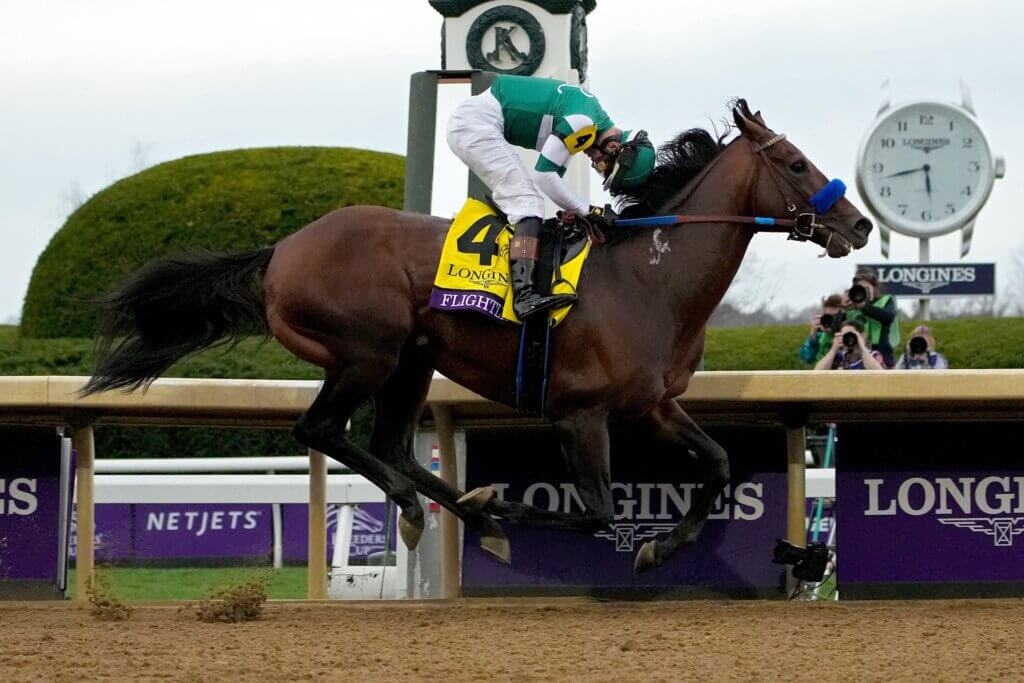
Yet the horse could sit, too. In the Breeders’ Cup Classic he tracked Life Is Good and passed him at the moment of his choosing. He was, tactically, whatever the race required.
That can be seen in his pedigree – A.P. Indy’s brilliance on the top line, Dynaformer’s stamina underneath.
“He’s not like anything I’ve ever seen,” Farish says. “He’s got everything. He’s got the speed and he’s got the stamina.”
So, could he have won on turf?
Farish doesn’t pause. “I think he could have won on anything. He just had that tremendous ability and so much speed. I don’t know that the surface would have really mattered that much. But we’ll never know.”
Japan has run this experiment before, and it changed the sport there.
Sunday Silence was an American dirt champion American breeders declined to support. He went to Japan because Japan wanted him, and from Shadai he rebuilt an entire racing nation on the grass, siring a turf dynasty that reaches into the present through Deep Impact and his sons. The lesson Japanese breeders drew from him was that American dirt blood, given a flat, fast, forgiving surface, can transfer.
Flightline is not Sunday Silence. The differences matter and Japanese breeders know them better than anyone: Sunday Silence was a bargain nobody wanted; Flightline is the most sought-after young stallion in the world, and Japan has been paying accordingly. This is not salvage. It is a chase.
But the experiment is the same one. And it has already returned its first result.
Farish has been looking for this horse for a long time, and he has a template for what he is looking for.
“Ever since we had a stallion named Kingmambo,” he says – a horse who was very successful in Japan and, he notes, pretty much everywhere. El Condor Pasa in Japan. Group 1 winners in Ireland, France and England. Lemon Drop Kid at home. “We’ve always looked for that stallion that could be successful there as well as here.”
He thinks he has found him. “It’s rare when you have a stallion that’s truly internationally successful, and I think he has the potential to do that.”
The strategy was deliberate. Lane’s End wanted good Flightlines in Japan without hollowing out his American book. Japanese interest made the balance easy: the quality going east was high. Demian was bought at the Keeneland September Yearling Sale for US$1.7 million and, as Farish notes, nobody yet knows the ceiling.
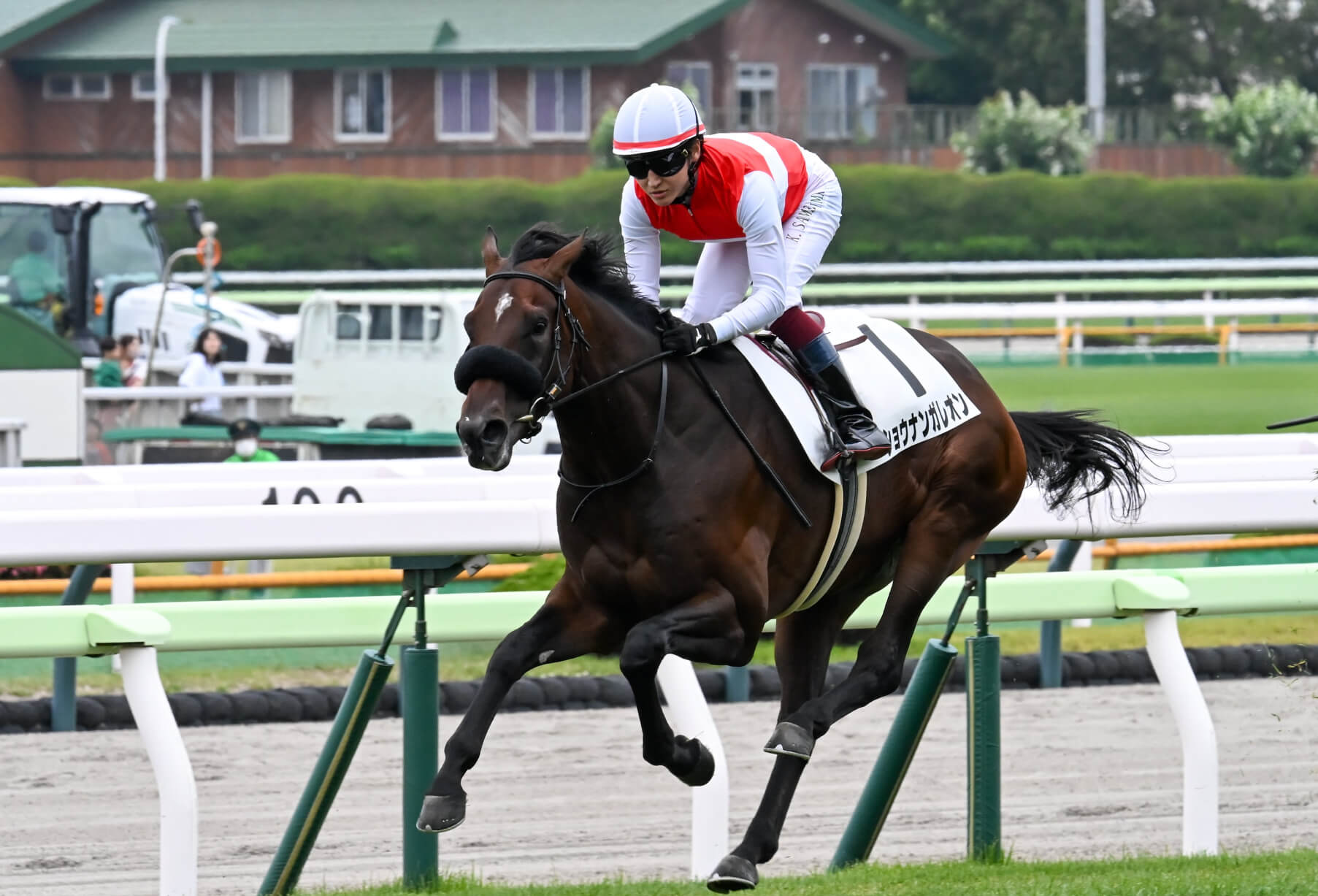
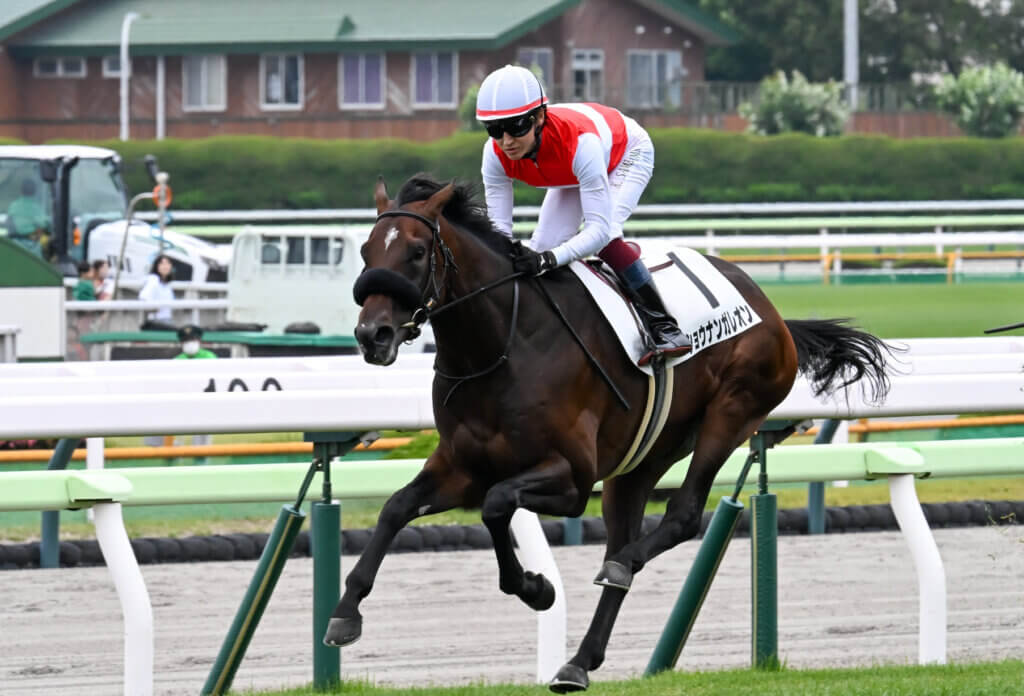
He has watched the traffic run the other way, too. Farish and his son travelled to the foal sale in Hokkaido and found three Flightlines out of South American mares – “all very impressive individuals.” One of them, Shonan Galleon, is out of the Argentine Group 1 winner Tan Gritona, a mare bought in America, covered, and shipped home in foal.
He is a big, imposing colt, and he has already made an impact. Shonan Galleon debuted at Hakodate on July 5, smashed the two-year-old track record at 1800m and seems set for Pattern grade next time.
Farish was already an unabashed fan of Japanese racing and when he talks about Forever Young, the enthusiasm is unguarded. “Just the excitement that he generates,” he says. “It’s fun to see the American crowds embracing the Japanese horses the way they did.”
Then the professional’s admiration: it is desperately hard to travel that far and perform, and the Japanese have become very good at it. “It’s great to see and it adds a tremendous amount of interest to the sport.” ∎