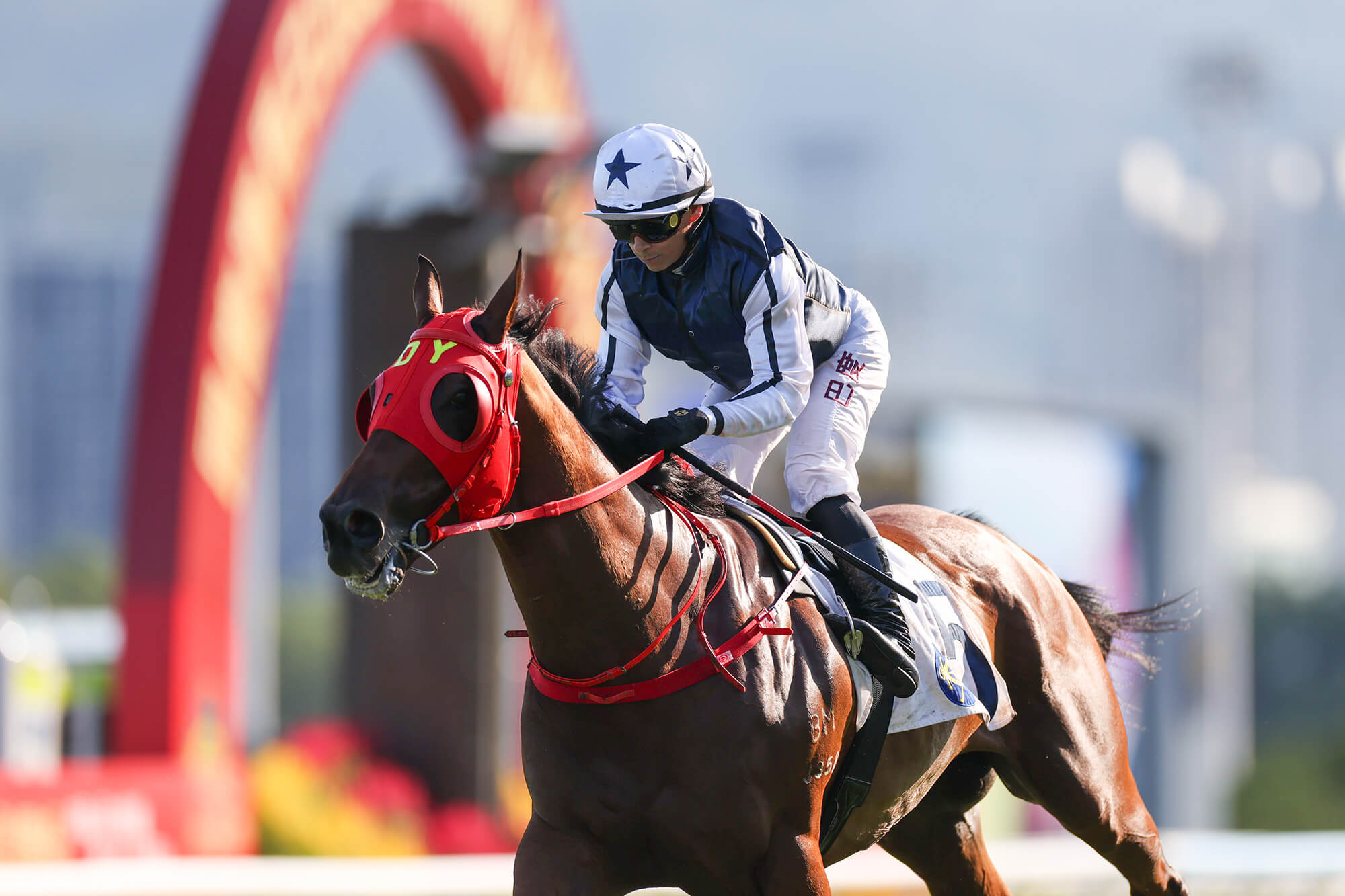
Mirco Demuro is back in Japan and his win at Kyoto on Saturday was a timely result for a man with something to prove. It came on the second weekend since his return from an extended period on foreign shores – a time spent seeking positive change.
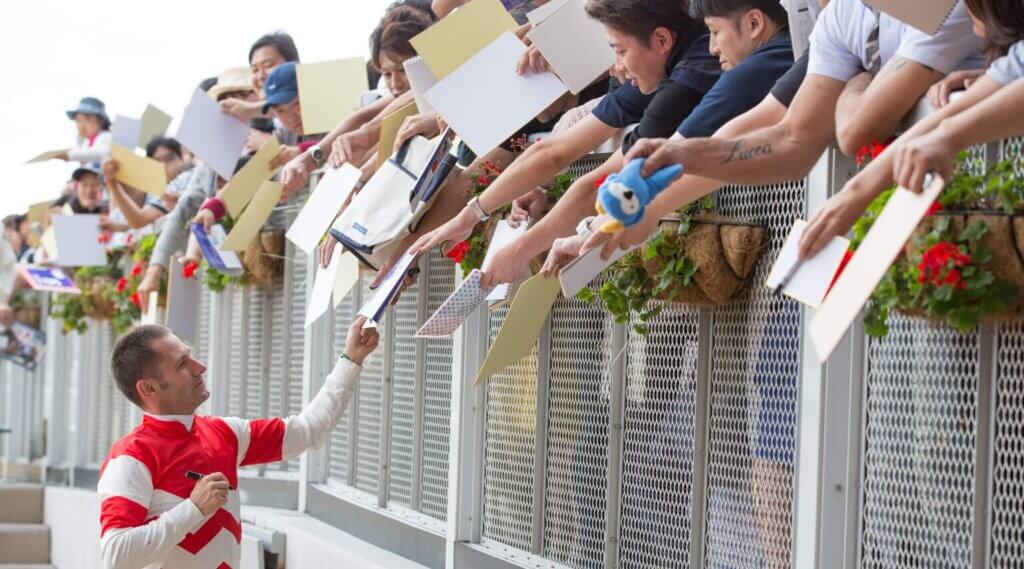
It was no Group 1, but Ten Ace One’s modest victory was met with an outpouring of warm celebration from the track-side fans. They know their sport and they treasure the Italian and his place in Japan’s horse racing sphere. But one allowance win does not a comeback make, and the man with more than 1,300 wins in Japan knows it: he has returned from California under no illusions.
Demuro wound up his North American sojourn at the end of April, and now that he is in Kansai again – back to the place he calls home – he is knuckling down to the challenge of reigniting his storied career as a Japan Racing Association (JRA) jockey.
When he left Japan last summer his stock had dropped: the iconic days of bowing to the emperor after Tenno Sho victory, of his emotional win “for Japan” in the 2011 Dubai World Cup, seemed distant. Since those days, the rising generation of Japanese jockeys has strengthened, and more so, perhaps, in the past 12 months, led by Forever Young’s rider Ryusei Sakai.
The landscape has altered, the challenge for Demuro, 47, is difficult. But when things get tough, that’s when the committed athlete rises to the task. The man with more than 50 Group 1 wins in the locker is fixed in his typically passionate self-belief that those days are not only his past, but his future too: whether that is true, whether he can succeed, will depend largely on support, perception, and his ability, not just in the saddle, but also to make, remake and maintain positive connections.
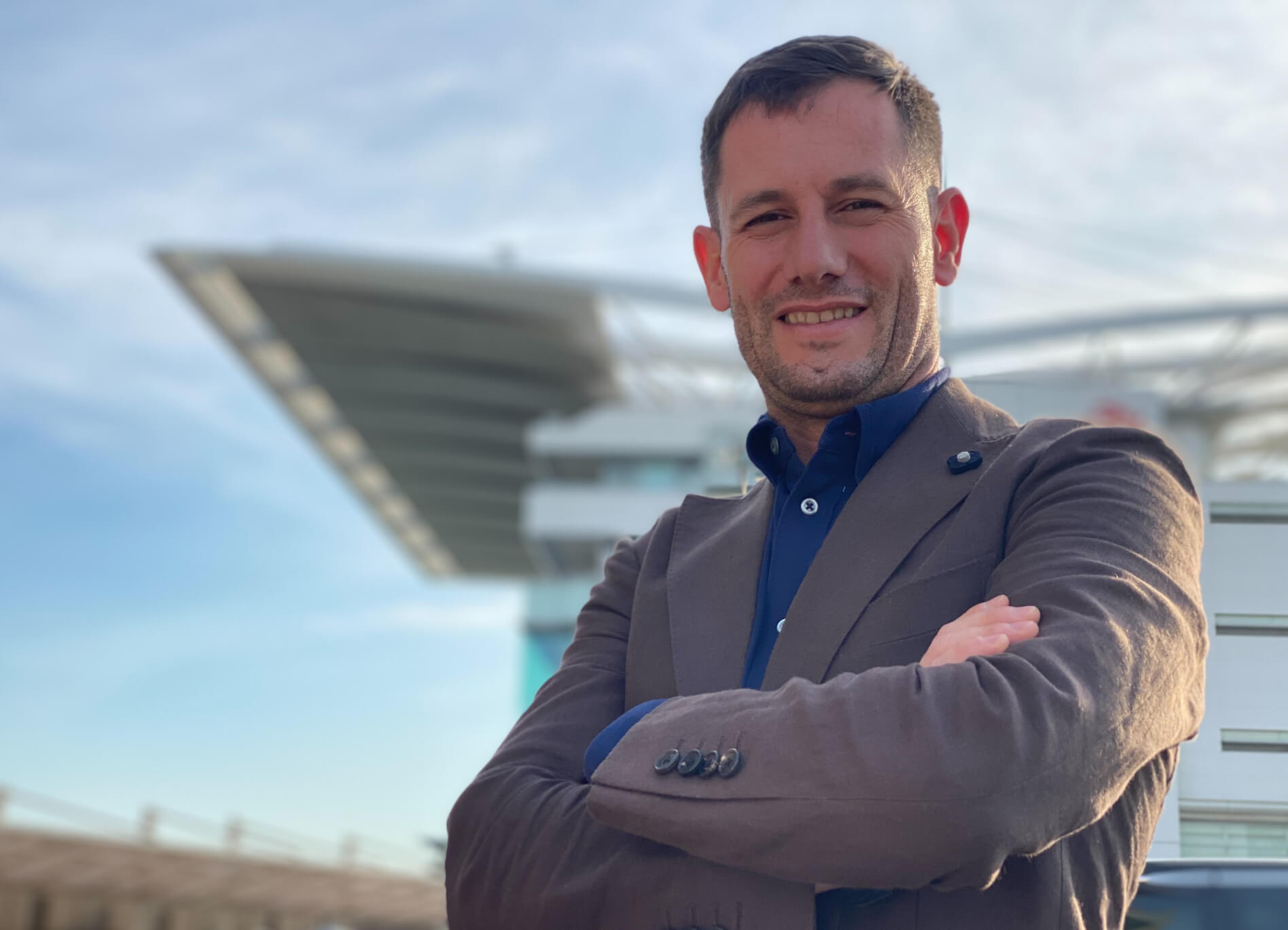
He knows it will be tough. But when life gets challenging, that’s when your friends show up, and that’s where Kanichiro ‘Joe’ Fujii comes in.
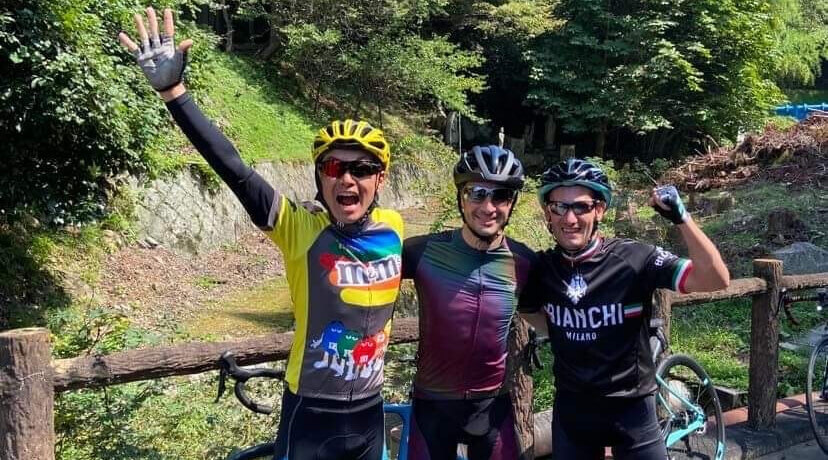
Fujii knows all about friends showing up. The former jockey was in isolation in a Sapporo hospital, his back broken after a horrific race fall, his life catastrophically changed by what would turn out to be paralysis of his body from the waist down, when his old cycling buddy Demuro stood the other side of a window and they talked on the phone.
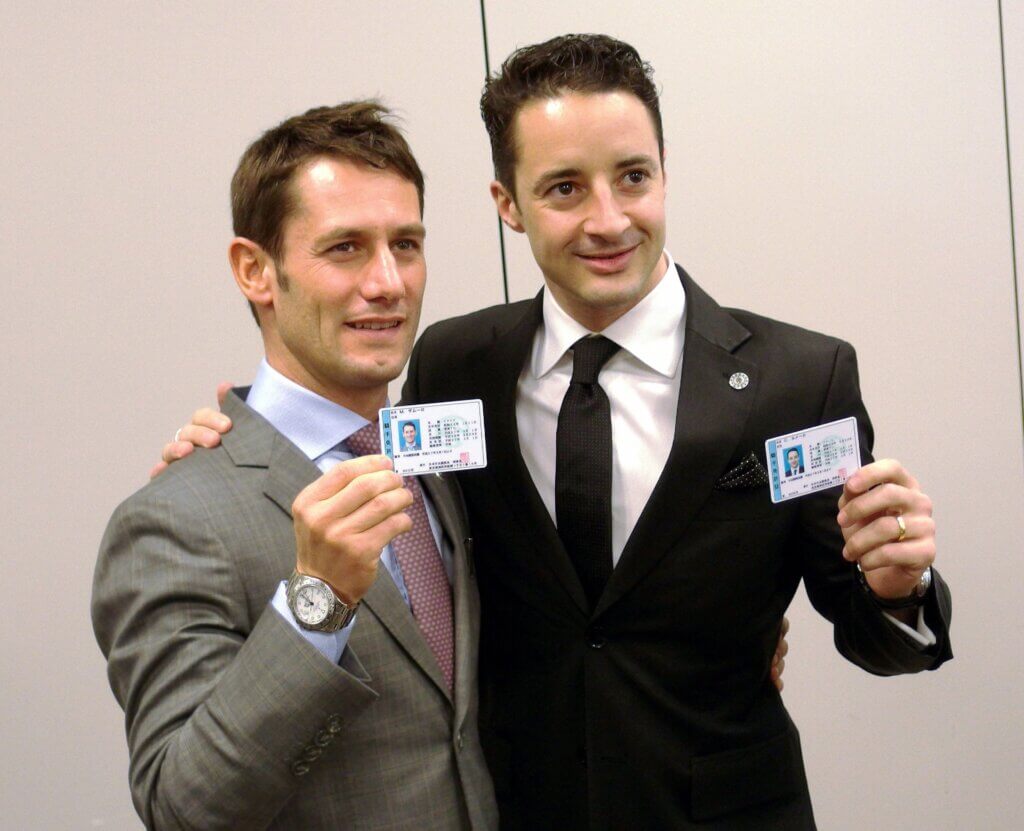
Now Fujii is part of Demuro’s professional as well as his friend circle – the former rider is listed on the JRA website as Demuro’s jockey manager.
“Joe is a former jockey and he knows my position better than anyone, and I am a foreigner so my Japanese is not as good, so it could be the key,” Demuro tells Idol Horse.
He says he asked Fujii two years ago if he would help him in a professional capacity, but the time was not right then.
“It was after he had the big injury,” Demuro recalls. “He said ‘Mirco, I don’t want to make any decision right now.'”
“I asked him this time again and he said to me, ‘If you want me to become your agent, you have to be changed. I cannot take care of you like you were before,’ so that’s the deal. I’m trying to do my best.”
Demuro’s return to JRA race-riding came at Kyoto on May 2. He had four rides, all longshots, and his best finish was eighth in the G3 Unicorn Stakes. But to get four rides – plus one the day after – including one in a Pattern race, is something Demuro sees as a positive; more positive still was the reaction he received from the race-going public. His second weekend brought 13 rides and that win.
“It was so good, the reception, the Japanese fans are always so nice,” Demuro says. “I had to do all the bookings for the first weekend by myself when I was in the United States and it wasn’t easy to find horses to ride in the morning or in the race.
“I just picked up those four horses and one on Sunday, which is very good because coming from the United States, you come back to Japan, even if everybody knows me, you know, it’s not easy, so I was very happy.”
Demuro left Japan right after he finished 15th in a Group 3 contest at Fukushima on July 13, 2025, his only mount that day. It had been almost a month – eight race days – since his previous win, and he had only 12 wins for the year, a far cry from the 171-win total he notched in his peak year of 2017, and a continuation of the decline that had seen his annual tallies for the previous four seasons come in at 75, 72, 44 and 42 wins.
He left seeking anything to refresh his career and reverse the prevailing trend.
“Honestly, I needed to change something,” he says. “I was here struggling to find a ride and I wasn’t happy, but I wasn’t unhappy either. I just needed to change something.
“Two years ago, I moved back to Kansai but even after that I was struggling and I needed to change, so I made the move to go back to California because I had the good experience when I went there 25 years ago. I was riding for the best trainers over there at that time, Bobby Frankel, Richard Mandella, Neil Drysdale, so yeah, I had that image of 25 years ago and the good feeling. I had never gone back there after 2001, and I thought it might help me refresh.”
Five days after his Fukushima ride, he was in Southern California, in the Del Mar winner’s circle after his first mount, Ribbons, had given him the perfect start in a maiden special weight. It was slow going for a while after, but then the odd wins here and there started to tick in, and in early October he won the G3 Surfer Girl Stakes at Santa Anita.
At the end of November, he won the G2 Hollywood Turf Cup at Del Mar and when the circuit moved to lower grade Los Alamitos, he returned to Japan to ride for two weekends in December, nailing two wins; then back to California and a year-ending win in the G2 Joe Hernandez Stakes. That all gave him 14 JRA wins and 30 wins for the year on American soil. Change was gradually happening.
“My goal going to the United States was to win a Group 1, as always,” he says. “But I went there expecting nothing, I just went there to see what would happen. I started to win Group races, and trainers put me on, Mandella used me and then I was unlucky: I fell down three times and I (injured) my spine at the beginning and then I broke my ribs.”
He won the G3 Megaherz Stakes at the end of January, but the broken ribs were an issue for a time. They stalled his steady progress. His last 31 rides were winless, going back to March 6.
When the horse he hoped to ride on the Kentucky Derby undercard was ruled out and he was left with nothing on Churchill Downs’ big day, he opted to return to Japan a week earlier than he had scheduled.
Back in the California summer of 2025, beachside in the sunshine, enjoying the freshness of the west coast Pacific breeze, Demuro had thoughts about possibly making a life there; but he says a return to Japan and his family’s home in the Kansai region was always the primary plan.
“I had a great experience in California and I really needed something different, a big change, and I was doing good, I liked it,” he says.
“It was refreshing, definitely. And it was a good experience because the horses there in America, the race there is totally different, I think I learned a lot that can help me in Japan.
“In Japan, we train the horses a little bit more like England, a long way out, long walking. And even if the race is fast in Japan, we train the horses not to go that fast at the beginning. But in the United States everything is so fast: go, go, go, go, go. They train the horses like a quarter horse, so it was a big change, a big difference and a good experience for me.”
Demuro and his family had a good time in the U.S. – “It’s nice, we were happy,” he says – but his interlude there was also a reminder that every place has its plus and minus points. He talks of a freer, more relaxed lifestyle in America, but also the high cost of living.
“You go to McDonalds and one meal is $20, that’s not a ‘Happy’ meal,” he laughs.
And the clincher: Japan is home.
“In Japan, I have a house, I don’t have to pay rent. But this is just, you know, when you think of your life, you have to think about everything and cost, money, it’s not the main thing … I have people who have supported me in Japan, the fans, too.
“Of course, I could stay in the United States but I changed my life when I was 20 years old to go to Japan to try to become a Japanese Jockey – I always said even then, Japanese horses are the best in the world – I took the test, that was not easy to get my JRA licence. So, I don’t think it would have been the right move to stay in the United States after everything Japan has given me.”
Now the work really begins. The proving of himself again, showing that he still has the talent, the drive, the commitment, the right mindset to be in the top echelon of JRA jockeys. Those things are not in doubt in his own mind, but he knows others will have misgivings.
He has spoken in the past about whispers around the circuit suggesting he is too slow at the start, that he doesn’t push horses out strongly to the line. He is aware that he will need to scotch those rumours and perceptions with results, and he feels America has sharpened him.
“I’m changed,” he says. “I changed and I have high hopes. I wish to go back to winning Group 1 races, which is always my dream. And that’s it. Try to make people happy.”
“Joe has a saying, always, even on his shirt, when he was riding in a horse race, it always said, Fujii Challenge,” Demuro says. “So, it’s going to be our (motto) because it’s a new challenge for us and it’s going to be fun.
“This time it will work,” he adds. ∎