
The best thing about James McDonald is that he hasn’t changed. He was a country boy growing up and he is still the same innocent country boy from the Waikato in New Zealand that he always was.
He’s quiet, he’s humble, and I don’t think he realises how good he is. Even now, after breaking Damien Oliver’s all-time Group 1 record on Saturday at Rosehill with three G1 winners including the extraordinary Autumn Glow, I genuinely believe that.
James doesn’t chase the limelight. He doesn’t pursue big endorsements or off-track activities. Everything with him is inside the sport. He’s not necessarily streetwise – he’s just a nice kid who happens to be an outstanding jockey. And that’s what makes him who he is.
I’ve known James since he was a kid. We’re from a similar part of the world – I’m very close with New Zealand Bloodstock’s Peter Vela, and James is close with him too. Peter took a shine to both of us as apprentice jockeys – Peter was and is one of New Zealand’s biggest owners and he supported both James and I early on in our careers and eventually got us both to Australia.
It is through that connection with Peter I’ve watched James grow up. But even before that, I kept hearing about this kid from Cambridge that could ride.
I was doing interviews when James first came to Australia around 2011, saying he would dominate Australian racing because he’s better than the rest. My opinion hasn’t changed. He’s a superstar. He was outstanding from day one in New Zealand, just like Brent Thompson or Jim Cassidy or any of the great Kiwi riders were.
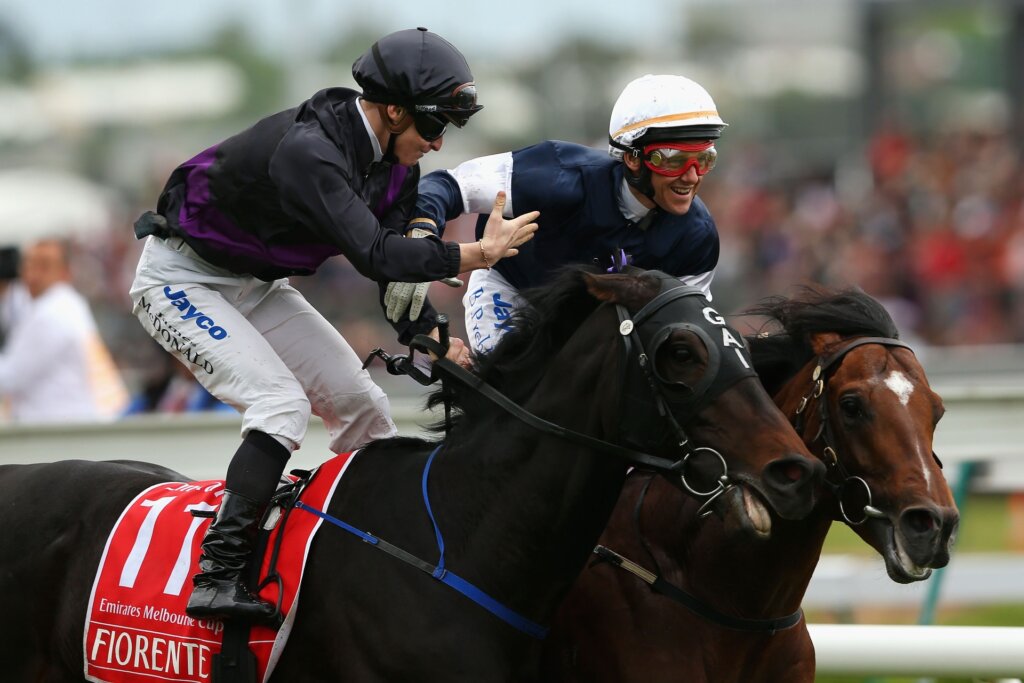
I went on television in Australia on Saturday and said that I would have ridden 200 Group 1 winners, not 93, had I not left for Hong Kong. People took it the wrong way – it wasn’t a shot at James. It’s true, and it’s simple mathematics – there are just far more Group 1 races in Australia. But there are even more opportunities today than when I was riding.
That’s where this gets interesting, because James won’t just get to 200. He’ll get to 250 – easily – and there are clear reasons why.
The first reason is competition, or lack of it. The system in Australia and New Zealand doesn’t breed superstar jockeys anymore. The last truly superstar apprentices in Australia were Darren Beadman and Darren Gauci, and that was back in the early 1980s. Damien Oliver was a very good apprentice around 1989, but you’re still going back nearly 40 years. There hasn’t been one since at that level. So the competition James is riding against now is not as strong as it was. He’s the only superstar riding in Australia.
The second factor is suspensions. You don’t get suspended in Australia like you used to. In the 1980s and ’90s, if you copped a suspension you could miss two or three Saturdays during a carnival. A lot of good jockeys missed a lot of big winners because of it. Today, if you get suspended on a Saturday, you can ride the following Saturday. Racing officials have woken up and realised that you need your best riders in big races – it’s better for the public, it’s better for the owners, it’s better for the trainers, it’s better for the horse. James doesn’t have to worry about missing races anymore. That’s a huge advantage.
Then there’s the sheer number of Group 1 races. When I first came to Australia, I think there were about 60 Group 1 races on the calendar. Now there are 74. That’s roughly 20 per cent more elite races than when we were riding in the ’80s and ’90s.
And here’s the biggest thing: the fields are small. Look at Saturday. The Rosehill Guineas had eight runners, two genuine chances. The Ranvet Stakes had five runners. In my day, Group 1 races regularly had 16, 18, even 20 runners. Smaller fields mean less traffic, less trouble in running, and when you’re riding the best horses – which James always is because he’s so dominant – it’s easier. Everything has come together for him.
I was averaging 10 or 12 Group 1 winners a year when I left Australia, and that was with everything against me – big fields, long suspensions, stronger competition across the board. James, with everything working in his favour, will ride 12 to 15 a year. He just has to. His ability, his dominance, his relationship with Chris Waller, the small fields, the lighter suspension regime – it all adds up.
Barring injury – and at any stage, any jockey can have a serious fall – James will get to 200 Group 1 winners within five or six years. If he stays in Australia beyond that, he’ll ride closer to 250. And before anyone says that sounds far-fetched, consider this: Frankie Dettori rode 288 Group 1 winners. Ryan Moore has already ridden well over 200 and he’s still going. This is not uncharted territory. James is 34 years old. He has time.
The Autumn Glow Factor
The other reason James will pile up Group 1 wins is that I don’t think he’s going to Hong Kong on a fulltime basis any time soon.
First of all, he has the best of both worlds. He can ride multiple Group 1 races in Australia on a Saturday, and then fly over and ride a horse like Romantic Warrior at Sha Tin on a Sunday. Why would you give that up?
But the bigger factor now is Autumn Glow. She’s unbeaten in 11 starts after another dominant win in the George Ryder Stakes on Saturday at Rosehill, and she’s a freak. She could be a champion – she probably already is. James won’t be going too far from her while she’s racing.
It’s the same situation as Zac Purton and Ka Ying Rising over in Hong Kong. Zac might have retired by now if it wasn’t for Ka Ying Rising, but while that horse is racing, Zac isn’t going anywhere. Autumn Glow will do the same thing for James. He’ll love her, he’ll want to ride her in everything, and that connection will keep him in Australia.
But mostly, I think James’s motivation has changed. He’s not chasing money anymore. If he wanted the money, he’d go to Hong Kong. What he’s chasing now is glory – records, big wins, legacy, how he sits among the greats. That’s a different kind of hunger, and it’s the kind that keeps you in Australia where the Group 1 opportunities keep coming every Saturday.
He’ll get to Hong Kong at some stage, I’m sure. But right at this moment, everything aligns for him in Australia to just keep riding winners. Group 1 after Group 1 after Group 1.
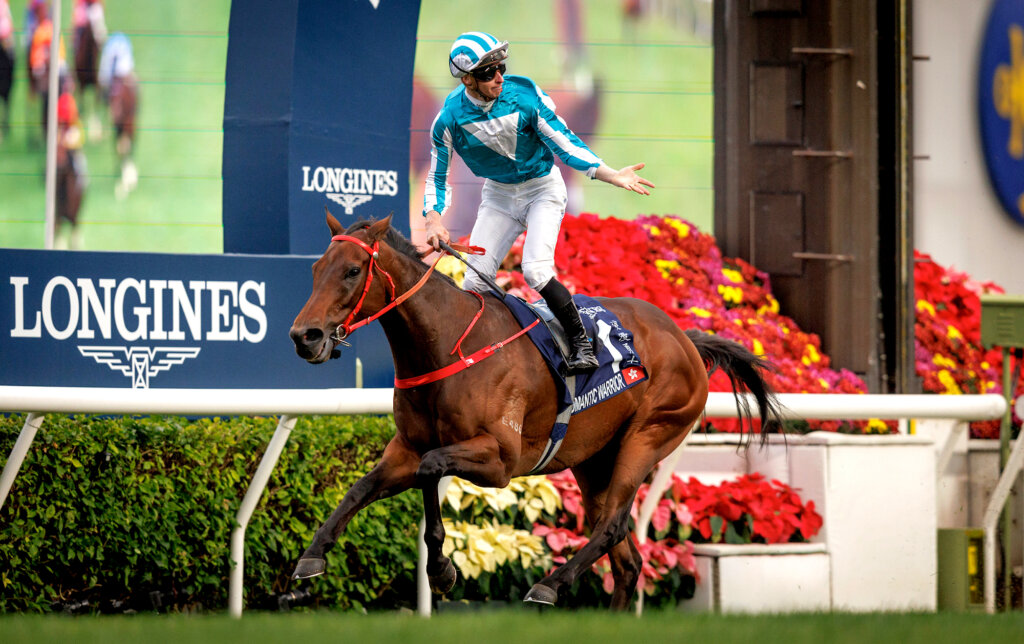
How Hong Kong Made J-Mac Better
Here’s something people might not appreciate: James has actually got better with age. He’s not making the mistakes he used to make. James McDonald at 34 is a far better rider than he was at 28, and the reason is Hong Kong.
I used to watch James in big races and he’d make his run from the 600-metre mark to the 400. He’d take off too early, commit too soon, and in the last 100 metres the horse would be wanting and he’d get beaten. He was impatient. It was the one thing that could cost him.
The other thing was, he never used to ride the rail. It’s a common trait among Australian jockeys – the default is always to get out, to look for space on the outside, to go around them. When James went to Hong Kong, he quickly learned that approach doesn’t work there. If you don’t ride the fence in Hong Kong, you won’t ride as many winners as you could. It’s as simple as that. The default in Hong Kong is the rail. Inside, inside, always inside.
James adapted. He learned to ride the rail. He learned to be more patient. He stopped taking off at the 600 and started waiting, trusting the horse underneath him to quicken when it mattered. Those two things – patience and the rail – have made him a completely different rider.
And he brought it all back to Australia. That time in Hong Kong just made him a far better jockey than he would have been otherwise.
You can also say this, and you can quote me: James could be the last superstar jockey we see out of New Zealand. Every 10 years or so, a superstar apprentice came out of the system – Jim Cassidy, Brent Thompson, Lance O’Sullivan, me, and then James. The system allowed us to be good at a very young age. But the system has changed now, in New Zealand and in Australia, and it doesn’t produce superstar apprentices anymore. James may be the last.
That makes what he’s doing even more special. He’s a country boy from the Waikato who hasn’t changed, who still doesn’t realise how good he is, and he may never know.
I’m incredibly proud of him. ∎