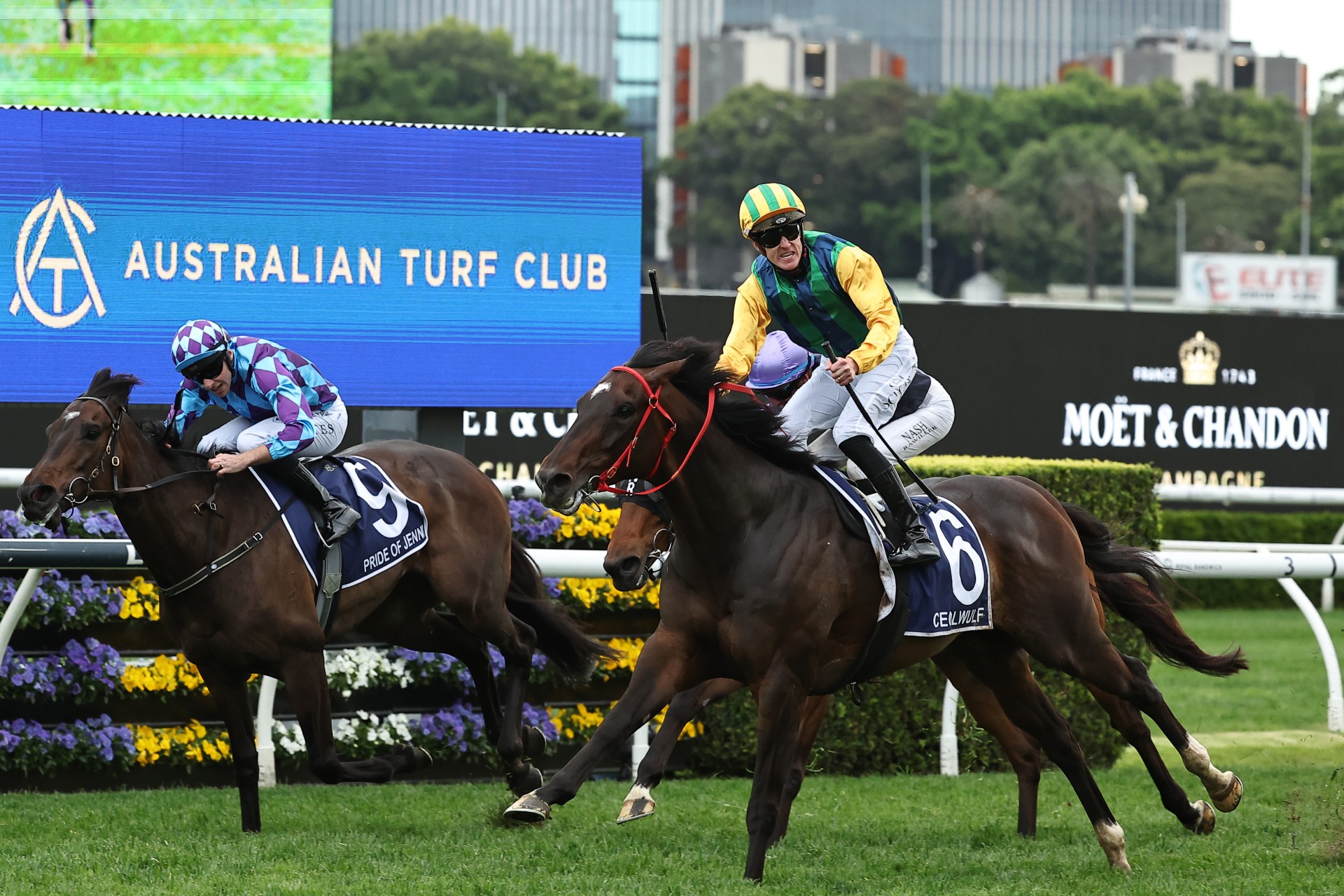
One of Australia’s best horses, Ceolwulf, will return to the races in the G1 Verry Elleegant Stakes a fortnight after he dodged a ban which could have spelled disaster for the rest of his career.
At five, there could still be plenty of seasons for the two-time G1 King Charles Stakes winner – who has already amassed more than A$10 million in prizemoney – to race for big money.
But at his last start, the Joe Pride-trained gelding returned to scale with blood present in both nostrils after finishing down the track behind the unbeaten Autumn Glow in the G2 Apollo Stakes.
Such a scenario usually triggers a three-month ban from racing in Australia, and a second bleeding attack deems the horse must be retired. Connections didn’t want to have one strike, let alone the thought of being on the cusp of a second.
But as Pride examined Ceolwulf after the race and observed the blood in both nostrils, he was perplexed. Ceolwulf wasn’t distressed, breathing abnormally, or even a little awkward on his feet. He seemed just … fine.
What happened next was Pride’s quick thinking saving his horse’s campaign and has put the spotlight on how thoroughbreds are examined when external clues might not lead to the standard conclusion internally.
Before driving the horse across Sydney back to his stables, Pride asked Racing NSW stewards if he could have the horse scoped on track. The regulator’s chief veterinary officer, Dr Carly Garling, watched the process unfold.
“Every horse is an individual and I’d like to think I know my horses well,” Pride said.
Pride suspected Ceolwulf hadn’t suffered exercise-induced pulmonary haemorrhage (EIPH), which is when blood enters the airways of a horse’s lungs. EIPH usually occurs after a strenuous gallop such as a race, and is manifested with blood from both nostrils.
After inspecting Ceolwulf’s airways and lungs, vets couldn’t find any presence of blood.
Stewards agreed there could be a possibility of further follow-up tests during the week to ensure Ceolwulf would be cleared to continue racing.
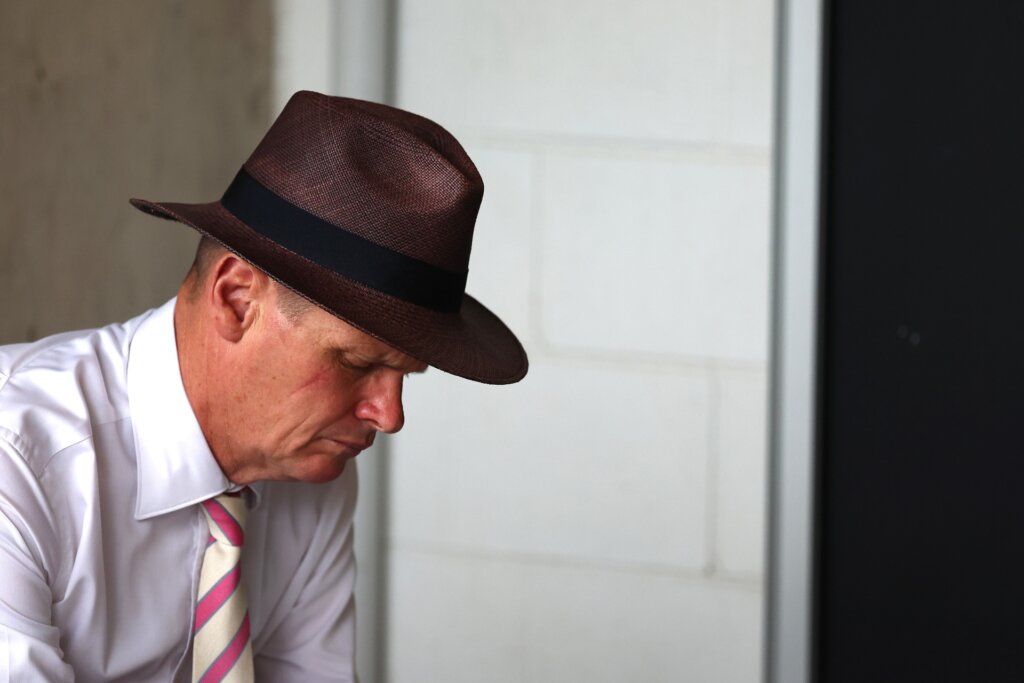
On the other side of the world, chief steward Tom Moxon was attending the Asian Racing Conference in Saudi Arabia. He was being kept abreast of the unfolding situation with one of the best horses in the country, including the post-race request for it to be scoped.
“It’s not something we would routinely do on tracks in NSW, but (Pride) was able to arrange for a vet to scope the horse on course,” Moxon said.
“It was clear on the scope that the blood on the nostrils wasn’t a result of EIPH, meaning that it was clear it hadn’t come from the lungs and there was no blood in the trachea. I suppose we just wanted to make as informed a decision as we could with the horse’s welfare at the forefront of our minds.”
What followed next was a nervous few days as Pride and Ceolwulf’s owners tried to jump every hurdle to make sure the horse was healthy and right to continue his preparation.
On Pride’s instigation, Ceolwulf went for a CT scan at Randwick Equine Centre in the days after the Apollo Stakes. Ceolwulf was sedated under the supervision of an equine specialist. The examination assessed everything: the horse’s skull, soft tissue, airways, the list goes on.
“We were looking for something in his sinuses where he might have had a growth, something that could have bled,” Pride said. “It might have been an obstruction. There was nothing.
“The horse passed every examination we could have put him through. It was above and beyond what they asked us to do, but he’s a valuable horse.”
Pride’s mentor John Size trains in the more extreme climate of Hong Kong, and is known for protecting horses once they suffer an EIPH bleed.
Pride is similarly cautious with his gallopers, but his intuition told him nothing was wrong with Ceolwulf despite the presence of blood after the race.
So, what happened?
“The most likely explanation seems to be he’s had, and I would call it minor, a head trauma and he’s burst a couple of vessels,” Pride said.
“What I have seen happen with horses is they might whack their head on a walker or in the pool, but nothing happens until you gallop them and the extra pressure they’re exerting through that area bursts those blood vessels.
“The blood is coming from a very innocent place.
“These are horses that are having ridiculously large amounts of money bet on them. The technology is there so let’s embrace it and use it and hopefully improve the game going forward. If something can improve out of this, that’s a positive as well.” ∎