Japan’s Super Stallions: The Galacticos Of Shadai
Inside the Hokkaido barn where geniuses, gentlemen and rule-breakers shape Japan’s stallion dynasty.
Japan’s Super Stallions: The Galacticos Of Shadai
Inside the Hokkaido barn where geniuses, gentlemen and rule-breakers shape Japan’s stallion dynasty.
25 December, 2025WALKING INTO Shadai Stallion Station in Hokkaido feels strangely familiar, even if you’ve never been there before. Maybe it’s like stepping into the home locker room at the Bernabéu stadium in Madrid circa 2003 – Zidane seated on the left, Ronaldo tying his boots to the right, Roberto Carlos chatting against a locker with Davd Beckham and Luis Figo. Everywhere you look: greatness. Everywhere you turn: another legend.
But instead of white jerseys, there are gleaming coats. Instead of football boots, hooves.
This is Shadai’s own version of the Galácticos, a hall of fame arranged not by position but by bloodline, temperament and the delicate psychology that keeps high-class stallions thriving.
And right at the end of the barn – past the polished brass, past the soft winter light spilling from the Hokkaido sky – stands the one horse who can hijack the mood of an entire corridor.
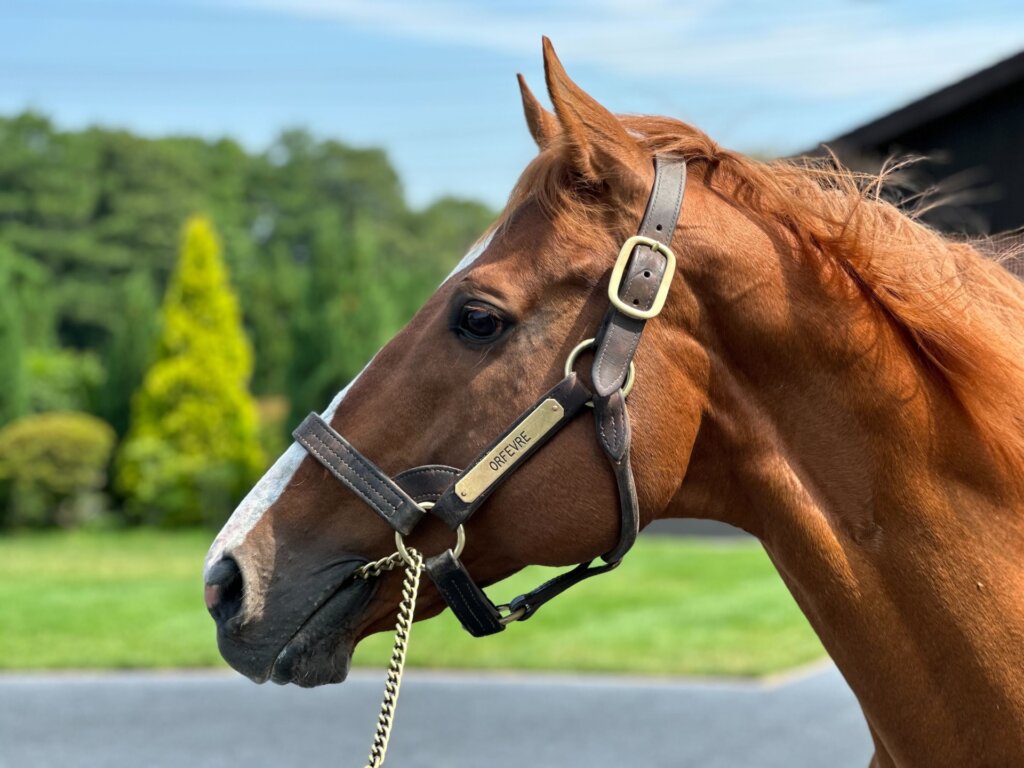
He is the one with the most trinkets hanging from his door, sent by an adoring legion of fans: Orfevre.
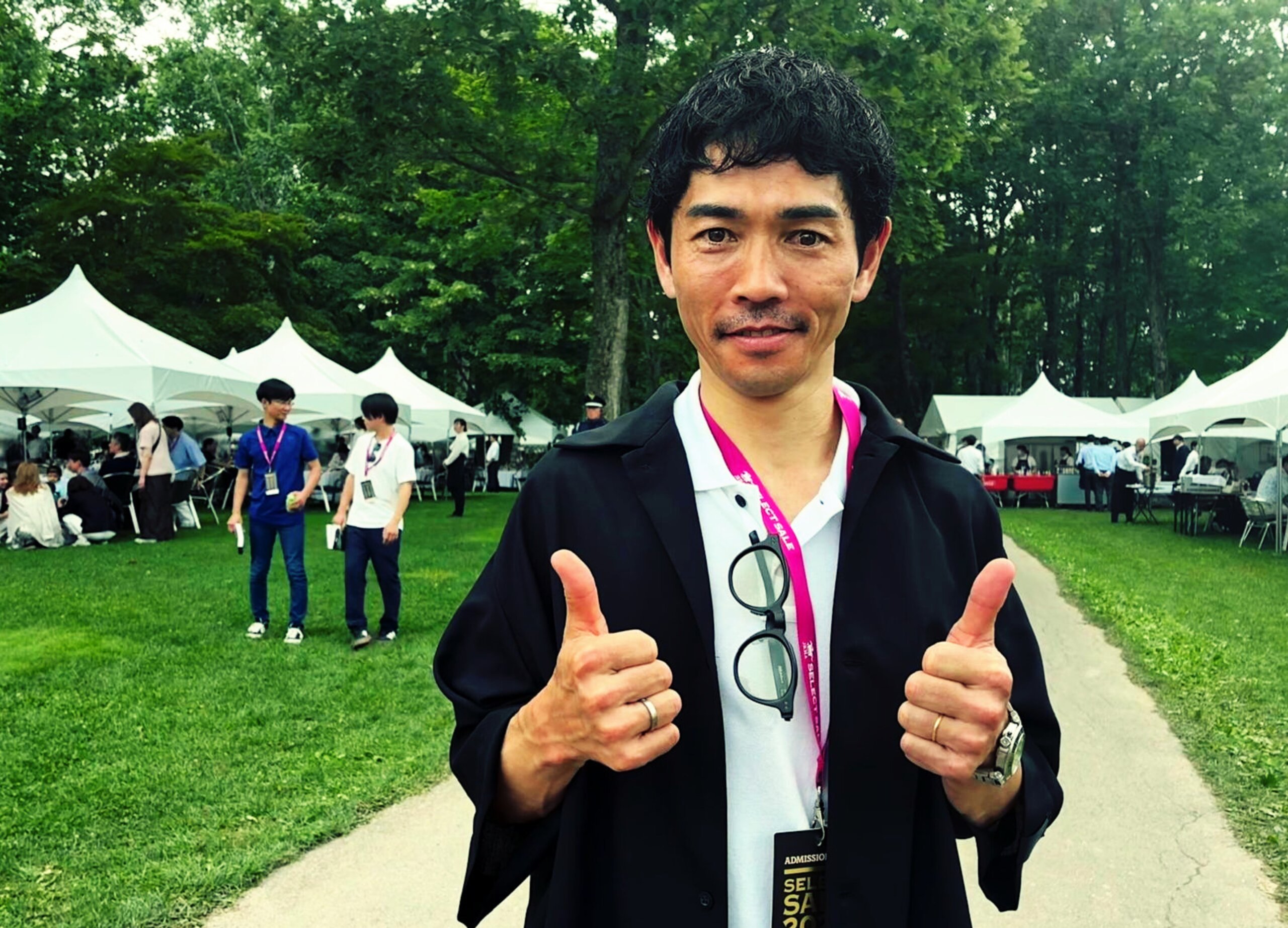
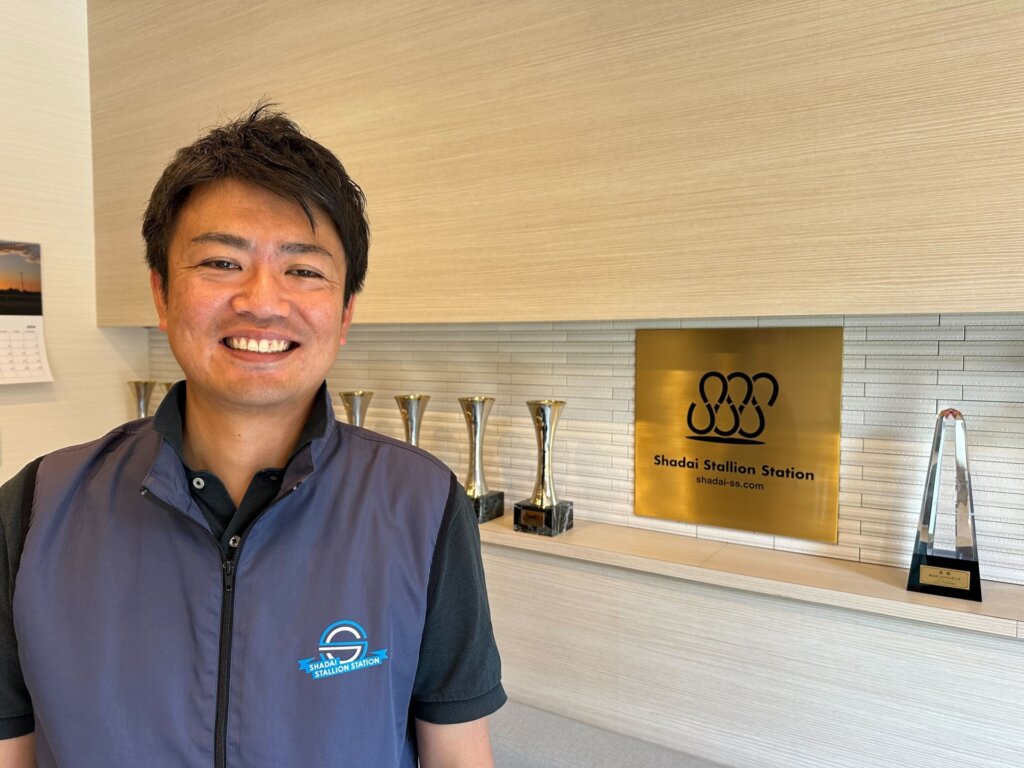
A chestnut burning with personality, a genius wrapped in mischief, the kind of athlete who changes the air around him simply by moving his head. Stallion handler Keisuke Miwa talks about him with a mixture of admiration, amusement and something that sounds a little like gratitude.
“Orfevre is not a violent horse, nor is he crazy. He is a genius. He is just playful, mischievous, and forever young,” Miwa tells Idol Horse.
To Miwa, Orfevre isn’t simply a stallion, he is a teacher.
“He always does what he wants, he always expresses himself.”
“Sometimes when I look at Orfevre, I start to think about my life.”
Few athletes change you after they retire. Orfevre still does.
Miwa sees him through a human lens because, in many ways, Orfevre behaves like the most memorable kid in school – the one who doesn’t follow the rules but upends the classroom dynamic daily.
“If Orfevre was a person?” Miwa pauses, “I think he would have a very high IQ … Orfevre wouldn’t wear his jacket, or would just leave his buttons open. He would occasionally not come to the school or would fall asleep in classes, but he would do very well in exams.”
It is the perfect picture of the rule-breaking genius – never malicious, always unforgettable – and Shadai must shape itself around him.
“Orfevre is a little bit playful, and he always wants to mess around with other horses, so we don’t want him to have too much connection with other horses.”
Orfevre is in a corner where he has fewer horses to provoke, fewer chances to spark the equine politics of the barn. Not to hide him – simply to help the rest of the dressing room function.
That’s the thing about Orfevre: he isn’t just part of the barn; he defines its energy.
If Orfevre is the rebel, then the late Deep Impact was the valedictorian. Where Orfevre pushes boundaries, Deep Impact understood them instinctively. If Orfevre is the kid who challenges the teacher, Deep Impact was the one the teacher quietly relied on.
Miwa doesn’t even pause before drawing the parallel.
“I don’t think he will get along with Deep Impact. Deep Impact would be a president of student government.”
The comparison isn’t made to critique either horse. It is to show how differently greatness can look – and how each of the expert horse handlers here treat each as an individual, thinking deeply about their character, their strengths and weaknesses.
Deep Impact was composed, aware, capable of handling constant crowds and cameras with the grace of a statesman. Orfevre is the free-thinker who refuses to adapt to the world. Deep Impact adapted to everything.
And Shadai’s staff has learned to honour both types of genius. That philosophy extends far beyond those two icons.
Contrail, son of Deep Impact, walks with perfect posture – almost self-aware of how he looks. Miwa describes him as model-like. Yet beneath that elegance, Contrail carries more heat, more spark, than his father. He is an honour student, but an eager one, the type who raises his hand before the teacher can finish the question.
Epiphaneia, meanwhile, arrived overwhelmed by other males. His sensitivity wasn’t framed as a flaw. It became the starting point of a tailored approach: a gradual desensitisation, a rebalancing of his environment, a reassurance that allowed him to settle into himself. His broodmare sire Special Week kicked walls when other stallions passed. His sire Symboli Kris S circled his stall until dust rose. Shadai saw not problems to fix, but a lineage to understand.
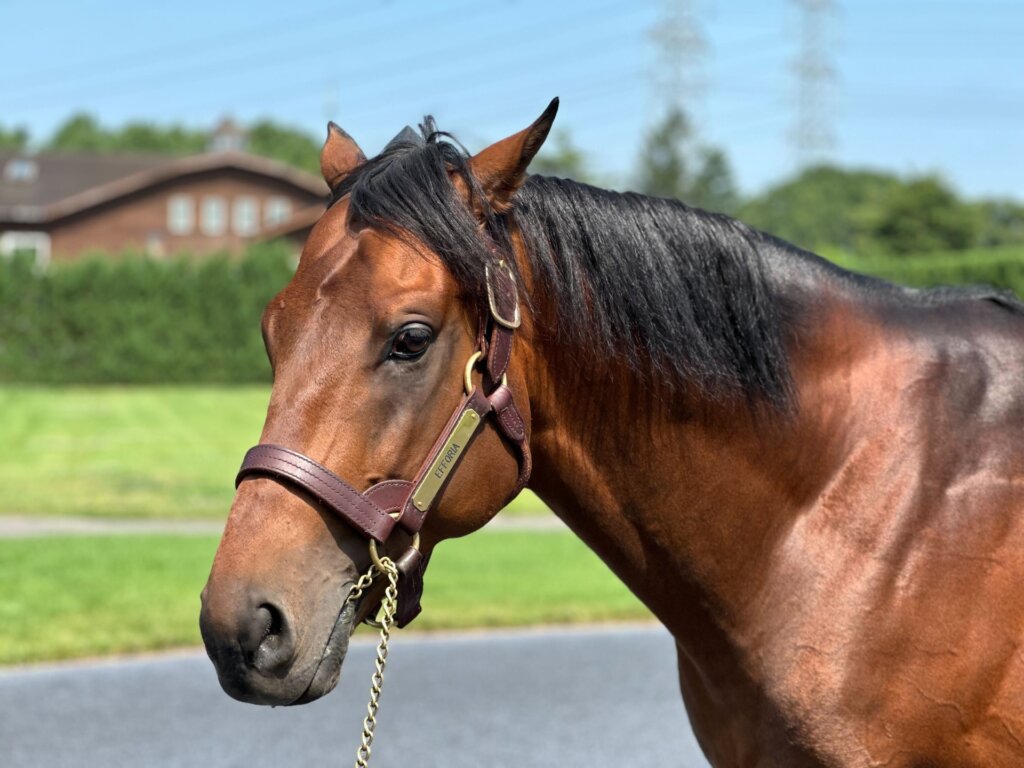
Efforia watches people the way others watch horses, testing rank, reading posture, deciding whether he approves. He needs a handler who meets him as an equal; anything less and he attempts to climb the hierarchy.
“That horse wants to be on top of people,” Miwa says. “So, if he sees somebody is inferior to him, he will become aggressive or just wants to show off and prove he is superior.”
“He classifies people and wants to establish superiority. So, the person who handles him needs to be viewed as superior to him, or they won’t get along. However, we don’t want to teach him that the people are superior by punishing him, or he will be really agitated or try even harder to establish superiority. Our experienced staff know how to get along with this horse. They will pay him respect, tell him that ‘you are the king’, give him the credit, but not to be viewed as inferior. We want to be on an equal standpoint.”
Under Miwa’s guidance, this is not a problem to correct, but a trait to respect.
Where Shadai’s horse-first approach shines brightest is in the pairing of Kitasan Black and his son Equinox – a decision Miwa explains with quiet pride.
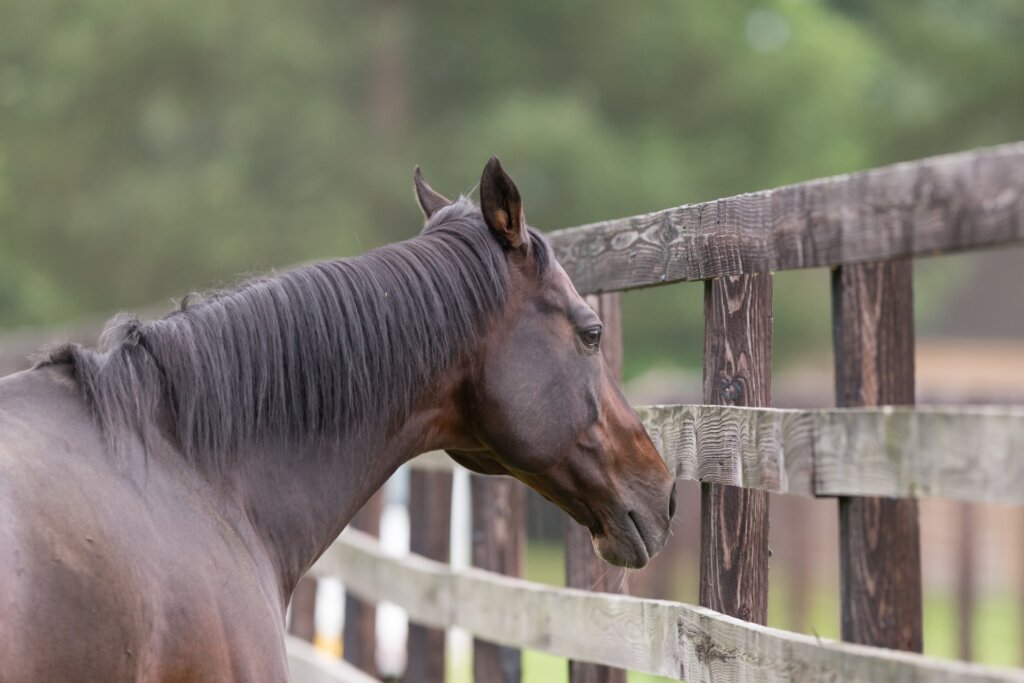
“We actually made them face each other. Their stalls are in the same barn, just across from each other.”
That choice didn’t just help with logistics. It created an education.
“They have a great relationship,” Miwa says.
Kitasan Black is naturally calm in his stall, explosive only when needed, a horse whose routine sends cues of balance and confidence. Placing Equinox – a young stallion whose early energy bordered on overwhelming – across from him established a daily dialogue between father and son.
And, just as Miwa hoped, Equinox began absorbing everything.
“Equinox sees what his father does, and he behaves very similarly.”
At first the resemblance was coincidence. Then it became habit.
“Before that they already had a lot of characteristics in common, but their behavior is just so similar.”
And finally, it became something more profound.
“It’s just like since his father is a great stallion, he is watching his father everyday and learning from him.”
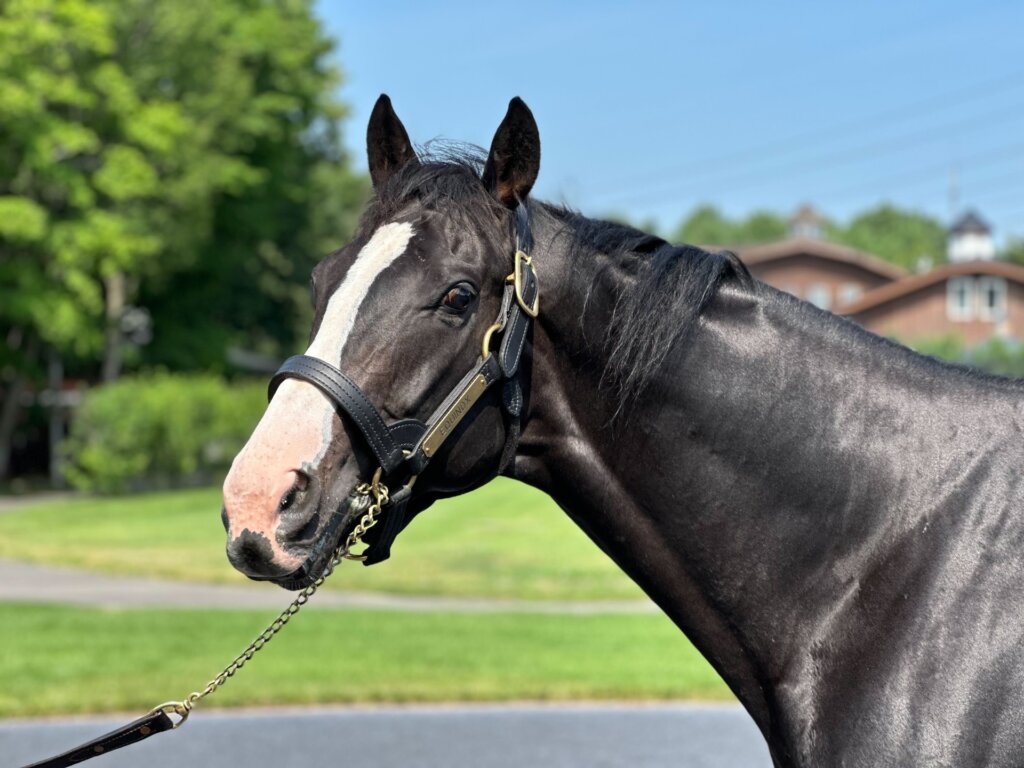
This isn’t training. It’s culture. It’s the way elite athletes learn from the quiet example of their seniors. It’s knowledge passed not through instruction, but through proximity.
Miwa and his colleagues are the conductors of that culture.
The transition from racehorse to stallion requires more than physical adjustment. What was forbidden becomes necessary. Nadal arrived and would sprint toward mares with such force that staff had to gallop alongside him. Miwa remembers those early days with a laugh – the moment they’d release him in the paddock, he’d set what was probably a record for fastest lap. Now?
“We had to gallop with the horse before, but now we can almost walk with him.”
Not because anyone broke his spirit. Because they let him learn the value of restraint without demanding submission.
“We don’t want a stallion to be quiet or easy to handle; we want them to be masculine and gentle,” Miwa explains. “Making them interested in the mares but also behave properly is the difficult part. We don’t want to damage their confidence as a male, we don’t want the horse to be easy to handle, but we want them to be a man, a gentleman, very calm. I think this is a very difficult thing to do.”
The distinction matters. Docile versus composed. Broken versus refined.
Equinox embodies the challenge. When he first arrived, his off-switch didn’t exist. The moment they released the lead, he’d explode across the paddock with such speed Miwa worried he’d hit the fence. Then they placed him across from Kitasan Black. Now Equinox stands during grooming with the same elegant calm as his father.
“He reminds me a little bit of Deep Impact,” Miwa says. “Even when there are a lot of people nearby, he can remain calm and relaxed. Kitasan Black was the same as well. He is just like a TV star. He knows what he is doing, and knows how to entertain people.”
It’s a throwaway observation, but it reveals everything. Miwa doesn’t just see horses. He sees performers, personalities and individuals navigating the peculiar demands of their new profession.
And then there’s Orfevre at the end of the barn, still refusing to button his jacket.
“If one day Orfevre’s son moves into the stall across from Orfevre, I don’t think they will get along,” Miwa says, laughing.
Two geniuses in close quarters would be chaos. So Orfevre will always be in his corner, watching the world on his terms, forever young, forever playful and forever making Miwa think about his own life.
“I respect him so much. When you are in the human society, in an organization, you have to pay attention to how your boss is thinking, and other trivial stuff. But Orfevre always does what he wants, he always expresses himself. When there is a mare in front of him, he will be happy. He just plays all the time and does what he wants all the time. I’m a little bit jealous.” ∎