Longevity And Legacy: Hayes On Ka Ying Rising In 2026 And Beyond
The ‘mental reset’ provided by Conghua Racecourse is a key factor in David Hayes’ plans to keep Ka Ying Rising racing at the top of his game for as long as possible, as the trainer maps out the star sprinter’s likely programme for 2026 and beyond.
Longevity And Legacy: Hayes On Ka Ying Rising In 2026 And Beyond
The ‘mental reset’ provided by Conghua Racecourse is a key factor in David Hayes’ plans to keep Ka Ying Rising racing at the top of his game for as long as possible, as the trainer maps out the star sprinter’s likely programme for 2026 and beyond.
3 December, 2025MORE THAN MOST, Hall of Fame trainer David Hayes knows just how precious a great horse can be. And now, in the relative twilight of a career that spans 35 years, he believes he has the best horse he has ever trained. That clarity brings sharp focus. With Ka-Ying Rising, the mission is simple: make the ride last as long as possible.
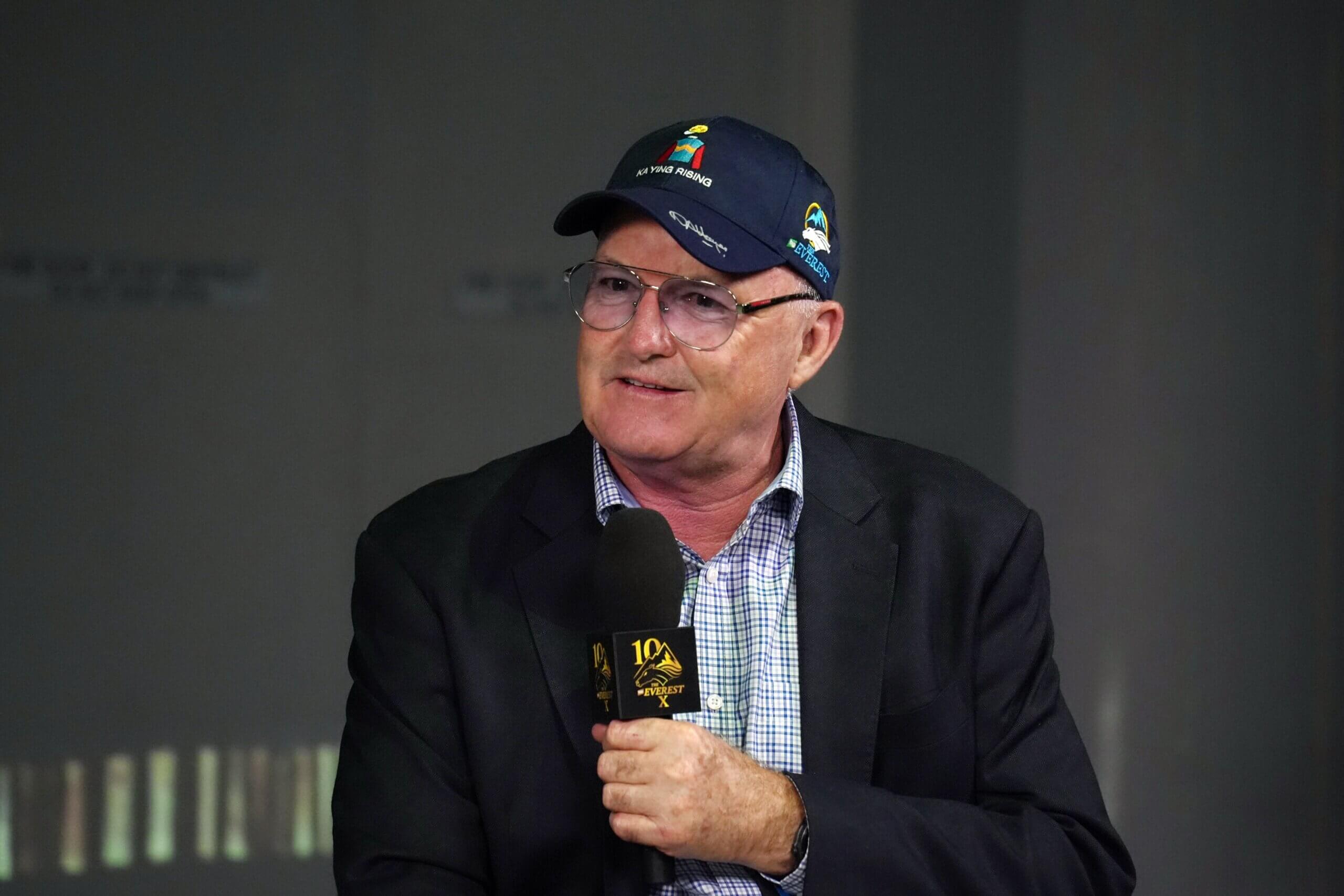
Hayes speaks about the horse with a sense of protectiveness that only comes with experience – and loss. “You can’t replace a horse like this,” he says. “I’ve had 107 Group 1 winners but I haven’t had one like him. He’s in real rarefied air.”
The goal now for Hayes isn’t just winning the next race. It’s longevity and legacy. “If we can keep him sound, healthy of mind and leg, he’ll be one of the all-time greats.”
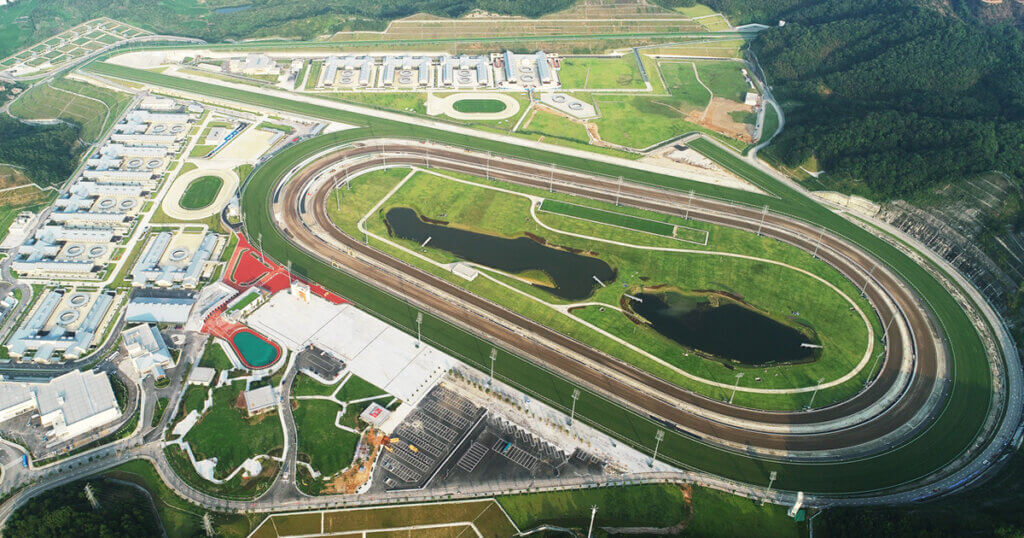
To do that, Hayes has leaned heavily on a tool he never had during his first Hong Kong stint at the start of the century: the Jockey Club’s mainland training complex, Conghua Racecourse, near Guangzhou.
Until August 2018, the daily life of a Hong Kong horse was defined by the steel-and-concrete claustrophobia of Sha Tin – the same walkways, the same tunnels, the same busy routine, day after day. That system produced champions, but Hayes – whose father C S Hayes pioneered ‘off racecourse’ training in Australia with the revolutionary Lindsay Park – always believed something was missing: a mental reset and a genuine change of scenery.
Conghua provides that. Sprawling day yards, grass, wide gallops, water walkers and above all, space. Horses can lower their heads, breathe and simply be horses.
“I find the environment there is a little bit more relaxed,” Hayes explains. “A change of environment for horses is as good as a holiday. Ka Ying thrives out of there, as a lot of horses do.”
It has become the cornerstone of an incredibly disciplined campaign Hayes has mapped out for his champion – eight starts a season. A routine set in stone. The same as last year, and, Hayes hopes, the same next season, and maybe even the season after that.
Hayes says he aims to run Ka Ying Rising eight times per season while the average horse in his stable will run 12 or 13. Some would call it conservative and most wouldn’t be able to resist running the world’s best sprinter in any race they could. “It protects him,” Hayes says of the light workload. “Hopefully it will lengthen his career because we have to remember he’s only five.”
For a sprinter with Ka Ying Rising’s explosive speed and constitution, that restraint may be the key to racing excellence well into his six- and seven-year-old seasons. And with the way he’s holding together – mentally, physically and competitively – Hayes sees no reason to deviate.
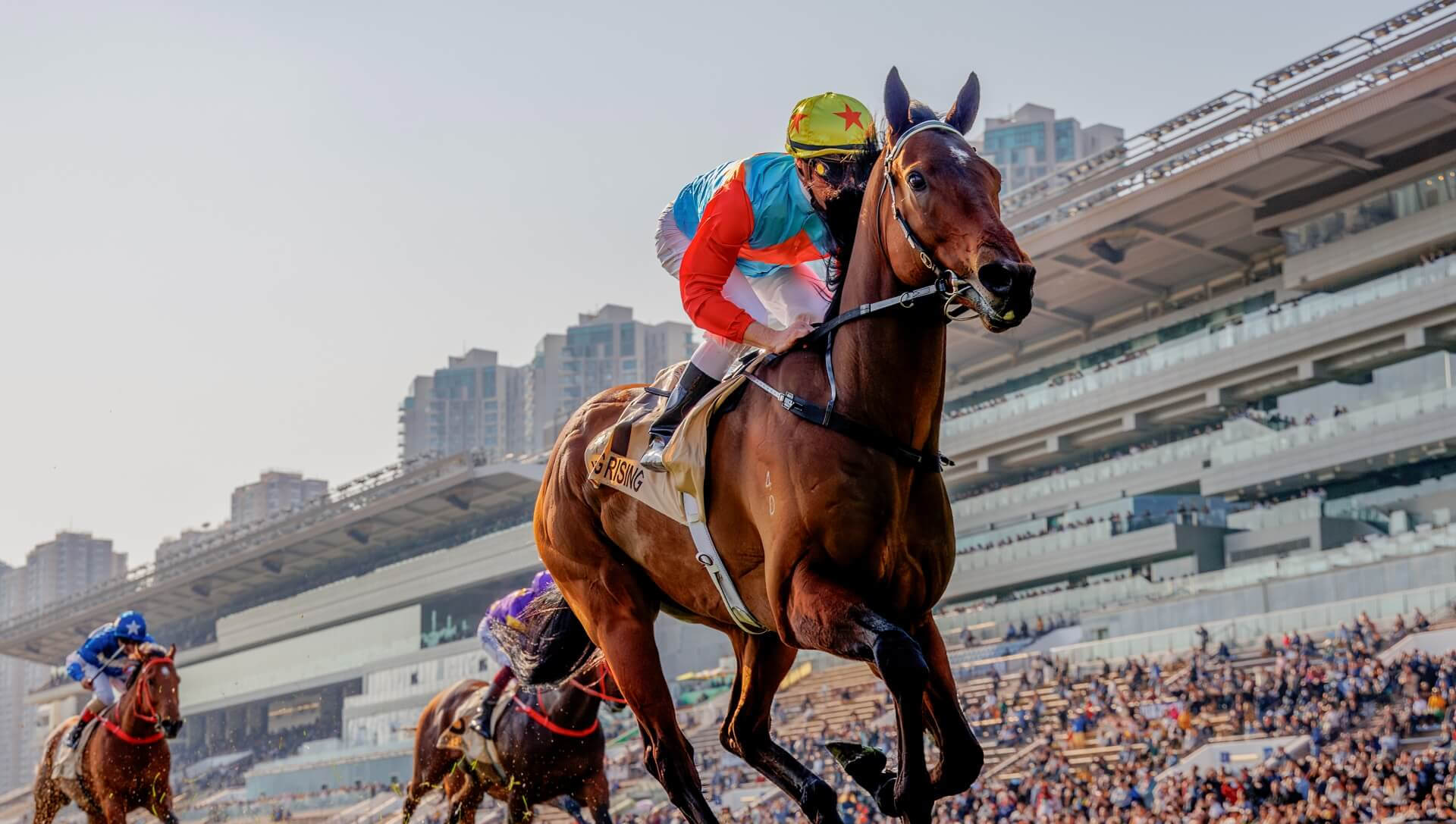
The record backs Hayes’ sentiment. Fifteen straight wins. A seemingly unbeatable track record broken – then his own mark broken again. The horse’s physique is still strengthening and Hayes says his horse has a constitution that seems to harden with every start.
When Hayes sent out eight runners on Ka Ying Rising’s most recent raceday, every one returned light on their feed – except the horse that had just broken 68 seconds for the sixth time. “He ate up. He’s got a wonderful constitution,” Hayes says. “That’s why I really thought he would handle the travel. And he did.”
The horse returned bigger and heavier than the same time last season, which Hayes sees as another indicator that the system is working. “It’s always a good sign when they don’t miss any work and they’re putting weight on,” he says.
The barrier trial-like performance in the G2 BOCHK Private Banking Jockey Club Sprint, three weeks out from the LONGINES Hong Kong International Races, confirmed what Hayes felt in his gut. “This was the least nervous I’ve been before a race. I was incredibly confident,” he says. “Something had to go terribly wrong to lose.”
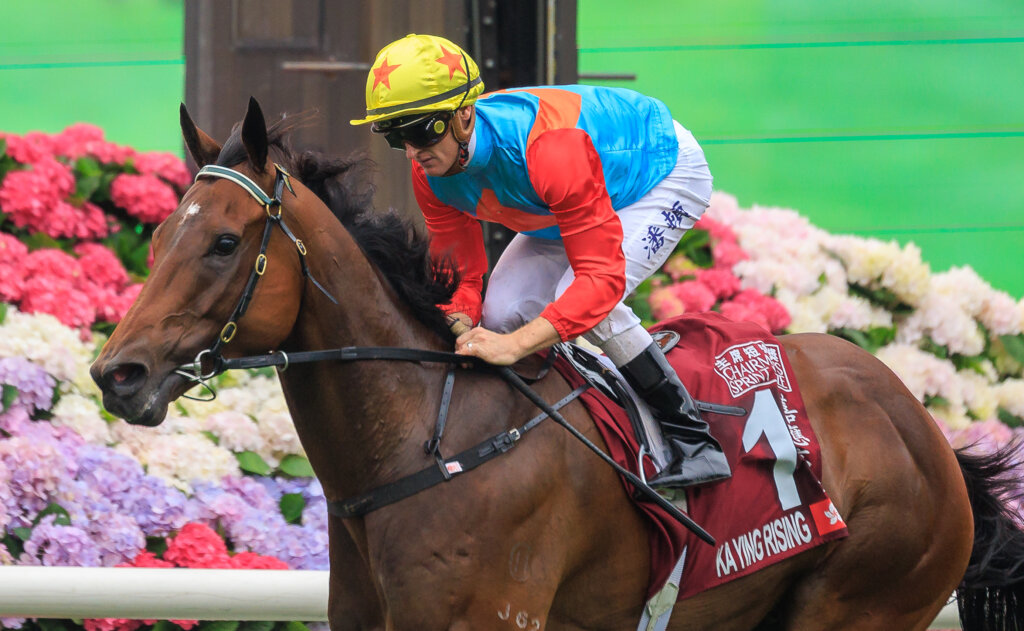
But the next assignment is different, the world will be watching. Hayes knows the job changes when international Group 1 prestige is on the line. “The international race is different,” he says. “There are new horses coming in, new challenges – it’s a three-week build into the race.” The horse will remain at Sha Tin until HKIR, then return to Conghua for his freshen-up reset.
And therein lies the great advantage Hayes feels he has over his first Hong Kong tenure. He has a tool to prolong brilliance and keep his champion in relative cotton wool.
“Reset is very important for me,” Hayes says. “If a horse is racing here and not in form, I’ll always send them to Conghua. And if a horse is racing well out of Conghua, I’ll always send them back. We’re full the whole time.”
Ka Ying Rising is the ultimate example. His routine has become a case of ‘rinse and repeat’. A big performance, and when there is more than three weeks between runs, a float ride north to recover in the open air. So far, he has returned sharper every time. Right now, he looks unstoppable and has a 16th consecutive win at his mercy on December 14.
After that? The plan is intentionally boring and Hayes is unapologetic. The same lucrative domestic schedule as last season, taking in the Hong Kong Speed Series and its HK$5m bonus. Three more Group 1s. If he goes through the same five races as last season undefeated he will have earned another HK$50m.
The British media might talk up a possible Royal Ascot bid in June but running for half a million pounds on the other side of the world has little appeal with a horse that, by then, is likely to have career earnings of more than HK$150m.
“He’s not going anywhere else,” Hayes says. A return to Randwick for an Everest defence aside, the only possible deviation to his long-term plan could be an additional run in Australia as part of his Everest campaign. But still, eight runs per year and a proper off-season break. “He can have a nice rest like he did last year, it keeps him from overcooking.”
How long could the win streak run for? Hayes keeps flicking ahead in the racing calendar, recognising something rare for a horse with Ka Ying Rising’s record. “Most of the big names today are seven,” he says. “And he’s five. That’s exciting.”
Hong Kong has always produced great sprinters. What it rarely produces is sustained dominance at the top of the division – the depth of the sprint ranks ensures that and the Sha Tin 1200m course is among the most demanding in world racing.
Silent Witness’ 17-race streak is the reminder: after the winning run was snapped, he only won once more. That victory, in the G1 Sprinters’ Stakes, was his first as a six-year-old. From there, he was defeated in his last nine starts.
Could Conghua be the edge that keeps Ka Ying Rising at the top longer than history usually allows?
One thing is certain, Hayes isn’t even considering the end of his own career while he has Ka Ying Rising to look forward to each morning.
“Training him is a pleasure,” Hayes says. “It gives you joy to wake up and go to work.” ∎