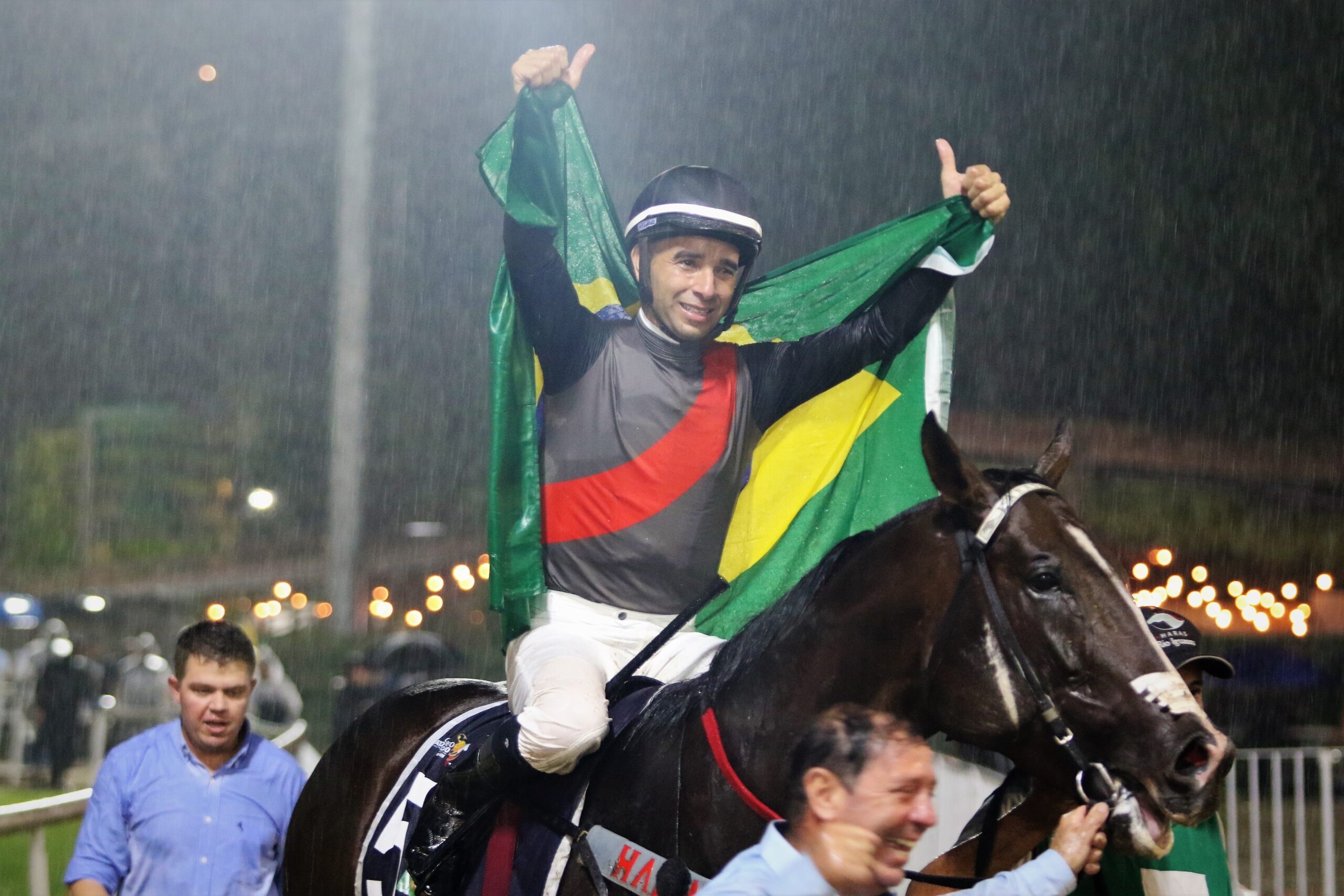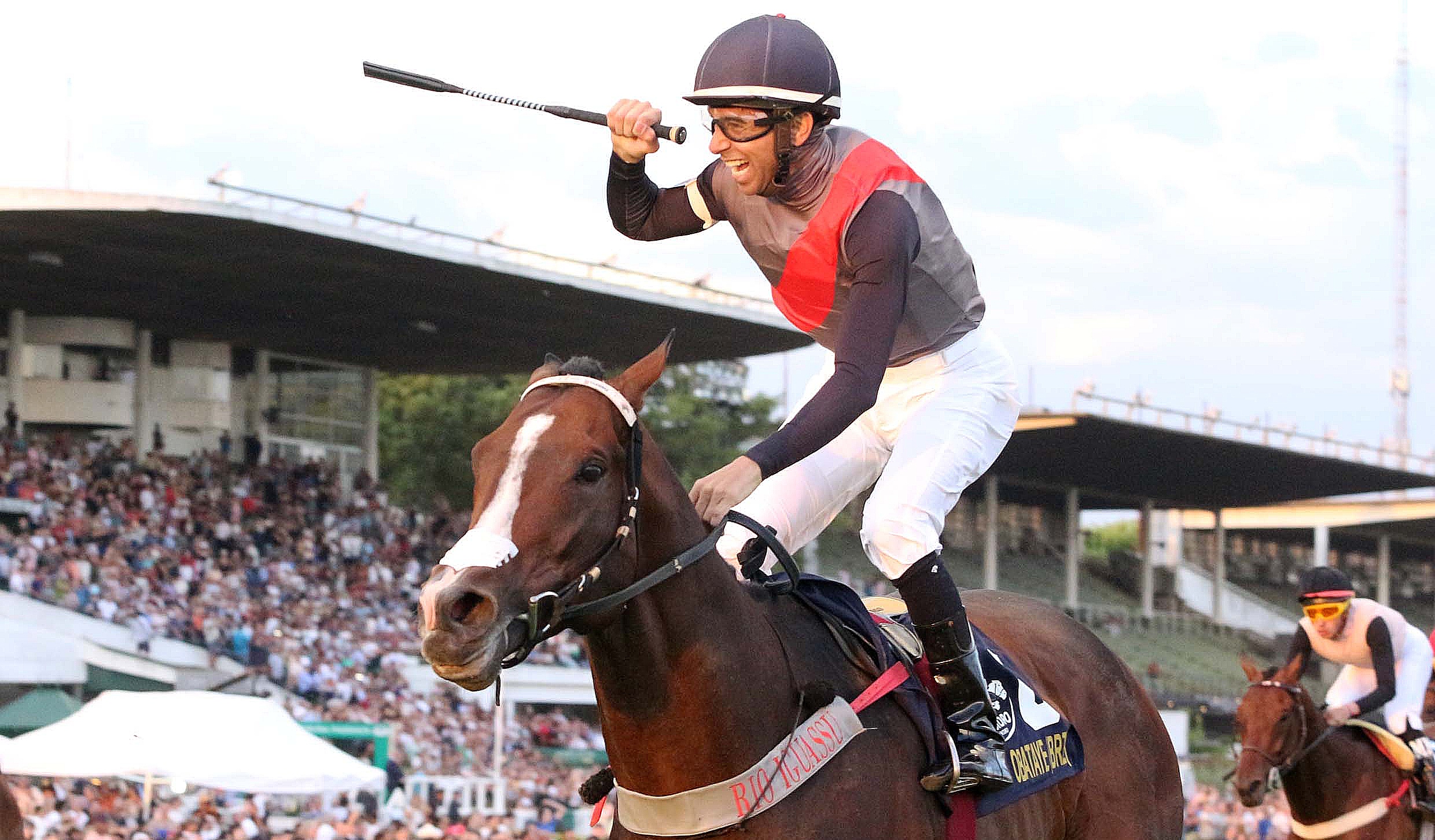
“It’s very rare,” Joao Moreira told Idol Horse, and the excited emphasis was on the elongated, sliding “e” of the “very”.
Moreira was talking about what Obataye had just done and his next sentence shed a little light on how very rare that was: “No other Brazilian horse in the last 30 years has done what this horse has done, which is very impressive.” Make that 31 years.
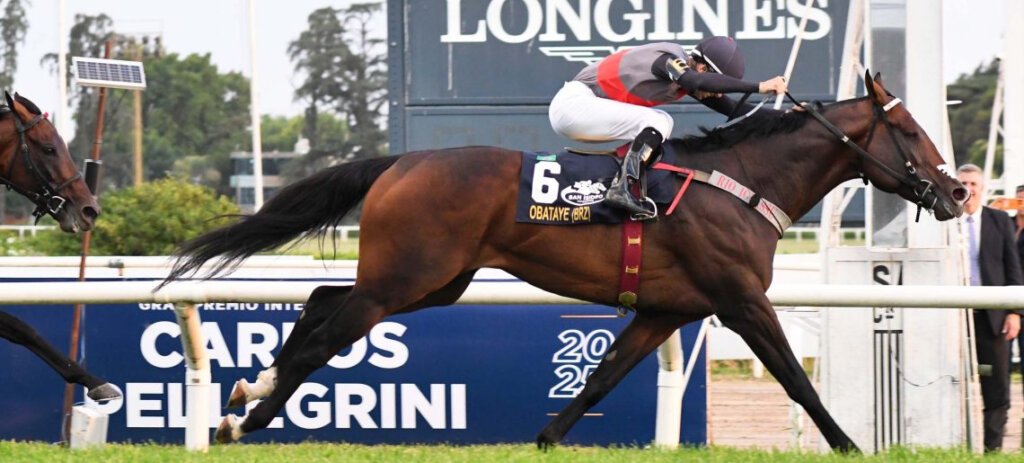
Obataye had travelled outside of Brazil for the first time and won Argentina’s greatest all-age race, the world renowned G1 Gran Premio Carlos Pellegrini at San Isidro. That’s an impressive feat, but since 1994 he’s the sixth Brazilian horse to have done that, and while that puts his win in the not common bracket, it’s not quite “very rare”.
The real rareness is that Obataye’s victory was his third South American major, following on from wins in the June 2024 G1 Grande Premio Brasil and the October 2025 edition of the continent’s biggest race of all, the moveable G1 Gran Premio Latinoamericano.
“You have to look back to a horse called Much Better to find another Brazilian horse that won three international Group 1 races like this,” Moreira said. “Much Better won the Grande Premio Sao Paulo, the Grande Premio Brasil and the Carlos Pellegrini.”
That was all back in 1994, with another great Brazilian jockey Jorge Ricardo in the saddle. Much Better was sent to Europe to compete in the G1 Prix de l’Arc de Triomphe that year, finishing six and a half lengths 14th of 20, and then went on to win the Gran Premio Latinoamericano at Gavea in 1996.
What makes Obataye’s story all the rarer, though, is the connection between the horse and his jockey. Moreira first came across Obataye in the summer of 2021, the colt was then 10 or 11 months old, having been foaled on August 27, 2020. The jockey loved what he saw and recommended the youngster to his brother Jair – Obataye was bought for US$12,000.
The colt was sent to the farm of Moreira’s friend Dr Hernani Azevedo Silva. There, he was prepared for his career as a racehorse before moving into training at the Jockey Club do Parana in Moreira’s hometown, Curitiba.
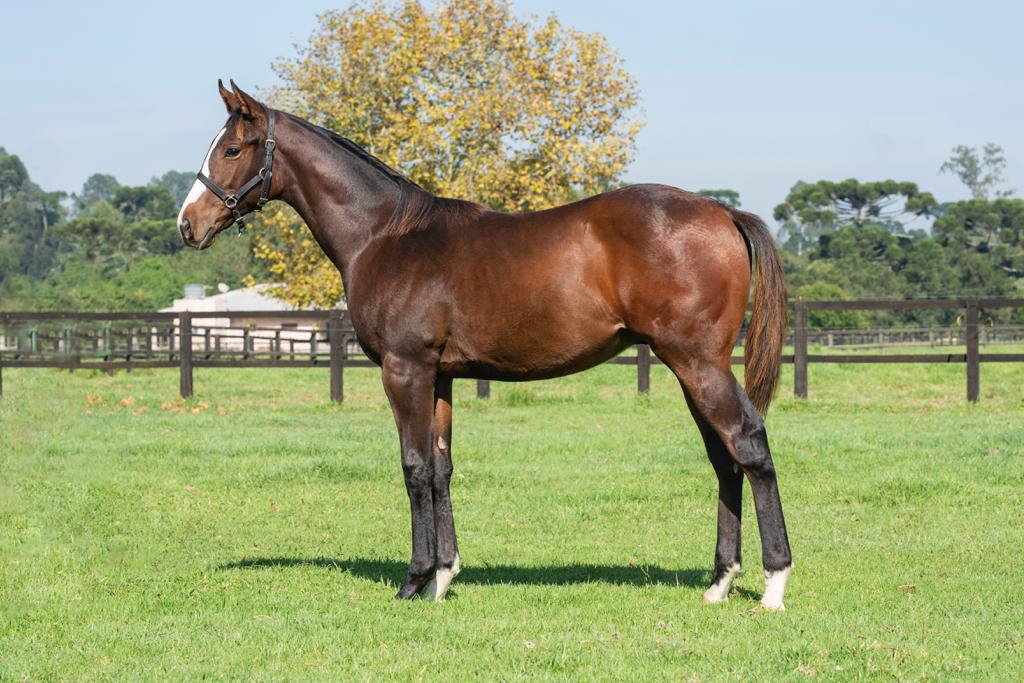
“We knew at the start, right away, that he was good, but we didn’t know how good,” Moreira said. “We knew he was one of the best ones coming through and then we put him on the bench, we let him develop. Every week he was a little better, then he was going to turn three on July 1, so he ran for the first time on 30 June 2023. He won by a big margin.”
That was about seven months after Moreira had returned to Curitiba, having called an end to his sensational time in Hong Kong where he was champion jockey four times in nine seasons. A chronic hip injury that had threatened to bring an early end to his career was the ultimate factor in his departure from Hong Kong and it is that same hip condition that means he only climbs aboard the Antonio Oldoni-trained Obataye on race days or for his final fast work.
“I ride him very little in trackwork because one ex-jockey, Manuel Aurelio – I used to ride with him a long time ago – he rides him every day and he knows him very well,” Moreira said. “He’s not an easy horse to ride in the morning because he’s so heavy. He doesn’t pull, he’s very light in his mouth, but when you gallop him, he’s got so much bulk he drags you, so what you gonna do? With this hip I’ve got, I can’t do that.
“When this horse goes two laps, I go one lap and can’t handle the second one. So, I just say, please just put this guy on, he can do better than me. Not that I can’t ride him, I can, but it’s just destroying me, so I watch it closely, then for the main gallop, I get on.”
After Obataye’s debut win on his home track, he travelled the several hours by road to Sao Paulo and won a mile contest at Cidade Jardim. So impressive were his two wins that Obataye then went into the Sao Paulo Triple Crown races: third in the G1 Grande Premio Iparanga, fourth in the G1 Jockey Club de Sao Paulo and third in the G1 Derby Paulista.
But between that second win and his classic campaign, the decision was made to sell Obataye to Haras Rio Iguassu, the ever-more powerful breeding and racing operation of the Pelanda family.
“I had just started riding for this big owner (Rio Iguassu) and I explained to them that they should have a share in this horse,” Moreira said. “They said ok, because the way he won he would have been one of the favourites for the three-year-old triple crown, so they bought a considerable percentage of the horse.
“They kept him with us in the same yard and he ran well in all three of the three-year-old races, he was beaten in them but he ran some really nice races, he ran well in them all and then he went on to win some of the big ones.”
Obataye’s classic campaign was followed by a hat-trick of Group 3 wins, then came the all-age G1 Grande Premio Sao Paulo in May 2024. He placed second. On then to the G1 Grande Premio Brasil the following month and a famous, emotional victory.
The colt’s four-year-old campaign was a mixed bag: two defeats, a minor win, fourth in the G1 Grande Premio Sao Paulo and seventh in the Grande Premio Brasil. But resuming as a five-year-old, Obataye had blossomed.
He kicked off in August with victory in the G1 Matias Machline, then came the big win at Gavea in the Latinoamericano, followed by the Carlos Pellegrini win, which has set him apart as a bona fide champion.
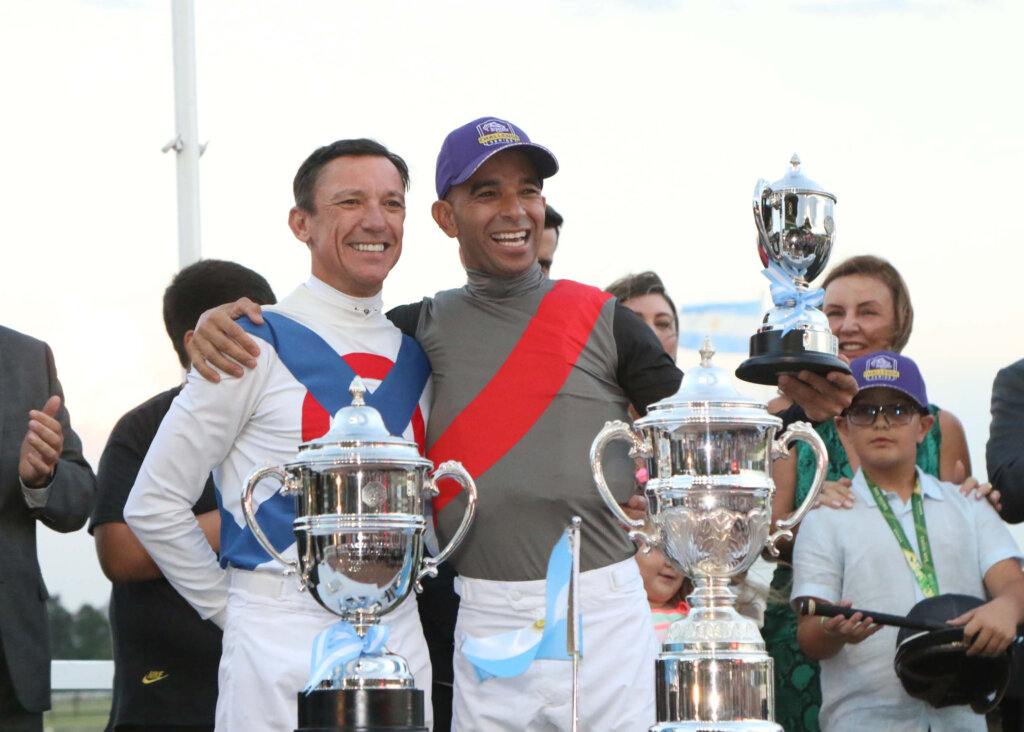
“I had three rides in Buenos Aires that Saturday and the two before him both went terrible,” Moreira said, recalling an 18-race event that also featured Frankie Dettori winning a conditions race before the packed and cheering San Isidro grandstand.
But the disappointment of two defeats was wiped away when Moreira walked into the parade ring and saw Obataye.
“He walked in big – massive. I got shocked in a good way,” he said. “I knew then he was just going to win, he’s a freak. He was shiny, toned, so strong. He’s got everything, he’s got scope, very nice temperament, a very intelligent type of a horse, and he’s got a very good acceleration.
“In the race, when I pressed and let him go, he was three lengths from the leaders and in three seconds he was three in front. His acceleration was very impressive; I think this was his most impressive win overall. I think the form here was good, they breed almost 7,000 horses per year in Argentina so they’ve got to have some good ones and the few he ran into in this race, in my opinion, were strong. There was form around him – Group 1 winners. Even looking at them in the parade they were nice horses.
“I don’t believe I rode him 100 per cent well,” he continued, “not that I rode him badly, but because I was kind of dictated to go a little bit too early. He was in front too early and he was vulnerable in the last bit.”
Moreira is the prominent human in the Obataye story, but he is quick to praise Oldoni, a trainer he has great respect for.
“He’s a very humble type of a person,” he said of Oldoni. “He’s one of those people who lives nearly 24 hours with the horses. He might sleep at home four hours a day and then he’s back at the stable. And he never complains.”
But the ace jockey credits much of Obataye’s success to the Pelanda family and the resources their large racing and breeding operation brought in.
“People have asked why did my family sell when we thought Obataye was that good,” Moreira said. “But I’m very sensible about it, I believe if this horse had not been sold to this particular family, the Pelanda family, he wouldn’t have won those races, no chance, no chance at all.
“Some of these races the entry fees are quite high, and we didn’t have the infrastructure to be travelling horses everywhere as this owner does. Also, I didn’t think this horse was a 10-furlong or 12-furlong type of horse, I thought he was a miler, so he was going to get stuck in those short distances a bit longer. He would still have won some races, big ones, but he wouldn’t have done as well as he did and I have no doubts about it.
“I’m very pleased and proud that we passed him on to the right people to give the horse every chance to be the successful horse he has been so far.”
Much Better took his South American champion status to Paris to test his credentials against the best mile and half horses on the planet. That route is not likely for Obataye. Moreira hopes the son of Courtier will attempt again to win the Grande Premio Sao Paulo, the one race he himself wants to win more than any other.
As for international travel, that might never happen, but Moreira believes Obataye – who like himself has emerged out of provincial Curitiba to become a champion – would not be out of place in overseas Group 1 races.
“I’ve seen horses inferior to him win the Dubai Turf,” he said. “If you could get him as good as he was last Saturday, I’m sure he would be competitive in those type of races.
“As a child, if I dreamed of a horse, it could not have been as good as this guy,” Moreira added. “This horse, I love him so much, he’s the horse of my life.” ∎