Venue: Hanshin
Date: April 12
Distance: 1600m
Value: ¥303,800,000 (about US$1,960,000)
The Classic season is upon us and first up is the G1 Oka Sho, Japan’s 1,000 Guineas, restricted to three-year-old fillies and a race that sets a generational benchmark for the campaign ahead.
The honour roll is impressive, as one would expect, and features 15 fillies that also went on to win the Yushun Himba, the Japanese Oaks. And a total of six fillies have completed the Triple Tiara since it became the trio of the Oka Sho, Yushun Himba and Shuka Sho: Still In Love, Apapane, Gentildonna, Almond Eye, Daring Tact and Liberty Island. Mejiro Ramonu in 1986 was the first Fillies’ Triple Crown heroine in the days when the Queen Elizabeth II Cup was the final leg.
Among jockeys currently riding, Yutaka Take has five Oka Sho wins, Yuga Kawada three, Yasunari Iwata two, Joao Moreira two, and current champion jockey Christophe Lemaire two.
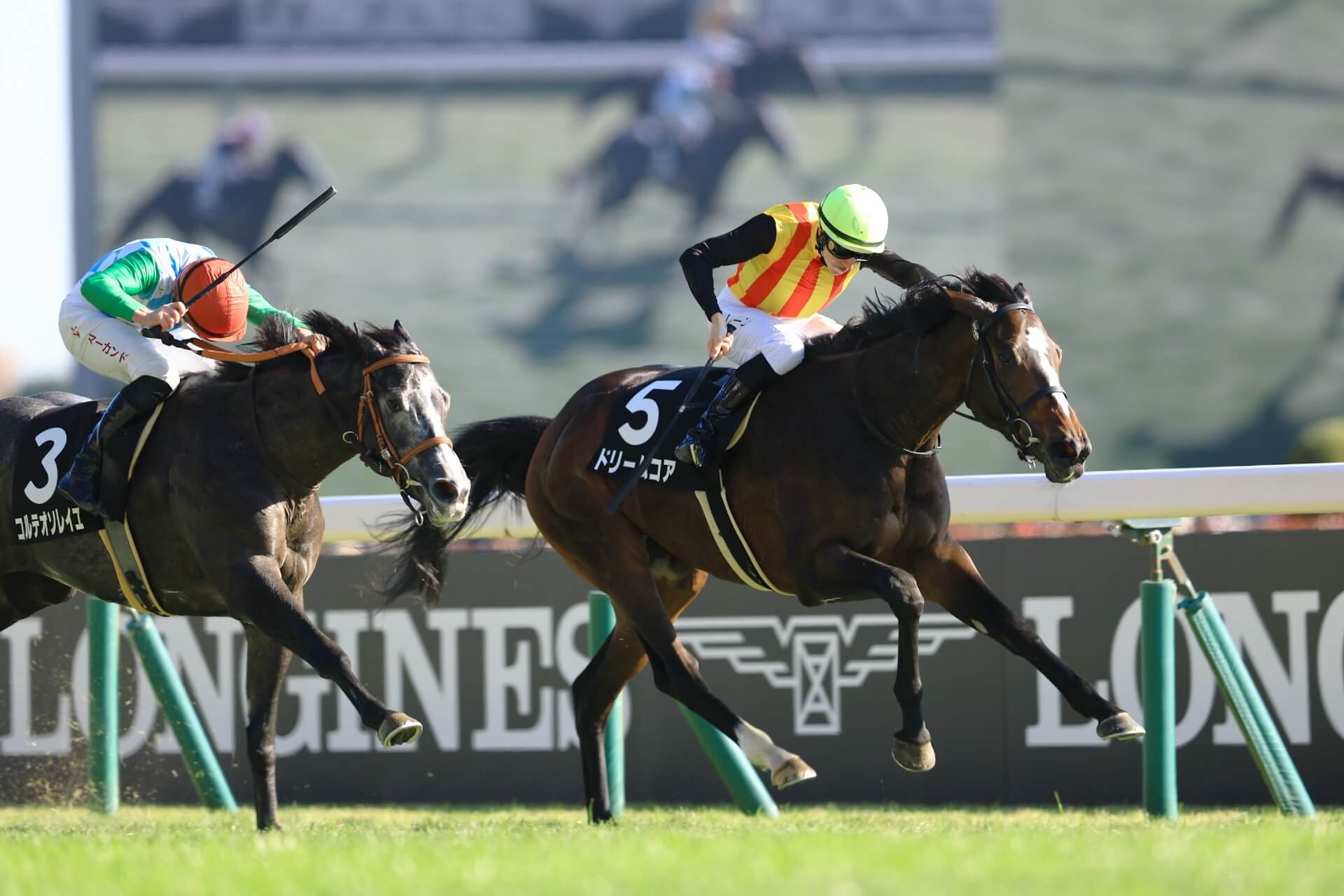
Dream Core For Normcore
Normcore did not make it to the Oka Sho in her three-year-old season back in 2018 after placing third in one of the lead-up races, the G3 Flower Cup; instead she went to the G2 Flora Stakes, an Oaks prep, and was third again. In fact, she never did make it to a Classic race, so perhaps her daughter Dream Core can make up for that.
What Normcore did achieve was a couple of major wins later in her career: the G1 Victoria Mile as a four-year-old and a career-capping triumph in the G1 Hong Kong Cup as a five-year-old.
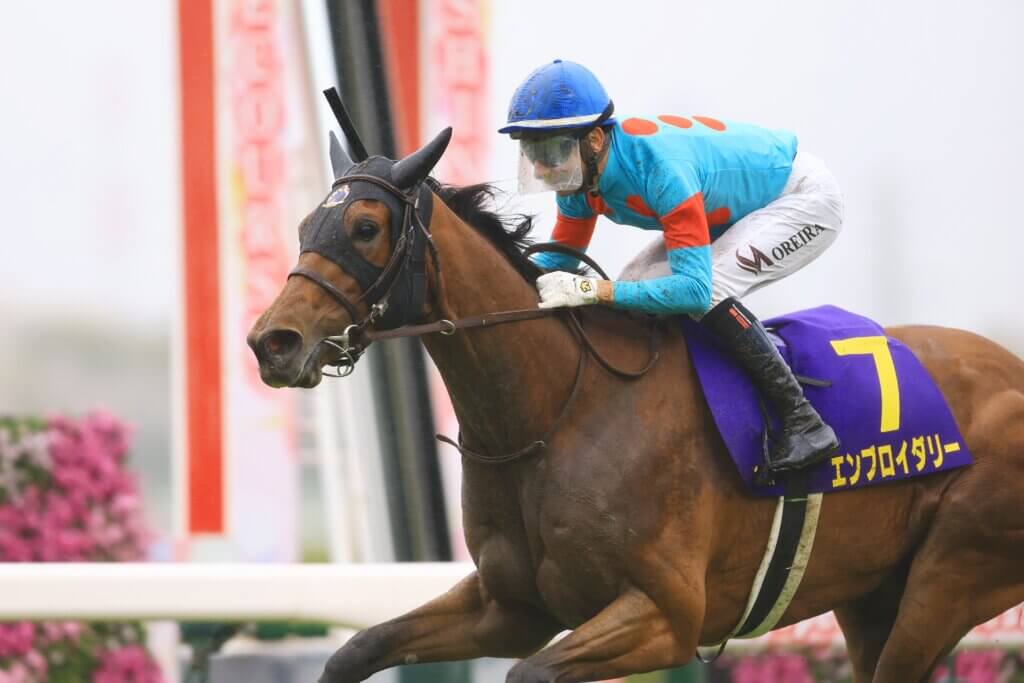
Dream Core won two of her three juvenile starts last term, then stepped out on Valentine’s Day this year with a smart win in the G3 Queen Cup under Christophe Lemaire, who is expected to ride her in the Oka Sho. The only other filly this century to have won the G3 Queen Cup and then followed it with an Oka Sho win was Embroidery, who pulled off that feat just last year.
Take Trusts Alankar To End String Of Losses
Yutaka Take has won the Oka Sho five times, but the last of those was Dance In The Mood 22 years ago. Japan’s most successful and most famous jockey now looks to have his best chance of winning the first Classic since he partnered the 8.0 chance Water Navillera to a nose second in the race Stars On Earth won four years ago.
This time he is booked to partner Alankar, a filly he rode for the first time in the G2 Tulip Sho last month, finishing third. Alankar had won her first two races as a two-year-old and started favourite for the Hanshin Juvenile Fillies under Yuichi Kitamura, who took her back at the break, was soon a detached last but made marked progress widest of all, skirting the field to finish fifth. Perhaps Take will make the difference and end his own two decades wait for his sixth Oka Sho.
Hanshin Juvenile Winner Record
Star Anise won the G1 Hanshin Juvenile Fillies last year, which, as the name suggests, is Japan’s de facto championship race for juvenile fillies. It’s seen as an important step to the Oka Sho, being held each year at Hanshin in December, four months prior to the Oka Sho at the same distance of a mile. But how do Hanshin Juvenile Fillies winners stack up?
Well, since the two races have co-existed, going right back to 1949, seven fillies have won both races, the first being Miss Onward in 1956 and 1957. So that’s a nine percent strike rate for Hanshin Juvenile Fillies’ winners in the Oka Sho. But that changes significantly when the sample is solely this century: T M Ocean completed the double in 2001 and she is one of six to have achieved that feat in the last 25 editions of the Oka Sho, and that’s a 24 percent win strike rate.
The last to do the double was Liberty Island in 2023, so perhaps the time is right for Star Anise, who won the two-year-old race quite impressively by a length and a half.
How Does The Hanshin Juvenile Form Stack Up?
Star Anise is going into the Oka Sho first-up, but her form has stacked up pretty firmly in her absence. As mentioned, Alankar has placed third in the G2 Tulip Sho, a half-length behind the winner Taisei Vogue who was third in the Juvenile Fillies; Taisei Vogue is missing from the Oka Sho line-up though. Sweet Happiness, fourth at Hanshin in December, has since won the Listed Elfin Stakes.
On the flip side, the Hanshin Juvenile Fillies runner-up Garavogue was only ninth in the G3 Queen Cup behind Dream Core last time. And the seventh home, Shonan Charis, has come out since and failed to fire in G2 Fillies Revue over 1400m at Hanshin, finishing eighth behind Ghillies’ Ball.
Prep Run Or Not?
Four fillies since 2001 have won the Oka Sho first-up for the year and three of that quartet were special talents: Gran Alegria, Liberty Island and Sodashi, the other being Stellenbosch. In the same period, 10 fillies have won the race off a one-run prep and another 10 off a two-race prep. One Oka Sho heroine scored off a four-race lead-in, and that was Kiss To Heaven who was beaten in two maidens before winning one, added a win in the G2 Flower Cup and then took the Oka Sho in a quite remarkable blossoming.
Of those 10 Oka Sho winners going in off one prep race, seven had won their lead-in race: Embroidery (Queen Cup), Daring Tact (Elfin Stakes), Almond Eye (Shinzan Kinen), Harp Star (Tulip Sho), Buena Vista (Tulip Sho), Rhein Kraft (Fillies’ Revue) and T M Ocean (Tulip Sho). When considering that those three Tulip Sho winners are among seven Oka Sho winners to have placed top three in that particular trial race before winning the Classic, it’s clear that it’s a race to go and look at again.
But back to the first-up contenders: it’s worth noting that all four of the fillies that stepped in and won the Oka Sho without a prep run did so in the last seven editions, a 57 percent winning rate in that period, making it a potent recent trend and making Star Anise a story to keep an eye on. ∎