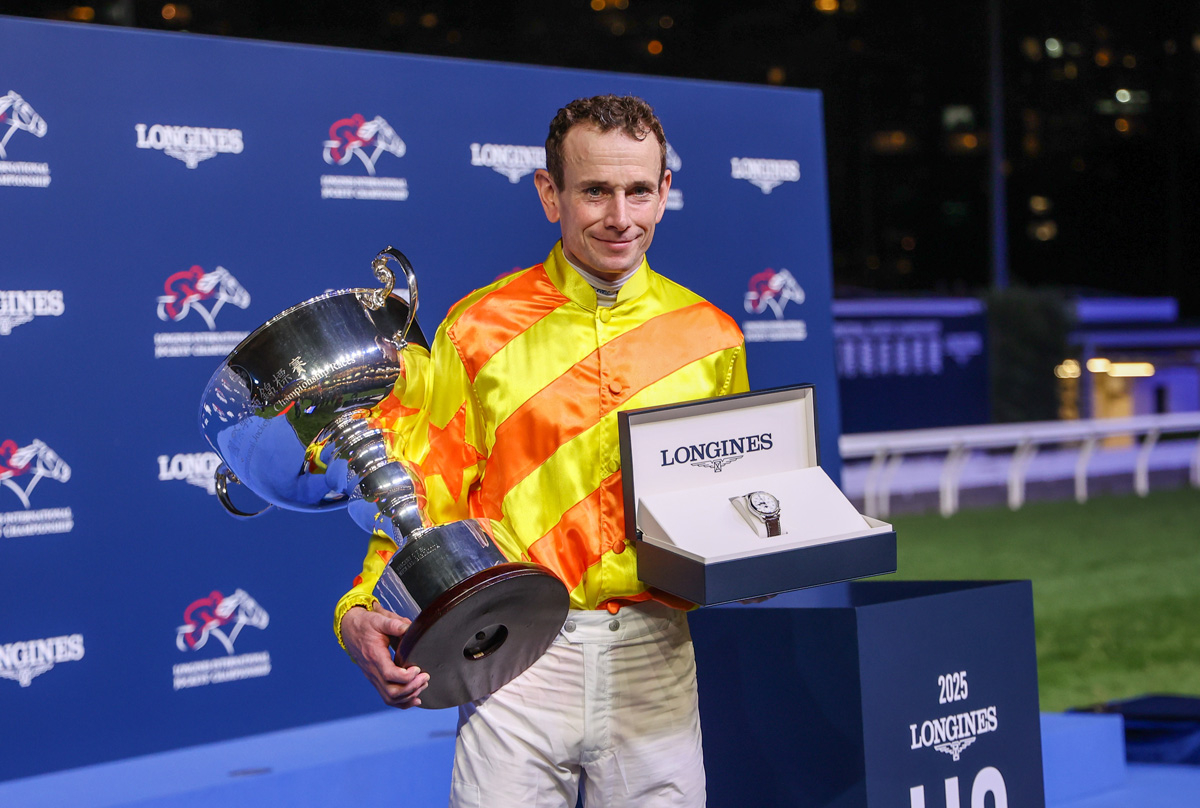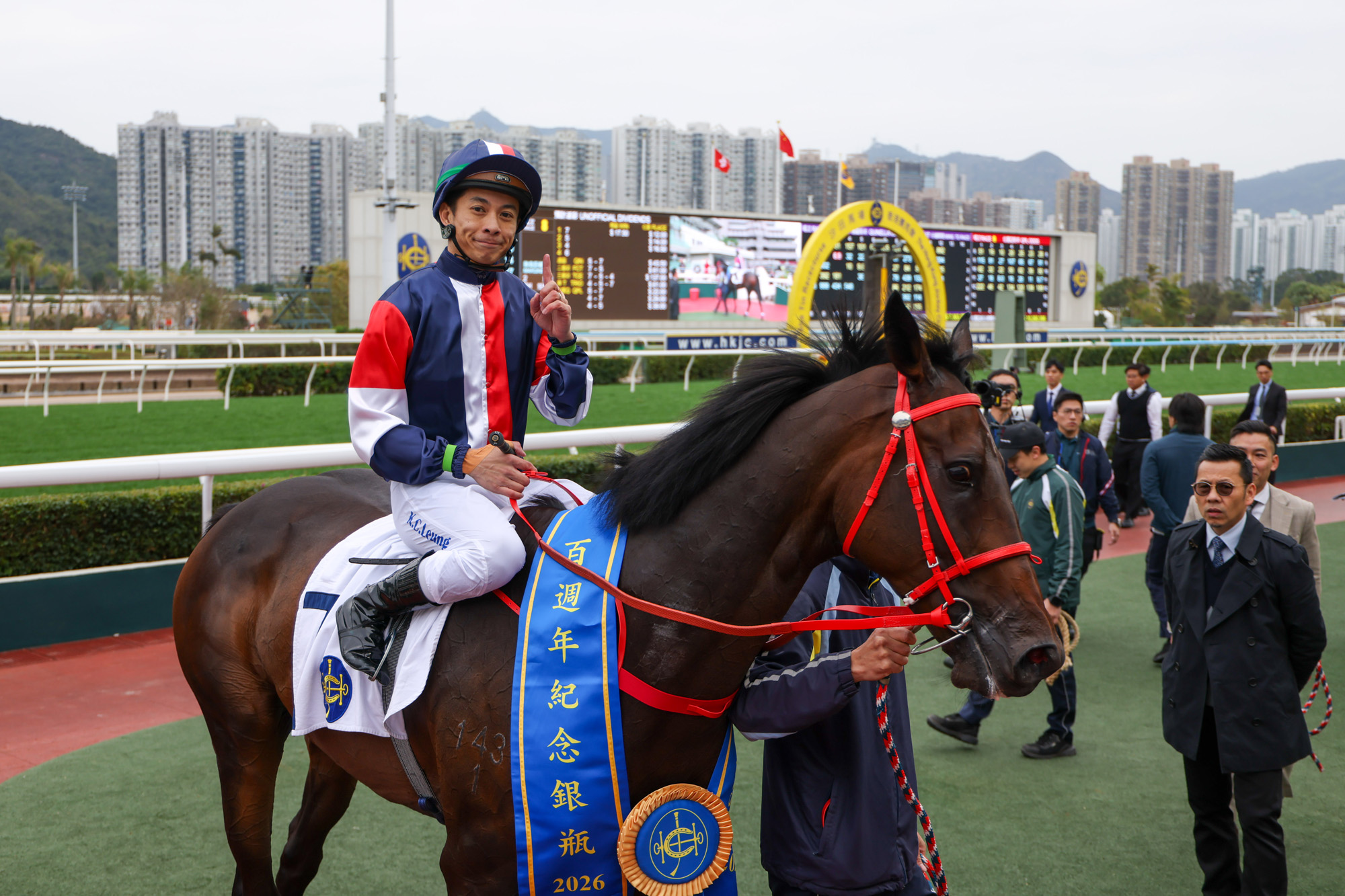
Derek Leung has been around long enough to realise the power of a special horse and what it can do for a Hong Kong career.
He is a young veteran of the scene. At just 38, his 538 wins rank 14th all-time in Hong Kong. He sits 33 shy of Olivier Doleuze, within range of Felix Coetzee, Gerald Mosse and Basil Marcus, and ahead of Eric Saint-Martin, Robbie Fradd and Shane Dye.
His first Group 1 came aboard Beauty Generation in the 2017 Hong Kong Mile, a ride that arrived through a light-weight opportunity and one he grabbed with both hands. Leung’s tactical turnaround, deciding to lead and control a 1400m Group 3, unlocked the horse’s superpower. Until then Beauty Generation was seen as a middle-distance stayer, and he still holds the 2200m track record at Sha Tin. At a mile he became an unstoppable force.
Zac Purton took the ride later that season. Leung holds no ill will, only a burning desire to find another horse who can carry him into the biggest races on the calendar.
Numbers could be that horse. The high-priced import was second in the 2026 Hong Kong Derby and again runner-up to Romantic Warrior in the G1 Standard Chartered Champions & Chater Cup. The stayer resumes in next Sunday’s G3 Sa Sa Ladies’ Purse over 1800m on a path to either the Longines Hong Kong Vase or Hong Kong Cup on December 13.
What makes Numbers special to Leung is how long he has been around him. Leung rode him in his first Hong Kong barrier trial in October 2025, soon after the horse arrived with Frankie Lor, and has kept him in his sights since. That is seven starts and two wins, including a Group 3 over the Ladies’ Purse course and distance in February’s Centenary Vase.
Leung is now 38 but he can’t stop asking his trainers why they did this and why they did that. He is always curious, always humble, and always asking questions. His interest runs to the horse itself, to how one is made and how it gets from a first trial to a Group 1, and it has begun to stretch beyond race-riding towards training. “Of course I love horses,” he says.
The humility has deep roots. “No ego, always stay humble,” he says. Leung learned it on the cold mornings in Matamata, New Zealand, where he earned his stripes working for Lance O’Sullivan and Andrew Scott. He then moved to Lance’s brother Paul at Sha Tin to continue his apprenticeship and begin his Hong Kong career.
For now his focus is the cutthroat battle in the jockeys’ championship. Leung wants a place in the International Jockeys’ Championship and a third Tony Cruz Award as leading local rider, an award he won in back-to-back seasons in 2016/17 and 2017/18.
The early standings show how crowded that fight has become. Behind nine-time champion Purton, the next four places belonged to Chinese jockeys heading into this week, and five of the top eight Jockey Club Apprentice Jockeys’ School graduates. Between them, those five had collected 61 of the season’s first 147 winners, a little better than four in every 10.
Wednesday night at Sha Tin only underlined the rise as homegrown riders won eight of the nine races, and Leung was among them, lifting his tally to 11 for the term and 538 in Hong Kong.
It is a long way from the weighing room Leung walked into as a ten pound claimer in 2008 – a room that boasted names like Douglas Whyte, Brett Prebble, Darren Beadman and Christophe Soumillon – a time when the best rides tended to find their way to the visitors and the locals made do with what was left. Leung says the biggest change since then is the support and trust now handed to local riders.
“We get more support now,” he says. “We can finish the job, we can get a good result, so everyone is happy.”
Leung believes that at least some of the change in attitude sits a three-to-four-hour drive across the border from Sha Tin. The Jockey Club’s training centre at Conghua, near Guangzhou, now stages more than 400 barrier trials a season, up from 132 when it opened for trials in 2018/19. Jockeys make the pre-dawn trip unpaid. Idol Horse reported in July 2025 that the Club agreed to cut Conghua trial days after riders raised workload concerns, but rejected the idea of paying them to ride trials. The same story found the leading expatriates had enough support to limit their journeys, while the riders still building a foothold kept making them.
For those riders the mornings are an investment. “If you say ‘no’ to riding the trial there’s a chance you upset the trainer and you won’t ride for him anyway,” one jockey told Idol Horse.
Leung sees the upside. “I think Conghua has helped us,” he says. “If you are willing to get up there and ride in trials, you will be rewarded with support.” He practised it in 2024/25, making 31 trips to Conghua after two the season before, and his winners climbed from 25 to 36.
The vacancies at the top help too. Hugh Bowman, runner-up to Purton last season, has been sidelined since the opening meeting with a hip ailment that required surgery, and rides that once went his way are up for grabs.
Leung says the International Jockeys’ Championship has changed for the better as well. Locals once drew bottom weights because many stables kept their better horses at home and entered ones not yet ready. The rules have since evened out. Each rider gets four rides on more equal terms, the fields are stronger, and there is more prize money and a bonus for trainers.
The line-up is set after the standings on November 25, and Leung wants in. That is the flipside of the homegrown riders’ early-season charge: the more of them who succeed, the harder it becomes to find a place.
“It’s a real war” among the local jockeys for that spot, Leung says. “It’s good, it’s healthy.” ∎