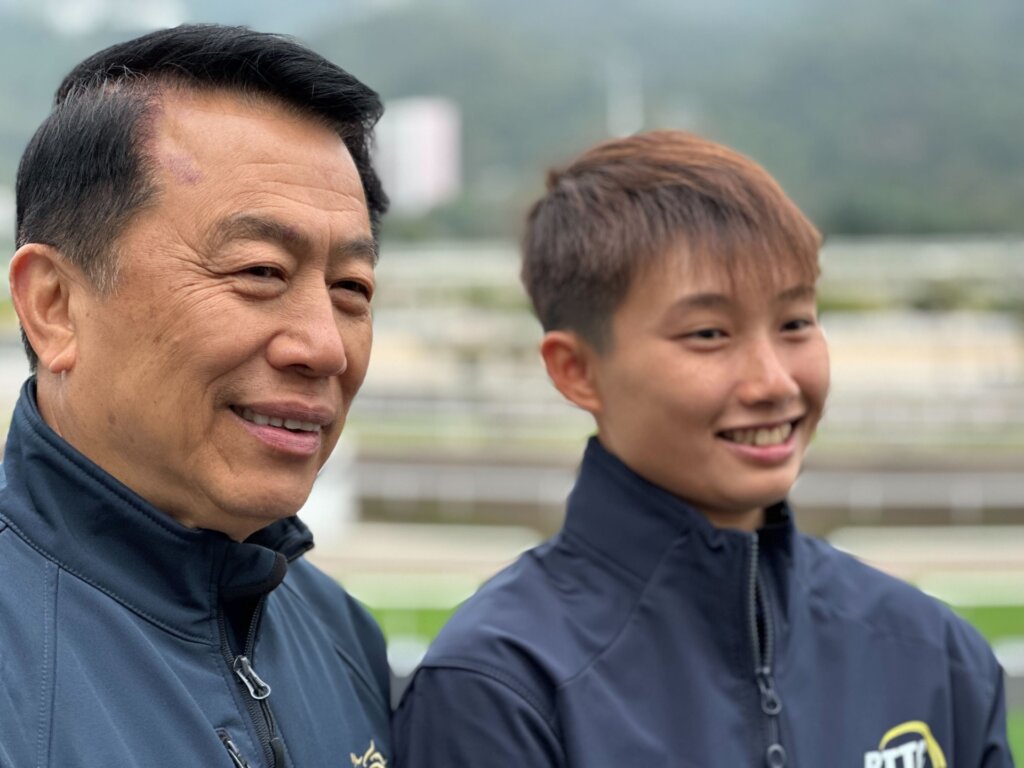
Nichola Yuen starts her career in Hong Kong this week. She should be very excited – but the news brought back memories for me.
I was 11 years old, standing at the Matamata races in New Zealand, the day Linda Jones had her first ride. It was 1978. Linda had created a storm. Women weren’t allowed to ride in races, full stop. But through relentless lobbying and public pressure, she and her supporters forced the hand of racing administrators and women were granted a licence in New Zealand that year.
The day of her first ride, there was press everywhere. It was unlike anything I’d seen at a country meeting. A week later she rode her first winner at Te Rapa on a horse called Big Bikkies – and the reaction was like the first person landing on the moon. A woman had won a race. In 1978, that was unbelievable.
Linda Jones was the pioneer in New Zealand. It took another year for Australia to catch up, through Pam O’Neill in Queensland. She wrote more than 140 letters to racing administrators pleading for the right to compete professionally against men. If it wasn’t for women like Jones and O’Neill nearly 50 years ago – lobbying, pleading, refusing to go away – then Nichola Yuen and Hong Kong’s other female apprentice Britney Wong may not even have a licence today.

Since those pioneers, there have been some outstanding female jockeys. In America, Julie Krone won over 3,700 races, became the first woman to win a Triple Crown event, and was inducted into the Racing Hall of Fame. Chantal Sutherland would be familiar to Hong Kong fans from her appearances at Happy Valley. They set the bar.
Throughout the years we’ve had great riders closer to home, too. In New Zealand I rode against Maree Lyndon and Lisa Allpress – both very good jockeys.
And of course in Australia, I will never forget the 2015 Melbourne Cup. I was at Flemington when Michelle Payne won on Prince of Penzance at 100-to-1. I had tears in my eyes. It was so good for racing. A woman winning the Melbourne Cup – nobody expected it. The ride won the race. There were other horses that should have won that day, but through bad luck or bad rides, they didn’t. Michelle gave that horse a perfect ride. You could run that Melbourne Cup 100 times again and the horse would never win once.
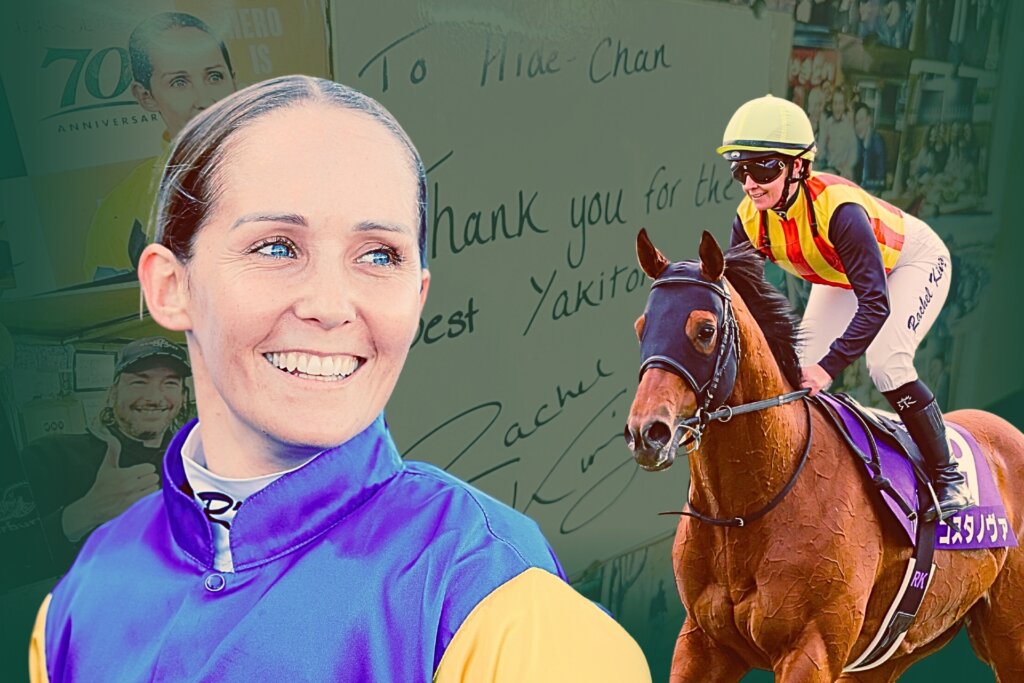
Then last year, Jamie Melham won the Melbourne Cup on Half Yours after also taking out the Caulfield Cup. She is an outstanding rider. Hollie Doyle and Rachel King have been successful, too. Look at Brisbane – Angela Jones became the first woman to win the city jockeys’ premiership last season, with Emily Lang right behind her. Angela is one to watch, she rides very well.
So what is the difference when it comes to riding? In my experience, women generally have “better hands” on a horse. What that means is a lot of horses won’t overrace for a woman when they will for a man. Female riders tend to have very good balance, and because of that balance and how quiet they sit, the horses run for them. I believe the horse feels more relaxed, more comfortable, and naturally runs better.
Now, I don’t want any arguments here – but it is a fact that men are physically stronger. So, male jockeys are stronger than females. But riding is not all about strength. And in modern racing, the whip factor has been taken away by officials. You can’t use it as much. That has levelled the playing field, big time.
The bigger picture is this: more women become apprentices because they love horses and it’s in their blood. Girls grow up in pony clubs, and once horses get into their blood, they don’t lose it. Pony clubs are a genuine pathway to professional race riding in Australia and New Zealand. A lot of men, on the other hand, take up riding because they’re small and someone says to them, “Why don’t you try to be a jockey?” That’s a very different motivation.
I won’t see it in the next 20 or 30 years, but I can promise you this: in 50 years, there will be more female jockeys than men. The weight scale and the pathway into the sport make it inevitable.
Good luck to Nichola. Hong Kong racing is as competitive an arena as there is anywhere in the world for jockeys. But she has the history of 50 years of pioneers behind her. ∎