About four hours before the 1989 Japan Cup, Lance O’Sullivan was given special permission to walk over to the stalls for the foreign horses next to Tokyo Racecourse, where his brother Paul was sitting alone beside a grey mare called Horlicks.
“You could hear the wind whistling around outside,” Lance said. “He and I just sat on a hay bale each, just chatting about the race, and she just had her head down in between us. It was one of those moments that I’ll never forget.”
Beyond the stable block a crowd that would be counted at 140,824 was finding its seats at Fuchu to watch Oguri Cap, the grey from the provincial track at Kasamatsu who had become the most popular racehorse Japan has known. Hardly any of them had come for the six-year-old from Matamata who was a 19-to-one outsider.
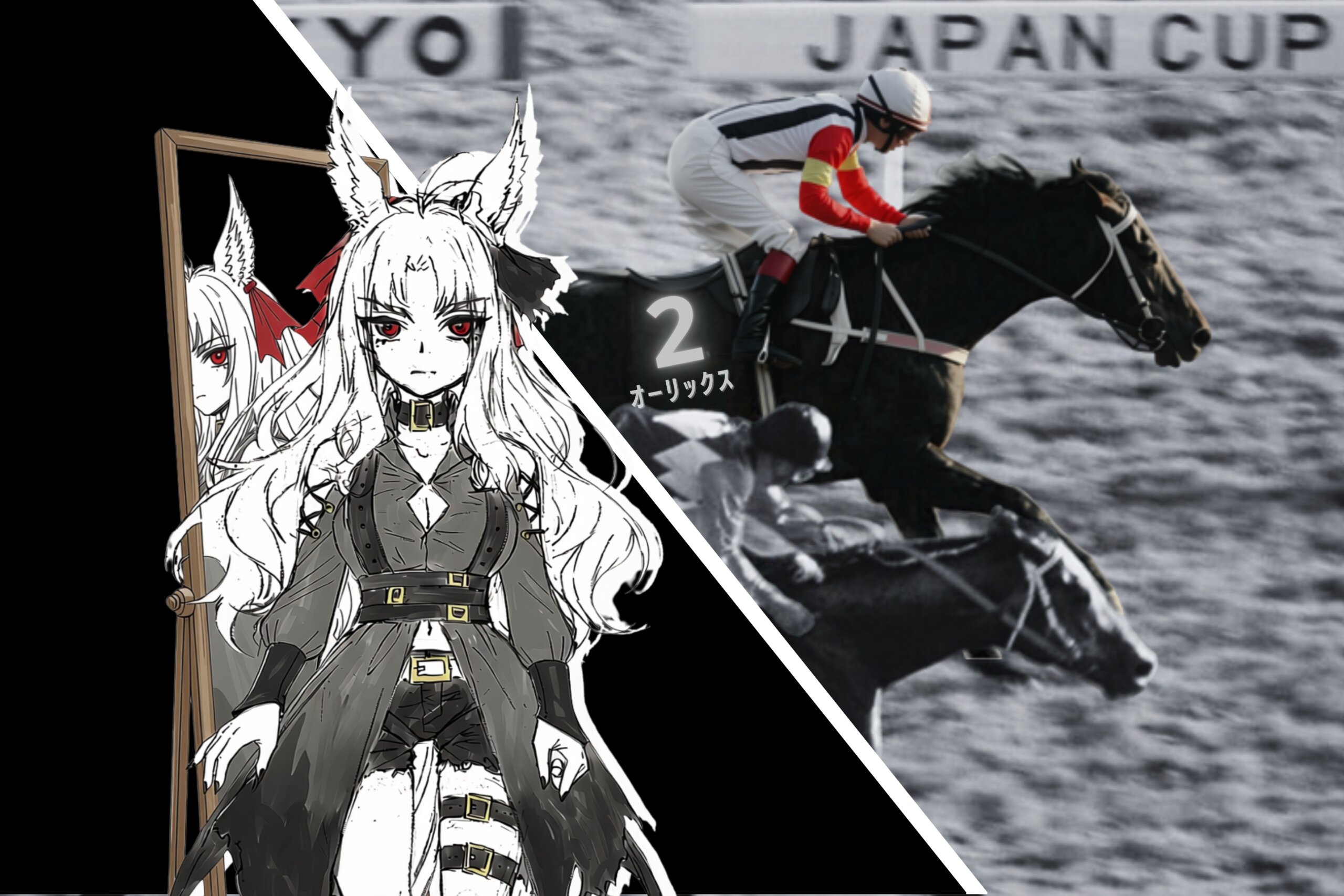
Thirty-seven years on, the mare has a second life in Japan that neither brother knew about until this month. Umamusume, the franchise that turns champion racehorses into ‘horse girls’, tells Oguri Cap’s story in a manga called Cinderella Gray, and in the autumn of 1989 its heroine runs into a small, fierce New Zealander called Folkqueen. In this manga telling, she has one red eye and one yellow, dresses like a punk singer, talks to her reflection in a mirror and wins the Japan Cup in a chapter titled “2.22.2”.
“Wow, that’s quite amazing, eh,” Lance said.
The mirror was Paul’s doing, and at home in the Waikato, where he is retired from training, he can still describe the shop he bought it in.
In Melbourne, where Horlicks was stabled before the trip, the horse in the next box was another grey, and Paul says the two were “buddies”. She was the only southern hemisphere horse in the Japan Cup and would land in Tokyo before the other overseas runners, which meant the mare was about to lose her best friend and spend her first days in Japan alone.
Paul went looking for company she could take with her and found a mirror in what he calls “a dirty old second-hand shop”. He covered the glass in chicken mesh so that she could not break it, wiped the sweat from the other grey’s head onto a rag and rubbed the rag over the mirror, so that the horse looking back at her would smell like her friend, and put it on the plane.
In Tokyo he tied it to the fence of her paddock and kept her feed and water beside it.
“She’d come up and sniff the mirror,” he said. “The first few days she was there, she just stood by the mirror the whole time. Well, the familiar face. After a few days she’d sort of wander away and do what they do, and then she’d come back. So it worked out pretty good.”
Paul was told that Folkqueen in the Cinderella Gray story has a mirror too, and that she talks to it.
“They’ve done their homework, haven’t they?” he said.
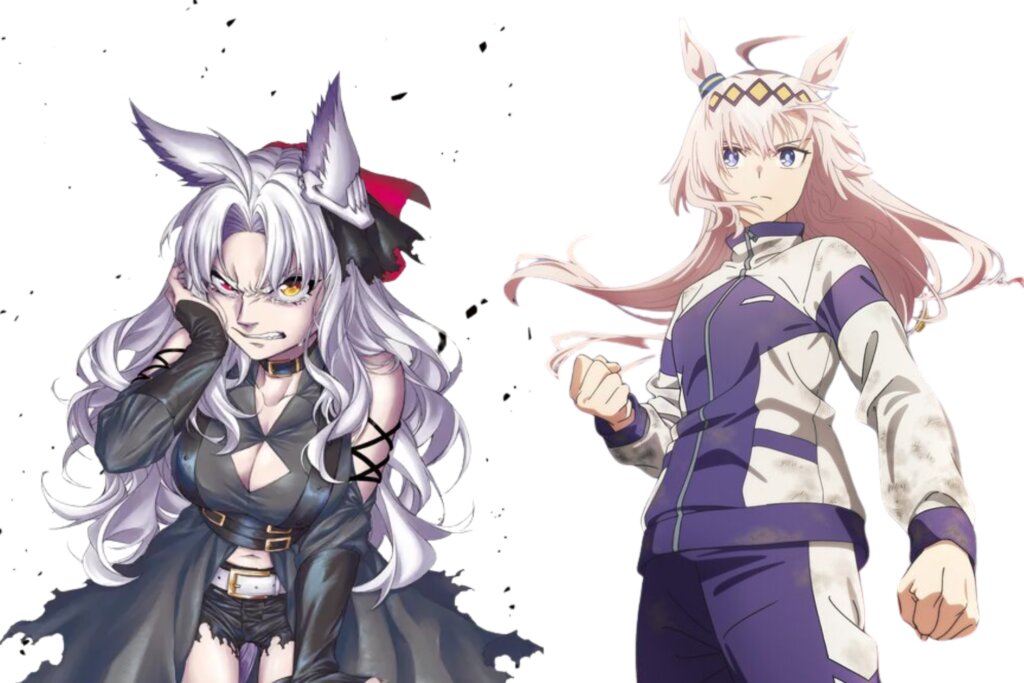
The artists had plenty to work from, because the ninth Japan Cup drew seven overseas runners to a field of 15. Carroll House had won that year’s Prix de l’Arc de Triomphe, Pay the Butler was back from the United States to defend his title, the British-trained Ibn Bey arrived on four straight wins and the American three-year-old Hawkster had set a world record of 2:22.8 for a mile and a half on turf at Santa Anita six weeks earlier. The favourite was Super Creek, who had won the Tenno Sho (Autumn) for a 20-year-old Yutaka Take, and the horse he beat by a neck that day was Oguri Cap.
Oguri Cap came to Tokyo by a road that is still argued over in Japan, because seven days before the Japan Cup he had won the Mile Championship at Kyoto by a nose. His jockey Katsumi Minai wept through the winner’s interview, and Japanese reports have the horse on a float to Tokyo within two hours. The Japanese sports magazine Number has reported that he was racing under a lease said to be worth about 300 million yen a year and that the mile race was added at the owner’s request. One racing writer is recorded as calling it a campaign tainted by human greed, and a well-known commentator who watched the horse’s public workout said he looked tired.
His trainer Tsutomu Setoguchi believed the horse was well, and when he was interviewed in 2017, shortly before his death, he remembered looking over the visitor from New Zealand, “an unimpressive-looking mare”, and deciding that she at least would not beat him.
Horlicks had been aimed at Tokyo since the start of the year by Dave O’Sullivan, who trained her at Matamata in partnership with Paul, and she had won the Mackinnon Stakes at Flemington 22 days before the race, beating a field that included Vo Rogue and Super Impose. New Zealand’s best result in the Japan Cup was a third, and the stable’s own Waverley Star had run fifth for Lance in 1986.
“She was at quite big odds, but her work had been phenomenal,” Paul said. “It was just a matter of, are we on some sort of a playing field, is Australasia on some sort of a playing field with the rest of the world or not?”
Paul went to Japan as her track rider and his main worry was azoturia, the muscle condition horsemen call tying up, which he says she suffered from badly. He borrowed the answer from Stanerra, the Irish mare who had the same trouble before she won the Japan Cup in 1983, and it was walking. Horlicks walked for an hour before work, an hour after it and, following a quiet ride in the afternoon, an hour more, and in between she went out to the paddock and the mirror.
The visiting horsemen rode bicycles to breakfast each day, and on the morning of November 26 the ride took Paul past the main gates.
“There’s all these tents along the road, all these people camped out overnight,” he said. “They looked like paper tents, dozens and dozens of them.”
Paul remembers hardly a word passing between the brothers on the hay bales apart from one piece of advice. Lance had watched every Japan Cup and decided that Tokyo’s long, climbing straight was no place to sit and wait.
“He said, ‘Paul, the winner of every Japan Cup was driven up the rise,'” Paul said.
Lance stood up, his brother hugged him and wished him luck, and he walked across to get changed.
“It was almost like going to war, but certainly not like that. Nobody was firing bullets at us,” Lance said. “All you want to do is not make a mistake.”
Horlicks danced through the parade on her toes, as she always did, and from gate two she had no trouble finding a position. Ibn Bey crossed to lead, Hawkster went after him and the mare sat third at every corner, one place ahead of Oguri Cap and Super Creek, who travelled side by side behind her.
The leaders ran the first 1000 metres in 58.5 seconds and reached the 2000 metres in 1:58.0, and they still had 400 metres to run. Kazuhiko Okawa, calling the race for Fuji TV, later told Number that the pace never settled for long enough to let him run through the field, and he reached the finish having named only six of the 15 horses.
“I think they ran the first 1200 metres in 1:10 and they were just going at breakneck pace,” Lance said.
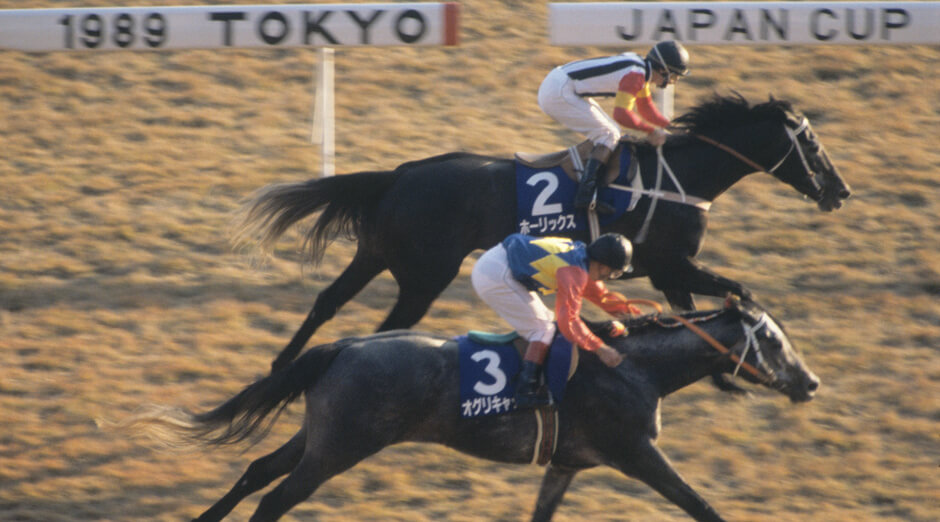
Hawkster drew up to Ibn Bey in the straight and Lance sent the mare between them and did what he had told his brother a Japan Cup winner must do. Paul says he “drove her up the rise and she just got enough of a break to stave off Oguri Cap”, who came after her down the outside and fought her for the last 200 metres in front of a crowd whose noise Lance’s biography likens to “a physical assault”.
Okawa was as caught up as anyone in the stands, calling Oguri Cap in front while Horlicks still led and, by Japanese accounts of the broadcast, shouting, “Come on, Oguri Cap!”
“She was a warrior, that’s what she was,” Lance said. “All the times I rode her, she never got passed in the home straight.”
The margin at the line was a neck, Pay the Butler was three lengths away in third in front of Super Creek, and the clock showed 2:22.2, six-tenths of a second inside the world record that Hawkster, who finished fifth, had brought to Tokyo.
Setoguchi had been urging his horse home and had to ask the trainer beside him which one had won. He told Number that a poorer finish would have brought the critics down on the back-up.
Lance had no idea in 1989 what the horse he had beaten meant to Japan.
“It wasn’t until after, hearing stories, and we thought, well, it was almost like beating one of the greats,” he said. “We certainly didn’t want to be the spoilers on the occasion, but that’s probably how it turned out to be.”
By Lance’s account the spoiler was forgiven quickly, and in 2012 the JRA went as far as building a television commercial around the race under the line ‘You don’t need three minutes to change the world’.
“She was exceptionally well accepted for an outsider and not being a local,” he said. “They sort of embraced her, hence probably why she’s in the cartoon.”
The time stood as a world record for a decade and as the Japan Cup record until 2005, and Calandagan holds the race record now at 2:20.3. Dave O’Sullivan, who died in 2024 aged 90, called that afternoon his greatest achievement in racing.
“It was a pinnacle,” Lance said. “It was the highest point of our careers, myself, brother Paul and my father, of course.”
The anime version of Cinderella Gray has not yet reached the 1989 Japan Cup, which leaves the biggest afternoon of Folkqueen’s career still to be drawn for the screen and a new audience still to meet the mare from Matamata.
Paul has two pastels on his wall in the Waikato, one of the sprinter Mr Tiz and one of Horlicks, and he was looking at the mare as he spoke. He wants to see the horse girl portrait as well, and although he never had her down as a punk rocker, the mare he describes would not look out of place beside the proud girl in the manga.
“She was just so easy to train, and wherever you pointed her, she went,” he said. “Without hesitation, whether it be on a flight or on a track. So she probably had a lot of self-confidence. Those horses have got it.” ∎