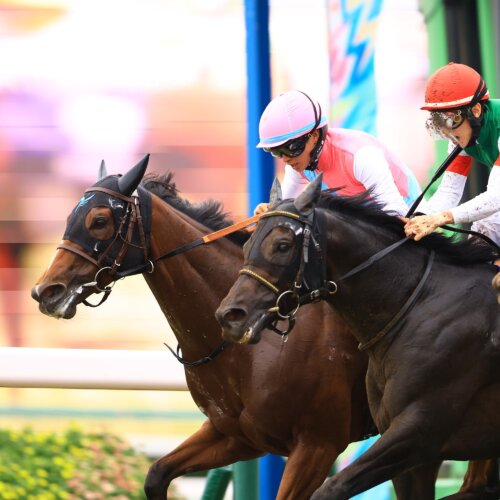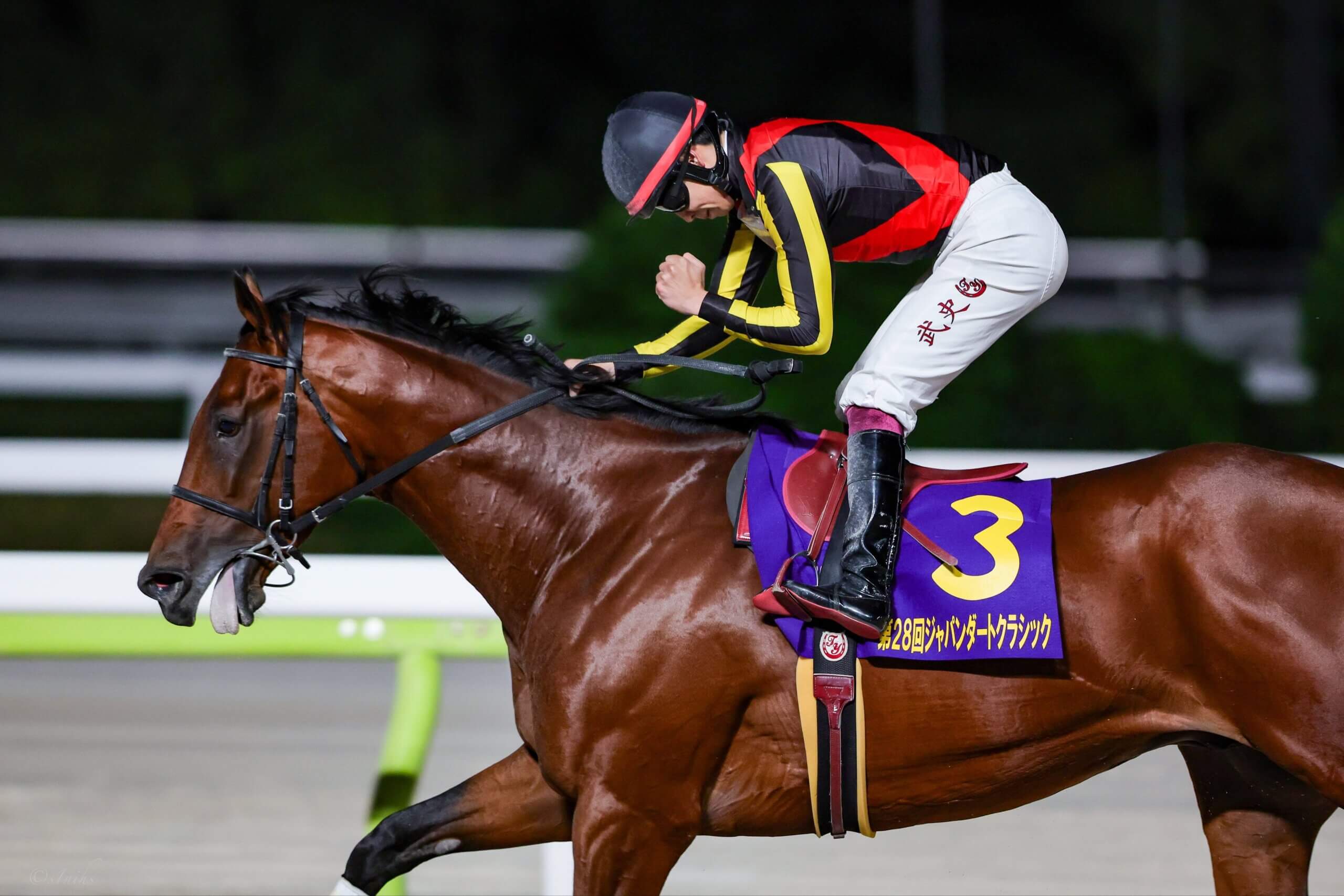
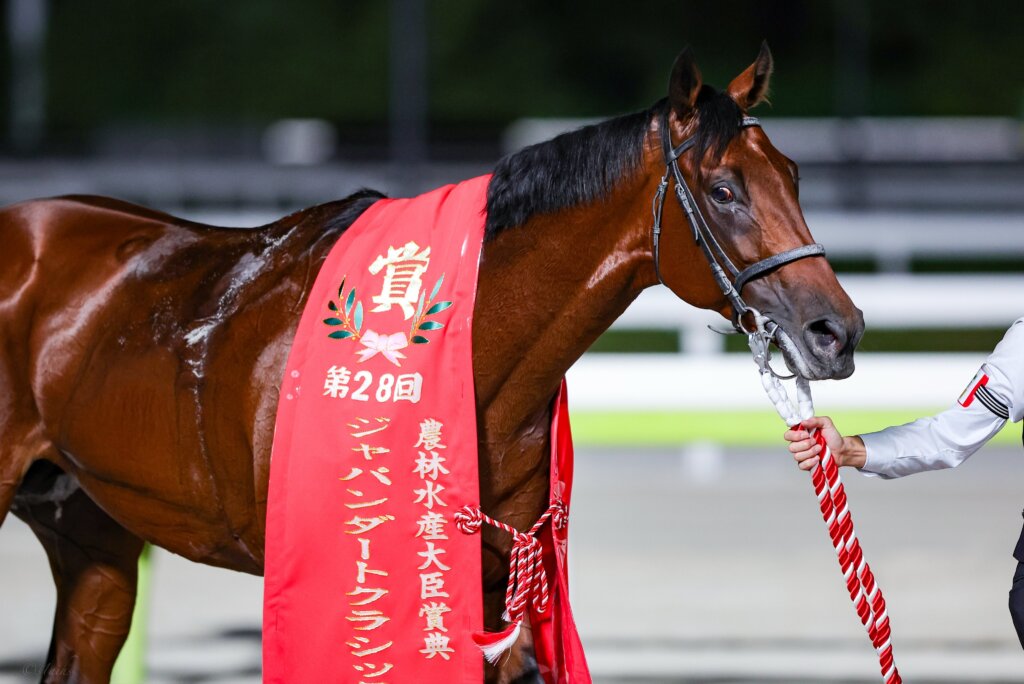
There was no ‘Dirt Triple Crown’ glory for Finger at Oi, but all options seem to be on the table for Silver Ratio after the Sunday Racing-owned colt’s win in Wednesday’s Jpn1 Japan Dirt Classic, the third and final leg of the National Racing Association (NAR)’s three-year-old series at the Tokyo City Keiba track.
Finger had taken the first and second legs at Oi earlier in the year, his wins in the Haneda Hai and the Tokyo Derby earning him a trans–Pacific shot at the G1 Pacific Classic. But that Stateside defeat, last of 11 behind Knightsbridge, seems to have affected the Hiroyasu Tanaka-trained colt whose pre-race workout was notable for how sluggishly and awkwardly he moved.
But as Finger’s star waned in a fading ninth place, Tokyo Derby runner-up Silver Ratio’s rose under jockey Takeshi Yokoyama, and according to his trainer Kenji Nonaka, expect more to come from a three-year-old who is still behind in his maturity.
Silver Ratio could step out again in the JBC Classic, but there’s also the NAR’s only Group 1 race to consider as an alternative, the Tokyo Daishoten back at Oi in December. The last horse to win this race and the Tokyo Daishoten in the same year was Forever Young in 2024, either side of placing third in the G1 Breeders’ Cup Classic,
“Now we don’t have to worry about his prize money, he can run in any race we want him to,” said Nonaka.
“The vet previously told me he has a really big and strong heart,” he continued, “but I feel like his body hasn’t caught up with that, and Takeshi thinks in the same way. Everyone aboard him says that. His movement is still a little bit stiff, or his range of motion is not yet ideal. He is getting better, but I still feel like his physical condition hasn’t caught up with his heart.
All of that left Nonaka to estimate Silver Ratio as being “only 70 per cent mature” and this, combined with the bay’s running style, could determine where he races next.
“The JBC Classic this year is in Kanazawa, it’s a tiny track, and I just can’t imagine how he could win there,” Nonaka said. “The 2100m distance is good, but he always comes from behind, and it will be a big disadvantage.
“He is in the race though, we can’t rule out this option yet. But just as I said, he has already got enough prize money, and I don’t think he needs to come back in a short turnaround.
“I am not sure about the Tokyo Daishoten,” the trainer continued. “Maybe we will race him one more time this year, maybe not. But at least he has shown he runs well at Oi, so Tokyo Daishoten is definitely an option.”
Yokoyama was in the saddle for the first time under race conditions, replacing Mirai Iwata who was serving a suspension for a wayward race-winning swerve at Hanshin recently.
Silver ratio broke steadily and Yokoyama allowed his mount to find his stride, which left him third-last at the first turn, more than 20 lengths off the pace. Setting that lung-busting tempo on the lead was Ryusei Sakai on Finger.
Yokoyama shifted out and asked Silver Ratio to advance towards the end of the back straight and by the time they swung off the final turn he was within striking distance and rolling with momentum.
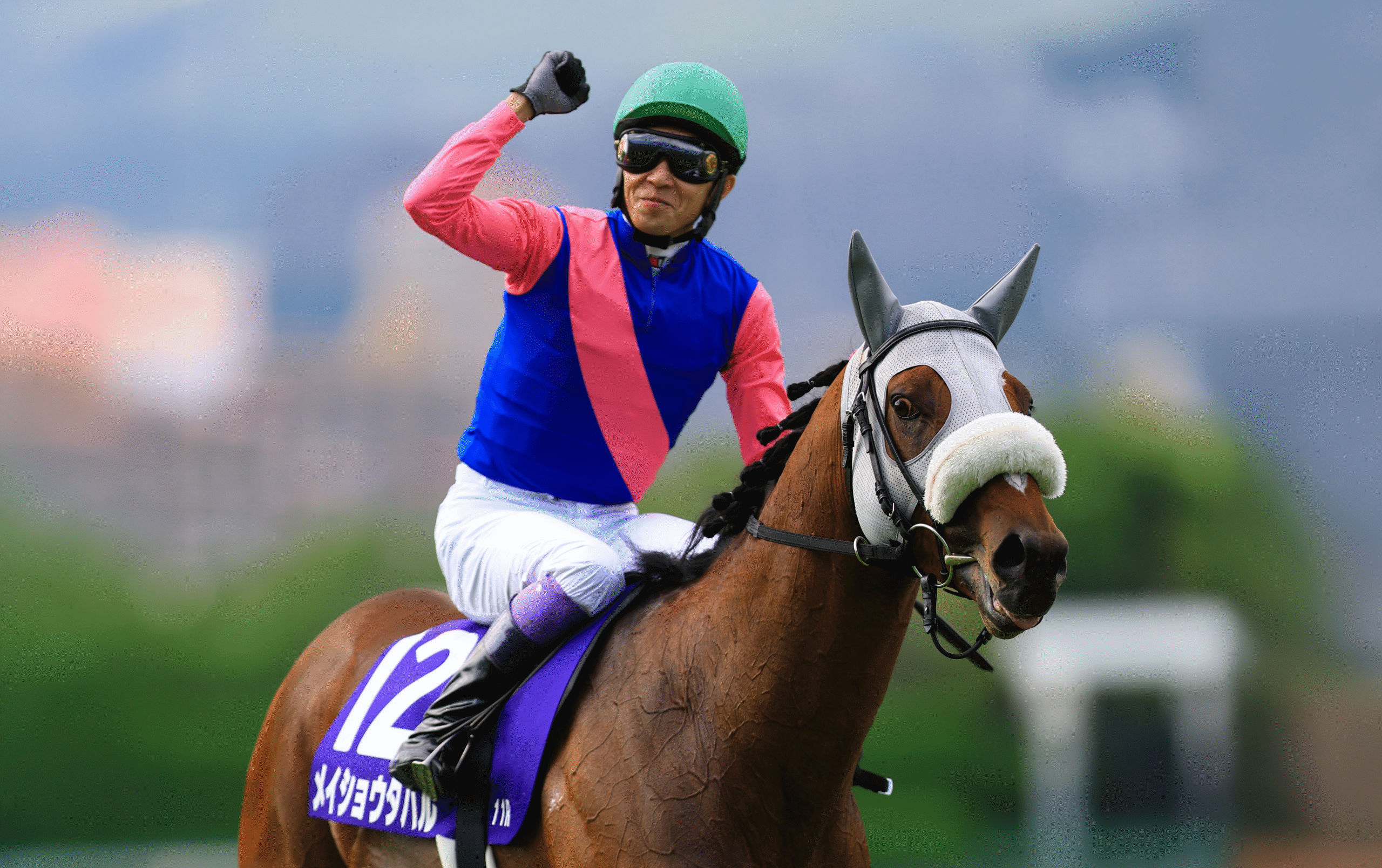
“I was focusing on getting the horse into his rhythm in the first half of the race,” Yokoyama said. “In the backstretch he had a lot of ground to make up, so I was a little bit worried, but he moved really well in the final corner, better than I expected, and entering the final straight I was confident he would get there.”
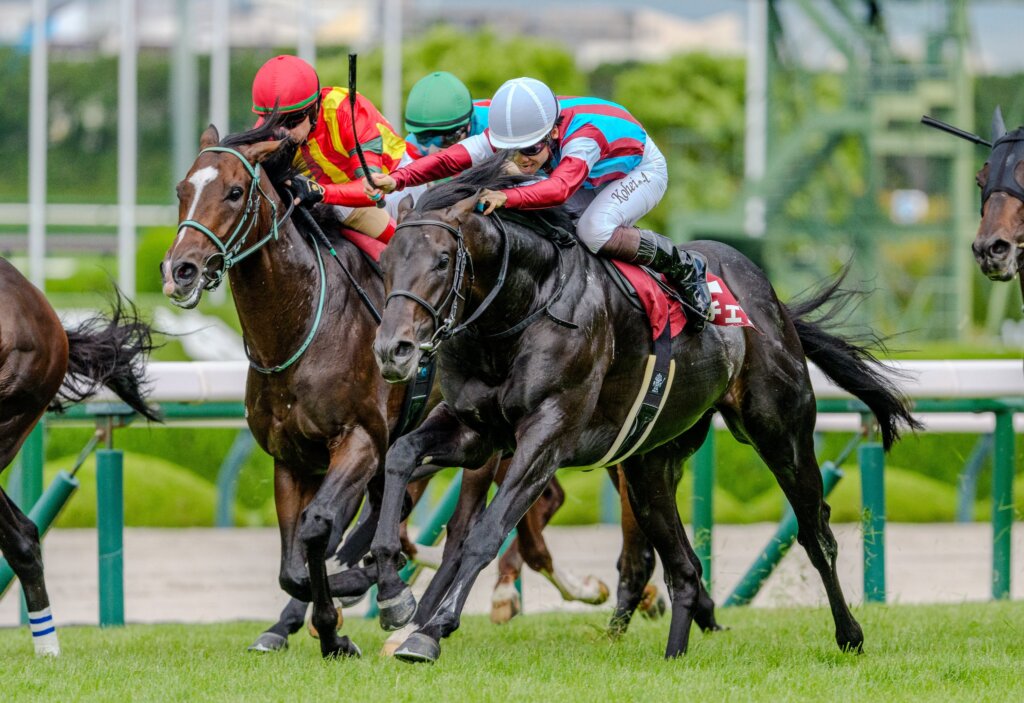
As Finger faded out, Silver Ratio ground his way past Wonder Dean for a length score. It was a solid field to beat: Wonder Dean himself won the G2 UAE Derby and was eighth in the G1 Kentucky Derby; back in third was the G3 Leopard Stakes winner Coeli Vento.
Silver Ratio now has a record of four wins and three seconds from nine races, and has the potential to develop into a star dirt track runner like his sire Le Vent Se Leve who rounded out his 2018 three-year-old campaign with wins in the Mile Championship Nambu Hai and the G1 Champions Cup.
Perhaps assignments in Saudi Arabia and Dubai might follow for Silver Ratio early next year.
“I believe he will be even better as an older horse,” Nonaka said. “I have been thinking about how we could make him a good older horse since his debut.
“He is growing step by step, and we don’t want to pose too many risks to his legs at this stage. So, we want to take care of him, see how he comes out of this race, and decide what his next step will be.” ∎