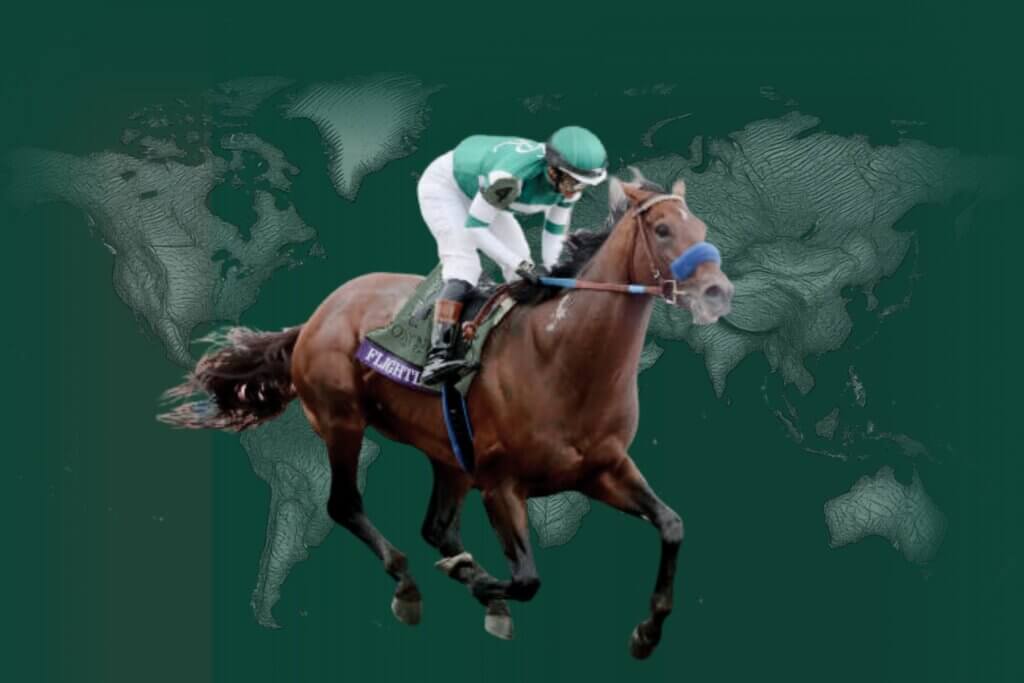

Forever Young has never walked the famous sale ring at Keeneland, never even been to Lexington, but if all plans are fulfilled, he’ll be in the heart of the Bluegrass State this fall, stabled at the racetrack close to the auction arena where generations of his family before him have been sold, for money large and small.
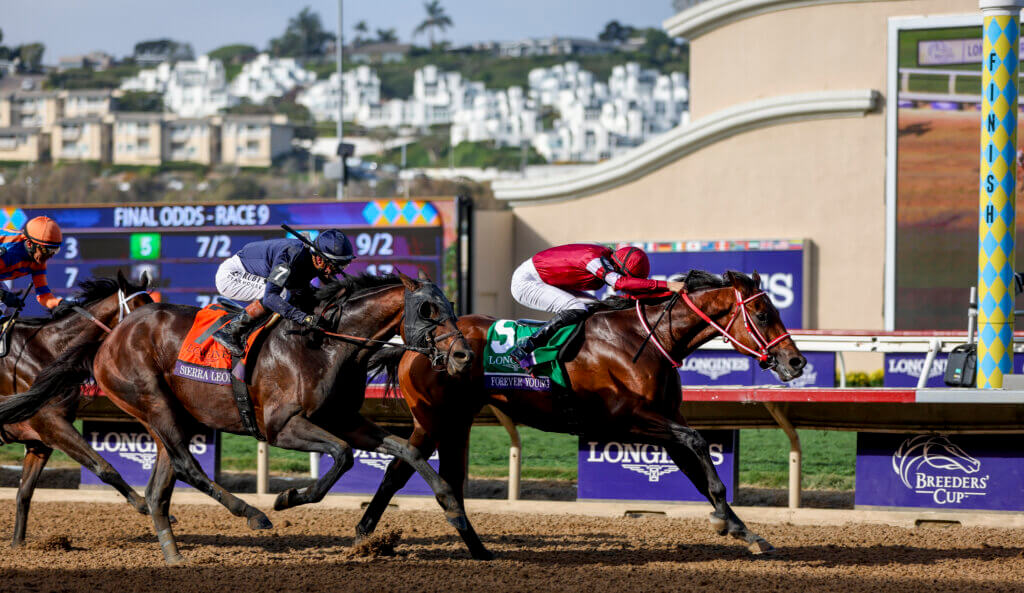
Japan’s greatest dirt track runner was conceived, born, and raised in Japan, but his story is inextricably tied to the United States, land of his grandfathers and mothers. He came close to making history there when a whisker away third in the king of all American races, the G1 Kentucky Derby, and where history was all his after the 2025 G1 Breeders’ Cup Classic at Del Mar, California.
That Breeders’ Cup victory was significant not only for Japan’s onward march as a force on the world stage, but also for owner Susumu Fujita, head of CyberAgent with its subsidiary Cygames, and its multi-faceted Umamusume: the horse-girl video game, manga, anime, music and stage show franchise that propelled him to billionaire status.
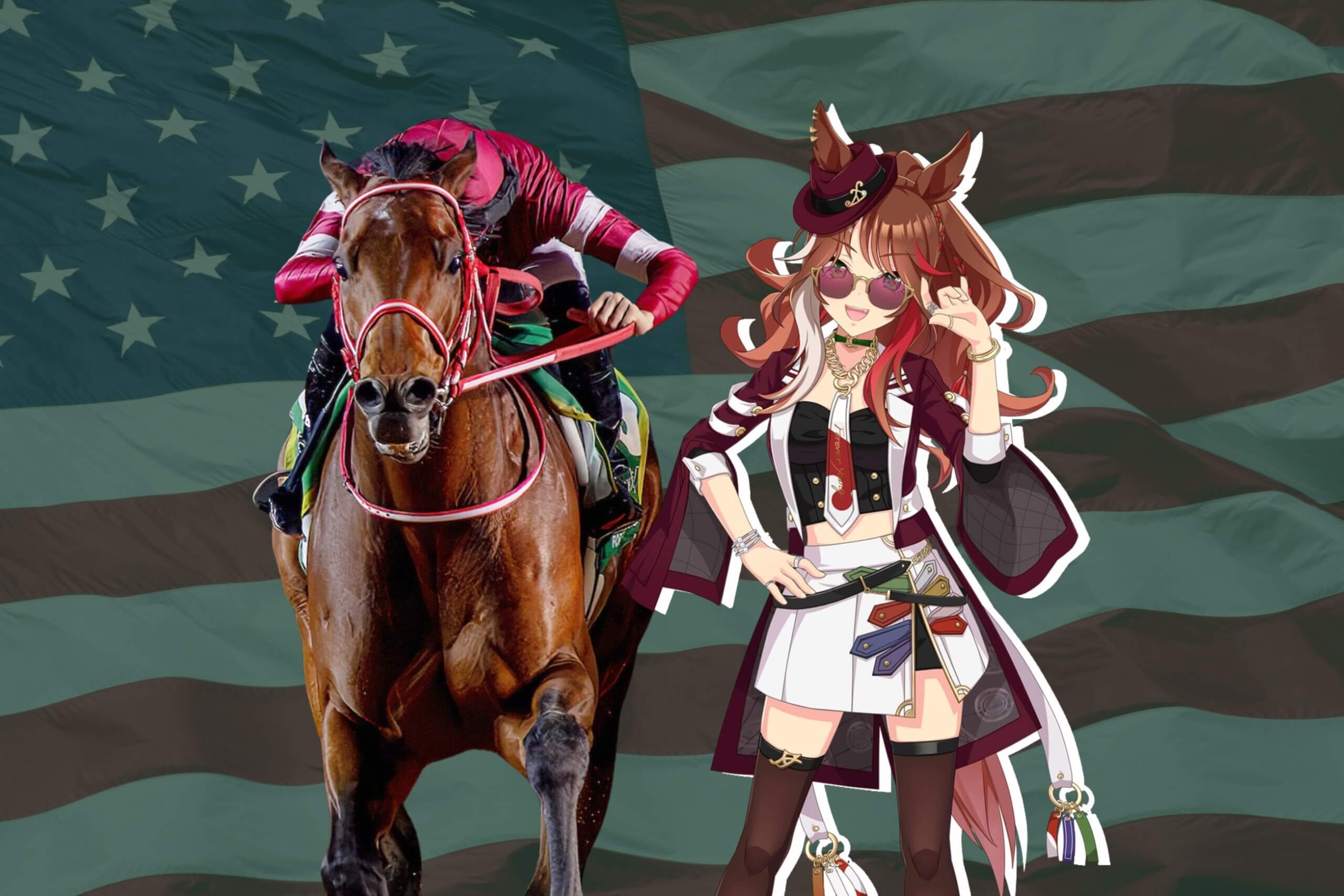
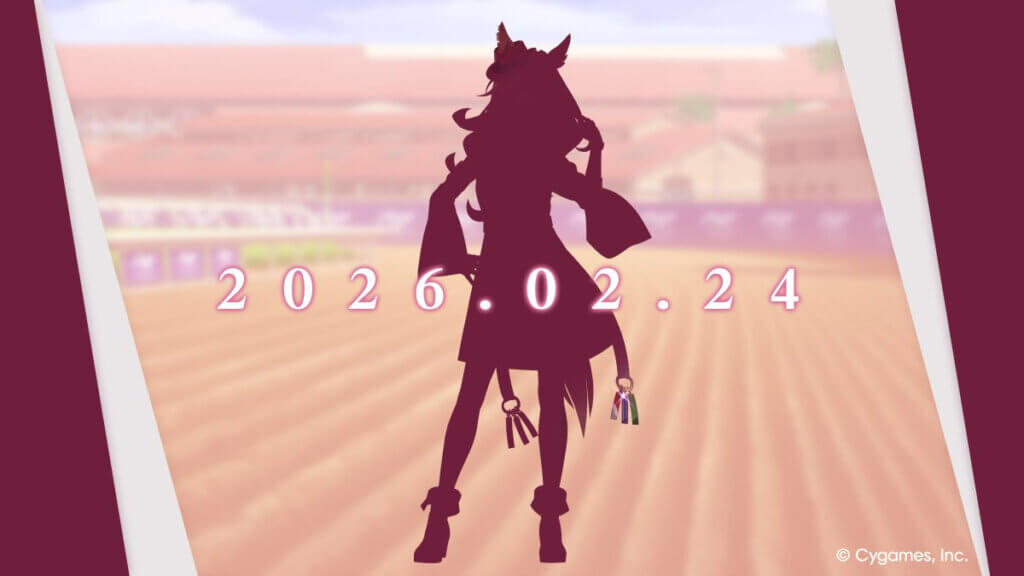
The phenomenon had gone fully international with its English language launch of the hugely popular Umamusume: Pretty Derby game just four months prior to Forever Young’s Del Mar victory. The game, a massive Covid-era hit in Japan from its launch in early 2021, takes famous Japanese racehorses, morphs them into late-teen horse girls, and retells their stories in an alternate universe at the Tracen Academy. Within moments of Forever Young winning the Classic, Umamusume’s official media posted a tantalising silhouette image of a forthcoming new character.
Roll forward to February 24 this year, a propitious date in Umamusume lore – the five-year anniversary of Umamusume: Pretty Derby’s mobile game launch, as well as Forever Young’s fifth birthday – and sure enough, the Breeders’ Cup winner was revealed in Umamusume as a playable character, complete with hat as a nod to the horse’s behatted trainer Yoshito Yahagi.
The real Forever Young boarded a plane back to the US on August 31 bound for New York and the G1 Jockey Club Gold Cup at Belmont Park – his mother raced there once, when sixth in the G1 Acorn Stakes – then Yahagi will send him on to Keeneland and this year’s Breeders’ Cup Classic.
The champion’s latest Stateside campaign is continuing an American legacy for Japanese horse racing and for Umamusume’s symbiotic connection. Japan’s first ever overseas Group 1 win was achieved in France, of course, in August 1998 when Seeking The Pearl won the Prix Maurice de Gheest under the great Yutaka Take, but even there, the U.S. link is strong: she was, after all, a U.S.-bred sold privately after going through the Keeneland ring as a yearling.
Not only that, she was trained by one of Japan’s greatest offshore pioneers, Hideyuki Mori, a man who has not only been a long-time key player in buying American-bred horses for Japan and racing the best of them around the world, but also has an important place in Umamusume legend.
“I knew at the time of Seeking The Pearl that Japanese horses were getting stronger, but connections in Japan didn’t know about racing around the world, so I wanted to show the ability and power of Japanese horses, I wanted to show that Japanese horses had a high value,” Mori told this writer – via an interpreter – a couple of years ago.
Mori became a JRA-licensed trainer in 1993 and it wasn’t long before he started looking to the United States auctions, to Keeneland, Fasig-Tipton and Ocala, for horses to buy because he wanted to capitalise on an element he felt was missing from Japanese racing.
“American horses are very good and they have better speed than the horses in Japan,” he said, “so that’s why I liked them, that’s why I went to the sales in America and started to buy horses there, in Kentucky and in Florida. And the cost, even with shipping, was attractive then.”
After Seeking The Pearl came Agnes World, a Calumet Farm-bred son of Danzig, a US$1,050,000 yearling buy out of Keeneland, who Mori trained to win two of Europe’s top sprints, the G1 Prix de l’Abbaye and the G1 July Cup.
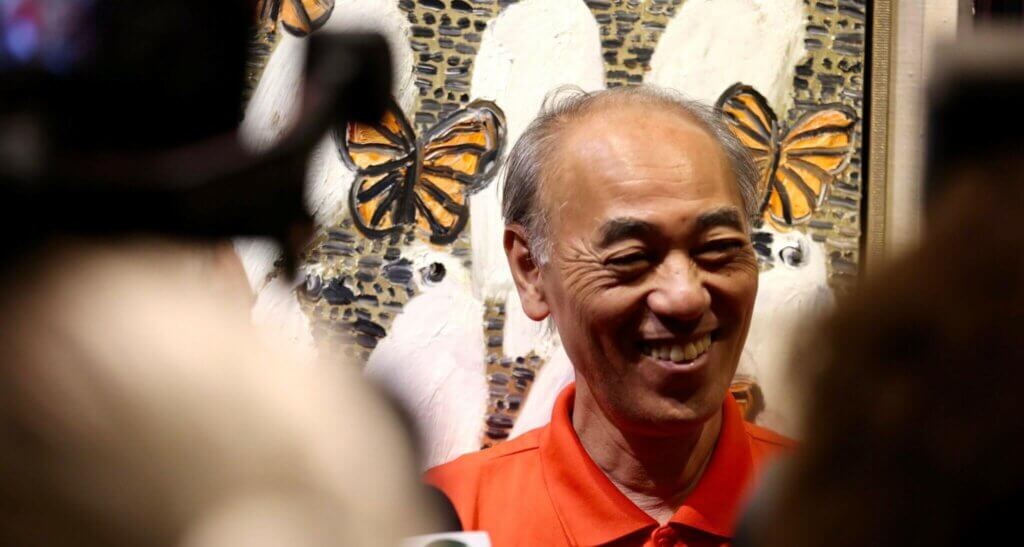
Mori’s place in Japanese racing history was long-since established when he met with Fujita and Japan’s greatest jockey Take for dinner in February 2021. Mori arrived ready with an owner’s application form in his pocket. Fujita asked what the annual costs would be. Mori told him. Fujita took the plunge into horse ownership and has spent big, becoming a major player in no time at all.
That move, aided by Mori, brought legitimacy to Fujita and to Umamusume within Japan’s horse racing sphere, an important factor in securing permissions to incorporate famous horses into the franchise.
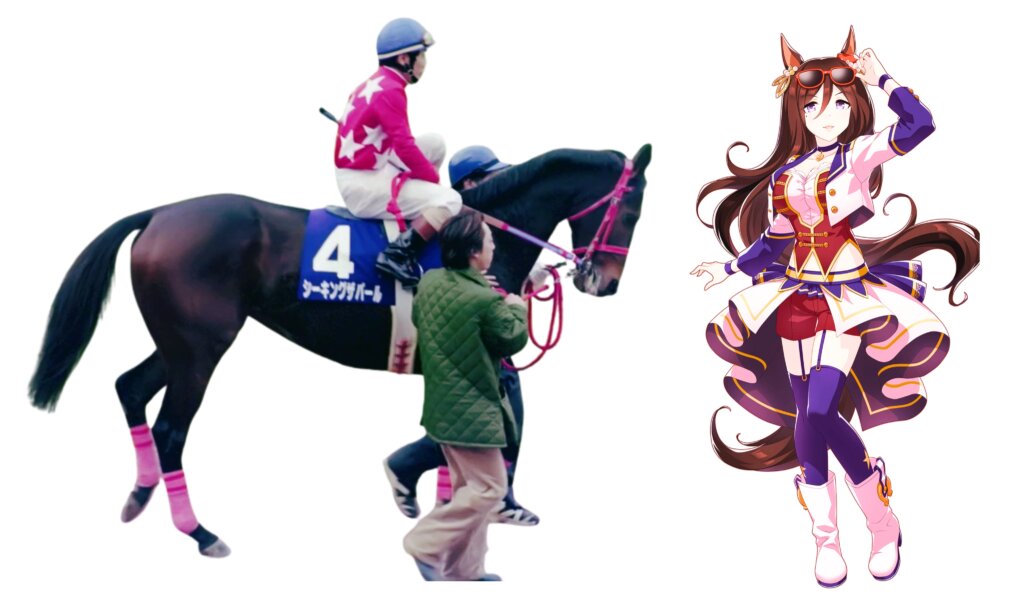
It is no surprise then that Mori’s history-maker Seeking The Pearl is prominent as a character in Umamusume, portrayed as a ‘big sister’ with an international outlook, having lived in multiple countries in that alternative dimension. Meanwhile, Mori’s temperamental dual classic-winner Air Shakur is in the Umamusume game as a ‘bad boy’ character.
Air Shakur was bred in Japan, but his sire was the American champion and great Japanese breed-shaper Sunday Silence, while his dam, I Dreamed A Dream, was bought at Keeneland for only US$57,000 and exported to Japan to join the Shadai broodmare band.
After meeting Mori, Fujita bought into this legacy and his first three horses to race, Dugat, Rayas and Jean Gros, all competed out of Mori’s stable. All three were bought in the U.S. as ready to run two-year-olds.
But Japan’s interest in North American racing, and even the Umamusume connection, goes right back to Hakuchikara’s 1959 exploits in California. And it has continued through Japan’s famous Stateside victors this century: Cesario, Casino Drive, Loves Only You, Marche Lorraine, Forever Young himself, and T O Elvis; not forgetting the notable among the defeated, the likes of Taiki Blizzard, Espoir City, Derma Sotogake and Mandarin Hero.
Hakuchikara was the trailblazer. He won the Washington’s Birthday Handicap at Santa Anita 67 years ago, though by then officially under the licence of an American trainer, Bob Wheeler. Japan’s champion had strong American genes on his mother’s side: his third dam was the U.S. raced mare Fairy Maiden who was sold to Japan and produced the 1935 Tenno Sho (known then as the Teishitsu Goshōten) heroine Cleopatra Tomas, Hakuchikara’s second dam, but also a tail female ancestor of an Umamusume favourite, the enigmatic multiple Group 1 winner Gold Ship.
It was 46 years before another Japanese star succeeded in North America. That historic triumph came with the Japanese Oaks heroine Cesario, a granddaughter of the great Sunday Silence, the U.S. champion who shaped the breed in Japan like no other. Yet in America he was unwanted, both as a stallion, and, in his early days, as a racehorse. He did pass through the famous Keeneland ring, though, unsold at US$17,000 in July 1987.
Cesario became the first Japanese-trained horse to win at the highest level in the U.S. and she has gone on to be an outstanding broodmare, the mother of Group 1 winners Epiphaneia, Saturnalia, and Leontes. Hence her Umamusume character being given a queenly air of compassion, intelligence and nurture.
While Cesario is a lead character in Umamusume, Japan’s next victor in North America, Casino Drive, is an NPC (non-player character) whose role is as a guide to America, the brains behind the ‘Dreams’ Breeders’ Cup project within the game’s ‘Beyond Dreams’ scenario.
The real Casino Drive was the first Japanese horse to win a dirt track graded race in the U.S., the 2008 G2 Peter Pan Stakes. But he was an all-American horse until he was bought at Keeneland’s September Yearling Sale by another long-established buyer, the Japanese agent Nobutaka Tada for US$950,000 on behalf of owner Hidetoshi Yamamoto.
The colt was a half-brother to two Belmont Stakes winners, Jazil and Rags To Riches, out of the remarkable mare Better Than Honour. Casino Drive was foiled in his own attempt at the concluding Triple Crown contest in 2008 when he was scratched on race morning due to a stone bruise to his foot.
Better Than Honour was a Group 1-placed Group 2 winner who sold for US$750,000 as a yearling at Keeneland in July 1997 and made US$14 million when she went through the nearby Fasig-Tipton auction ring in November 2008.
As for Loves Only You and Marche Lorraine, the Breeders’ Cup groundbreakers in 2021 – that year of such significance for Japanese racing and Umamusume – both appear in Umamusume’s ‘Beyond Dreams’ scenario: Loves Only You’s character, of course, shares love and runs her own fan club, a nod to the real horse being fan-owned under the DMM Dream Club; Marche Lorraine is a shy character and communicates via hand puppets.

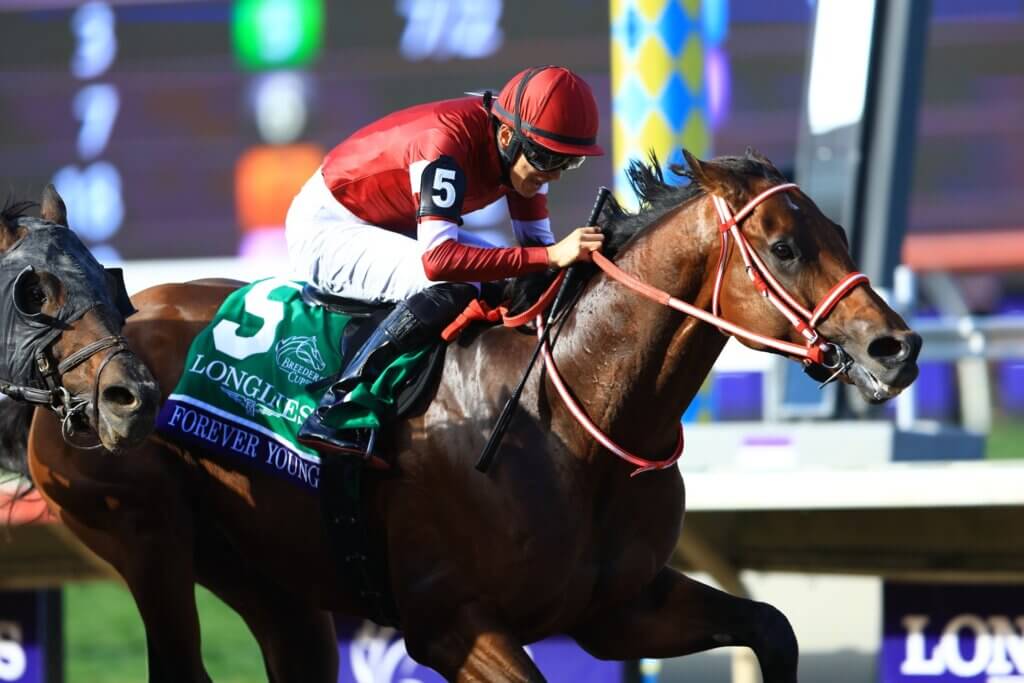
Since Forever Young won at the Breeders’ Cup, Japan has had a seventh U.S. winner, T O Elvis, a colt as American as cherry pie in his breeding. His sire, Volatile, was a Keeneland September yearling, selling for US$850,000, while his first, second and third dams all sold at Keeneland at one time or another.
And it’s a similar story with Forever Young, despite Japan being the land of his birth. He is three generations removed from the incredible sire of sires Sunday Silence, but his own mother Forever Darling was a high-class runner, winning the G2 Santa Ynez Stakes at Santa Anita, two years after she sold for just US$8,000 at Keeneland’s September Sale in 2014.
Forever Young’s second dam, the Group 1-placed Darling My Darling, was a daughter of the G1 Ballerina Stakes winner Roamin’ Rachel and made US$300,000 as a yearling at Keeneland in September 1998. Darling My Darling was also a half-sister to Japan’s Horse of the Year, Zenno Rob Roy, conceived after Roamin’ Rachel, a US$20,000 Keeneland September yearling in 1991, was sold to Japan.
Forever Young will have to buck a trend if he is to win the G1 Breeders’ Cup Classic on October 31, only one other horse has won the race back-to-back and that was Tiznow in 2000 and 2001. But if he does, it will be a fitting final American fling just yards from the sale ring where his progenitors were sold and bought and where so many of Japan’s international dreams began.
After that, Forever Young will be given his opportunity to continue the legacy through his own offspring. And, such is his prowess and reputation, there’s every chance the chain will loop full circle, with Forever Young, a Japanese stallion, producing youngsters for the U.S. market. Who knows? Maybe some will reconnect with family tradition and pass through the Keeneland sale ring. ∎