Japan’s Great Foal Sale: The Queen Is Pacing Between The Trees
Beneath the boughs at Northern Horse Park, hundreds of horses with elite bloodlines await their time in the Select Sale arena where keen buyers are ready to pay big money in one of the sport’s biggest gambles, buying a foal.
Japan’s Great Foal Sale: The Queen Is Pacing Between The Trees
Beneath the boughs at Northern Horse Park, hundreds of horses with elite bloodlines await their time in the Select Sale arena where keen buyers are ready to pay big money in one of the sport’s biggest gambles, buying a foal.
15 July, 2026DARING TACT is animated but not agitated: her proud head is high, her eyes keen. The mare’s strong, maternal frame is on the move, four feet stepping nimbly this way and that on the mossy grass; her handler moving with her, lightly yet firmly engaging the short-held lead rein; a guiding hand on shoulder when needed, giving just enough rope for her to move freely yet controlled.
A few feet away at the edge of the long copse stands Daring Tact’s foal, a hushed gaggle of media with cameras and phones pointed his way. The colt, by Equinox, is standing still, ears cocked, each twitching alternately, lazily, then peaking high; tail swishing calmly.
His mother, the brilliant Triple Tiara heroine of six years past, is still moving, never stopping for more than a short moment. But her demeanour remains regal, powerful: the one-time queen of the race track has some recollective sense – memory, minds-eye images, perhaps – of the things her young prince’s soon-to-be new owner will be hoping the colt will experience too.
“She is excited,” the mare’s groom says smiling, “this atmosphere reminds her of the racecourse.”
There is to be no race, but there is an unmistakable feeling of anticipation on this close, humid, grey morning; a mild tension and boxed-up excitement beneath the trees at Northern Horse Park. Those trees: high reaching karamatsu with their rich, green pine-like needles; maple and silver birch interspersed; and beyond the trees, open grass.
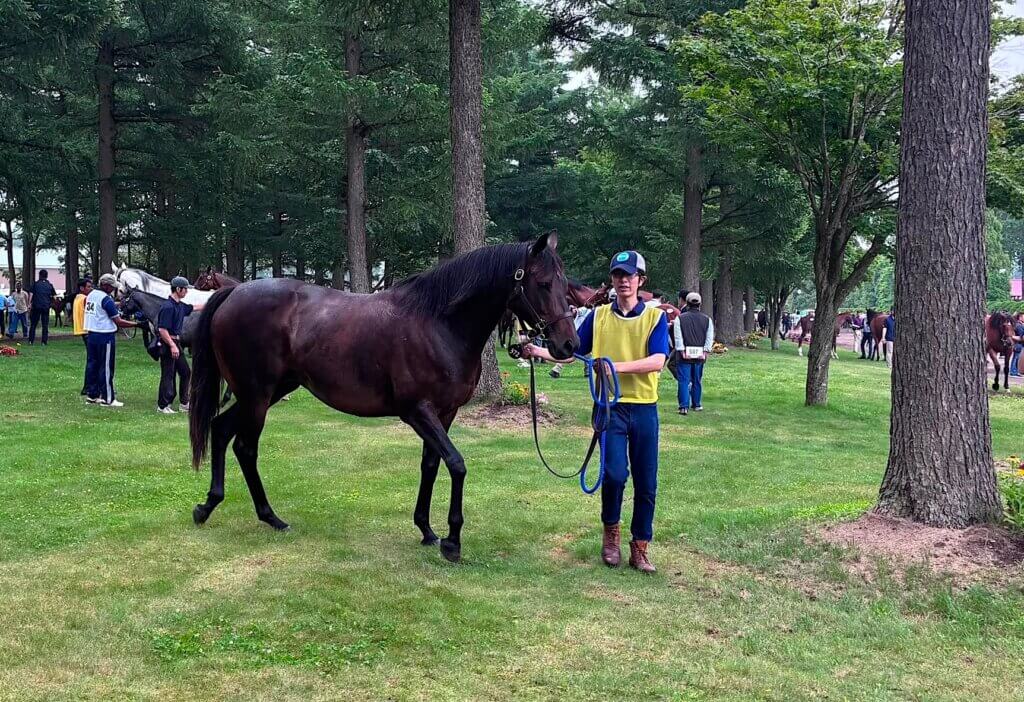
Everywhere below the boughs and spilling a good way into the grassy field there are horses, about 500 all told, mares with foals at heel, each with a handler. And milling or standing in and around are prospective buyers – owners, trainers, breeders – journalists, photographers and the privileged curious, here to see Japan’s great annual foal sale at the Yoshida family’s property.
Turn this way and a foal is rearing up excitedly, turn that and another is suckling milk from his mother; all around mares are standing, some calmly, some picking grass, others alert, some fidgeting, pawing the ground, stamping a hoof; foals are being walked or trotted, sometimes solo, sometimes with their mother in tandem alongside.
And all of this plays to a non-stop cacophony of back and forth whinnying, neighing, maternal grunts, and immature hollering from this quarter and that, in what sounds like an off-beat equine call and response chorus.
It all started sometime between seven thirty and eight o’clock – time seems to slide away when faced with one of life’s rare wonders. It was then that mares, foals and handlers emerged from barns and made their way along the bridle ways to the trees and field.
There is order to what is happening. The mares and foals are positioned in lot order in rows, and those with higher expectations find themselves between the karamatsu; the later lots are all stationed out on the grass, to wait patiently for their time to move along the line, through the trees, and eventually through the sliding doors onto the sale ring stage.
The grand Japan Racing Horse Association (JRHA) Select Sale pavilion, where one day earlier blue-blooded yearlings had sold for pocket-emptying money. But, let’s be clear, the foals are not the afterthought, traditionally the yearlings are the sideshow here.
“We used to not sell the yearlings before, we only had foals,” Northern Farm boss Katsumi Yoshida tells Idol Horse.
When the Select Sale took form in 1998, yearlings and foals were both sold, but as Yoshida relates, that was discontinued the next year and it was the yearling element that was ditched, returning in 2006.
“Interestingly, the buyers here in Japan want to buy foals: It’s a tradition here,” Yoshida continues. “We initially thought about only selling the yearlings but the clients insisted that they wanted to buy foals.”
To be clear, this is not about pinhooking. These are some of world racing’s biggest players, Japan’s top level buyers buying blue bloods for keeps not for resale.
“The clients here have the mindset that they have to buy a horse as early as possible, so they want to buy a foal,” Yoshida says. “That might also be the reason why the pedigrees of foals sold here are usually better than the yearlings. I don’t mind if we were to get rid of the foal sales and just sell the yearlings, but I think that will only increase the private transactions of foals between farms and owners, which is another thing they do here in Japan traditionally. I think these aspects are what separate us from the other parts of the world.”
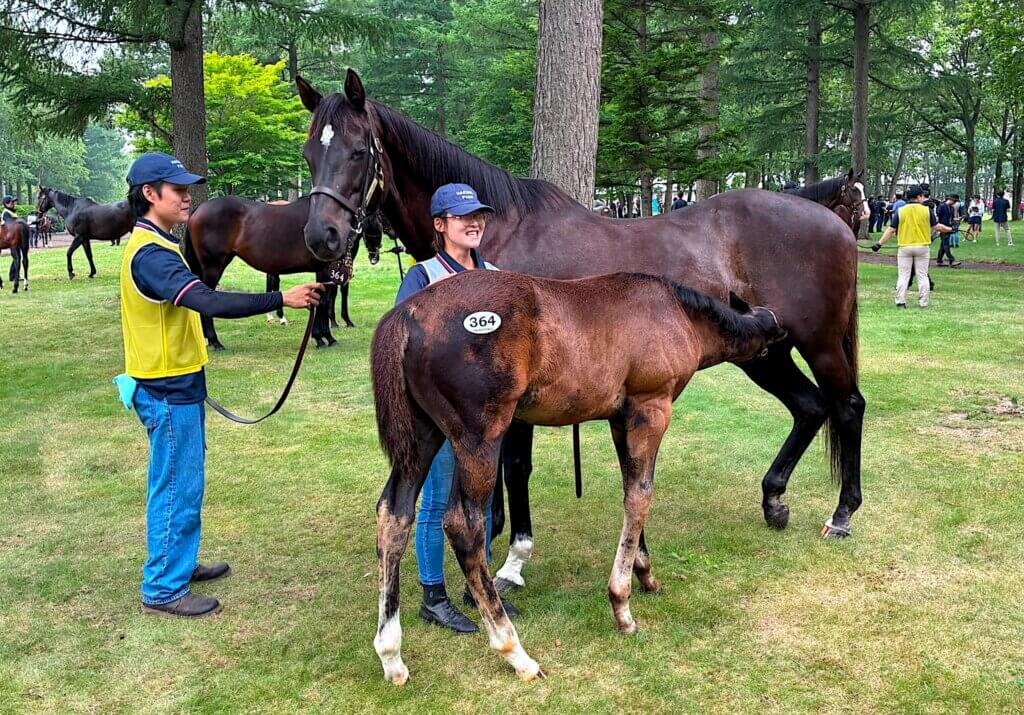
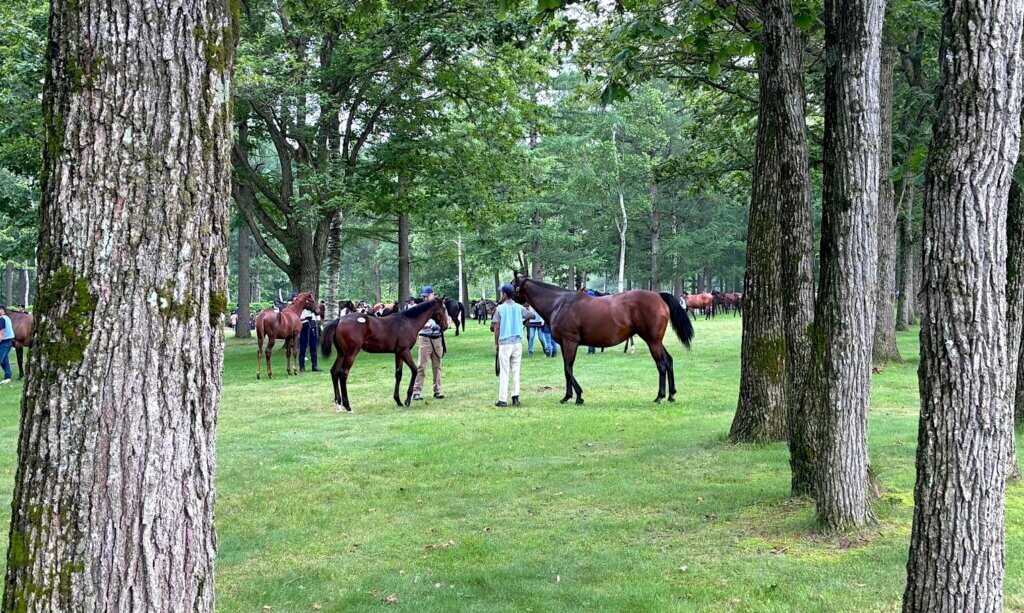
Beneath the branches a potential buyer has a groom line up the foal alongside its mother, positioned ‘inside’ her frame, comparing shape, trying to imagine how this months-old horse, still more legs than substance, might one day turn out. If the late great Bart Cummings’ assertion that buying a yearling is like buying a car without any clue what the engine is, what is buying a foal?
“It is a huge gamble, it’s very hard to judge foals,” classic-winning trainer Mitsu Nakauchida tells Idol Horse. “You don’t know what the foal is going to be like in two years’ time, but if you don’t take that gamble, someone will take that gamble and get good ones.”
But this reality does not dissuade Japan’s keen buyers and there are benefits to the breeders.
“You just see the foal itself, you see it as it is before it might mature too early or too late; it’s difficult to describe why, but if they are good, you want to buy the foal before anyone else. That’s the way the owners think,” Nakauchida says, noting that the new foal is the new owner’s to do with as they see best, a fresh canvas, as it were, not shaped by what someone else might do in preparing them through the next year to the yearling sales.
“And from a breeder’s view, it’s a quick return on investment as well,” he continues. “It generates money for the next generation. If you sell as a foal you don’t have to wait as long: with yearlings or two year olds, you’re not going to see money returning to you for maybe two years, but if you’re selling as a foal, you get a return one year after you cover the mare.”
First in line out on the bridle way is Lot 301, a second crop son of the incredible champion Equinox out of the French Group 3 winner King’s Harlequin.
The youngster has the white blazed face of his sire and he betrays nervous tension, ears flicking, a coltish display; his mother is sleepy, leaving her son to whinny away. But that reverses when the pair walks into the sale ring together: as the auctioneer rattles through bids and the bid spotters call out from the floor, King’s Harlequin is pulling, backing away, the muscles in her quarters tense, her ears and tail switching.
Susumu Fujita is in his assigned seat, one of those green chairs reserved for buyers, right by a screen of potted seven-foot conifers. The day before, the big-spending owner of the Breeders’ Cup Classic and Saudi Cup champion Forever Young made six yearling purchases, including the first ever offered by Equinox for ¥82 million (approximately US$500,000). He spent ¥1.002 billion (US$6.1 million) in total.
But the 53-year-old billionaire founder of CyberAgent has deep pockets and he is first off the mark, sealing Lot 301 for ¥200 million (approx. US$1.2 million). The youngster’s fourth dam is the legendary British sprinter and blue hen Marwell. Pedigree, it seems, is probably the overriding factor when buying foals.
“They change over time, so the pedigree is important, and you’ve got to understand the siblings and the mare,” Nakauchida says. “And it’s good that at this sale the mares come with the foals so you can actually look at the mares as well as the foals. So this is a huge advantage.
“They get good results at the racecourses as well from this sale, so there is buyer confidence here.”
That buyer confidence and great pedigree comes together with a colt whose family Nakauchida himself knows. Earlier, in a quiet spot close to the copse edge, the Australian Group 1 winner Yankee Rose is munching grass alongside her chilled Kitasan Black colt.
Mother and son enter the ring as Lot 401, dam and half-brother to Nakauchida’s brilliant but ill-fated Triple Tiara winner Liberty Island. The foal is knocked down for ¥410 million (approx. US$2.5 million) to the big-spending M’s Racing. That’s buyer confidence for you.
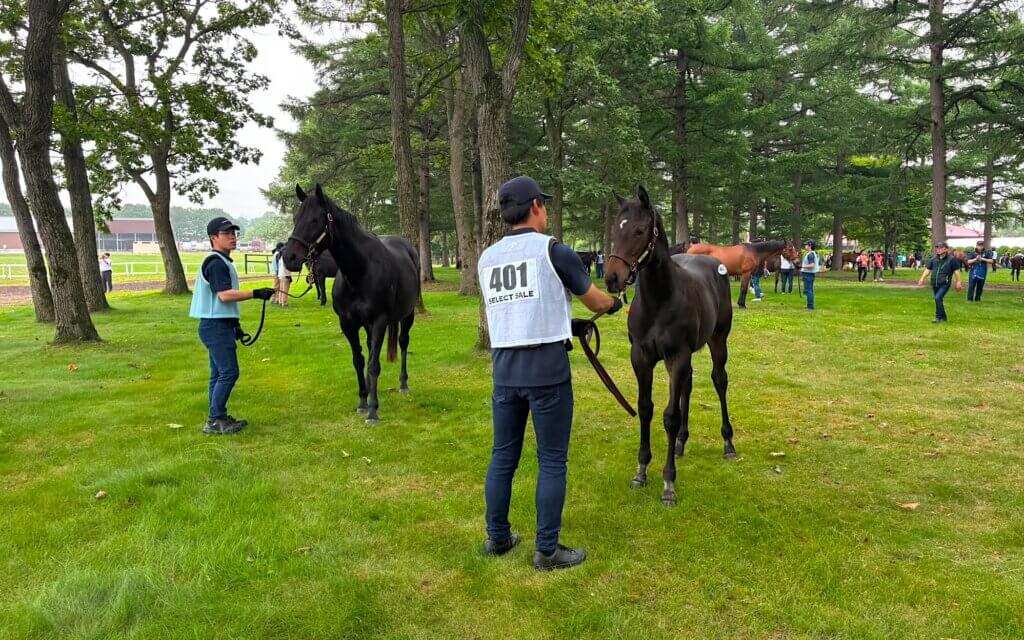
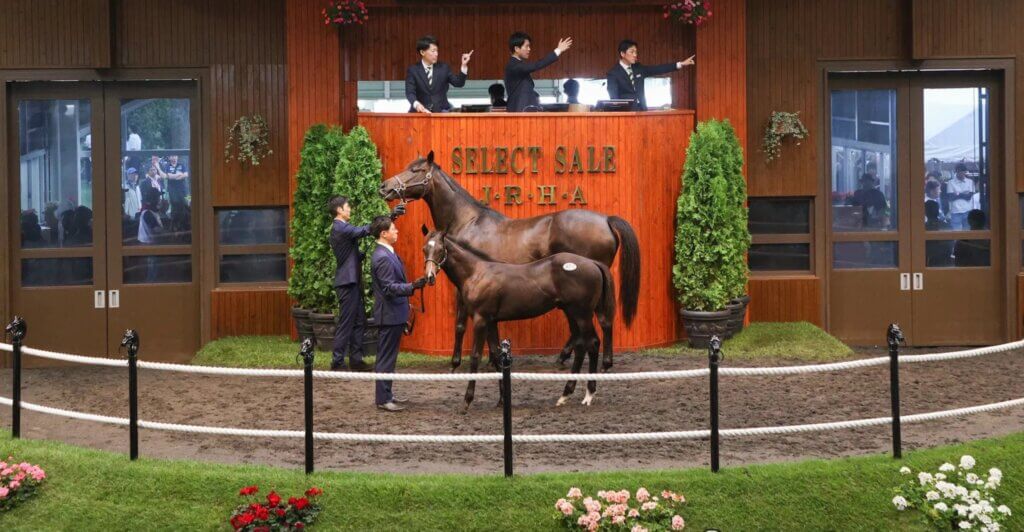
It might seem odd to ‘old world’ European owners and breeders to be selling premium foals, given their obvious immaturity. Seeing mares and foals together in the sale ring might not be everyone’s idea of the way to do things, but it works, and there’s something special about seeing the mother with her foal under those trees, preparing for a big moment in its young life. And, it should be noted, it’s not like the foals are taken from their mothers as soon as the sale is done. Avoiding trauma and enabling healthy nurture and weaning is vital to a horse’s development.
“The foals will stay with their mother until next March,” Yoshida says. “The owners pay half of the price, for the first year after the sale, then they pay the other half the next March. Then the (full) ownership will be moved to the owners.”
Those mares heading home with their foals sold but still at foot include another Australian Group 1 winner Mosheen, who didn’t turn a hair for all the attention pre-sale alongside her Maurice filly; then there’s the G1 Fillies’ Mile winner Commissioning and her Kizuna colt who sold for ¥270 million (approx. US$1.6 million) and fellow European Group 1 winner Incarville with her Admire Mars colt; and another major spender, Masahiro Noda of the Danon prefixed horses, splashed ¥310 million (approx. US$1.9 million) on an Equinox foal out of yet another Australian top-liner, Funstar, just a day after spending ¥420 million (approx. US$2.5 million) on a yearling out of Funstar’s elite half-sister Youngstar.
Daring Tact and her colt arrive in the ring as Lot 372. It plays out as it did under the trees, but there’s a hint of impatience this time up on that stage: the queen pacing, muzzle pushing into the handler, imposing her presence, feet moving non-stop; her Equinox foal quiet, looking out, hearing the auctioneer’s sing-song cadence, wondering what it’s all about, perhaps.
The hammer comes down at 330 million (approx. US$2.03 million) for Daring Tact’s little prince. The yearling sale brought in a total of ¥17.66 billion, close to US$109 million, a Japanese sale record; the foals reaped ¥15.824 billion, down from last year’s all-time high (¥17.154 billion).
“Nowhere else in the world does it, but we do it quite well and here at the Select Sale they do it really well,” Nakauchida adds.
The trees beyond the pavilion are quiet now as afternoon wanes into evening after a heavy downpour, the field is empty, too; the mares and foals have gone and the buyers are leaving, their money invested in a long range gamble they hope will be worth the couple of years’ wait. ∎