“It was like someone switched off the noise,” Gerald Mosse tells Idol Horse.
The moment has been replayed and recalled countless times in the almost 21 years since the unthinkable happened: the great Silent Witness was beaten, his winning streak halted unexpectedly at 17.
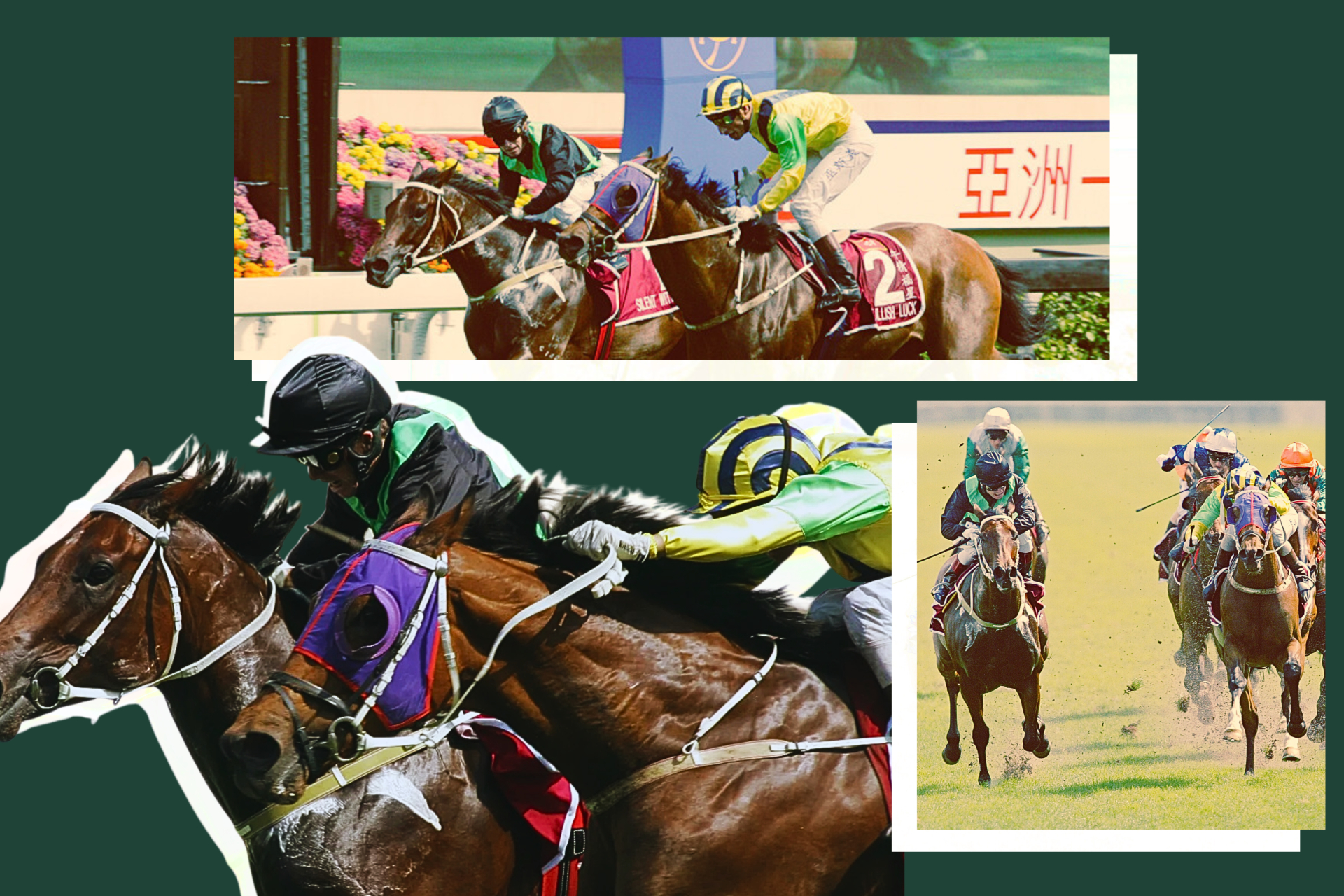
After an ear-battering roar that lasted the length of time it took Hong Kong’s champion to lead the field the length of the Sha Tin finishing straight, the crowd was numbed. Mosse had driven Bullish Luck past Hong Kong’s great hero to a last ditch, short-head upset in the 2005 Champions Mile.
“Bullish Luck drives up, beats the champion!” race caller David Rafael told the world, adding, “It’s a photo. I hope I’m wrong, but I’m pretty sure I’m not.”
It took three or four strides after the horses passed the winning post for the crowd to realise what had happened, then, “No more noise,” Mosse says. “That’s what I remember, that’s what I will remember all my life.
“It was … wow,” the Frenchman continues. “No one could expect that. So, all the crowd were screaming to push the hot favourite to win, and then when I passed him, just after the winning post, no one was making any sound.”
David Price of Price Bloodstock, the man who sourced Silent Witness for the Hong Kong market and sold him to run in owner Archie da Silva’s black with green cross-belt silks, gives a short, dry laugh as he is reminded of the moment and says, “I’ve only just got over that,” and there’s truth in his throwaway mirth.
“It went quiet, it went pretty quiet,” Price recalls. “Pinged him right on the line. It was like, wow, he’s got beat, hasn’t he? It was sickening on that front.”
The man who rode Silent Witness, Felix Coetzee, told Michael Cox in May 2015, “It was like it all rested in my gut at that time. I just felt pale, I felt weak … It was a horrible, horrible feeling. I took the saddle off, gave him a pat, and walked away like a broken person.”
After the expectation, the promo, the hype, the worldwide media attention, interviews with the likes of CNN and Time magazine, it wasn’t supposed to be that way. But Silent Witness’s defeat is a famous example of the truism that anything can happen in sport once the protagonists get to the business of competing: the talking stops and even ‘good things’ at odds of 1.2 can be beaten.
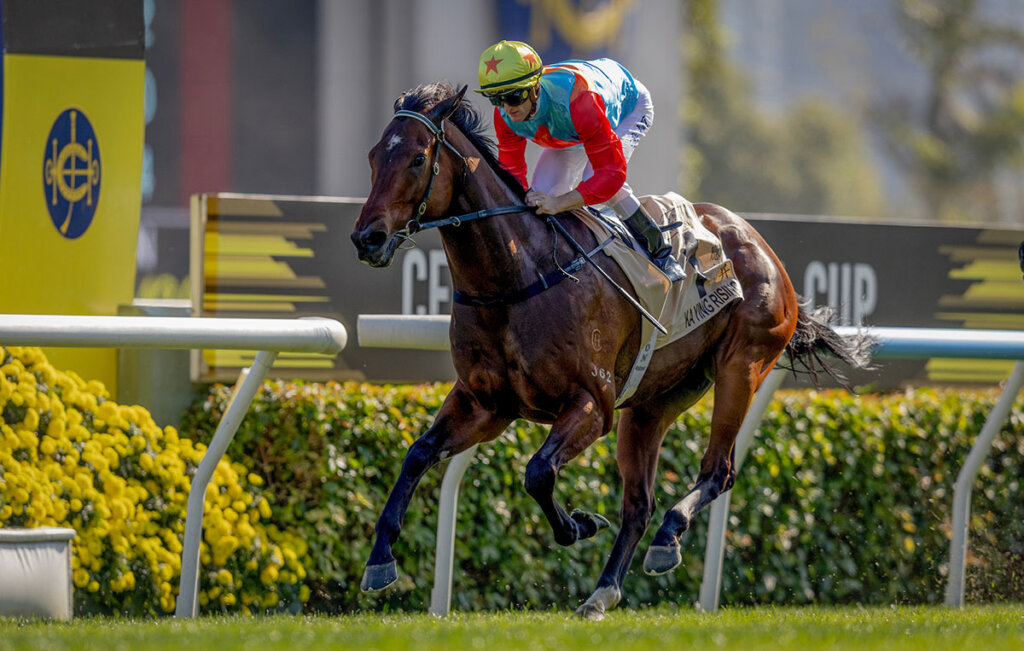
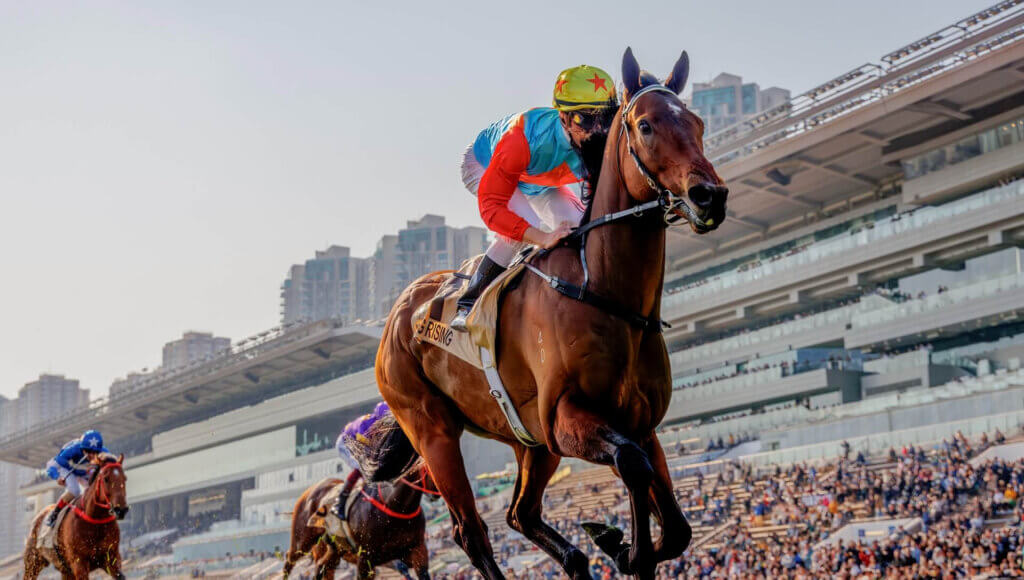
Ka Ying Rising is the latest good thing. Trainer David Hayes’s exceptional sprinter equalled Silent Witness’s 17-win streak in the G1 Centenary Sprint Cup last start, and on Sunday, in the G1 Queen’s Silver Jubilee Cup, he is expected to break into clear ground with a new Hong Kong record of 18 straight wins.
But Ka Ying Rising’s story is different, he has beaten his upcoming rivals with improbable ease each time he has raced in Hong Kong this season and crucially he is already a proven winner at the 1400m distance.
When Silent Witness went to the Champions Mile on that mid-May day, he was stepping into the unknown against high-calibre milers. His prowess was at 1000m and 1200m, he had stretched out and proven himself at 1400m, but he had never raced at 1600m.
Tony Cruz – Hong Kong racing’s greatest son – was Silent Witness’ trainer and the former champion jockey says he had reservations about stretching out to the mile and expressed those in private conversations between the connections. He also trained Bullish Luck.
“I didn’t believe he was a miler,” Cruz tells Idol Horse. “But there was insistence and it was decided that we run him at a mile, I said, he’s not a miler. I knew there was danger at the mile, and I had the other horse, Bullish Luck, who was a champion horse at a mile.”
Part of the lure was a lucrative bonus in place at the time for any horse that could win the Champions Mile and the Yasuda Kinen in Japan three weeks later. That was the aim. Cruz, nine seasons into his training career and familiar with Hong Kong’s cutthroat racing environment, says he sought and received assurances that he would not carry blame if the champion was defeated.
“The mile plan was always there,” Price recalls. “There was always a chance of being a touch vulnerable but with a horse that good in Hong Kong, it’s not as though you can run them that often, so it seemed the right call at the time to run him and unfortunately it created the loss.”
Silent Witness was drawn in gate one; Bullish Luck was in gate two. The champ broke swiftly under Coetzee, as expected, and rolled to the lead, as was his wont. Bullish Luck was more slowly away and was soon well back, about 10 lengths off, sticking close to the fence.
The tempo was strong, with The Duke and Ain’t Here harrying up outside Silent Witness’s powerful quarters.
“It’s very simple,” Mosse says, “when we go to the races to compete, we always try to win. Silent Witness was everyone’s favourite, the people’s horse, and I was expecting to compete, not really to be able to beat him.
“My horse had pretty solid form as well, but Silent Witness was an unbeaten horse. I remember Tony asked me to ride Bullish Luck how he was usually ridden, coming outside.”
But starting from the inside, with anticipation of a hot tempo likely to be happening ahead, Mosse made a tactical decision.
“I was just thinking, if I’m going to do what he asked me to do, go around everybody, there is no way for me to get him,” he says, “so I took the shortcut, I saved every centimetre, and then I’ve been lucky to get through and I just tried to come and get him on the line. I knew with 150 metres remaining that I would win, so it was really something special.”
The result brought mixed emotions for Mosse and especially for Cruz.
“Tony was still happy because he still got the winner, but not with the one he was expecting,” Mosse recalls. “In the happiness of that moment, of winning the Group 1 like that, you don’t really think too much about the champion getting beat. You’re somewhat proud to be able to beat the superstar, but at the same time, I felt a bit sad because he had those 17 wins in a row.
“You compete to win, so when you beat the champion like that, of course, some people will be extremely proud to beat ‘The King of Hong Kong’ and I was not: I really like to see champions keep winning, and I think that is something Hong Kong people like to see as well.”
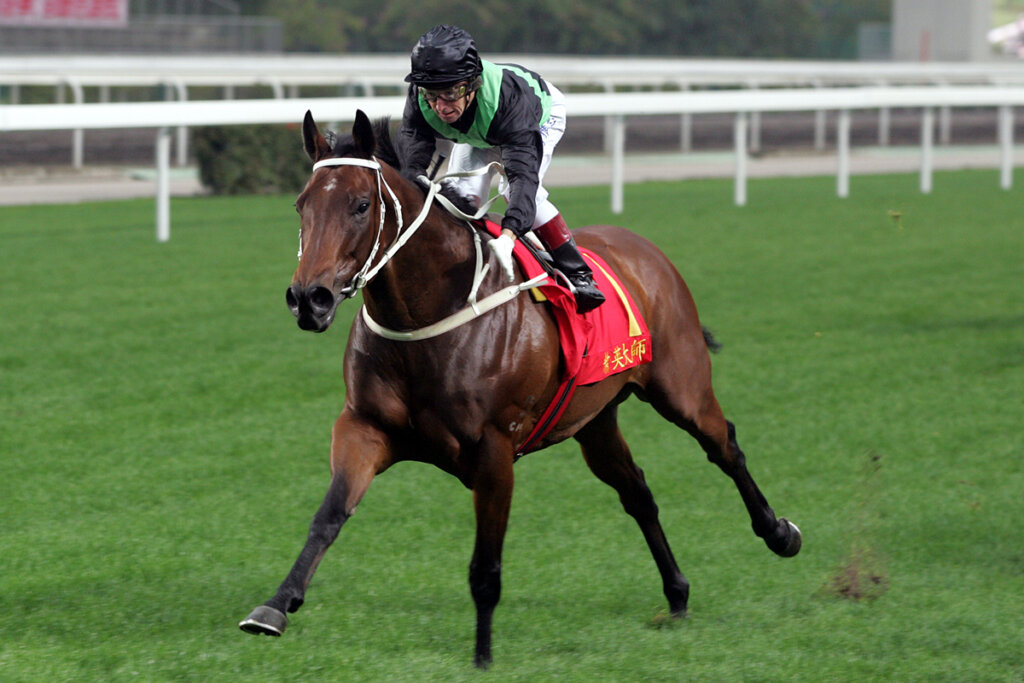
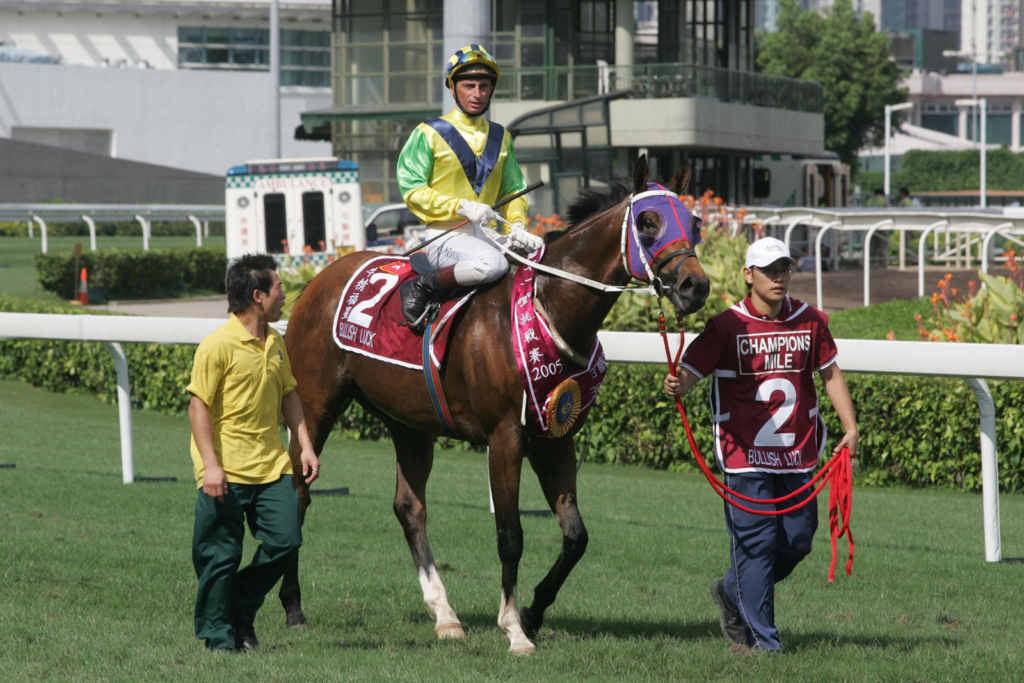
Despite the narrow loss, Silent Witness continued on to Tokyo and the Yasuda Kinen, Japan’s great summer mile race.
“It was funny because from there he still went to Japan to run in the Yasuda Kinen,” Price says. “So, it wasn’t as though it was considered to be, you know, like go back to sprinting. It was push on. The discussion, I think, was more about he’ll do that and then he’ll go to Japan, so I mean full credit, he got beaten and they still went.”
Cruz looks back on that as “a big mistake,” though because “he ran third, the race was too long for him.” But again, the champ was beaten only a neck, finished one place in front of Bullish Luck, and lost no respect in that second defeat.
Price, though, points out that Silent Witness’s Yasuda Kinen run “was outstanding,” that his defeats were races seven and eight that season – he only ever raced five or six times in his other campaigns – and observes of the Yasuda Kinen, “it was almost like the horse was looking at the board at the end of the straight; in the run, you could sort of see his ears up and he seemed to lose concentration and Felix didn’t seem to sort of punish him and he only narrowly got beaten.
“So, you could never say that he couldn’t run a mile when he was narrowly beaten in two high class mile contests,” Price adds, “but his absolute A-grade strength was up to 1400 metres.”
Silent Witness was taken back to 1200m and back to Japan for his next race, the G1 Sprinters Stakes at Nakayama that October. He was brilliant, notching his 18th career win at his 20th start and it seemed that he was ripe for another winning streak. But things took an unexpected turn.
“After that race they had to do a swab test up the nostril to check if he’s bringing any virus back to Hong Kong,” Cruz recalls ruefully. “But every time they tried to swab him, he reared up, so they sedated the horse twice, once in quarantine when he went in and then leaving the quarantine with another sedation, and I believe that was the downfall of Silent Witness.”
He takes the view that, “Once you sedate a horse, you take their guard down, the immune system against infections and viruses. He came out and was a different looking horse, his coat changed, his hair was on end, he couldn’t gallop, he had a lot of mucus after that.”
Silent Witness was scratched from his intended next start that November and failed to win again in nine races up to his retirement in 2007.
But his legacy is epic. He was the horse that came along at one of Hong Kong’s lowest ebbs, as Severe Acute Respiratory Syndrome (SARS) ravaged the city through 2003 into 2004, bringing fear and killing almost 300 people at a fatality rate of 17 percent.
That puts Silent Witness on a different pedestal to Ka Ying Rising. He wasn’t just a champion racehorse, he was a folk hero.
“Silent Witness brought joy and happiness, he made Hong Kong proud at the time of SARS, that’s why he was called ‘The Spirit of Hong Kong,’” Cruz says. “He came out like a champion and had 17 straight wins and he was a superstar, the people loved him.
“The Jockey Club put up a giant TV screen in Central so people could see him winning. CNN came along and interviewed us with the horse in the paddock for an hour and a half, and the horse didn’t move, he seemed to love the attention. Time magazine put him on the cover!
“It’s not the same this time,” Cruz adds.
Price highlights another difference: “The part of the story that we’re all hanging our hat on is that Silent Witness’s unbeaten streak was from the start, so we’re always keen to remind Hayesy (Ka Ying Rising’s trainer, David Hayes) that Wunderbar beat Ka Ying Rising twice before he got his streak going.”
Ribbing aside, no one begrudges Ka Ying Rising. Price, Cruz and Mosse are united in their admiration for the horse that is making his own legacy as one of the greatest sprinters of all time.
“Ka Ying Rising is an all-time champion too and nothing can beat him right now,” Cruz says. “I think he will keep on winning for a long time to come because there’s nothing around to beat him and I wish them all the best because he’s an incredible horse.”
As Ka Ying Rising went through his final preparations for his shot at win 18, Silent Witness – now 26 years old and a longtime resident of Living Legends – was out on the streets of Melbourne, bringing his celebrity to the Lunar New Year celebrations in Chinatown.
Bullish Luck, 27 years old now, is at Living Legends, too. He went on to win the Champions Mile again in 2006 when he completed the double Silent Witness could not, winning the Yasuda Kinen, this time under Brett Prebble.
The now aged ‘Ageless Warrior’ as he was known in his later racing days, will always be remembered most for that day at Sha Tin when he downed a legend under what Price describes as “an extraordinarily good ride.”
Mosse reflects on Bullish Luck and Silent Witness on that famous day, then brings his thoughts back to the now of Ka Ying Rising and his sporting instincts hold true.
“When the champion keeps showing up, carrying the flag, and keeps winning, he deserves to carry on if he can,” Mosse adds. “I like to see champions keep winning.” ∎